
Stewarding the Earth: Leave No Trace

“And I brought you into a plentiful land to enjoy its fruit and its good things. But when you came in, you defiled my land and made my heritage an abomination.” Jeremiah 2:7 ESV

About six years ago, I was sitting at my table when God whispered to me, “It’s time!” I knew exactly what He meant. He was inviting me into an adventure, where buttered bagels didn’t cover up anxious thoughts and donuts didn’t distract me from loneliness. God’s distinct voice encouraged me to see what was under the layers of fat and cellulite. Who was the woman underneath? What passions and desires had been covered up for decades with cupcakes and cheesy bread? I have written about many of the things I learned on this journey: fat is not a feeling and bread doesn’t fill. But I uncovered something else that I never expected: a woman who craved to be in the outdoors whether it was hiking or taking walks in parks. And this new woman found the outdoors restorative and inspiring.

I am not alone. Since 2020, when the global pandemic made all our worlds smaller, people turned to the outdoors to see that their world was bigger. In a 2023 report from the Outdoor Industry Association, the trend for participating in outdoor recreation continues to increase, seeing 2.3% growth in 2022. Some of the new participants are young and diverse, although compared to the general population, diverse ethnic and racial groups are still wildly underrepresented. The senior age demographic also saw a record high participation, making seniors one out of every five people spending time outdoors.  Whether fishing, hiking, kayaking, or mountain biking, people are finding more ways to spend time outside.

One of the greatest and most inexpensive ways to spend time outdoors is to explore state parks. I am blessed to live in Pennsylvania, where state parks are free. When I lived in Wisconsin, our annual state park pass was only $28, still relatively cheap. Across the United States, the average annual cost of a state park pass is $59.76, the price for two separate family trips to a fast-food restaurant. The state parks are treasure troves for people to explore the outdoors. There are thousands of miles of trails for hiking and biking, and thousands of lakes for kayaking, fishing, and swimming. Additionally, a lot of these parks offer educational opportunities, like workshops on foraging, invasive species, and wildlife. When living in Wisconsin, my children and I participated in a story time hosted by a state park. We learned that owls flew silently, and skunks tapped their back feet as a warning before spraying.
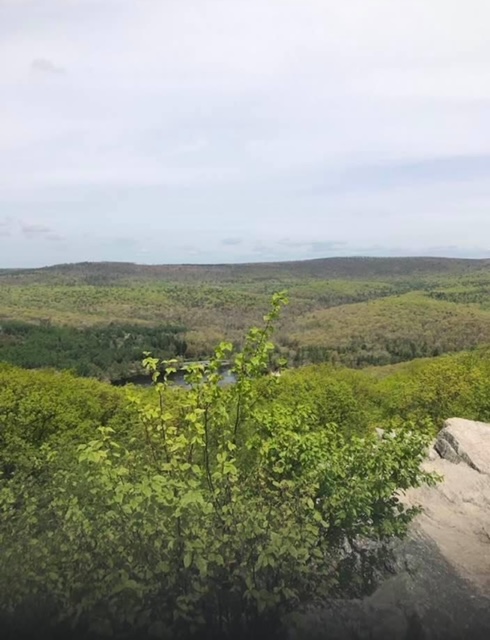
As a child, I occasionally hiked with my Uncle Mike in the Kettle Moraine State Forest in Sheboygan County. Most of these hikes took place in the fall, when the forest canopy was aflame with brilliant red, orange, and yellow leaves. I loved how the saturated green moss contrasted with brown tree bark. I spied birch trees, composing in my mind an imaginary letter on its wispy white bark. I enjoyed the sound of crunching leaves as I trod the paths. It felt otherworldly, taking me away from the chaos of my home. I felt calmer and more hopeful, and for a few hours, I even breathed more freely.

These hikes only lasted for a few years. My uncle got married and started a family, and I was too fraught with anxiety over my abuse to continue hiking. After I got married and had children, I wanted them to have a more well-rounded childhood than I had. We spent time at nature preserves, hiked occasionally in the same places I hiked as a child, and camped. I believed these activities were for my children’s benefit and I didn’t take the time to explore how these activities could be helpful for me as well. Instead, I was just checking the boxes of being a good parent.

But as pounds melted away, I awakened from the calorie-induced coma that I had been in. The air was fresher, birds’ songs were clearer, and the sun was brighter. I longed to be outdoors, exploring places I had never been. I felt God calling me into His beautiful creation to heal the places where food had always been a cheap salve for my pain. John Muir, renowned environmentalist, says it best: “Everybody needs beauty as well as bread, places to play in and pray in, where nature may heal and give strength to body and soul.”

With the increase of depression and anxiety, mental health professionals are encouraging people to spend more time outdoors. Studies have shown that time spent in nature has improved people’s focus, lowered stress, and has reduced the risk of developing a psychiatric disorder. It has also been shown to reduce frustration and increase empathy for others. For a long time, most of these studies were focused on green spaces, time spent strolling in the parks or hiking in the forests. But now, researchers are finding evidence of these same benefits with blue spaces: being able to access views of rivers, lakes, or oceans.

But spending time in nature has a cost. We are entering into lands for our enjoyment, but these are also places where wildlife and vegetation are free to thrive and grow. When we are hiking, kayaking, or fishing, we should be mindful of the impact we are making in that place. And the best way to do that is a catch phrase used across the nation: Leave No Trace.

I have understood the basic tenets of this phrase for years. If I eat a granola bar on my hike, I need to throw away the wrapper at home instead of leaving it amongst the leaves. I know I shouldn’t feed the wildlife, and I should leave flowers and plants alone, so that others can enjoy them on their own hikes. But in listening to a recent podcast on PA state parks and nature, Hemlocks to Hellbenders, I learned ways I was still leaving a trace. The host, Christian Alexandersen, interviewed Ben Lawhon who served as the Director for Education and Research for the Leave No Trace organization for twenty years. Lawhon shared some ways of which I was ignorant about the negative impact I was making when hiking. My apple core or banana peel may be biodegradable, but apples don’t typically grow in forests and bananas don’t even grow in this hemisphere. My waste can introduce wildlife to types of food that are not part of their normal diet. Also, if I avoid the mud puddle on the trail by walking off the path, I may be causing more of the forest to erode, leaving less places for vegetation to thrive. Also, when I camped, dumping my gray water (dish water) on the ground was exposing the earth to chemicals.

It’s easy to say that one banana peel is not a big deal. But during a hiking season, if 100 visitors each throw a banana peel in one park, this could have a major impact on the diet of bears and other wildlife. Walking around one mud puddle may seem insignificant, but if just half of the people walk around that mud puddle, the off-trail vegetation is going to be trampled and destroyed. And finally, dumping one bucket of gray water doesn’t seem like it will have a major impact, but if just half the campers dump their gray water over the course of a summer, the soil will become contaminated.

Earth Day was on Monday. For years, many right-leaning talk show hosts have blasted the environmental policies of the left. Many Christians, because of their political leanings, have sided with their arguments, including myself. In researching for this series of blogs, I have found that many of these so-called arguments were based on faulty science and fake news. As Christians, we can and should do better. If we believe that God made the earth good, we must believe that He knew the benefits nature would provide for our mental health, and emotional and cognitive processing. He chose to create a world of diversity, filled with forests, wetlands, oceans, mountains, and deserts. And He gave us the responsibility to steward it well. Stewardship means we need to examine the science behind climate change, continue the search for alternative sources of energy, and garner support for the benefits of regenerative farming. Good stewardship will ensure that the earth stays in good working order for generations to come!

We also need to support policies that protect and expand our state and national parks. These places are good for everyone, from my grandchildren who have a natural love for exploring the outdoors, to our senior citizens who find the outdoors beneficial to their health. And more than just supporting good policies, we all need to go outdoors more often. I have a goal to take 60 hikes within 60 miles of my house before I turn 60. But more than just a goal, I want to continue the healing process in my life by spending time in nature, God’s natural form of preventive medicine. And as I spend more time outdoors, I am going to continue working on leaving no trace.

My Uncle Mike introduced me to the outdoors, and it is something I have never forgotten. And, although his life was cut short by COVID-19, I see his impact living on in the next generation. All three of his sons explore the outdoors with their children through camping, hiking, and other outdoor activities. I, too, can carry on his legacy by taking my grandchildren on hikes. The more time we spend outside, the more we will learn to care about our earth’s future.

Stewarding the Earth: Plastics in Placentas

“Commit to the Lord whatever you do, and he will establish your plans.” Proverbs 16:3

Terry and I are the dynamic duo of “puppy chow”, one of our family’s favorite snacks. No, we are not making dog food, it’s a sweet snack sometimes known as muddy buddies. I start out by melting butter with chocolate chips. Next, I stir in a generous amount of peanut butter, turn off the heat, and add the cereal. Then Terry takes over. He dumps the coated cereal into the doubled garbage bag filled with powdered sugar. He then closes them up and does what we call the Puppy Chow Rumba Dance. Shaking the bag, he bops around the kitchen to the beat of sugary goodness. After a few minutes, the coated cereal is dumped out into a bowl and put in the fridge to cool. The dance has become so popular that our little friends plead with us to make puppy chow. This weekend, Terry finally performed the dance for our grandchildren, amidst squeals and giggles. And their delight was enhanced when they took their first bite, wanting just one more piece.

Today, I clicked submit on my phone to pay for my trash and recycling pickup. Hiring a waste management company was new for me when we moved to Pennsylvania. In Wisconsin, we didn’t see the expense since it was part of the homeowner’s property taxes. Now that I see it, I am acutely aware of how it has doubled in the last twelve years. I have shopped around for other companies, but although they have lower prices, they hit you with hidden costs, like rental fees for the container. But the biggest problem is that these cheaper companies do not offer recycling services, something I am committed to doing.

Although it is a standard practice, recycling remains a contentious topic. At one end, there are the militants, grabbing the plastic soda cup someone else has carelessly thrown away, rinsing it out and placing it in the recycle bin. On the other side, there are those who believe that recycling is useless, arguing that all trash is going in the same landfill, and almost gleefully choose not to recycle. But I think most of us fall in the middle of these two continuums, recycling to the best of our ability but skeptical as to whether it is making a difference.

For me, I kept dutifully recycling, pleased I had done my part to keep our environment clean. That changed after watching an episode of From the Source, a Magnolia Network show hosted by Katie Button. On her show, Katie explores the origins of ingredients she uses at Curate, her James Beard Award winning restaurant. This episode took her to a Maine farmer who was harvesting oysters using natural materials instead of plastic cages. The farmer then talked about microplastics, a new term for me. Plastics that are not recycled don’t just sit in our landfills. They eventually break down into tiny pieces that leech into our water tables and soil. Evidence of microplastics has been found in our foods, drinking water, and marine animals. They have even found a way into our most vulnerable populations through placentas and breast milk. Yes, the very ways babies, in utero and outside, find nourishment is contaminated with micro plastics. Researchers are studying how microplastics affect our health. Although most research is in its infancy, studies are linking high amounts of microplastics in our systems to irritable bowel syndrome and heart attacks and may explain the reason for the increase in colorectal cancer in a younger demographic.

We love plastic, evident by a simple inventory of our homes. It fills our pantries in the form of peanut butter jars, oil bottles, and our healthy granola bags. Our refrigerator shelves explode with milk jugs and yogurt cups while the door is bursting with condiment containers. All-purpose cleaners, dish soap, and glass cleaner compete for space underneath our sinks while large jugs sit in our laundry room. Our bathrooms are packed with shampoo bottles, hand soap pumps, toothbrushes, and floss sticks. Finally, plastic toys fill our children’s toys boxes. This does not even include our use of plastic shopping bags, drinking straws, and all the iced coffees we buy every week.

At some point, when the last bit of peanut butter is scraped out of the jar, the plastic toy has broken, or the shampoo bottle is empty, the useless plastic is thrown out. The New York Times reports that the average American uses and throws away about 110 lbs. of plastic a year. When you consider how light most of these containers are, that is a lot of plastic! Additionally, despite our best recycling efforts, some research indicates that only 9% of plastic is truly recycled, confirming the skeptics’ views on recycling.

I am disturbed and outraged that my grandchildren will undoubtedly suffer adverse effects from my plastic world. I will continue to recycle plastic because I hope the free market will eventually find a way to reuse it. But I am looking at my overflowing recycle bin with my carefully rinsed plastic differently. I no longer want it to overflow, instead I need to reduce my use of plastic. If Terry and I alone can eliminate just 20 lbs. each of single-use plastic in a year, that is a total of 40 lbs. less plastic in the landfill. Those 40 lbs. may seem insignificant but imagine if everyone in Pennsylvania reduced their plastic by 20lbs, that would be 259,233,600 lbs., a far more significant dent in our plastic consumption!

When I look around my home, it feels overwhelming. Where do I start? Should I buy a trendy shampoo bar? Do I start making my own peanut butter? I believe the Bible has an answer for every problem in our lives. I am not going to find a commandment that says, “Thou shalt not use straws”, but I do find David reminding us in Psalms 24:1, “The earth is the Lord’s and everything in it, the world and all who live in it.” As a Christian, I am called to respect the earth and be mindful that it is for everyone. With this respect, I should engage in behaviors that help make the earth a better place to live, not only for me but for future generations. And finally, as a Christian, if I know that something is potentially harmful, I need to change my behavior to align my actions with my beliefs.

Since becoming aware of the existence of microplastics, Terry and I have started our reduction journey by purchasing several reusable water bottles for traveling and for our bedsides. But purchasing was not enough, we needed to develop the habit of taking our water bottles everywhere to avoid the impulse to buy water. We also decided to use reusable containers instead of plastic bags when packing lunches. We haven’t stopped using these bags completely, but we have significantly reduced their use. After implementing these changes, Terry purchased metal straws to use when he gets a drink. These straws, along with a cleaning brush, are kept in a pouch in the car. I don’t like metal straws, so I found some reusable silicone straws to use instead. Yes, this is still plastic, but at least it is something I can reuse for an extended period.

We are also trying to decrease our use of plastic shopping bags. I use cloth bags when going to the farmer’s market. I am also grateful that my local grocery store uses paper bags for pick-up orders, my preferred way of shopping. We are not perfect, and there are many times we forget to grab our reusable bags, but it’s a start. Additionally, I have decided to tackle the single-use plastics in my laundry room by using Earth Breeze, an eco-sheet full of detergent that dissolves in your wash. So far, this new way of washing laundry is doing the trick. Finally, to avoid the use of plastic and foam takeout containers, we are going to keep a set of containers in the car for leftovers when eating out.

None of these changes are earth-shattering or budget breaking. For us, they are simple changes we can make to cut back on plastic waste. I am contemplating some bigger changes like making our own yogurt and finding refillable deodorant containers. I also hope to visit some local refill stores, looking for ways to be more sustainable. But this is in the future, right now I want to work on making my current habits stick. All too often, I tackle a problem with too many changes, and in the end, find these changes too overwhelming, reverting to old habits.

To be transparent, convenience is a big reason why it can be hard to adapt to new behaviors. It’s easier to put a few chips in a plastic bag for lunch than bring home an empty container to wash. It’s easier to use plastic straws than find an alternative. It’s easy to keep on doing what we are doing, without thinking about the impact. But, when my convenience comes at the cost of someone else’s health, that is when I must lay aside what’s easy for what’s right!

And it may even affect family traditions. After making the puppy chow this weekend, I realized the hypocrisy of using not just one, but two garbage bags. I can only imagine the micro plastic leaching into our sweet snack. This too will have to change, so I am contemplating alternatives while keeping the traditional dance. Along with that, I want to start my grandchildren off with the habit of using reusable water bottles as a normal part of life. Last Christmas, we bought Joel a water bottle with airplanes on it. He loves it and uses it every day. Eva, not wanting to miss out on the fun, kept eyeing my water bottle along with Joel’s. We ordered her a pink confetti one, and she is in love! I hope they see the habits that we have developed as natural, and readily adopt the behaviors we are modeling. I may still live in a plastic world, but I hope in time I will make mine more sustainable!

Stewarding the Earth: Stars and Friends

“There is one glory of the sun, and another glory of the moon, and another glory of the stars; for star differs from star in glory.” 1 Corinthians 15:41

My grandson, Joel, held his mother’s hand as they walked to the car. He had spent the last few hours playing with his friends, Landon and Lydia. They giggled and played in the finished basement while we adults were upstairs chatting about our holidays. Although it was past his bedtime, the crisp cold air along and his time with his friends had invigorated him. He stopped and looked up at the sky and noticed all the twinkling stars. He shared his observation with his parents, that the “Stars were at Landon’s house!” Half an hour later, Joel arrived at our house. With stars and friends still in his mind, he immediately looked up at the sky as he stepped out of the car. To his dismay, clouds covered the night sky, hiding his twinkling stars. Dejected, Joel said “The stars only shine at my friend’s house.”

There is something magical about looking up at the night sky. Vincent van Gogh, the artist who painted Starry Night remarked, “For my part I know nothing with any certainty, but the sight of the stars makes me want to dream.” These tiny specks of light have enamored people for millennia, making astronomy one of the oldest natural sciences. Even David in the Bible pondered his significance when looking at the night sky. He wrote in Psalm 8:3-4, “When I look at your heavens, the work of your fingers, the moon, and the stars, which you have set in place, what is man that you are mindful of him?”

My husband is generally an even-keeled person. But there are a few things that delight this man invoking animated responses, including our grandchildren, books, trees, and the sky. A few nights ago, he yelled across the house, “Sherry, come here quickly!” I stopped my mundane household task and ran to the front door. He grabbed my hand and ushered me outside to gaze at the dark sky. He pointed up to a few bright stars, and named one of them Beetlejuice which, until that moment, I thought was just the title of a strange movie (the actual spelling of the star is Betelgeuse). He recently downloaded an app that would point out any given stars visible on a given night based on our location. I smiled as I held my husband’s hand, sharing in his delight of planets and stars.

But this ability to marvel at the night sky is quickly disappearing due to our addiction to artificial light. This is known as light pollution, a term I didn’t understand. I knew how industries’ careless waste had affected our water, experienced the effects of poor air quality, and despaired how our soil degradation mutes the taste of our food. But what is light pollution and why is it such a big deal? Other than making the night sky less visible, how is light pollution impacting my daily life, and why should I care about it?

This attitude changed after listening to an episode of The 1000 Hours Outside podcast hosted by Ginny Yurich and featuring Paul Bogard. They were discussing Bogard’s book The End of Night: Searching for Natural Darkness in an Age of Artificial Light. I have been struggling with menopausal insomnia along with an overactive bladder, causing me to use the bathroom at night. What resonated the most with me during that podcast is how our use of artificial light decreases and even interrupts our natural melatonin production. Research indicates children and adults alike have an increase in sleep disorders due to our screen addiction and use of light. Along with reducing our use of screens, Bogard suggested using a red nightlight at night instead of flipping on our light switches. This simple change can help maintain our natural melatonin. I shared the idea with my husband. After a little research, we purchased a motion sensor red light for our bathroom. This insignificant purchase was a game changer for me. No longer are the glaring lights waking me up if I have to use the bathroom in the middle of the night, making it difficult to fall back to sleep. Instead, I walk out of the bathroom with the red glow lighting my path, lay down my head on the pillow, and dissolve back into dreamland.

This podcast prompted me to find Bogard’s book at our local library, and I began to read how light pollution affects more than just our melatonin levels. Researchers believe it is changing the habits of nocturnal animals, affecting their mating habits, feeding schedules, and habitats. Frogs croaking during mating season are confused by the artificial light in their habitats, thus reducing reproduction. Baby turtle hatchlings look for the natural light across the ocean’s horizon. They have a short period of time to reach the ocean so that they can grow and thrive. Unfortunately, city lights blazing at night confuse these poor hatchlings, causing hundreds of them to die before reaching the sea. Research demonstrates the impact artificial light has on bats and opossums in the ecosystem. Without these two species living and feeding optimally in the dark, ticks and mosquitos thrive, increasing the risk of Lyme Disease and malaria. And the list goes on and on.

Yet, we believe we need light to be safe and to prevent crime. This is evident by how many homes use bright floodlights near garages and closed businesses light up their parking lots at night. In the book, Bogard refutes this argument. He shows two identical pictures of someone’s yard, one with a light and one without. Even on my e-reader, the grainy images clearly showed how the one with the light prevented me from seeing the person at the gate, whereas the one without the light, I could easily see the potential intruder. The use of light produces shadows and obscures our view. FBI and other crime prevention agencies are not seeing any evidence that well-lit areas are keeping away intruders or preventing crime. Instead, some are arguing that more light increases the likelihood of criminals feeling safe and less obvious in their endeavors. On the other hand, in Bristol, England, officials have seen a 50% drop in crime since the lights were turned off after midnight. People also argue that well-lit highways and roadways at night prevent accidents. Again, the evidence shows that roads with less light force drivers to slow down, thus reducing the potential for accidents.

Finally, we receive an intangible good that we can only access from a dark night full of stars. This is not measured by statistics and dollars. Instead, it’s a feeling of wonder and awe that can only be experienced when looking up at the heavens and actually seeing something. And in turn, this feeling has inspired poets, philosophers, writers, artists, and musicians to create beauty by trying to express this feeling of awe. I had this awe-filled experience a few years ago when I started going for walks in the predawn hours. These dark walks helped me grapple with Covid-19, the death of my uncles, and other major changes in my life. Looking up at the moon and stars reminded me of God’s sovereignty and majesty. Knowing that He artfully placed these lights in the sky and created galaxies larger than I can even imagine, helped me realize that He had everything under control. It made His love feel more comforting and, somehow, He felt closer.

One astronomer, Bob Berman, said to really be swept away by the night sky and feel infinitude, one would need to see about 450 stars in the sky on a given night. Unfortunately, where most of us live, while the stars are there, they are obscured by city lights. We are lucky to see a dozen stars, or maybe a hundred, if we live in the country. To see that many stars it would have to be in a place where the sky is truly dark. For me, the closest place recognized by astronomers as a dark place is Cherry Springs State Park, about three hours north of me. Unfortunately, even the darkest places on earth keep getting diminished by our increasing obsession with neon signs and large light posts. If we keep going at this rate, how many stars will my grandchildren see at night?  Will they ever be awed by the magnitude of the night sky?

I could articulate my concerns, write this piece, and call it the day. But as a Christian and just being a good human, it is not enough for me to express frustration about this form of pollution without tangibly making some changes to how I live. So, I start by looking at how I am personally contributing to the problem. There are a few days a week where Terry and I are gone from early morning till late at night. For a few months, we decided to turn our outside light on for that entire period. It saved us a few seconds of fumbling at the door with our keys. But this light was not only wasting energy, it also was not helping my nocturnal animal friends who pass through my yard. Now, we keep the light off.

I am sharing my newfound knowledge in a nonjudgmental way with friends in casual conversation. I hope this knowledge will help others question their use of lights at night. I am also going to write to the local convenience store chain in our area, addressing their use of bright lights, suggesting some ways they can reduce their electrical bills and help preserve our night sky in a responsible way. The organization DarkSky International has resources on their website to help with this process. On the local level, I want to be an informed voter, voting for people who are interested in addressing light pollution in our municipal policies.

As a Christian, I should care about preserving the night sky. God created the galaxies as a reminder to us of how great He is. He asks some probing questions in Job 38:31-32, reminding Job of his place in creation. Eugene Peterson paraphrase this in the Message Bible with these words “Can you catch the eye of the beautiful Pleiades sisters, or distract Orion from his hunt?”  When we diminish the view of the sky, are we also diminishing His witness to both unbelievers and believers?

But I haven’t always cared. In looking back on my own record of stewarding the earth, I would have given myself a failing grade until five years ago. I consumed media in an echo chamber that mocked environmentalists and minimized the value of Earth Day. I made a point of not teaching my kids the importance of the three Rs: reduce, reuse, and recycle, and instead, prided myself on teaching them the Bible and its principles. But stewardship of the earth is a Biblical principle as well, and a far-reaching one! In reading the Bible with a healthier perspective, I am seeing how God values his creation and that He wants us to steward this earth well. The three Rs are important and so is the night sky.

I do care now. I want to take a trip with my husband to Cherry Springs State Park. I want to see the grandeur of the galaxy. And for my grandson, Joel, I hope that he always associates the stars with his friends.

Stewarding the Earth: Daffodils and Trash

“The Lord God took the man and put him in the garden of Eden to work it and keep it.” Genesis 2:15

A few mornings ago, I was curled up in bed, bundled under the covers. I woke to the melodious songs of birds and the sun streaming through my curtains. I breathed deeply, imagining the smell of spring floating through the air. I quickly stretched as I jumped out of bed and played “Good Day” by Forrest Frank as I embarked on my morning. I instantly felt the winter hibernation cloak sloughing off, while energy surged through my body with fresh ideas and motivation. Spring had arrived and I was ready.

A few days later, I noticed the cheerful daffodils had burst on the scene, welcoming me as I drove along the streets of Carlisle. The lines from William’s Wordsworth’s “I Wandered Lonely as a Cloud” flitted though my mind: “Ten thousand saw I at a glance, tossing their heads in a sprightly dance.” These yellow and white blooms seemed to reaffirm spring’s arrival along with the golden yellow forsythia bushes edging people’s lawns.

It’s interesting that the first signs of spring flourishing come in the form of yellow. Even as the trees’ new leaves start to unfold, the green has a yellowish tint. Baby yellow chicks are appearing at our farm stores, waiting to be purchased. And in my opinion, the original yellow Peeps are the only ones to devour. In color psychology, yellow is often linked to energy, joyfulness, and happiness. It also happens to be my favorite color. This seems to match the vibe early spring is giving off. Winter has ended so let’s energetically spread joy and happiness through nature.

But along with the daffodils, chicks, and forsythia bushes comes the melting of snow, leaving our highway shoulders and medians covered with trash. Plastic bags, fast-food containers, and boxes litter the landscape, dampening my excitement for spring. I can only speculate where this trash came from, hoping that the wind knocked it off the back of someone’s truck. More likely, people threw it out, choosing to make the outdoors their personal garbage dumpster.

The juxtaposition of daffodils and trash in spring leads me to examine my responsibility towards the earth. If I believe that the earth is a good gift from God, and He expects me to steward it well, how am I measuring up? More importantly, would someone see my treatment of the earth as aligning with the Christian values I espouse? And an even greater question, do others see Christians in general valuing the earth?

In honor of Earth Day on April 21, I will explore my relationship to the earth and some changes I have been making in a series of posts called “Stewarding the Earth”. I will share some concepts I have been learning about such as light pollution, plastics in placentas, local ecosystems, and what I hope to leave for my grandchildren in relation to the earth. Please join me for this series and let’s show gratitude to God by our actions towards the earth!