 by
by “And I brought you into a plentiful land to enjoy its fruit and its good things. But when you came in, you defiled my land and made my heritage an abomination.” Jeremiah 2:7 ESV
About six years ago, I was sitting at my table when God whispered to me, “It’s time!” I knew exactly what He meant. He was inviting me into an adventure, where buttered bagels didn’t cover up anxious thoughts and donuts didn’t distract me from loneliness. God’s distinct voice encouraged me to see what was under the layers of fat and cellulite. Who was the woman underneath? What passions and desires had been covered up for decades with cupcakes and cheesy bread? I have written about many of the things I learned on this journey: fat is not a feeling and bread doesn’t fill. But I uncovered something else that I never expected: a woman who craved to be in the outdoors whether it was hiking or taking walks in parks. And this new woman found the outdoors restorative and inspiring.
I am not alone. Since 2020, when the global pandemic made all our worlds smaller, people turned to the outdoors to see that their world was bigger. In a 2023 report from the Outdoor Industry Association, the trend for participating in outdoor recreation continues to increase, seeing 2.3% growth in 2022. Some of the new participants are young and diverse, although compared to the general population, diverse ethnic and racial groups are still wildly underrepresented. The senior age demographic also saw a record high participation, making seniors one out of every five people spending time outdoors. Whether fishing, hiking, kayaking, or mountain biking, people are finding more ways to spend time outside.
One of the greatest and most inexpensive ways to spend time outdoors is to explore state parks. I am blessed to live in Pennsylvania, where state parks are free. When I lived in Wisconsin, our annual state park pass was only $28, still relatively cheap. Across the United States, the average annual cost of a state park pass is $59.76, the price for two separate family trips to a fast-food restaurant. The state parks are treasure troves for people to explore the outdoors. There are thousands of miles of trails for hiking and biking, and thousands of lakes for kayaking, fishing, and swimming. Additionally, a lot of these parks offer educational opportunities, like workshops on foraging, invasive species, and wildlife. When living in Wisconsin, my children and I participated in a story time hosted by a state park. We learned that owls flew silently, and skunks tapped their back feet as a warning before spraying.
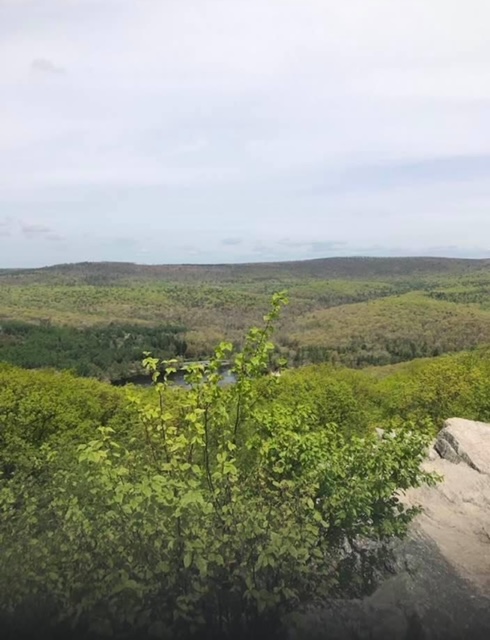
As a child, I occasionally hiked with my Uncle Mike in the Kettle Moraine State Forest in Sheboygan County. Most of these hikes took place in the fall, when the forest canopy was aflame with brilliant red, orange, and yellow leaves. I loved how the saturated green moss contrasted with brown tree bark. I spied birch trees, composing in my mind an imaginary letter on its wispy white bark. I enjoyed the sound of crunching leaves as I trod the paths. It felt otherworldly, taking me away from the chaos of my home. I felt calmer and more hopeful, and for a few hours, I even breathed more freely.
These hikes only lasted for a few years. My uncle got married and started a family, and I was too fraught with anxiety over my abuse to continue hiking. After I got married and had children, I wanted them to have a more well-rounded childhood than I had. We spent time at nature preserves, hiked occasionally in the same places I hiked as a child, and camped. I believed these activities were for my children’s benefit and I didn’t take the time to explore how these activities could be helpful for me as well. Instead, I was just checking the boxes of being a good parent.
But as pounds melted away, I awakened from the calorie-induced coma that I had been in. The air was fresher, birds’ songs were clearer, and the sun was brighter. I longed to be outdoors, exploring places I had never been. I felt God calling me into His beautiful creation to heal the places where food had always been a cheap salve for my pain. John Muir, renowned environmentalist, says it best: “Everybody needs beauty as well as bread, places to play in and pray in, where nature may heal and give strength to body and soul.”
With the increase of depression and anxiety, mental health professionals are encouraging people to spend more time outdoors. Studies have shown that time spent in nature has improved people’s focus, lowered stress, and has reduced the risk of developing a psychiatric disorder. It has also been shown to reduce frustration and increase empathy for others. For a long time, most of these studies were focused on green spaces, time spent strolling in the parks or hiking in the forests. But now, researchers are finding evidence of these same benefits with blue spaces: being able to access views of rivers, lakes, or oceans.
But spending time in nature has a cost. We are entering into lands for our enjoyment, but these are also places where wildlife and vegetation are free to thrive and grow. When we are hiking, kayaking, or fishing, we should be mindful of the impact we are making in that place. And the best way to do that is a catch phrase used across the nation: Leave No Trace.
I have understood the basic tenets of this phrase for years. If I eat a granola bar on my hike, I need to throw away the wrapper at home instead of leaving it amongst the leaves. I know I shouldn’t feed the wildlife, and I should leave flowers and plants alone, so that others can enjoy them on their own hikes. But in listening to a recent podcast on PA state parks and nature, Hemlocks to Hellbenders, I learned ways I was still leaving a trace. The host, Christian Alexandersen, interviewed Ben Lawhon who served as the Director for Education and Research for the Leave No Trace organization for twenty years. Lawhon shared some ways of which I was ignorant about the negative impact I was making when hiking. My apple core or banana peel may be biodegradable, but apples don’t typically grow in forests and bananas don’t even grow in this hemisphere. My waste can introduce wildlife to types of food that are not part of their normal diet. Also, if I avoid the mud puddle on the trail by walking off the path, I may be causing more of the forest to erode, leaving less places for vegetation to thrive. Also, when I camped, dumping my gray water (dish water) on the ground was exposing the earth to chemicals.
It’s easy to say that one banana peel is not a big deal. But during a hiking season, if 100 visitors each throw a banana peel in one park, this could have a major impact on the diet of bears and other wildlife. Walking around one mud puddle may seem insignificant, but if just half of the people walk around that mud puddle, the off-trail vegetation is going to be trampled and destroyed. And finally, dumping one bucket of gray water doesn’t seem like it will have a major impact, but if just half the campers dump their gray water over the course of a summer, the soil will become contaminated.
Earth Day was on Monday. For years, many right-leaning talk show hosts have blasted the environmental policies of the left. Many Christians, because of their political leanings, have sided with their arguments, including myself. In researching for this series of blogs, I have found that many of these so-called arguments were based on faulty science and fake news. As Christians, we can and should do better. If we believe that God made the earth good, we must believe that He knew the benefits nature would provide for our mental health, and emotional and cognitive processing. He chose to create a world of diversity, filled with forests, wetlands, oceans, mountains, and deserts. And He gave us the responsibility to steward it well. Stewardship means we need to examine the science behind climate change, continue the search for alternative sources of energy, and garner support for the benefits of regenerative farming. Good stewardship will ensure that the earth stays in good working order for generations to come!
We also need to support policies that protect and expand our state and national parks. These places are good for everyone, from my grandchildren who have a natural love for exploring the outdoors, to our senior citizens who find the outdoors beneficial to their health. And more than just supporting good policies, we all need to go outdoors more often. I have a goal to take 60 hikes within 60 miles of my house before I turn 60. But more than just a goal, I want to continue the healing process in my life by spending time in nature, God’s natural form of preventive medicine. And as I spend more time outdoors, I am going to continue working on leaving no trace.
My Uncle Mike introduced me to the outdoors, and it is something I have never forgotten. And, although his life was cut short by COVID-19, I see his impact living on in the next generation. All three of his sons explore the outdoors with their children through camping, hiking, and other outdoor activities. I, too, can carry on his legacy by taking my grandchildren on hikes. The more time we spend outside, the more we will learn to care about our earth’s future.
 By Sherry Collins
Leave a comment