Page 12 of 28

Silver Valentine

“Love bears all things, believes all things, hopes all things, endures all things.” 1 Corinthians 13:7

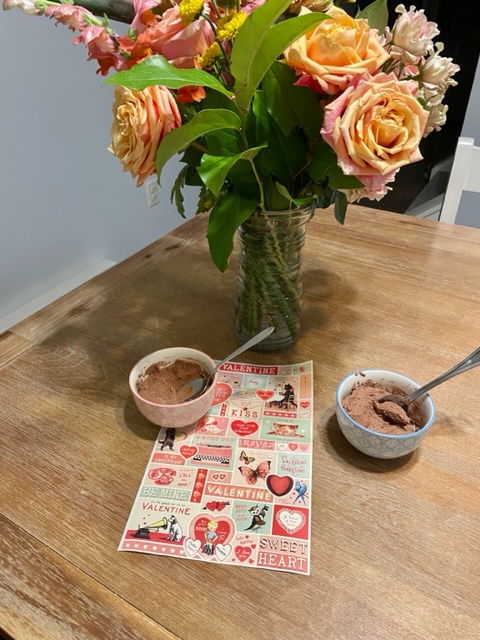
Last Tuesday was Valentine’s Day! Terry and I had a quiet evening at home with Frank Sinatra, and Michael Bublé serenading us in the background. I seared a ribeye steak, made twice-baked potatoes and salad with fennel and blood oranges. We finished putting together a Valentine-themed puzzle while savoring chocolate mousse. Flowers from my favorite florist and an exchange of cards helped make the evening perfect for our first Valentine’s Day as empty nesters.

Valentine’s Day is a controversial holiday, about which I hear more Scrooge-like comments than for playing Christmas music before Thanksgiving. “Why do we need a holiday to celebrate our love”, “I’d rather receive flowers on a different day than on a made-up holiday”, or “Valentine’s Day has become too commercialized” are some the comments I have heard. Even my husband believed the same way for many years. We had two very different ideas of how to celebrate this holiday, and it left both of us feeling frustrated, unseen, and not loved.

It is curious that none of these same ideas are expressed about other holidays. On Mother’s Day, I never hear anyone say, “Why should I honor my mom today? We should celebrate her every day.” I don’t hear on Veteran’s Day, “Why should a veteran get a special discount today? Shouldn’t he/she get a discount every day?” We can all agree that mothers, fathers, and veterans should be honored regularly, but there is something special about setting aside a particular day to honor someone important. But Valentine’s Day feels different for many people, resulting in polarizing responses.

I agree that “unexpected flowers on an ordinary day” has its own special delight. I also agree that in a committed marriage it is important to celebrate your love more than one day a year. But after being married for almost 27 years, I know it’s easy to get busy in the day-to-day of life and forget the unexpected flowers, the special meals, or making sure you are setting the mood with romantic music. Soon, days creep by, weeks move on, and years pass without intentionally celebrating your marriage.

Celebrating events takes up significant real estate in the Bible, indicating it is important to God. He told Moses to set aside time to honor, remember, and express thankfulness for His faithfulness, deliverance, and abundant blessings. Regardless of what the Hebrews were experiencing, they celebrated together in community. Sometimes these celebrations occurred in times of peace and abundant harvest. But these same celebrations also happened in times of war, famine, and captivity. The point was to set aside time to remember the goodness of the past, to acknowledge the situation they were in now, and to look to the future. God also used these calendar events to mark life-changing experiences that were not coincidental. Jesus’ defining moment: his death and resurrection, happened during the celebration of Passover. And the outpouring of his spirit on believers also happened during the Feast of Weeks, a time to be thankful after the grain harvest.

I recently heard about “silver or gray divorces.” These are divorces that happen after twenty or more years of marriage. What I find shocking is that in the past twenty years, the divorce rate in the United States has declined, except for the over-fifty demographic where it has doubled. In 2021, 34.9% of all Americans who got divorced in the previous year were 55 or older. That is more than twice the rate of any other group surveyed! One therapist shared potential reasons why divorce happens with older couples, including retirement adjustments, active vs. passive lifestyles, and past hurts. But the number one reason for the divorce is that the couple grew apart. They grew apart, living in the same house, eating regular meals together, and sharing the same bed. After years of being married, creating a life with each other, raising children, and eating countless meals together, these husbands and wives felt they no longer knew each other, and went their separate ways.

I understand how that happens. Five years ago, Terry and I hit a point in our marriage where, if we hadn’t been committed to our vows before God, it would have been easy to go our separate ways. We were living together as roommates with the task of launching our adult children, but not connecting on a personal level. We were busy doing life side by side but not together. And as days went by, we forgot to remember our past, acknowledge our present situation, and look to our future. Not only was Valentine’s Day not being celebrated, but I wasn’t getting unexpected flowers and Terry wasn’t getting a special steak prepared for him.

Sadly, it took a major crisis to alert us to how far off the “together” path we had strayed. Since then, we have engaged in some hard work, in a lot of ways, some internal therapy together. In retrospect, we should have done marriage therapy, and highly encourage it for others. It is still on the table for us, and it’s a shame that insurance companies don’t prioritize mental health as much as physical health. I often wonder how much of our aches and pains are the result of the mental health loads we carry. But that’s rabbit hole for a different post. Our major crisis changed our lives for the better by drawing us back to God and each other, and we didn’t join the growing statistics of “silver divorces.”

I want to set the record straight; I am in no way judging another person’s marital status. There are difficult, unsafe marriages, marked with abuse and infidelity, where separating or divorcing is the right thing to do. We also have a no-fault divorce society that most people would say has made divorce easier legally, but the process is still painful. I also know that God can redeem lives on the other side of divorce.

Looking back, I can see little steps that we both made that caused us to drift apart. Four years prior, we were intentional with our family, but forgot to be intentional as a couple. We dealt with some major hurts from the past that affected our relationship in ways we didn’t fully understand. We both faced pressures and believed that our own individual struggles were more valid than our spouse’s. And with our lack of intentionality, hurts, and selfishness, it was easy to stop celebrating holidays and anniversaries.

I wonder what would have happened if we had set aside our own feelings, and celebrated Valentine’s Day anyway. Maybe it would have been us just going through the motions and the result would have been the same. But just maybe, we would have remembered what brought us together in the first place, allowed ourselves the space to acknowledge the hard we were feeling, and taken the opportunity to dream for the future.

Last year was busy for our family. We had major family celebrations: wedding showers, a baby sprinkle, the wedding, birthdays, and the arrival of a new granddaughter. And we were also still unpacking some hard issues and didn’t prioritize time set aside just for us. Even though we are on the other side of the crisis, when looking at the list of why silver divorces happen, it is easy to see how these marriage pitfalls can still affect a marriage, even after they have been identified.

Terry and I have very different activity levels. I love to go places, experience cities, explore museums, and try new restaurants. After a long week of looking at spreadsheets, Terry enjoys relaxing at home with a cup of coffee and a good book. Our activity levels have always been different but have become more pronounced without children filling in the spaces. We both needed to acknowledge that each other’s level of activity is a valid lifestyle, and not put a judgmental spin on our differences. We also need to create a win-win situation, where both of our needs are being met. These conversations require honesty, space to self-reflect, and some sacrifice on both parts.

We came to the place where we agree to be intentional in both spaces. We split our time between going to new places and spending time together at home. But this takes effort carving out time for each other by marking dates on the calendar. God gave the Hebrews a calendar because He knew they would forget. We are mindful to plan dates for the symphony, put a puzzle together, or just go out for a good cup of coffee.

And we choose to celebrate Valentine’s Day as a day set aside for celebrating our committed love. It is no longer a day when Terry feels frustrated, and I feel disappointed. It is the day where we come together, choosing how we are going to celebrate it. Yes, there are flowers, food, and music. And yes, they are all important to us. But what is most important is us remembering our past, acknowledging today, and looking towards the future!

Boots and Hope

“Hope deferred makes the heart sick, but a desire fulfilled is the tree of life.” Proverbs 13:12

At my son’s home in Rhode Island, the bitter wind whipped against the house, howling as it blew. The weather apps warned readers to stay inside, that even for a few minutes, any exposed skin would be in danger of frost bite. This Wisconsin-bred woman had forgotten what below freezing feels like. Wearing a thick sweater, heavy wool socks, and wrapped in a blanket, I still couldn’t get rid of the chill that permeated deep into my bones. Even the sturdy house had a hard time staying warm, with the temperature turned up in hopes of keeping everyone comfortable. I couldn’t conjure up feelings of Hygge until I got the idea of baking ginger molasses cookies. The spicy smell of ginger warmed up the house as I held my granddaughter, swaddled in her cozy blankets. Coffee, cookies, and grandchildren helped me embrace Percy Bysshe Shelley’s hopeful line of poetry, “O, wind, if winter comes, can spring be far behind?”

Hygge, which I have explored in a previous post, helps me get through the long, cold days of winter. It’s easy to embrace Hygge when one has plush throws, wool socks, steaming cups of coffee, and candlelight glow. But for thousands of people in our country, being warm is a distant dream as they huddle in entryways, sleep on park benches, or create makeshift tents below overpasses. For myriad reasons, these people have no place to call their own. They don’t have the option to buy a house, rent an apartment, or even stay in a hotel for a night when bitter winds and low temperatures are causing those of us with homes to struggle to stay warm.

When I was college, I did a week-long volunteer trip to the largest homeless shelter in Washington, DC. I worked in the shelter, met some residents, and passed out blankets on the cold March evenings throughout the city. Some of the homeless were veterans who never got the proper mental health care to deal with the stress of war. Some were addicts who never broke through the addiction cycle to get to the other side. Others were people who had degrees, but suffered with mental illnesses, unable to find adequate services to stabilize their health. I spent time talking with individuals, listening to their stories, and hearing of their hope constantly deferred. I don’t believe any of them ever envisioned themselves living on the streets, isolated from their families and friends. A lot of them were conscious of the hard cold fact that they could die without anyone knowing who they were.

I came home from that week inspired but not changed. Like most experiences, I moved on, and started building my own life. I was busy furnishing my own home, creating a space that was warm and cozy. I lived in relatively small communities where it was easy to avoid paying attention to homeless people. Yes, occasionally I would see them in the libraries I visited. Yes, I would see individuals and families outside of my local Target with signs asking for help. Since I didn’t have cash, I justified ignoring them. And over the course of time, I put aside, and soon forgot, the heart wrenching stories of the people I met in Washington, DC. I hardened my heart, made unfounded assumptions, and developed judgmental narratives about the people I was seeing in my own community.

In making this post, I don’t want to make myself out to be some sort of hero. I am ashamed of my lack of community involvement. I have always been an active contributor in my church community, but I have limited my involvement to activities that felt safe and comfortable. I can no longer sit on the sidelines of my community and allow others to suffer, no matter what their story is, without finding some way to help. If I am really a Christian, changed by the life and example of Jesus, I must choose to involve myself with those suffering around me. And even though I have sat on the sidelines for years, Jesus, in his infinite kindness, has gently nudged me outside of my comfort zone to actively serve my community.

This year, I am partnering with Community Cares, a local agency that helps our homeless population in Cumberland County. They are sponsoring a national event called “Coldest Night of the Year” and it takes place on February 25. It will be a two-mile walk in the evening with others in the community in the hopes of raising funds and awareness for the homeless. I am hoping to raise $100+ for my walk. If you are interested in helping, this link will lead you to a secure site to donate. Every donation counts and even just the price of a cup of coffee will help me reach my goal.

Recently, I read the account of Job in The Message Bible. Job had lost his children, his crops, and all his animals. In essence, he had lost everything and was, in many ways, similar to a homeless person. In his moments of greatest despair, his friends tried to fathom what he had done to deserve the supposed wrath of God. They also give him advice on how to get out of this situation. In Chapter 7, Job responds to his friends by saying, “Do you think I can pull myself up by my bootstraps? Why, I don’t even have any boots.” I no longer want to be one of Job’s friends. Instead, I want to help give boots to those who need them.

Bacon and Eggs

“Commit your work to the Lord, and your plans will be established.” Proverbs 16:3

Four years ago, I set a goal to run the Newport, Rhode Island ½ marathon by the time I turned 50. On one of our many visits there, my husband supported my dream by driving the marathon route. The route starts at Easton Beach, running up a steep incline into the quaint downtown area of Newport. It zigzags past the beautiful mansions, homes of Boston’s ultra-elite during the turn of the century. The race finishes to the soundtrack of crashing waves on Ocean Drive with majestic views of the ocean. As we drove, I envisioned running this 13.1 miles with my family cheering me on at the finish line.

I went home and downloaded an app for running whose subtitle was moving from a couch potato to a 5k run in three months. Every day, I started the app, ran for 30 seconds, then walked for three minutes. As I progressed, the length of running eventually increased and the walking decreased. After three months, I reached a point where I got stuck. After five minutes of running, my thighs burned like molten metal solidifying with the impact of every step. Thinking this was a mental block, I continued trying to push past with no success. I then thought maybe it was my form and read books and blogs about running to figure out my problem, still finding no solution. I thought maybe it was a weight issue and focused on dropping twenty more pounds. After the twenty pounds were gone, I still had the same burning sensation moving through my thighs at the five-minute mark. I even thought of hiring a running coach to see if I could get some help. I was frustrated! I saw pictures of women of different sizes running half marathons and even completing full marathon. I wasn’t endeavoring to break any records, just to complete a half marathon at some point in my life. But I just couldn’t get past the place where my thighs seemed to plant themselves in the asphalt, stopping me from achieving my goal.

With the help of my family and friends, I eventually concluded that this dream wasn’t going to happen. It wasn’t for lack of commitment: I had brought the right shoes, did a lot of research, and even signed up for a 5k. It wasn’t for lack of motivation: I worked hard to reach this milestone. It was simply because my own body, with Rheumatoid Arthritis wreaking havoc, wasn’t in the physical condition to support the rigors of running. At this point, I faced two choices: I could hang up my dreams for accomplishing some major physical milestone, or I could find a new mountain to climb.

I looked for something else to accomplish, some physically rigorous activity that would be challenging but still achievable. This was about redefining who I am in terms of physical activity. For years, I was defined by being the last chosen for teams in gym class, unable to swing on uneven parallel bars, and sitting on benches while the rest of my family went site-seeing. I felt a weight of shame that added to what was already deemed my too-large body. I want to be physically active so that I can keep up with my grandchildren and explore the world around me. I want to have energy, flexibility, and strength to be the best woman I can be, despite limits placed on my body by a disease I can’t control. And I don’t want to be defined by shame anymore. This idea of setting a goal encapsulates what I wanted and what I was leaving behind.

Six months ago, I discovered a book, 60 Hikes Within 60 Miles (Harrisburg) by Matt Willen. It’s part of a series of books that can be found for locations all over the country. As I read the book, I learned about parks, nature centers, and trails near my home. I remembered how much hiking has become part of my new definition. It’s an activity I enjoy doing, both alone and with others. I love connecting with nature in all seasons, observing small things that delight me, and feeling strong and capable as I explore the forests, meadows, and creeks. I knew instantly that my new goal was to accomplish all 60 hikes withing 60 miles by the time I am 60. It’s an achievable goal, hiking 6-7 of these trails per year for the next nine years. It involves me being mindful of my body and building up the strength to accomplish some of the more strenuous trails. It’s also not a destination goal, instead focusing on the journey to achieving the goal.

This journey through the sixty hikes is something I have been pondering for the last few months when the cold has made hiking a challenge. How do I mark this for myself? How do I keep myself motivated when it would be easier to sit on the couch in any given month? How do I keep going when the goal seems insurmountable? Creating a journal seemed the answer to these questions. Words, sketches, and photographs can be a visual reminder of where I have been and where I am going. The words might be lines of poetry, quotes, or scriptures that speak to me during and after the hike. The sketches might be leaves, flowers, or moss that I encounter. And the photos might be views I see from the top of a mountain. This journal is a record of my thoughts, feelings, and experiences as I explore the world around me. It is for me to look back on and see how I grow and change throughout the next nine years.

We recently stopped at a restaurant with a popular saying on its wall, “The best way to describe the difference between involvement and commitment is bacon and eggs. The chicken is involved but the pig is committed. Which one are you?” All too often, the only way an outcome is deemed successful is to be as committed as the pig, to literally sacrifice your life in achieving this goal. Some would argue this is the only way to become great, like a concert pianist, Olympic medal winner, or master artist. All of these feats are to be admired for their discipline and commitment. But I would argue with the statement that the chicken is not committed. She recognizes she is not bacon, and instead, dutifully goes about her day, laying great eggs that complete the meal. We can all agree that bacon is great! But, unlike bacon, these eggs have the opportunity to come in different forms: poached, boiled, scrambled or fried, adding diversity to an otherwise straightforward breakfast. She is just as committed; it just looks different than being the best at only one thing!

I believe in goal setting; it helps me focus and work toward something. I love the geeky psychology behind habits and discipline that James Clear outlines in Atomic Habits. I even like setting deadlines for myself, even if I procrastinate. My approach to goal setting doesn’t work for everyone, especially when I set what seem like impossible goals. I am not a perfectionist, so when I set a goal for walking every day in a year, the fact that I missed seven days already doesn’t devastate me. Instead, it motivates me to continue walking on days when it seems hard, showing grace to myself on days when its below zero or my RA is acting up.

I choose not to view the death of my dream of running a half marathon as a failure. Instead, it helped me define my own limitations and clarify what I am truly capable of accomplishing. I may not get a medal after my last hike, but I will have nine years of experiences to look back on through a journal that chronicles my journey. And if I don’t accomplish this task due to some unforeseen reasons, I will pivot and set a new goal.

Friday, the weather looks decent in my area of the world. I plan on putting on my hiking shoes and finding a new trail to explore. And if Friday doesn’t work out, I’ll try again another day.

Satisfied and Moving

“Satisfy us in the morning with your steadfast love, that we may rejoice and be glad all our days.” Psalm 90:14

It has been about four and a half years since I began my journey to better health. I have been transparent about this journey, sharing details about pounds I have lost, setbacks I have endured, and lessons I have learned. In “Let Them Eat Pie”, I shared my new journey into intuitive eating by focusing on strength, fitness, activity, and health. Today, I am going to share what part of a day of intuitive eating looks like for me.

This morning, I woke up a little later, giving my body the rest that it desperately needed. I have been having some problems sleeping, chalking it up to menopausal insomnia. When I have a rough night, I set my alarm a little later, showing my body some grace.

Knowing my day was going to be full, I wanted to get my morning off to a good start with something warm and cozy. I fixed some oatmeal, dotting it with maple syrup and Craisins. I no longer measure the Craisins, but sprinkle them generously into my oatmeal, letting the pops of color brighten the warm bowl.

After breakfast, I decided to take my daily walk. This year, I am shooting to walk every day. I already missed three days in January due to rheumatoid arthritis flares. But this is a minor setback, and I wake each day with the intention of walking, even if it’s only ten minutes. I struggled getting dressed, thinking about the day’s long to-do list. I reminded myself, this short walk would revive me and boost my energy. Once I stepped outside, the struggle ended, when I breathed deeply and exhaled slowly. The fresh air, bird songs, and scampering squirrels both invigorated and grounded me. Instantly, my day was more manageable. I walked briskly enjoying the pace, helping my arthritic body acclimate to movement, slowly loosening my morning stiffness.

After my walk, I went to work, prepping a pot of soup for a friend and working on a talk I am doing at a ladies meeting in Rhode Island. I was a bit hungry and decided to eat a few nuts and blueberries. Again, I poured the nuts into my bowl, eyeing what seemed like a satisfying amount, without measuring or weighing. I nibbled as I worked, feeling like everything was running smoothly, checking off my daily tasks.

Soon, it was lunch time, and I decided to use the overripe bananas in a smoothie, along with some peanut butter toast. After making my smoothie, I stopped what I was doing and sat down, listening to a book while I was eating. I soon felt full, with one third of my smoothie and a quarter of my toast uneaten. This sense of “full” is new to me, and I am becoming more aware of it when I create an environment where I am enjoying myself. If I make it a working lunch, I often find myself overeating. But when I stop to eat and focus on the conversation or book or podcast I am listening to, I find myself better able to pay closer attention to my body. The old Sherry would have either finished the food or immediately went to her food diary to erase points or calories. Today, I didn’t think anything of it. I was full, so I moved on.

The last thing I want to share is my decision on a Kit Kat bar. This had been my go-to candy bar for years prior to my weight loss journey. Previously, as I lost weight, I had judged the candy as not calorie-worthy, instead preferring dark chocolate. With intuitive eating, I am no longer taking any food off the table. Instead, I am choosing to make food decisions based on taste and satisfaction, rather than on guilt, macronutrients, or what gives me the biggest “fill” for my calories. I unwrapped the candy and took a bit of one of the four long pieces. The chocolate-coated crispy bar tasted overly sweet and no longer appealed to me. I rewrapped the rest and decided to share it with others.

Evaluating satisfaction, hunger, and food in terms of taste is a new concept for me. For years, my food choices were determined by food pyramid category, nutritional value, or calorie content. Intuitive eating is learning to eat differently, really paying attention to what my body needs and wants. Even moving every day should not be measured by how many calories I am burning or how many steps I am taking. I still struggle with this one, still looking to my phone to see if I am taking enough steps. But every day I move, I am becoming more in tune with how my body feels afterwards, along with my fluidity and energy level.

Diet culture has such a stronghold on my life, it might take years to root out some of these behaviors. I still look in my mirror and say I feel fat, when I know fat is not a feeling. When I express disparaging comments about my appearance, I stop and try to assess what I am feeling. Sometimes, I don’t feel like I measure up, or I feel defeated, or I feel uncomfortable. I am working on pausing and bringing those feelings to God and reminding myself who I am in Him. Then I remind myself my goal is not a size or a number, but to be strong, active, energetic, flexible, and capable!

Two women in my circle have recently lost a significant amount of weight. I found myself still complimenting them on their weight loss. In my reading on intuitive eating, I am learning these compliments are adding to the stigmas of body image that diet culture creates. Later, I went back to both women individually and asked how they were feeling. “Do you feel stronger? Do you have more energy?” It opened a dialogue with both sharing the changes they feel in their bodies. It is not my intention to police everyone about the importance of intuitive eating, but I can be a part of changing the focus of the conversation.

I am a work in progress. I wanted to share in real time the struggles I am having. I haven’t yet departed from my trusty scale, but I am using it less. I want to get to a place where I am comfortable with my body, not always looking at it in the mirror wishing it was different. I want to be the confident woman that God created!

Snowflakes

“To all who mourn in Israel, he will give a crown of beauty for ashes, a joyous blessing instead of mourning, festive praise instead of despair.” Isaiah 61:3

“I smell snow”, I said, channeling my inner Lorelai Gilmore, as I await tomorrow’s possible storm. Snow always evokes a sense of wonder for me. It coats the dead brown grass with a white blanket that sparkles with the sun’s reflections. It outlines the tree branches, more starkly defining their shapes. It muffles all the noise, creating serenity with a bit of magic. Lewis Carroll asks, ‘“I wonder if the snow loves the trees and fields, that it kisses them so gently? And then it covers them up so snug, you know, with a white quilt, and perhaps it says, “Go to sleep, darlings, till the summer comes again.”’ Like Carroll’s description, snow conjures a sleepiness with the hope of summer flitting through my dreams.

A few days ago, two little girls and I made paper snowflakes. As we folded the paper, cut out the intricate patterns, and decorated them, I shared with them that God made every snowflake unique. I later read to them the Caldecott Medal Award picture book, “Snowflake Bentley” by Jacqueline Briggs Martin. The book tells the story of Wilson Bentley, a young Vermont farm boy who loved snow. He later grew up wanting to document individual snowflakes through photography. After many failed attempts, he is credited with the first photographs of individual snowflakes. He also discovered, over the course of years, that no two snowflakes were alike, despite most having six branches. He believed that wind, temperature and humidity all shaped the design of each individual snowflake. He spent his whole life trying to document snow because he “found that snowflakes were masterpieces of design. No design was ever repeated. When a snowflake is melted…just that much beauty was gone without leaving any record behind.”

Wilson Bentley’s beautiful photographs of snow didn’t happen by luck. He studied his craft, learning to use a knife to cut away all the dark parts of the negative. He also recognized that his own breath could destroy the perfect snowflake he was trying to document. He was devoted to his art, telling friends he couldn’t miss a storm because “he never knew what treasures he would miss.” He also didn’t count the cost, spending almost $15,000 on his craft, while only earning about $4,000 from the sales of his book and slides. Yet, his work has endured, influencing future photographers and naturalists.

Bentley chose storms over comfort. His life ended after walking six miles in a blizzard to capture more snowflakes and later developing pneumonia. Storms were not his enemy, but rather opportunities to see something beautiful and unique. Considering how Wilson Bentley lived his life, I doubt he would have regretted that final walk.

All too often, I fail to live my life like that. Yes, a cataclysmic storm of abuse and trauma raged through my childhood. But after becoming a Christian, I believed I would face only minor storms. I planned and had contingencies protecting me and my loved ones from any major storms. I falsely concluded that if I did A and B, then C would automatically result. Yet, as carefully as I planned and as rigidly as I controlled, major storms have happened. My only options were to let the storms destroy me, or let God, through the storms, create something unique and beautiful. Ultimately, the type of change they made in me was my choice.

Isaiah prophesies about the Messiah in chapter 61, foretelling that Jesus would heal those who are oppressed. He then tells what Jesus would do with that oppression, exchanging beauty for ashes, joyous blessing for mourning, and festive praise for despair. He also talks about rebuilding, reviving, and possessing “a double portion of prosperity in your land and everlasting joy”. The chapter is full of the good news of Jesus despite storms and oppression.

Mary, a friend of mine, was diagnosed with breast cancer last October. By all accounts, she would be the first to testify that she had the best-case scenario for a positive outcome. Yet, this storm has caused her discomfort, pain, and unbelievable fatigue when going through radiation. She is in her final days of radiation, but still faces a few hard weeks of side effects along with a new medicine with its own potential side effects. Despite all the pain, Mary shows up for church and life group with a smile on her face. She and her husband, Dave, worship God with “festive praise”, trusting in God’s goodness. Neither of them would ever have chosen this journey, yet, they believe it has increased their faith and trust. The design of this intricate snowflake they are allowing God to create in the midst of this storm is a testimony to their daughters, grandchildren, and friends. They can truly tell others about the goodness of God!

But in the case of my mother-in-law, Eva Jane, who was also diagnosed with breast cancer six years ago, her outcome was not a best-case scenario. After a double mastectomy and radiation, my mother-in-law died under hospice care five years ago this February. I vividly remember my last phone call with her. I was about to let her go, thinking she was too weak to carry on, but she asked me to stay on the line. Whispering, she asked me to talk about God. I shared with her the impact her prayers had on my life and on my children. I thanked her for raising her son, my husband, to be a kind and generous man of God. I reminded her about how she had remained strong in all of this, believing in God’s faithfulness. I told her that this wasn’t goodbye but see you later. In her rasping voice, she started repeating her signature phrase that every family member can remember her speak in her distinctive tone, “Thank you, Jesus.” She, too, was a beautiful snowflake created during her storm through this simple phrase. It is reflected in those of us who loved her by leaving us with a joyous blessing instead of mourning.

I am hoping for snow tomorrow. I look forward to going outside, walking in the crunchy snow, catching a flake or two on my tongue. As I shovel our driveway, I am going to thank God for his goodness, his ability to create beauty in storms. And I am also going to thank God for both Mary and Eva Jane, and so many more, who allowed God to create beauty in their storms.

Logs vs Slivers

“And be kind to one another, tenderhearted, forgiving one another, even as God in Christ forgave you.” Ephesians 4:32

I introduced Moses and the burning bush to my Sunday School students when I noticed a few of the boys looking at my feet. I looked down and instantly realized what they were staring at: the knobby bunions protruding out between my sandal straps. One boy, without any guile, blurted out, “Do you have tumors on your feet?” I decided to set the record straight that I had an autoimmune disorder that affected my joints, including my feet, resulting in bunions, hammertoes, and nodules. I spoke without shaming the boys, knowing that this was an honest question and, as one boy stated in the past, “Wow, I thought your feet were uglier than my mom’s.” Children are naturally curious and draw conclusions without understanding possible underlying medical conditions or social protocols. I wanted to be honest and talked for a few minutes and then moved on in the lesson. Soon the students’ attention was back on the burning bush, not on my deformed feet.

I am conscious of my feet and their deformities. Often, after wearing shoes all day, the bunions can be painful and swollen. I have difficulty finding shoes that are comfortable yet stylish. Surgery is an option, but even that has its potential pitfalls. But despite all these challenges, I am thankful that my feet are still able to get me from where I need to go.

It’s easy to be conscious of something obvious like the two-inch bunions on my feet, but harder to be aware of some of my internal shortcomings like selfishness, a judgmental attitude, and labeling of others. Like the boys in my Sunday school class, it’s easier to point out what I see as a fault or character flaw in others, than it is to look at myself and see my own faults and flaws.

Several times in the last few months, God has quietly addressed some of my personal shortcomings while I have been venting to my husband or friends about some frustrations. Every time I spewed unkind or judgmental words from my mouth, God, in his kindness, gave me some epiphanies about myself. While complaining about someone’s lack of generosity with their time, He reminded me that, although I am generous with my time, I can be selfish with my limited finances. While expressing judgement of an expensive purchase someone made, despite their complaints about their limited budget, God reminded me of foolish purchases I have made. And when someone misread my expression as frustrated, I was reminded of the times I have mislabeled my husband as angry or moody. In all these situations, God, in his kindness, has led me to repentance.

God calls us to sacrifice even out of our limitations, to pray for others and show grace, and finally, to show curiosity instead of labeling someone. All these actions require us to be honest about areas where we find it hard to give, pause before talking, pray sincerely for others, and take the time to really listen to others. Yet, instead of those things, my judgmental attitude erupts quickly, just like the young man who blurted out about the “tumors” on my feet. But instead of acting out of a place of innocence, these attitudes flow from years of me thinking that I am right. I easily draw conclusion about others, without internally evaluating myself.

The Bible addresses this failure with a harsh but true word: hypocrite. Even the sound of the word is harsh and staccato to my ears. As a teenager, I recognized the demeaning nature of that word when I hurled the insult at my stepfather, calling him a hypocrite because he was against drugs but had an obvious alcohol problem. Jesus, the only one who can legitimately use this word, uses it to address those of us who point out the “tiny speck” in a friend’s eye when we have a beam in our own eye. My husband envisions a person walking around with a log sticking out of their eye, banging into everyone around them while pointing out a sliver in someone’s pinky.

It may be funny, but this comedic image reflects the sad state of my heart. I discussed this rigid judgmental attitude in last week’s post, “Views” but it prevails across all areas of my life, not just my views on social justice issues, but also how I treat, or think about, others. Empathy is a trait I have consciously cultivated over the years. But in moments of frustration, or when I feel misrepresented, my judgmental heart comes out swinging and I “vent”!

Venting itself is not wrong. It’s important to have a good ventilation system in your home.  It keeps the air fresh and healthy indoors. Good ventilation helps remove unwanted moisture, odors, gases, dust, and other pollutants. And, on a personal level, we need to be able to talk about frustrations and problems we are experiencing. But I need to do so in way that is not tearing down someone else. This is hard and I am not always good at it.

What I am learning is that empathy is easy to apply when the situation doesn’t personally involve you, but less easy when it affects you. Those are the moments when I need to pause. I can address frustrations using “I” statements. I need to examine why I feel frustrated and get to the heart of the issue. In each of the above situations, I had what I deemed were legitimate frustrations, but in examining the reasons for the frustrations, I discovered some hard facts. In one situation, I had pride in the time I offered towards others. In another, I was frustrated that God hadn’t answered a prayer. I also discovered I had no problem labeling others, but I didn’t like having my expressions or actions being misinterpreted. In each of these situations, I discovered my own flawed humanity, placing me humbly at the feet of Jesus. This position of humility can only increase my empathy and keep my personal ventilation system healthy.

The last two books I read have shed light on the beam in my own eye. Sue Klebold’s “A Mother’s Reckoning: Living in the Aftermath of Tragedy” helped me see the other side of the Columbine Massacre. The mother of one of the shooters shares candidly the responsibility she feels and holds her son to with the unfailing love of a mother. It helped me see that good parents can raise children who do horrible things.

Bryan Stevenson’s “Just Mercy: A Story of Justice and Redemption” is changing my view on those in prison and how they are treated. One story that stood out is that of a victim, Debbie Baigre. She suffered a gunshot wound to the jaw, resulting in losing some teeth along with painful damage. Her shooter, Ian Manuel, thirteen years old when he committed the crime, was tried as an adult and sentenced to life imprisonment without parole. He spent the next eighteen years in uninterrupted solitary confinement. After calling Baigre to apologize for his crime, the two developed a relationship that resulted in her advocating for leniency and voicing that the conditions of his incarceration were inhumane.

When reading about these situations, I can see how I have misjudged and mistreated my friends in minor frustrations. Can I learn to be as vulnerable as Sue Klebold is in her book when facing harsh scrutiny? Can I show as much as grace as Debbie Baigre when I have been wounded? How do I choose not to be a hypocrite? The apostle Paul answers this question in his letter to the Ephesians by saying, “Let all bitterness, wrath, anger, clamor, and evil speaking be put away from you with all malice.” This is what my unhealthy venting sounds like. He continues with, “Be ye kind to one another, tenderhearted, forgiving one another, even as God in Christ forgave you.” When I remember how my God graciously forgave me, how can I, in good conscience, help but treat others with more grace? The answer: I can’t!

Views

“Trust in the Lord with all your heart, and lean not on your own understanding;” Proverbs 3:5

It was dark as we headed to Rosendale, Wisconsin. Shadowy voids of farmland passed by, with the occasional flickering farmhouse lights to break up the lack of scenery. I stared out the window, with nothing to occupy my thoughts. Suddenly, we crested a mountain-like hill, and I stared straight ahead with wonder. Below me, the city of Fond Du Lac blazed with lights, appearing larger than reality. It was an amazing sight for a young girl growing up in rural Wisconsin. Not to disparage my friends who live in Fond Du Lac, but I no longer see this hill as one of the wonders of the world as did my nine-year-old self.

So often, our sense of reality is shaped by our experiences. At that point in my life, the farthest I had ever traveled was to Chippewa Falls in northern Wisconsin, and Milwaukee was the biggest city I had experienced. When our experiences are limited, smaller things seem larger. This distortion shapes our worldview and color our opinions. It also helps create divisions between us and others.

For two years, I have been wrestling with how my faith intersects with my political worldview. For years, I drank the Kool-Aid, believing that a certain party aligned more with the actions and words of Jesus. It shaped how I viewed marginalized people, immigrants, and issues like poverty. And as I listened to only one side of the debate, my views became more entrenched. I was convinced and spouted the dogma, without engaging in research.

But when the pandemic shut the world down and social justice issues came to the forefront, my beliefs were challenged. It was at this same time, that I was also reconstructing my faith. I examined my faith through the Bible, paying particular attention to the words and actions of Jesus and his followers. Jesus’ compassion for marginalized people jumped out at me. Time and time again, Jesus chose to spend time with those who society ignored, like the Samaritan woman at the well and the woman caught in adultery exploited by the religious leaders. His closest disciples were men and women who society didn’t hold in high regard: fisherman, prostitutes, and tax collectors. He broke social norms by elevating women through simple interactions. His followers carried on his mission by addressing how we should handle widows, the fatherless, and foreigners.

The more I pay attention to the life of Jesus, the more I desire to be like him. Last fall at a MOPS meeting, the speaker admonished us to pray, “Jesus, let my heart break for what breaks your heart.” Immediately, my mind jumped to Jesus speaking to his disciples about when the King came in judgment. He told the righteous, “when I was hungry, you gave me food, when I was thirsty, you gave me drink, and when I was a stranger, you took Me in.” The righteous were confused and didn’t remember seeing the King under those circumstances. But Jesus replied that when they did this to the least of them, the marginalized, they were seeing Jesus. Conversely, the King asked another group to depart, because they ignored those who needed food, shelter, and clothing for the same reason.

Jesus cares about those around us who are in need. He is not interested in my pontifications on my beliefs and philosophies on social justice issues. He wants me to act with compassion in tangible ways. He finds my excuses empty and stinky and finds my actions more representative of where my heart is. My compassion can’t be based on what I get from it, rather it needs to be done with a spirit of generosity. In 1 John 3:17, the apostle John asks how the love of God can be in someone if he or she doesn’t show pity upon others. In Hebrews 13:16, Paul reminds the church to do good and to share with others.

There are so many issues that break Jesus’ heart: domestic abuse, homelessness, rape, human trafficking, elder abuse, the foster care system, drug addiction, and so much more. It’s overwhelming and I sometimes don’t even know where to start. This month, I am spending some time in prayer, asking God to lead to me somewhere I can volunteer to help others, and then I will take my first step.

Additionally, I will continue to examine my views through a Biblical lens. There are a lot of Christians who are interested in social justice issues, and I need to open my previously closed mind to another perspective. I can do this through reading books and listening to podcasts that explain the other side of current social issues, including diving into the historical context.

So, where do I stand politically? How do I know where God’s truth lies when there are Christians on both sides articulating radically different points of view supported by scripture? Can Christians do good works and still be short sighted on issues of race, poverty, and immigration? How can I make sure I am not being deceived by one side or the other? And once I draw a conclusion or take a stand, what if I am wrong?

I don’t have answers for any of these questions. But I heard a thought attributed to C.S. Lewis that I have been unable to verify. The idea is to hold firmly to the truth we know today, but be humble enough that, when new information presents itself tomorrow, I can shift and be willing to change. I think it’s a good model to live my life.

Five Books, 2 Podcasts and 2 Shows

“An intelligent heart acquires knowledge, and the ear of the wise seeks knowledge.” Proverbs 18:15

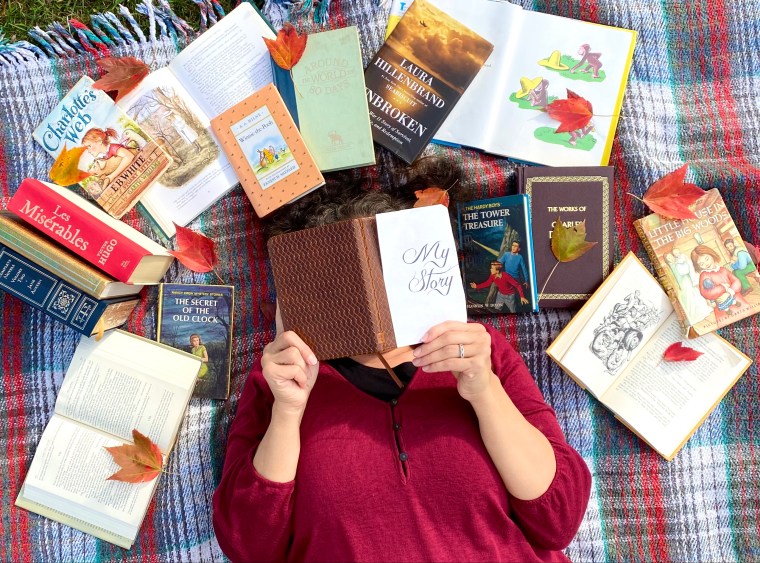
Being old school, I don’t readily embrace fads or new technology. I didn’t get my first cell phone until 2011, I don’t know how to send a GIF, and I only recently started streaming media. This carries over into my reading life as well with a dusty Kindle on my nightstand beneath a stack of actual books. I also kept saying “no” to the idea of audiobooks, inwardly judging that listening wasn’t reading.

In June, I opened my Goodreads app to the notification, “You have read only 13 of the 70 books you set for your goal.” At the same time, my husband informed me that he was about to crest 200 books on his list of books read. He accomplished this partly by listening to audiobooks. Not happy with my reading life, I decided to give audio a try, putting aside my judgmental attitude.

With my earbuds in, I listened to my first book. I soon found myself enchanted with the spoken words, laughing aloud. I finished one book and quickly found another. I still have a stack of books both on my end table and on my nightstand. But I find listening to audiobooks is a way to fill in spaces where I would normally be unable to read, like car rides and house cleaning. I particularly enjoy modern fiction and memoirs as audio books.

I finished the year by surpassing my goal, reading 73 books. I love writing this annual post but had a hard time whittling it down to just five books. Overall, I saw a pattern in my reading. I am still reading cookbooks, exploring cultures through food, along with the addition of chef biographies. I read three books about death, all memoirs, that were sad but lifegiving as well. I discovered Louise Penny and her Inspector Gamache series, and I hope to become a completist this year. I continued my love of poetry by completing two anthologies.

I also noticed what I wasn’t reading. I read a few naturalist books, but not as many as in the past. I read no history or historical biographies. I also didn’t read any classics and my theological reading was light. Don’t get me wrong, I read the books my soul needed this year, but I want to widen my reading for 2023.

So, here is my list…insert drum roll or confetti falling from your ceiling. Remember, these are not in any particular order.

  1. My Grandmother Asked Me to Tell You She’s Sorry by Fredrik Backman. This book has two main characters, seven-year-old Elsa, and her eccentric grandmother. Both are quirky, along with the rest of the cast. The story had me laughing and crying throughout, sometimes simultaneously. The pieces don’t come together till the end, but I end up believing Grandma’s motto “Only different people change the world.” I loved Backman’s A Man Called Ove and intend to read the rest of his works. Note to sensitive readers, it does have some language.
  2. Know My Name by Chanel Miller. If I could require one book for every high school student to read before graduation, I would put this at the top of my list. This book chronicles the harrowing rape and aftermath of Chanel Miller by a Stanford athlete. This case hit national news when it went to trial and Chanel faced public harassment because she was intoxicated. It addresses the injustices of our criminal justice system and how rape victims are also put on trial based on their potential level of intoxication, style of dress, and whether she screamed “NO”. Chanel says, “My pain was never more valuable than his potential.” She described the effects of being raped in a poignant way that will resonate with all victims. “My damage was internal, unseen, I carry it with me. You took away my worth, my privacy, my energy, my time, my safety, my intimacy, my confidence, my own voice.” With sexual assault statistics as high as they are, this book will surely resonate with you or a loved one. As a victim myself, it has helped me see how damaging the victim-shaming continues to be.
  3. Waymaker: Finding the Way to the Life You’ve Always Dreamed Of by Ann Voskamp. Voskamp remains one of my favorite writers with her carefully chosen poetic prose. Her vulnerability about her marriage and adoption resonated with me. Through this vulnerability, she leads you back to Christ and wholeness. She writes, “The deeper I trust the sovereignty of God, to accept and receive whatever He gives, the deeper my intimacy with God.” She helped me sum up my own marriage with these words, “There’s an old love that sees with a kind of holy double vision-that remembers a young lover in all their seeming infallibility and sees your aged lover in all their beautiful humanity.” This will be a reread!
  4. Animal, Vegetable, Miracle: A Year of Food Life by Barbara Kingsolver. This book was written in 2007 and still resonates today. Kingsolver is a fictional writer, but this non-fiction work is about her family’s commitment to eating local. Imagine giving up oranges and bananas, and truly eating seasonally. Her family did just that, and not only survived but thrived. Because they were not relying on packaged food and fast food, her family connected with cooking. She discovered, “Households that have lost the soul of cooking from their routines may not know what they are missing: the song of a stir-fry sizzle, the small talk of clinking measuring spoons, the yeasty smell of rising dough, the painting of flavors onto a pizza before it slides into the oven.”
  5. Rembrandt is in the Wind: Learning to Love Art through the Eyes of Faith by Russ Ramsey. I finished this audiobook on December 30 and knew immediately it belonged on this list. The book explores goodness, truth, and beauty through nine different artists and their works. Not academic in approach, Ramsey uses story to enrapture you with these faith principles, inspiring you to find a local art museum and explore. Furthermore, he helps convey a truth, that beauty can be created even within the broken lives of artists because they bear the image of a perfect God.

Honorable Mentions: In His Image by Jen Wilkin; Grandma Gatewood’s Walk by Ben Montgomery; I Guess I Haven’t Learned that Yet by Shauna Niequist; The Middle Place by Kelly Corrigan; and Call Us What We Carry by Amanda Gorman.

I continue to be an avid podcast listener, often binge-listening to a new one I have discovered. I want to briefly share two that I have found inspiring.

  1. Confronting Christianity by Rebecca McLaughin and Ken Worley. This is a new podcast with only 12 episodes to date. They deal with hard issues the church faces through a balanced theological lens. It has helped me solidify some of my beliefs.
  2. BEMA Discipleship by Marty Solomon and Brent Billings. A dear friend recommended this podcast, saying it forever changed how she reads the Bible. They look at the Bible from the same perspective as it was written, exploring the Jewish world. This world is not based on logic like ours but on stories and experience. I have only listened to a few and am hooked. I highly recommend starting at Season One.

Finally, I am going to do something new this year. I am going to recommend two shows that I have watched that have made my life more beautiful.

  1. Stanley Tucci: Searching for Italy. Tucci explores the twenty separate regions of Italy through their unique foods. It weaves together history, art, and folklore with beautiful cinematography.
  2. The Chosen. Recommended by enthusiastic friends, we finally downloaded the free app in October, and binged the first two seasons. It is a series about Jesus and his disciples. You get a glimpse of the humanity of Jesus and the brokenness of his disciples. It may take a few episodes to hook you, but I promise it well.

This is one of my favorite posts to write each year. As a reader, listener and now watcher, I am always looking for a new book, podcast, and shows. Feel free to drop your favorites in the comments and maybe they will find their way onto my list next year!

Advent 4: Season of Joy

Then the angel said to them, “Do not be afraid, for behold, I bring you good tidings of great joy which will be to all people.” Luke 2:10

From November through the end of January, I indulge in Cranberry Ginger Ale. The festive pink soda comes in a 2-liter bottle with holiday fonts and designs. I love the taste, the bubbly effervescence in my glass, and the seasonal specialness of finding it only during a certain time of the year. Despite my love for this drink, I have painfully learned the right way to open a new bottle: slowly and deliberately. A few years ago, caught up in the bustle, I quickly unscrewed the cap and ginger ale exploded across the room, bubbling madly over the lid. Splashes of pink ginger ale hit my backsplash, my cupboards, and even shot up to my ceiling. Not quick in a crisis, I yelled, “Ooooh”, as I watched it erupt from the bottle. Ethan and my father-in-law laughed as I stood frozen, unsure of what to do. Eventually, I found towels to clean up the mess.

I love all things that explode, bubble, burst, or pop. I share the joy of Pop Rocks with the little people I love. My daughter and I squeal with delight as the cotton candy-colored soaps bubble across our windows in a car wash. The Broadway show “Wicked” enchanted me during the ending when metallic emerald streamers explode from the theater ceiling. And I jumped on the bandwagon of hot chocolate bombs, watching them burst in my cup. I believe bubbles and glitter should adorn every festive get together. The giggles that ensue are contagious, as is the glitter that remains in your carpet but is worth the cleanup!

Joy is the final topic of this Advent series, and the easiest for me to receive and give. I am bubbly in nature, delighting in simple pleasures. Practicing the discipline of gratitude increases my joy. I also try to engage all five senses when experiencing joy. Watching fireflies dance in summer, hearing my grandson’s giggles, smelling cardamom pods, tasting bright oranges in the dead of winter, and snuggling cozily under warm blankets all bring me joy.

Joy is a sensory experience in the Christmas story as well. The Bible records the angel startled the sleepy shepherds with the message, “I bring you good tidings of great joy,” followed by an angelic chorus filling the sky with music. Mary swaddled her newborn baby in soft blankets, keeping him warm and cozy in the chilly stable. A bright star appeared in the sky, leading the wise men to baby Jesus, showering him with gifts, including the fragrant frankincense. And Mary prophesied in her song “He has fed the hungry with good things.”

Four times in the Biblical account of the Christmas story, the word joy is used to describe the coming of Jesus. Exceeding and great are used to qualify that joy, emphasizing its importance and magnitude. This joy is not the same as the happy feeling that rushes over you when you see fresh fallen snow, hear your favorite Christmas carol, or receive a hug from a loved one. These are based on external circumstances. This exceeding joy has nothing to do with what is tangible, but everything to do with the character of God. Yes, there were happy moments during the birth of Jesus, but exceeding joy had to do with this baby born to right the world.

For all the characters in the Christmas story, nothing outwardly changed at the time of Jesus’ birth. The shepherds returned to their ordinary lives, taking care of sheep. Despite Mary and Joseph having to deal with the rumors surrounding his birth, and even having to flee from their country for his safety, Jesus was still a normal baby. And the salvation that Simeon and Anna recognized in the temple did not come to everyone until after his death, burial, and resurrection. But the Bible doesn’t say joy “is coming”, but rather places joy in the present tense. Writer Jared C. Wilson says, “Happiness is dependent on our own circumstances. Joy is dependent on our Savior.” The shepherds, Mary, Joseph, Simeon, and Anna had joy because they knew they were a part of God fulfilling his promise. This joy, based on His word, affirmed his goodness and mercy.

Joy is mentioned throughout the Bible. Often, it is used in conjunction with tears, suffering, and the cross. These are not the words an ordinary person would associate with joy. But as a Christian, we can have joy in hard circumstances, not because we are manufacturing a cheerful disposition. Our neighbors will easily see through the facade. But if we allow joy to spring up from the comfort of knowing who God is, it will bubble over and make itself felt in everything we do. It will joyfully reveal the glory and majesty of that little baby born over 2,000 years ago.

Christmas and the end of Advent are just a few days away. I’ve been preparing my heart with hope, peace, love, and now, joy. Join with me on Christmas morning by listening to a version of “Joy to the World” accompanied by a full orchestra. Blast it and sing the lyrics wholeheartedly. I know of no other song that musically and lyrically embodies the true celebration of Christmas joy. And as the song is being played, I’m going to reflect on this past year, reminding myself of times that may have been hard, but how the goodness of God still prevailed. And like the song declares, I will “repeat the sounding joy”, offering gratitude to our good God.

Merry Christmas, dear readers! Thank you for journeying through Advent with me, this year. I pray you experienced the hope, peace, love, and joy of Christ, this season, and that they continue with you throughout the coming new year!

Advent 3: Season of Love

“For God so loved the world that He gave His only begotten Son, that whoever believes in Him should not perish but have everlasting life.” John 3:16

As young adults, my sisters and I hosted our first Christmas party with our church family. We sent the invites, cleaned the house, and baked cookies late into the afternoon. Pleased with our attempts at domesticity, we looked for some of my mom’s platters buried deep in her cupboard. As we pulled out the 1970s ruby glass platter, I noticed just a slight trace of dust, likely due to lack of use. Exhausted (and maybe a little lazy), I ignored the dust, and quickly placed the cookies on the dusty platter. The party was a success, despite dusty platters.

At Christmas, my husband is one of the jolliest souls I know. He loves old Christmas movies, especially “White Christmas”, collects vintage Christmas books, and listens to Bing Crosby. But when the song “Christmas Shoes” comes across the airwaves, my husband gets a little Grinchy. The song records the plight of a young child trying to buy a pair of shoes for his sick mother. It pulls on the heartstrings by expressing that the shoes will help her look beautiful if she meets Jesus, tonight. Please do not think my husband is heartless. He has teared up over the course of fifty viewings of George Bailey’s basket of donations during “It’s A Wonderful Life.” Unlike the Grinch, his heart is the right size. He just doesn’t appreciate contrived emotionalism.

The Christmas season invites differing opinions about music, movies, traditions, and foods. There are those who love Mariah Carey’s “All I Want for Christmas” while others hate it. Most Americans seem to despise fruitcake, but across the pond, the love of fruitcake is alive and well. The Elf on the Shelf tradition elicits various responses, from those who chronicle the Elf’s antics on Instagram to those who wouldn’t chase the dog running away with the Elf in his mouth. We throw the words love and hate around casually, like the strands of tinsel that float around your house for months after Christmas.

This week in Advent, I am focusing on love. Even in researching Advent, I found some traditions disagree where to place love: either in the third or last week. Wherever you place it, John 3:16 clearly explains that Jesus came because “God so loved the world”. This love is not fickle like our love for fruitcake. It doesn’t compare to our love for our spouses, because sometimes that love is a choice, not a Hallmark moment. Pet owners declare undying love for their pets and may go to great lengths to care for them, but this love doesn’t measure up to God’s love. The closest human relationship we have with this kind of love is how a parent loves their child. But the Bible records that even though we provide amazing gifts for our children, especially under a Christmas tree, these gifts don’t compare to the gifts from God.

As a child, my son, Ethan, loved Christmas as much as his father. He was the first to turn on the lights on the tree, couldn’t wait to indulge in Peanut Butter balls, and had his favorite songs on repeat during the holidays. Even his sense of gratitude matched his love for Christmas. After opening each gift, he would bellow, “Thank you, mom and dad” followed up with a big hug.

As I unwrap the gift of Jesus, I want to express my gratitude as well. Jesus chose humility by being born in a stable full of animals, even though He was the King of everything. He endured a life of hardship and poverty when He had access to all the riches of the earth. And finally, He suffered unbelievable pain to bring me hope, peace, and joy, all for the sake of His love for me.

And who am I to be worthy of such a gift? Elyse M. Fitzpatrick, as quoted by Ann Voskamp in “The Greatest Gift”, helped me answer this question. She said, “I am more sinful and flawed than I ever dared to believe, but more loved and welcomed than I ever dared hope.” This quote has resonated with me as I examine where I fall short. I am a sinner, and no matter how I try to paint things, I have lied, judged, been harsh, and refused to do the things I know to do. And if I say I have no sin, I “deceive myself and the truth is not in me.” Like cookies on dusty platters, I may look good to others and even to myself, but Jesus looks underneath and knows who I really am.

Yet, despite this understanding of my sinful heart, Jesus loves me unconditionally. He doesn’t love me based on what I do, how I perform, or even how others perceive me. He loves me and welcomes me into His family as His adopted daughter. It is a relationship full of privilege and blessings. I have the hope of eternal life because His love covers a multitude of sins. I can move towards wholeness where sin had left me broken. And it’s His love that transforms my brokenness into the beautiful story I live today.

Yet, while I bask in His love, I can’t keep it all in my own heart. This love needs to be shared not just with my family and friends, but with the marginalized in my community. When I read the Christmas story, I marvel at the birth of the Messiah. Angels revealed His birth to shepherds. Simeon and Anna recognized Him as the Messiah in the temple. Wealthy wise men searched for the newborn king and presented Him with presents. Meanwhile, the so-called royalty of Jerusalem, baffled by the wise men’s inquiries, attempted to use them to destroy this new king. Poor farmhands, senior citizens, and foreigners got a glimpse of the baby who would change the world. From the time of His birth, Jesus cared about all people with an overwhelmingly abundant love. With such a great gift given to me, how can I help but share it with others?