
Page 17 of 29

Valentine’s Day in the Potter’s House

“But now, O Lord, you are our Father; we are the clay, and you are our potter, we are all the work of your hand.” Isaiah 64:8

This morning, I looked for the perfect card for Valentine’s Day. Some were funny, and some were romantic, some seemed to put down the husband to elevate the wife, while others were just generic. A few had beautiful pictures, but the sentiment inside didn’t match the design of the card, while others were clearly not my style. After looking for twenty minutes, I left the store feeling disappointed. All the cards felt inadequate. How do you express your feelings after a hard, good year in a simple card with a cutesy saying, and at the inflated price of $7.99? And aren’t the feelings you are expressing contradictory?  How can one have a hard good year?

 Last Valentine’s Day, Terry pulled out all the stops in celebrating the holiday. He ordered me a box of chocolates from French Broad Chocolates, my favorite chocolatier, and a beautiful Rifle coffee mug. He wrote me a sweet note in a card and gave me flowers. He then took me to a local restaurant I had been wanting to try. I felt loved, cherished, and valued that day!

The year started off well, even though we had made a major life change a few weeks prior. However, from the romantic high of Valentine’s Day we moved into a year of hard moments: one uncle died in April, Terry had emergency surgery and subsequent short-term disability for three months, a new auto-immune diagnosis for me, some additional family challenges, vacation plans canceled, an unexpected job loss, no income for six weeks, Covid-19, and the death of another uncle in November. When I look at this list, I understand why, at times, we felt everyday was a battle. Both of us were stressed, anxious, and struggling just to survive.

 But I also look back on some of the wins from last year. When you have stresses in your life, they often trigger your underlying fears. In the past, Terry and I have reacted out of those fears and worked against each other, neither of us feeling heard or supported by the other. This year was different. We had both been doing some reading and learning how to identify those triggers, get to the root of our fears, and share with each other what was really going on. While one person shared, the other worked hard to listen well, validating the other’s feelings without trying to fix them. When we got the heart issues behind our fears, we both learned to pray for one another more effectively.

Did we always do this well? Not at all. So many times, one or both of us would get defensive. So many times, our voices would raise, and we would have to start over. Yet, the more often we had the hard conversations, the better we got at it. The benefits of this hard work were that both of us, for the first time, felt completely safe with one another, heard, and validated. Furthermore, we are both learning to position ourselves in a posture of love towards one another.
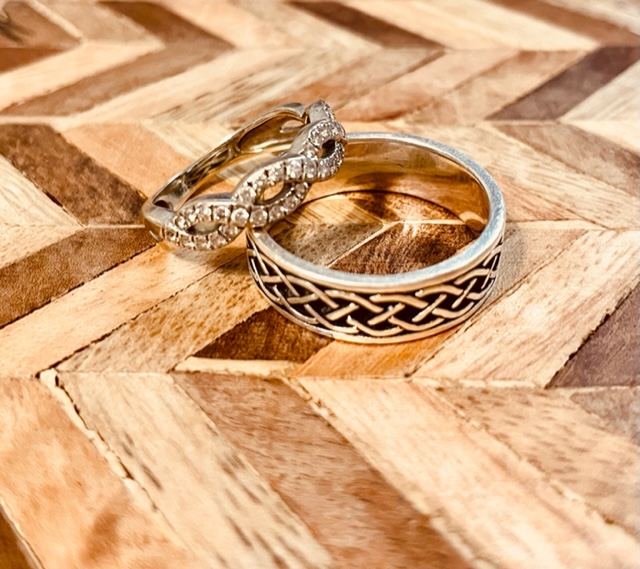
Picture of our wedding rings taken by Terry Collins

About three and half years ago, Terry and I had a major crisis in our marriage. It is not the story either of us ever expected or wanted. For many marriages, this could have resulted in divorce or years of bitterness. Instead of pointing fingers at one another, we each took a hard look at ourselves and our relationships with God. We both refocused on putting God first in our lives by saturating ourselves with worship music, studying scripture, reading books, and listening to sermons and podcasts. We also learned the importance of being transparent with God in prayer. As we grew closer to God, we were able to recognize where we personally were coming up short. This made room for confession, personal responsibility, and healing to take place.

This past Saturday, Terry and I had the privilege of sharing our story and its details at a marriage retreat with some other couples in our church. As I listened to my husband, I was in awe of God’s ability to take something broken and craft it into something beautiful. It reminded me of Jeremiah’s vision at the potter’s house. Jeremiah saw this expert potter creating a vessel on the wheel. As he worked, scripture records that the vessel was “spoiled” or “marred” depending on the translation. This word was also used in the book of Ruth when Boaz asked the nearest relative if he would be willing to redeem Ruth. Being a Moabite, she was not viewed as a prize for the chosen Hebrew people. The man told Boaz that he was unwilling to redeem her because it would mar his inheritance and reputation. Both the clay and Ruth had no apparent value or worth. Yet scripture declares that the potter reworked the clay and made it a vessel that was good. Boaz saw Ruth’s heart and compassion and willingly entered a marriage covenant with her. The result of this unlikely union was Ruth being named in the lineage of Jesus. In the case of our marriage, we allowed the master potter to rework our marriage into a vessel that exudes his expert craftsmanship.

I don’t think a simple greeting card can express my gratitude for the hard work my husband has put into our marriage. No saccharine sentiment could adequately express the hard year we had, how we chose to invest into each other and into God. No picture on a card could capture the beauty of how God took two broken people, healed their deep wounds, and created something new. And the value of the God’s craftsmanship is far greater than $7.99; it’s measured on an eternal scale!

Wild Yeast Listening

“Know this, my beloved brothers: let every person be quick to hear, slow to speak, slow to anger;” James 1:19

We have all found different ways of coping with the pandemic. One way that gained a lot of traction for people was learning how to make sourdough, making the hashtag #sourdough trendy in 2020 and 2021. As with most trends, I jumped on the bandwagon a little late. This past fall, my generous brother-in-law shared with me his sourdough starter. He put the starter in a Ziploc bag and packed it carefully in my suitcase for my flight home from Nebraska. Although the dough exploded in the bag, I was able to salvage enough of the starter to refresh it in its new home. Later, I made one somewhat decent loaf with the bread, but life got in the way, and I forgot to feed the remaining starter. I tried to revive it, but something was terribly wrong with the dough. It didn’t bubble and ferment like it should, instead it was runny and gray. So, the unnamed starter (I am convinced that, because it didn’t have a name, it felt defeated and gave up) ended up in the trash.

Still determined, I cracked open the King Arthur Cookbook and started to read about bread. I learned the importance of water temperature, ingredients, kneading, scoring, and baking. I also read something that shocked me. According to the experts at King Arthur Baking, “If you bake bread all the time, your kitchen is full of wild yeast and any dough you make there will rise vigorously.” Conversely, the book said, if you don’t bake bread often, your kitchen is sterile, and it will take longer for bread to rise. Their test kitchen in Vermont is full of wild yeast, and they use a scant 1/16 teaspoon of yeast for every three cups of flour!

Photo credit by Terry Collins

Yeast is a living organism that, under optimal conditions, gives bread its unique properties. But this primarily happens through its waste products. The experts at King Arthur say that it releases “carbon dioxide which leavens the bread; alcohol, which contributes to the bread’s aroma; and organic acids, which give its flavor.” These optimal conditions are related to temperature, the right ratio of flour to water, and even a little sugar. I envisioned that someday I would have wild yeast floating around my kitchen. This wouldn’t happen overnight and certainly wasn’t in the air right now. But after consistently practicing the art of making bread, the wild yeast would grow and help ferment, flavor, and create breads unique to the Collins home.

I will be beginning my own sourdough starter in a week. I need to block some time out to carefully attend to this starter daily. It can take a few weeks to get the fermentation going, with a daily feeding schedule. I’ve heard a lot of bakers refer to their starters as a baby, and hence why most have a name. But after consistent care on my part, this starter should grow and take on the properties of a good crusty sourdough bread, adding to the wild yeast in my home.

Along with the fine art of baking bread, I am learning the fine art of listening well. Maybe most of my readers have mastered this skill, but for some reason it has taken me almost fifty years to get it right. Its more than just being silent while someone tells their story. It’s more than being attentive and nodding your head at the right moments. It’s more than showing sympathy that often comes off as pity. It’s looking at the person, asking good questions, validating their feelings without judgment, and not trying to fix their problems. It’s letting them share some hard things in their life and being present with them. It’s having enough awareness of your own triggers that you don’t become defensive if the person is addressing issues related to you. It’s hard!!!

A few weeks ago, someone I love shared some hard truths with me. They expressed some legitimate anger. They shared how my inaction had contributed to some brokenness in their life. It wasn’t something I had done deliberately, but it was something I missed. And what I missed was big! While they were talking, I kept my own emotions in check, choosing not to attempt to fix the situation or defend my actions. All I could say was that I understood their anger and ask for forgiveness. We both left the situation in a good place, healing for both of us and the relationship repaired.

I haven’t done this well with everyone in my life. There are a lot of times I have been defensive, have gone into fix-it mode, or have tried to speak what I thought was truth into their lives. This has left the other person feeling invalidated, creating more problems. Craig Thompson, my favorite psychiatrist (who says that?), talks a lot about the importance of being seen, soothed, safe and secure. When we share hard truths with one another, it can often produce what he calls a rupture in the relationship. The rupture is repaired when the listener stays, validates, and loves unconditionally. It changes the neural pathways in your brain, and helps you become the fully integrated human that God intended.

But this only happens when I practice listening well. It’s a skill I have been cultivating this past summer. And the more I do it, the more I see God being glorified in my relationships. God, like the wild yeast that makes our sourdough better, is orchestrating this healing through His divine design. But for wild yeast to exist, I need to make bread, and for God to do His work, I need to create an atmosphere where others feel fully heard, fully known, and fully loved!

Sunset Generosity

“You will be enriched in every way to be generous in every way, which through us will produce thanksgiving to God.” 2 Corinthians 9:11 ESV

A few days ago, I was driving home after a long day. Purple and pink streaks were strewn across the sky, framing the mountains around me while splashes of color reflected across the icy snow. I was amazed at the artistry on display, making the long drive go by faster, as I thanked God for His beautiful sky. The next morning, John Eldredge, in his Restoration Journal, asked the question, “Can you name in your life where your heart feels awakened because of Jesus’ extravagant generosity?” This led me to a few questions of my own. Am I aware of God’s generosity? Do I respond in a way that shows I believe He’s generous to me? Am I generous to others?

God’s generosity is displayed throughout His creation. He paints the sky differently each sunrise and sunset. He creates the romantic pink peony, the whimsical daisy, and the symmetrical sunflower. He designed each snowflake to be unique, only noticeable under a microscope. Even the sand throughout out the world is different. When my children were younger, my mom would bring jars of sand from her travels, from the fine white sand of Florida beaches to coarse tawny sand found in Maine. Even our foods don’t taste one note: we have salty olives, tangy goat cheese, and sweet oranges. His generosity can be found everywhere if we are willing to pay attention.

The Garden of Eden was God’s generosity perfectly displayed. Adam and Eve wanted for nothing, living in a perfect climate. The Bible says that they could eat of every tree and had dominion overall, except one tree. Figs, plums, bananas, and every kind of berry were available for their choosing. And every day they had the opportunity to interact with all of God’s creation. But Satan made them question God’s generosity and focus on the thing they couldn’t have, which led to the fall. It is easy to look at them and see the error of their ways, but like Adam and Eve, I can fall into that same trap. All too often, I get focused on what I don’t have. I get caught up with the small bank balances, the vacations that didn’t happen, and the opportunities that didn’t come my way. This leads to discontent and believing that God is not generous to me.

When I realize I feel discontent, I look for truth in scripture. Paul says in Philippians 4:19, “And my God will supply every need of yours according to his riches in glory in Christ Jesus.” My God is faithful to provide. Maybe I didn’t get the vacation I had hoped for, but I did get some time exploring God’s creation in local forest preserves near me. He’s blessed me abundantly with friends and family. Whatever I need is available to me. But along with God’s generosity, I find another truth: God expects me to be generous. We all know about the principle of reaping what you sow. This principle is followed by in 2 Corinthians 9:7 with the statement, “Each one must give as he has decided in his heart, not reluctantly or under compulsion, for God loves a cheerful giver.” A few months ago, one of my pastors preached about the Greek word “hilaros” which means “cheerful.” This is the same word that hilarious comes from. We are supposed to be over the top cheerful givers! Which leads to my last question: am I generous to others?

Last year, an acquaintance of mine died unexpectedly. This is someone who I greeted with a smile but looked for ways to end the conversation quickly. I said the right words but didn’t demonstrate real interest. I was never generous with my time, compassion, or investment in this person’s life. And all this person ever wanted was to feel connected with me because of a distant familial relationship. This death hit me hard and made me realize that I was generous to people I loved but not always to those who were on the fringes of my life. By no means am I saying that I need to be friends with everyone or insert myself into everyone’s lives. But if someone is trying to engage me in a conversation, I should be generous with my time and be fully present. Every time I have gone back to Wisconsin over the last ten years, it would have taken just a few moments each visit to inquire about their life, their health, and their blessings. Instead, I plastered a fake smile on my face while I was thinking about someone else I wanted to connect with. I was genuinely sorrowful for how I had treated that person and repented.

This repentance leads me to God’s generosity again. He is generous in his willingness to forgive me of times when I am less than kind. The Bible records that his mercies are new every day. However, this doesn’t give me the right to continue to be less than generous with others. Instead, it gives me the freedom to come to total repentance and ask God to help me be more generous.

 I was hoping to catch a picture of the beautiful colors as they painted the sky, but the sunset had disappeared by the time I go home. That’s how sunsets work, they last for a few amazing moments and then disappear and, all too often, I am too busy to notice them. Like a sunset, generosity only takes a few minutes. But all too often, I miss the opportunities to be generous. In this upcoming year, I am choosing to make more time for sunsets and generosity.

There and Back Again

“Do not lie to one another, seeing that you have put off the old self with its practices and have put on the new self, which is being renewed in knowledge after the image of the creator.” Colossians 3:9-10

Most mornings, I start breakfast and the coffee pot. Terry then comes downstairs and pours me a cup of coffee. Not only does he add the perfect amount of cream, but he also selects a different mug each morning to delight me. Some mornings I get the salmon-colored mug that declares “Good Morning Gorgeous”, while other mornings I might get my Rifle bibliophile cup with the gold handle. If it’s a cold morning, he might reach for my blue stoneware mug from Laurel, Mississippi and if he’s feeling especially formal, he’ll reach for my pink First Lady cup from the Smithsonian. I love the routine of coffee every morning but enjoy the spontaneous choices of mug from which to sip my happy juice. And, for those of you who are Marie Kondo enthusiasts, yes, all my mugs spark joy!

 I think having a routine but balancing it with the ability to mix things up are good principles to live by. If your routine is too rigid, you might find yourself unable to adapt to the inevitable changes in life. If you constantly live by spontaneous behavior, you might miss the long-term benefits of consistent habits. By nature, we all lean towards one side or the other, but in practice, its important to find the balance that works for you.

For almost two years, I had developed consistent habits with exercise. I was going to the gym five to six mornings a week, working both with weights and cardio. I enjoyed this routine and had gym friends that I talked to each morning. I loved the benefits of consistent exercise: weight loss, more strength, more flexibility, and extra energy.

But when the world shut down, so did my gym. I had to find a different way to exercise, so I started walking. I attempted to lift weights at home and do Pilates regularly, but the only thing that stuck consistently was the walking. Last year, I set a goal to walk 320 days. It was an ambitious goal that Covid-19, travel, and occasional bad weather prevented me from accomplishing. Overall, I walked 290 days averaging about three miles a day. This is more than I had ever walked in my entire adult life. The fresh air, exercise, and being out in nature was good for my mental health and helped me, for the most part, to maintain my weight loss.

I say for the most part because, in the last few months, I have realized my clothes are not fitting quite as well as they did in the past. I can see the difference in pictures and, more importantly, I can tell that my energy, strength, and flexibility have regressed a little. I could stubbornly try to continue the same practices of last year, walking outside, which I enjoyed. But, based on the evidence, I knew I needed to do something to jump start my body into getting fit again.

So, I joined the gym again. The first time I walked through the doors, I knew how I left the gym was not the same condition as I was returning. I knew that I couldn’t jump on the weight machines and do the same routine I was doing in the past. I knew that my endurance on the treadmill would be shorter and less intense. Without the right attitude, these facts could be a recipe for disaster. I had to walk into the gym with low expectations and determination.

 I started this health journey about three and half years ago. And I use the word journey instead of goal for multiple reasons. Too often, I have set goals and not reached them. Instead, this time around I have taken the approach James Clear outlines in his book, “Atomic Habits”.  He says, “True long-term thinking is goal-less thinking. It’s not about any single accomplishment. It is about the cycle of endless refinement and continuous improvement.” This journey has been about me creating healthy habits that would manifest themselves not only in weight loss but also in building strength, flexibility, and higher energy. It was about choosing to live, and uncovering, underneath all the layers of fat, a woman who was energetic, loved the outdoors and enjoyed physical activity. It was discovering that the space I took up in the room didn’t need to be measured by my circumference but what I had to offer in the gifts and talents God has given me. It was about surrendering all of me to God, and letting Him fill me, instead of filling myself with ice cream and bagels. And finally, it was letting Him lead me on this journey and giving me the strength to continue, pivot, and grow.

I know this journey has had its ups and downs. It hasn’t been a linear path from 361 pounds to the weight I am now. It has never been about the numbers, but about learning to trust God in the process. I haven’t completely conquered any of my past habits; they are still chasing me and sometimes I go back to eating out of anxiety or using food to find comfort. Sometimes, I honestly don’t care and want to eat the whole cheeseburger and fries. But whatever missteps I take, I show myself grace and move forward. Moving forward this time meant joining the gym and starting fresh.

 I still have no final weight goal in mind. I want to feel healthy, be active and find all my fulfillment in the Lord. What that looks like in 2022 will be different than it was in 2021. I do know that, like my coffee in the morning, I will have some consistent habits but still mix it up occasionally like my mugs.

Confetti and Books

“An intelligent heart acquires knowledge, and the ear of the wise seeks knowledge.” Proverbs 18:15

Last week, Terry and I finished a book that we had been reading aloud together. I recorded the book in my Goodreads App and watched in pure delight as confetti fell across my screen. The falling confetti marked my accomplishment of reaching my goal of reading 66 books in 2021. I later finished two more books, but, unfortunately, no more confetti!

Earlier this year, I read I’d Rather Be Reading: The Delights and Dilemmas of the Reading Life by Ann Bogel. It felt like I was reading my own personal memoir as a bibliophile. One quote in her book is the reason why I love doing this post annually. And I can say annually because this is my third year sharing my favorite reads of the year. Ann says, “When we share our favorite titles, we can’t help but share ourselves as well.  Shakespeare said the eyes are the windows to the soul, but we readers know one’s bookshelves reveal just as much.”

I am going to share with you five books that are windows into my soul. These books added beauty, contemplation and/or self-discovery for me. Some of the titles were like opening Pandora’s box, opening the door to genres or authors I hadn’t read before. Again, it was hard to narrow it down to five books. One observation I made immediately was that I didn’t include any fiction in the list. I did read some fiction this year, but a lot of it was light-hearted.  One book, All the Light We Cannot See, by Anthony Doerr, was a reread, and although the book is beautifully written, I wanted this list to be first-time reads only. Thus, I am making it a goal to read some more fiction next year to add beauty to my life.

So, let the confetti fall (because we all need more confetti) and here is the list!

Photo Credit Terry Collins, I am missing the title Humility, I lent it out to a friend.
  1. A Fine Romance: Falling in Love with the English Countryside by Susan Branch. I absolutely love this book. As the reader, you join Susan and her husband on a tour of the English countryside, exploring gardens, homes, art, and people. It includes hand-drawn sketches, photographs and even some recipes. It’s the best form of armchair traveling, accompanied by a scone and a cup of tea. If this quote makes you fall in love with the book, it’s for you. Susan says, “England reminds me of a quote I saw on a packet of Swiss Miss instant cocoa mix: ‘Like a basket of drinkable kittens, wrapped in a blanket, next to a fireplace.’” She handwrites her books, that are then actually reprinted. This can make it challenging to read if you have any vision issues.
  2. The Way Through the Woods: Of Mushrooms and Mourning by Long Litt Woon. Nature writing has become one of my new favorite genres. This book on mushrooms made it to the top despite my constant recommendation for others to read the The Hidden of Life Trees. Long Litt Woon’s Norwegian husband dies unexpectedly, and she embarks on a journey of grief that she didn’t ask for. She says, “Grief grinds slowly. It devours all the time it needs.” She enrolls in a mushroom course and “the mushroom outings gave me the push I needed to get out of the house and take part in life.” She interweaves the fascinating facts of mushrooms with her own self discovery. I found myself delighted in God’s design with mushrooms like the blue fairy tale mushroom and the Witches Caldron. I wept as she arrived at the realization that she would never travel to certain place because of the books her husband left unread on his nightstand. It helped me process my own grief this year and prepared me to grieve the loss of my uncle.
  3. Humility: The Journey Toward Holines by Andrew Murray. This little book was recommended on many different podcasts, convincing me that God wanted me to read this it. The turn-of-the-century author was a South African missionary who challenges Christians to posture themselves in humility. He outlines how Jesus himself modeled humility in everything he did. He says, “Humility is nothing but the disappearance of self in the vision that God is all.” He also remarks, “Here is the path to the higher life: down, and lower down! Just as water always seeks and fills the lowest place, so the moment God finds men abased and empty, His glory and power flow in to exalt and to bless.” This is a slow read, I often sat rereading scriptures he recorded and his brief commentary. It is the type of book that you must let marinate in your soul to get the full benefit. It’s my hearts cry, and one I will revisit again and again.
  4. The Soul of Shame: Retelling the Stories We Believe about Ourselves by Curt Thompson. This book changed my thinking on how I respond to sin in my life and in the lives of others. Thompson says, “Guilt is something I feel because I have done something bad. Shame is something I feel because I am bad.” For the Christian, this feeling of shame hinders us from becoming who God intended us to be, restoring us to an abundant life. He encourages Christians to change their cultures where shame is exposed “allowing room for healing and creativity.” He suggests, “In an environment where we are unafraid, mistakes are not our enemies but our friend.” In an age where so many people are deconstructing their faith, this book helped me to see how Christians can create healthy environments.
  5. Bread and Wine: A Love Letter to Life Around the Table with Recipes by Shauna Niequist. This book is part cookbook and part memoir about the author’s relationship to food and hospitality. Although this book was written many years ago, her concept of hospitality resonated in a world that is so divided. She says, “The heart of hospitality is about creating space for someone to feel seen and heard and loved. It’s about declaring your table a safe zone, a place of warmth and nourishment.” Her love for cookbooks led me down a rabbit hole of reading cookbooks cover to cover. I have learned a lot about food, culture, and the importance of tradition in the various cookbooks I have read.

Honorable Mention: Is Rape A Crime?: A Memoir, an Investigation, and a Manifesto by Michelle Bowdler. This book is graphic, hard, and disturbing on so many levels. It made me question some of my assumptions of what is considered evidence and how can we prosecute rape that doesn’t further traumatize the victim while still protecting the rights of the accused.

I would also like to briefly share three podcasts that have inspired me and encouraged me:

Being Known with Curt Thompson, MD. This podcast explores Thompson’s books in depth and the importance of beauty and community. This podcast is paradigm changing.

Unedited with Meg Najera. Meg Najera is from Wisconsin, and although we have never met, we have friends in common, that led me to this podcast. Najera gives simple tips to help establish the spiritual discipline of reading your Bible. She closes each podcast with reading an unedited journal entry. Her writings are insightful and beautifully written. She crafts sentences with artistry that inspires me to be a better writer. She will be publishing a book soon, and I’ll be first to buy it!

Cherry Bombe. I started listening to this podcast after reading Yasmin Kahn’s newest cookbook, Ripe Figs. After googling her, I listened to her interview on the podcast. The premise is to interview and celebrate women in the food industry while raising awareness of important issues. The podcast has raised my curiosity about food, small business owners and culture. I am not endorsing all the conclusions that Cherry Bombe draws, but I do believe their stories are compelling. One of my favorites was Episode 204: Rescuing Grandma’s Recipes with Anna Francese Gass. Gass wanted to write down her Italian’s mom recipe for meatballs. This led her to interview countless immigrant woman in their kitchens, cooking with them and learning the stories behind their signature dish, and writing down the recipe. She compiled the recipes into a book. These interviews were priceless insights into culture, history, and life.

I hope this blog inspires you to read and listen to both books and podcasts in the upcoming year. I would love to hear what your favorite books or podcasts were in 2021. And, yes, your suggestions will enlarge my TBR (to be read list in bibliophile vernacular) list.

Finally, I have added a new donation button on my blog. If you have been blessed by my writing and would like to support my writing endeavors, please consider buying me a cup of coffee. Just go to my home page and scroll down! This can be a one-time donation or even a regular one if you so desire. These donations will help offset the cost of my domain and yearly WordPress fees. If you are unable to give, no worries, Graceful Transitions will continue!

Stinky Cheese and 2021

“The righteous person perishes, and no one takes it to heart; the faithful are taken away, with no one realizing that the righteous person is taken away because of evil. He will enter into peace – they will rest on their beds – everyone who lives uprightly.” Isaiah 57 1-2 CSB

I was born in Wisconsin and grew up with cheese as my second language. From an early age, I knew that fresh cheese curds should squeak, how to properly eat string cheese, and what aged meant in terms of cheese. American cheese was referred to as an artificial plastic cheese food and cheddar was king! We took pride in being the inventors of Colby cheese and even if California was technically the dairy state, we still wore our cheese heads proudly at Packers’ games!

A family favorite in our home was aged brick cheese, purchased from Gibbsville, a local cheese artisan. This soft, pale white cheese is considered a part of the cheddar family and was first created in Wisconsin. As it ages, it develops a pungent odor that some believe resembles dirty feet. Yet, if you can get past the distinct order, and slice it thin, this cheese melts in your mouth and its creamy texture and taste leave you wanting more. Someone recently shared with me that as you eat these strong cheeses, like blue cheese, Limburger, and Brick, your taste-buds change the smell as you are eating the cheese, making it more pleasing to you. I may have liked brick cheese as a child but haven’t been able to get past the smell as an adult.

December is wrapping up, along with 2021, and I am so looking forward to a fresh start in 2022. I’ve been transparent about this having been a tough year on so many levels. I remember in early November sharing with God that I felt like I was stretched thin, and couldn’t handle any more challenges, begging for peace. But within a few weeks, we had a job loss, an email that set a boundary I didn’t understand, and my uncle died unexpectedly. I felt like my world was unraveling and I could barely hold it together. I went through the motions of living but felt distant and numb. The only thing I could cling to was my relationship with God and His faithfulness.

It’s so easy to look on the outside and not see the goodness of God working at all when life is hard. If I take an honest look at this past year, and made a list of pros and cons, the cons will outweigh the pros. Yet, just like the stinky brick cheese, I must get past the stinky life situations, most of which I have no control of, and believe that God is working through these difficult situations. Notice, I said He is working though these difficult situations, not around them, not despite them, but through them. I must trust the process and believe that God is using these situations to build my trust and faith. Furthermore, He is using these situations to bring light to some areas in my life where I need healing and clarity.

Some of that healing comes through the process of confession. I am talking about finding a select few friends with whom you can be honest about your feelings. For me, that looked like sharing with my husband and a few friends that I was struggling with believing in the goodness of God. It was telling someone that I felt like I was a failure. It was being honest with all the difficulties and how I wanted to stay in bed during the holidays and only get up to play with my grandson.

 I spent most of Sunday afternoon and Monday being authentic with a few friends. My situations haven’t changed, but my perspective has changed. No one tried to fix me, instead they listened and validated the challenges. They demonstrated compassion and allowed me to be not ok. It helped me clear the air and not put on a facade that everything was fine. It helped me exhale all the hard parts in my life and inhale the love, compassion, and empathy from others. And it changed me.

This change was not a magic pill that made everything look and feel great. Instead, it was more subtle, but still life giving. It helped me release some of the burdens I was never meant to carry, and truly give them to God. It meant that I spent some time praying with my husband asking God to demonstrate His goodness and work in situations that will clearly display His glory. It meant that I wasn’t alone and that these situations are hard. It gave me glimmers of hope!

 I have no idea how some of these situations are going to end up next year. I can’t even imagine the solutions or paths that God has prepared for me. As author Lysa TerKeurst often says, “I do know that God is good, He’s good to me and He’s good at being God.” That is what I am clinging to! The stinky situations still stink, but I am choosing to embrace them, and let God work through them, just like sometimes you need to get past the smell of Brick cheese to truly enjoy it.

 Finally, I am choosing to end my year reflecting on some truly beautiful moments I have experienced over the last twelve months. Those beautiful moments will help shift my perspective and help me imagine a better year. I want to thank you for taking the time to read my blog, and I hope it has been a blessing to you. Happy New Year!

Jolabokaflod

“Rejoice with those who rejoice, and weep with those who weep.” Romans 12:15

Christmas is a few days away; the presents are under the tree, and I have a few cookies left to bake. I am looking forward to all my family being together under one roof. Last year was supposed to be our Christmas to host, but with all the COVID-19 restrictions, our Rhode Island family couldn’t travel. Additionally, my daughter ended up working her first holiday in the hospital on Christmas Eve. For the first time in our married life, Terry and I were alone on Christmas Eve!

It would have been easy to focus on all the losses of the Christmas season, after all, we were missing our grandson’s first Christmas. Instead, Terry and I chose to make the most of the holiday. We ordered gourmet pastries from our favorite bakery and brisket with sides from a local BBQ joint. Additionally, Terry surprised me with a Hot Chocolate Bomb and a jug of my favorite iced latte from Denim Coffee. We stayed in our pajamas on Christmas Eve, lit candles, curled up in blankets, and read some wintry books. We responded to some texts, listened to Christmas music, and Face-timed with family. But, mostly, just relaxed, discussed what we were reading, and enjoyed the silent night.

I wish I could say that this idea was original, but it stems from an Icelandic tradition called Jolabokaflod. It started during World War II when paper was one of the few things not being rationed. Icelanders altered their Christmas gift exchange by choosing to give books to one another. In 1944, Jolabokaflod was reinforced by the book trade, which published a catalog of books to be released before the holidays. Today, as soon as the catalog is released, Icelanders rush to order the books ahead as gifts. After exchanging the books on Christmas Eve, they find cozy nooks in their homes to read, accompanied by a hot beverage and dark chocolate. This is my idea of perfection, and it helped make last Christmas memorable!

I am aware Christmas is not a joyous season for everyone. Maybe, it’s the first holiday a family spends without a loved one. Maybe, past Christmases have been disappointing, leaving someone feeling like the holiday is overrated. Maybe, it’s been a hard year and choosing to celebrate feels difficult and burdensome. Whatever the reason, Christmas this year may feel challenging and difficult. It is easy to be on the outside and try to encourage people we care about to celebrate anyway, but is that really the best response?

Through a lot of different podcasts and books, especially the works of Curt Thompson, I am learning the importance of validating someone else’s feelings. I remember sharing with someone last Christmas that I was sad about my son and his family not being able to come for Christmas, and the person responded, “Well, it’s probably better they don’t come.” I already understood the wisdom of the decision, but the facts didn’t lessen my loss. The same person went on to talk about their grandchildren and the gifts they would be opening together, knowing my grandson’s gift would remain wrapped.

While that person may have been trying to help, I was left feeling dismissed and invalidated. I had another friend who responded differently. She looked me in the eyes and said, “I know this is hard for you and I am here if you want to talk.” This simple response gave me room to express my loss and that what I was feeling was fair and real. I didn’t have to put on a smile and pretend everything was okay.

 After Mary’s angelic visitation, she was left to deal with the judgmental responses of those around her. Nothing about her situation was easy: an unwed, pregnant woman was going to be the talk of her village. And we don’t even know how long it took for Joseph to make his decision whether to put away his fiancée. This poor young woman was left alone to deal with the gossip and rumors, until she went to visit her cousin Elizabeth. Elizabeth, through the Spirit of God, recognized that the babe in Mary’s womb was from God, but she didn’t just quietly affirm Mary’s situation. Instead, the Bible says that Elizabeth spoke with a loud voice, “Blessed are you among woman, and blessed is the fruit of your womb.” Elizabeth’s response gave Mary the boldness to respond differently to her situation, resulting in Mary’s song found in Luke 1:46-55, starting with, “My soul magnifies the Lord.”

Terry and I were able to work through our loss and find a resolution that redeemed the holidays for us. But not everyone is able to do that. And that’s okay. Instead, if I have a friend who is having a hard holiday, I hope to offer the same helpful support that I received. I will listen to their feelings, acknowledge that the situation is hard, and be there if they want to talk. And just maybe this will help them work through their feelings and find their own way to redeem the holidays.

And even though my family will be with me this Christmas, I may choose to sneak away for twenty minutes, find a cozy book, and read, accompanied by some dark chocolate!

A Whirligig Christmas

“And she shall bring forth a Son, and you shall call His name Jesus, for He will save His people from their sins.” Matthew 1:21 NKJV

Every family has its own Christmas traditions. Some families have matching festive pajamas, others watch certain movies, and some may even love fruit cake (although I have never met this particular family). The Collins are no exception to traditions. We bake Dishpan Cookies, watch the movie “Holiday Inn”, and listen to “The Cinnamon Bear”, an old radio show. We have one tradition that I am confident no other family shares, on a biannual basis we would read, as a family, Whirligig House, a children’s book written by Anna Maria Rose Wright.

I can say this with confidence for multiple of reasons. First, the book was published in 1951 and it is no longer in print. It also hasn’t won any awards and I’ve never seen it on a list of books every child must read. It only has two reviews on Amazon, one of which is from my husband. Yet, despite its lackluster reputation, this old beige book is a treasure in our home. It sits in our blue library cabinet protected by glass doors. It is the one material possession of ours that both my children want, which is why I hope someday to procure a second copy.

Terry was the first person to discover this book as a library page in Junior high. Opening the pages, he grew fascinated with the family of five children and their adventures. The story starts near Christmas Eve, with the children learning that their mother is seriously ill with tuberculosis. She is sent to a sanatorium for a year, and the kids learn to pull together and self-govern themselves to avoid their dreaded Aunt Tatty’s schemes to divide the family. The book ends with a Christmas scene of the mother returning that rivals the final scene of “It’s A Wonderful Life!”

Photo Credit by Terry Collins

Terry told me about the book shortly after we started dating. I could tell that this book would make an amazing present, so I began to hunt for the book in antique and bookstores. This was before eBay was popular, or Amazon had Prime, when dial-up was the only way to connect to the web. I searched for months for the book, even calling his old school to see if they would be willing to sell the book. Despite these obstacles, I finally managed to purchase a copy of the book for his birthday in December our first year of marriage. As he unwrapped the book, the look of joy he had on his face has only been surpassed with the birth of our children and grandson. We started reading the book together as a couple that year and have since shared the love of this book with our children. About six years ago, we read it aloud with our kids one last time during the Christmas season, realizing that this era as a family was ending. Hopefully, we will pick up the book again with our grandchildren, sharing the delight of the Christmas Eve feast, Buster joining the choir, and envisioning what a licorice bed looked like!

 If you looked in our house, you would find other items that appear with more glitter or look more valuable. You would likely miss Whirligig House on the shelf, surrounded by beautiful copies of Pilgrim’s Progress and Les Misérables. Yet, of all the books in our home, next to the Bible, this book is probably at the top of everyone’s list. It’s worn, beige with simple lettering, and plain. Nothing about it indicates the value it holds for our family.

But isn’t that the same with the story of Christmas, nothing about the circumstances of Jesus’ birth seem valuable or special. He was born in a stable with animals instead of a palace and had shepherds as visitors instead of a royal procession. The only hints that there was something extraordinary about this birth were the angelic visits and gifts from the wise men. Yet, this tiny baby held the hope for the whole world. His chubby little fingers would later perform miracles for the masses. His tiny little mouth would speak words of encouragement, teach principles, and fulfill prophesies. His little feet would walk many miles to meet with sinners and the broken-hearted, and later walk to his own death. His little body would grow to healthy adulthood only to be broken on the cross, not because of his own actions, but because of my sinful actions. And three days later, his resurrected body would give me a hope that someday my broken life would be fully restored.

We all have traditions, and our family traditions become more valuable to us at Christmas. They unify and define us. They might be wrapped up and put away to open year after year, or like mine, they might sit in a bookshelf all year. But as much as I value Whirligig House, the birth of Jesus grows more precious to me year after year. I echo C.S. Lewis: “Once in our world, a stable had something in it that was bigger than our whole world.” And I believe what John wrote: “And the Word became flesh and dwelt among us.” Yes, Jesus’ birth may have seemed “less than” to those around him, but, to me, this baby being born in a stable is more precious to me than any mere possession!

Cupcake Delights

And Mary said: “My soul magnifies the Lord, and my spirit has rejoiced in God my Savior.” Luke 1:46-47

 Years ago. visions of sugarplums danced in my head whenever my mother would take us to the Wonder Bread/Hostess store. We strolled among racks of Ding Dongs, Twinkies, and Ho-Ho’s amazed and delighted at the bounty before us! I passed by all these confectionery delights looking for my favorite: Hostess Cupcakes. I fantasized about the two chocolate cupcakes filled with sweet cream in the center, topped with chocolate frosting and the trademark vanilla swirl stripe. My mother would typically add a few of these to her basket, and I couldn’t wait to get home to peel off the plastic wrapper and start devouring my cupcake!

Forty years later, my tastes have changed, and Hostess cupcakes no longer impress me. I still love cupcakes, preferring upscale bakeries such as Georgetown Cupcakes. This tiny corner bakery is located on M Street outside of Washington DC. This intersection is busy, filled with little shoppes and restaurants, surrounded by historic brownstones. My wonderful husband deals with the crazy traffic and narrow side streets, dropping me off at the corner, while I wait in line for cupcakes. Rarely does he complain but indulges me by driving around in circles while I make my purchase. We then drive home, and two hours later, I squeal in delight over flavors like the Chocolate Peppermint Ganache cupcake, savoring its sweetness.

Photo Credit by Margaret Collins

Christmas is the season for delight: twinkling lights, decorated trees, wrapped presents, and Christmas carols. In my home, you often hear Andy Williams bellow “It’s the Most Wonderful Time of the Year” while I bake Christmas cookies or write out cards. Even Maxwell House Coffee tugs at your heartstrings with its sentimental commercials, usually a homecoming, that warms your soul. In general, the world feels calmer, at peace, and full of hope. Harlan Miller, a 20th century columnist, said, “I wish we could put up some of the Christmas spirit in jars and open a jar of it every month.”

This same sense of delight and wonder is found in the story that makes Christmas possible: the birth of Jesus. This year, I am choosing to read the Biblical account repeatedly throughout December. I want my “soul to magnify the Lord” as Mary embraces her miracle. I want to be obedient to the voice of God, putting aside all my pride, as Joseph did when the angel spoke to him on three separate occasions. I want to stand in awe with the shepherds as the angels sing “Glory to God in the highest.”  I want to lift my eyes up to heaven with Simeon declaring that “my eyes have seen your salvation.” I want to thank God for my redemption as Anna did in the temple. Finally, I want to fall and worship with joy as the wise men did when they saw Jesus, recognizing his royalty.

The word “delight” is recorded multiple times in the Psalms, encouraging us to delight in things like the law and commandments of the Lord. But this word is also found in prophecy. We don’t know much about the prophet Malachi except that he prophesied at a time when Israel was returning from exile. Although the remnant was glad to be back in Jerusalem, they knew that this wasn’t the final plan. God had foretold about a Messiah who would come to redeem and restore the people of God. In Malachi 3:1, he prophesies, “Behold I send my messenger…in whom you delight.”  This future messenger is Jesus, and we are supposed to delight in Him.

There have been a lot of challenges this past year. We switched churches, dealt with a serious injury, faced the unexpected deaths of two uncles, contracted COVID-19, and suffered a recent job loss. These are just the surface challenges; additionally, we’ve had to work through some emotional and relational issues. I could look at this list and easily fall into despair since I am still waiting on some resolutions. But I would miss some of the highlights this year has given me: my daughter’s engagement, feeling connected to a new faith community, growing in God, celebrating our 25th anniversary, watching my grandson grow, and quality time spent with family and friends.

 Yes, I delight in cupcakes, but even if I eat slowly, this delight lasts for only a few minutes. Soon, the memory fades, making this feeling of delight a temporary situation. But just like the cupcake, my challenges are temporary. Over time, they will be resolved one way or the other. Even the memory of my highlights will fade because they, too, are temporary. But, If I keep my eyes on the messenger like Malachi suggested, and celebrate His birth, the delight I will find in Jesus is eternal. And maybe this eternal hope in Jesus is the feeling Harlan Miller wanted to open monthly, making every day “the most wonderful time of the year!”

Less is More

Better is a handful of quietness than two hands full of toil and a striving after the wind.” Ecclesiastes 4:11 ESV

About eighteen years ago, Judy Stock, the owner of “Wonderful World” coffee shop in Sheboygan, WI, was a marketing genius. She sold addictive caffeinated drinks for mothers, coupling it with a live folk music half hour for children. Judy played her banjo and jaw harp, singing children’s songs, while I sat at a table with friends, drinking a latte or espresso shake. After spending one morning at “Wonderful World”, I decided to bring home a new treat for my husband: chocolate covered espresso beans. After a little coaxing, Terry tried one bean and found it to be delicious. Six hours later, Terry lay in bed wide awake, realizing eating a small bag of espresso beans right before bed was not the best idea.

The Christmas season is in full swing, with Black Friday gone and the hours left for Cyber Monday slowly dwindling. My home is fully decorated, with gnomes and reindeer having taken up residence. The Piano Guys are on repeat, while my favorite “Jolly” mug is filled with coffee. I love how Christmas makes my home feel: softer with the white garland of pompoms that drapes across my favorite sign, calmer with twinkle lights that add warm glow, and more peaceful with baby Jesus laying in the manger.

Photo Credit to Margaret Collins

For the past few years, I have been changing how I approach Christmas. Too often, Christmas was a season of me trying to capture all the magical moments I could. These included baking dozens of cookies, hosting a hot chocolate party, writing out Christmas cards, trying to squeeze in all the wonderful events in the community, watching all my favorite Christmas movies, and reading some Christmas favorites. Christmas didn’t feel calm or peaceful, it felt like a lot of hustle and bustle. Even typing this list causes my heart to race faster and my anxiety to increase. None of what I was doing was bad or harmful. They were all wonderful additions to add to the merriment of the season. But just like too many chocolate-covered espresso beans that kept Terry awake, too much of a good thing can end up causing some unnecessary stress.

Now, I approach Christmas trying to do less, and finding it gives me more. I buy less, not because I don’t enjoy gift buying, but am more intentional with what I buy. I watch less, because I want to be more present with my husband, by reading a book aloud, or putting together a puzzle. I bake smaller amounts, because I want to have more energy at the end of the season instead of being in a sugar coma. I participate in less activities, making more space to have time for reflection on the true meaning of Christmas.

To be honest, I still do way too much. I haven’t mastered this. Just this past Thanksgiving weekend, I was about to bake two different types of donuts and a muffin for brunch. My wise daughter stepped in and reminded me that two different donuts and a muffin were not necessary. I compromised by only making one doughnut and a muffin. This honey nut squash muffin with maple bourbon glaze was an involved recipe, requiring a long list of ingredients and multiple steps, but resulting in only six muffins. In the end, I was the only one who loved the pseudo-nutritional muffins. I could have saved myself some time and effort by keeping it simple, making only one doughnut.

Coco Chanel, the famous designer, told women when they were accessorizing their outfits, “Before you leave the house, look in the mirror and take one thing off.” I’ve heard interior designers, writers, artists, and chefs echo the same thing about their craft: eliminate one item on your shelf, one sentence in your blog, one flower in your painting and one ingredient in your dish. This simple elimination of one item, makes the room more cohesive, the blog more concise, the painting more beautiful and the dish more balanced. I think Coco Chanel’s philosophy is not only applicable to creatives, but also to our ordinary lives. We need to create room in our lives for wholeness, beauty, and balance. And for some of us who add a lot of extra in our life, maybe we just need to eliminate one thing in our holiday traditions.

This year, as we were putting ornaments on the tree, I realized that we had too many ornaments for our now smaller tree. We got rid of some we no longer liked, simplifying our tree a bit. I even put less on some shelves and kept some of my décor packed away. I think this simplification helped create the atmosphere of warmth, peace, and calm in my home. I want the feeling of peace and calm that is reflected in my décor to be reflected in my heart as well. This will only happen if I continue to simplify my life. So, once again, I am emphasizing that less is more this season.

If you find yourself already feeling anxious and it is not even the first of December, maybe try to follow Coco Chanel’s advice: look at your calendar and eliminate one thing. And, just maybe, this will help the season be calmer and more peaceful for you.