“Oh Lord, you are so good, so ready to forgive, so full of unfailing love for all who ask for your help.” Psalms 86:5 NLT
It started almost 36 years ago, tear-stained cheeks, bowed at an altar asking a simple question: “God, are you real? If you are, please fill me with your spirit?” Seconds later, I felt this warm blanket of peace cover me and joy bubbling up from deep within my soul. At that moment, I knew there was a God who loved and cared for me. At that moment, He became my Savior. At that moment, I still had a lot to learn about this God.
I am still discovering His goodness, His love for me, the depth of His sacrifice, and His plans for my life. I love my husband, my children, and my grandchildren. I love my extended family and friends. But the greatest love story in my life is still unfolding, it is my relationship with Jesus Christ.
Like all love stories, it has its hills and valleys. Those are not based on His love for me, but rather my distorted view of Him. I sometimes wander away from Him, pridefully believing I can figure it out on my own. Time after time, His gentleness leads me back to repentance. Other times, I try to worship or connect with Him, but I allow distractions to turn my gaze to other things. Again, His Word redirects me so I can connect. He is forever faithful, knows my deepest secrets, my most unkind thoughts, and yet, still loves me.
I am forever grateful for that altar 36 years ago. It has slowly turned me from being a broken teenager scarred by sexual abuse into a woman who knows God heals and lovingly restores. And as this love story continues, I know someday I will be reunited with Him, surrounded by His glory.
“Whatever is good and perfect comes down to us from God our Father, who created all in the lights in the heavens.” James 1:17 NLT
Every morning, I wake up to the glorious smell of freshly brewed coffee. I wipe the sleep from eyes, slowly stretch like a slumbering cat, and stumble out of bed. Thirty minutes later, I waltz down the stairs, greeting my husband but secretly looking over the railing to see if my cup of coffee has been made. Well over 90% of the time, he has picked out my favorite mug and made me a perfect cup with just the right amount of cream. I smile to myself, forever grateful for that warm beverage that makes my soul sing.
I love coffee in almost all its forms: from hand-selected beans for a pour over experience at Omega Coffee Collective (my favorite place in Chambersburg) to an ordinary cup of joe brewed at home. I love lattes with oat milk, cortados, cappuccinos, and cold brew. I love homemade syrup from the Fig Cardamom I found at Café Emis in Kennett Square to the more than occasional caramel latte at Dunkin’, with only half syrup. I love espresso flavored ice cream and find affogatos one of the most decadent desserts ever.
I identify with one of my favorite characters, Lorelai Gillmore, when she states, “I stop drinking coffee, I stop doing the standing and walking and the word-putting-into-sentence-doing.” It is part of my essence and maybe has even filtered into my pores, making me smell a little like coffee with notes of mango, white peach and florals (this is the Tanzania Citrus Nectar Blend that I plan to buy the next time I go to Omega).
My love for coffee extends to coffee merch and places: mugs, coffee makers, and coffee shops. I love how different coffee shops have different vibes; some are cozy and warm, some are sleek and modern, while others are fresh and open. I love the weight of a solid hand-crafted mug, and the candy cane stripes on my Holly Jolly mug. I love dreaming about what espresso machine I might own someday.
But what I love most about coffee is not its taste, or its caffeine properties, or the trendy coffee merch. I love the many heartfelt conversations I have had with family and friends over steaming mugs. I love the laughter, the memories, and the life shared in homes and coffee shops over a cup of coffee. And for that I am more than just grateful for coffee, I am indebted to God who created the coffee bean.
“In everything give thanks; for this is the will of God in Christ Jesus for you.” 1 Thessalonians 5:18
I am insatiably curious about everything, well almost everything. From snails, horse racing, and architecture to travel, history, and biology, I read, research, and run down rabbit holes on a diverse number of subjects. In looking back, childhood trauma stifled my curiosity, but it was reawakened when I home educated my children. The fires were fanned while watching their deep brown and shimmering blue eyes sparkle when learning how pitcher plants could trap small mammals, and the frigate bird stole food from the blue-footed booby. I readily engage in conversations with strangers, listen to a wide array of podcasts, and have a never-ending stack of books on my nightstand to satisfy my curiosity. As I grow older, I hope to keep these fires burning, forever positioning myself to be a life-long learner.
One of my favorite areas of study is learning how the brain’s wiring changes with new interactions. For many years, we thought that brain development became static as we age. But we are learning that even people 50 and older can change due to neuroplasticity. They are not trapped by their childhood and early adult patterns of viewing the world. Instead, they can move towards being more healthy, whole, and wise as they age.
One of the simplest ways to change is to express gratitude. Various studies have demonstrated that practicing gratitude daily can reduce cortisol, which lowers stress. It also provides more structure for the prefrontal cortex, the part of the brain that deals with difficult emotions. Building neuron connections through gratitude helps us feel good both in the short term and in the long term, by strengthening our emotional resilience.
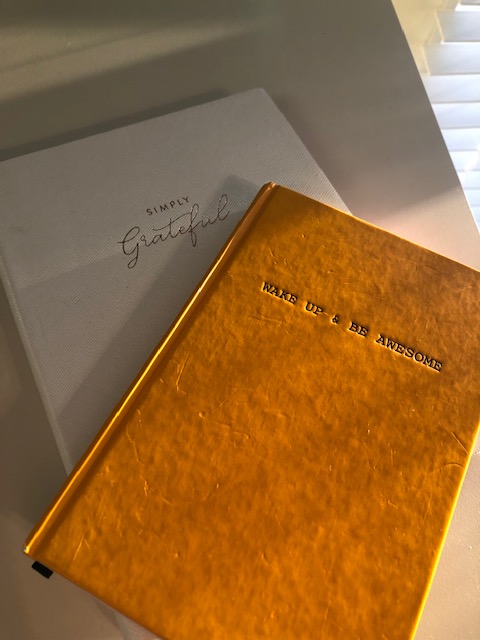
I could go on about the benefits of gratitude, but I know firsthand how it has improved my life. For about 10 years, my daily gratitude journal has been an important rhythm in my life. Expressing gratitude daily has helped me pursue peace during adversity, demonstrate kindness to others, and remain hopeful in hard circumstances. It confirms Paul’s words in Philippians 4:6, “Don’t worry about anything; instead, pray about everything. Tell God what you need and thank him for all he has done.”
For the next 30 days, I am going to share with you a glimpse of what this daily practice has looked like in my life. I am doing this for several reasons. I need to reincorporate this practice with more consistency. I also need to make writing a priority in my life as well. Writing helps me process and is an important creative outlet for my life. It may be just a few sentences or a few paragraphs, but each day, I invite you to see a window into my soul.
I am going to title this series Formation. Formation means an act of giving form or shape to something. I hope this practice of writing gratitude helps shape my brain to focus on the goodness of God and gives form to my writing habit. So come along with me for the month of November, and practice daily gratitude with me. Feel free to share in the comments about your own gratitude.
“Precious in the sight of the Lord is the death of His saints” Psalm 116:15
Recently, we spent an evening at Longwood Gardens in eastern PA. We meandered through the gift store, finding treasures to share with loved ones. We took a small walk through the garden, seeing golden, purple, and burgundy flowers make their final encore before the frost curtain falls. We marveled at the Ginkgo trees, hearing squirrels scattering in the branches. We ended the evening waiting for the illuminated fountain show, which highlighted Bollywood music. Enchanted by the crisp air, I offered to get Terry a hot drink at the food stand above where we were sitting. I climbed the steps and found my way to the hut selling hot spiced apple cider. After the woman handed me my drinks, I started the descent down, but an image of hot drinks sloshing over the lids, or worse, one tumbling down the stairs, stopped me. I could not hold both drinks at the same time while going down the stone stairs. So, I called Terry, and he met me, as he always does, to help me.
I have written four eulogies for people I loved, three of which I personally gave at their funerals. Eulogy writing is hard; how do you sum up someone you loved in a few paragraphs amid your own personal grief? How do you share other people’s perspectives, trying to make the person you care about sound well-rounded? In the case of my uncle, how do you write about him as a husband, father, uncle, and mentor? And the thing I have wrestled with most is how do I stay honest in my portrayal? All too often, I have heard people eulogized, making them akin to Queen Elizabeth, Mother Theresa, or even Jesus himself. In no way do I think a funeral is the place to air your grievances, but it is important to be honest. Even the greatest humanitarian has faults. No one on this side of Heaven is perfect, except Jesus himself. So, I found myself putting fingers on the keyboard, painting with words a praiseworthy portrayal of the person, yet staying true to their humanity.
About two months ago, Dr. James Dobson died. For those of you outside the evangelical world, Dr. Dobson was a major influencer with his daily radio program and nonprofit, Focus on the Family. As a clinical psychologist, he doled out parenting and marriage advice through a Christian lens. He later became more politically active by addressing issues concerning abortion, immigration, and euthanasia. As a new mother, his voice was ever-present in my home, and his books filled my shelves, including Dare to Discipline and The Strong-Willed Child. I loved the world his nonprofit created with the children’s radio drama Adventures in Odyssey. My son’s middle name is Whitaker, and I secretly wished he was named after Whit, the wise older man who owned an ice cream shop in the imaginary town of Odyssey. I even called Focus on the Family’s hotline once to seek some parenting advice during a difficult toddler moment. I was an ardent follower.
Sometime after my children reached high school, I stopped listening to Dr. Dobson. It wasn’t for any specific reason, but likely because I had gotten bored. I had spent the last eighteen years or so listening to the same ideas from different voices through his various interviews. Dr. Dobson had also stepped down from Focus on the Family and later formed a new show under a different nonprofit, where he could make a stronger impact on politics. I only tuned in when my son became engaged and streamed a few shows on how to be a good mother-in-law. I was in a new season of my life, listening to new voices.
In 2016, when Donald Trump arrived on the scene, I was surprised to hear that Dr. Dobson endorsed him. This was the same man who stood firm during the Clinton years, speaking that morality mattered in political office. I tried to justify his endorsement because Mike Pence, his running mate, seemed to have a moral backbone. But as time went on, I heard more about Dr. Dobson’s stance, and I became a little disillusioned with one of my Christian mentors. He seemed to shift, espousing the idea that morality was less important in electing people for political office.
I also started hearing some criticism from some adults who had been raised by Dobson’s followers. They felt his stance on discipline opened the door to child abuse. I reflected on what I had heard and was shocked that some parents had drawn these conclusions based on his talk show and books. Yes, he advocated for discipline and structure, but he insisted discipline had to be shrouded with love. But, upon reflection, I also understood how some people can draw those conclusions based on Dobson’s teachings.
How do I hold the Dr. Dobson who helped shape my parenting in a healthy way, when that same Dr. Dobson’s methods were seen as creating controlling environments and potentially leading to child abuse? How do I hold the Dr. Dobson who helped me see that integrity was an important trait to develop in my life, when that same Dr. Dobson called President Trump a gentleman despite Trump’s crassness on the Hollywood Access tapes? The only way I can hold that is by realizing that, just like me, Dr. Dobson is a Christian who is not perfect. As a formerly ardent follower, I also needed to be careful not to make my mentor an icon.
About six months ago, a question was asked by my pastor: as a Christian, who do you admire or want to be like? One person admired an influential prayer warrior, another said their mom, but one precious tween said “Sherry, because she is always cheerful and encouraging.” I was humbled and surprised by her love for me, but I also felt the weight of that responsibility. I am human and far from perfect. In conversations with her since then, I constantly remind her that I have faults. I don’t want to be the disgraced hero in her eyes. But maybe I need to let her draw her own conclusions at the end of my life. I pray that she doesn’t see me as a perfect Sherry, but a Sherry who knew that Jesus loved her and let His love flow through her to others.
I found holding two hot drinks and going downstairs outside at dusk challenging. But what is even more challenging is knowing that someday my husband, friend, sibling, child or grandchild will have to write my eulogy. I know I have made mistakes in all those relationships, and I will continue to do so while still breathing. I just pray that as I get to know Jesus more, they will see a woman who owned her mistakes and kept growing closer to Jesus.

“The way of a fool is a right in his own eyes, but a wise man listens to advice.” Proverbs 12:15
It is finally cooling down, and you can see the leaves getting tired and worn out, ready to shed their verdant color and expose the red, yellow, and brown of Autumn. Squirrels scurry on the streets, desperately trying to grab every nut and seed they can find before winter. Pumpkin décor scatters my bookcases, the spicy apple butter scent has already permeated my home, and I just made my first pot of chili. And, yes, I have had more than my share of hot and cold pumpkin spice drinks. This has been and continues to be my favorite time of the year.
Fall always feels like a time of transition—a time to get cozy and embrace hygge living. You can learn more about my love for hygge in an earlierpost. This fall, more than ever, I look forward to lighting candles, cozying up under a throw, and listening to my cousin Johanna’s classical spooky playlist. It is a welcome change after a summer filled with swirling noise, making everything feel murky and confusing.
But practicing hygge this season would not be enough. I had known for a while; it might do me some good to start counseling—to follow the advice I had given to so many recently. But sometimes it is easier to give advice than to follow it. Almost two months ago, I took the plunge and went back into therapy. I needed some help processing the aftermath of publishing my book. I also needed some help reconciling the things I had been taught about faith with what Jesus taught, as some of it felt incongruent. So, I found a licensed counselor who could help me reorient myself and clear up the murkiness I was feeling.
I am too early in the process to fully disclose what I am learning about myself and about God. I can say that I still believe God is good. I can also say that thirty-six years ago I had a life-changing experience that filled me with peace and joy when I asked God to fill the empty space in my life. But beyond that, I am still figuring out how to hold Jesus in one hand and the obstacles of life in another.
Transitions are hard, whether you ask for them or they come unexpectedly. This whole blog experience was because I was facing transitions. I had no idea that in this process, I would be expanding my views on God and finding a fuller message of the gospel. But in that process, I have learned some unpleasant things about myself, things I need to work on. One of those things is that I can be extremely passionate when I make a change or discovery, and that enthusiasm or passion can make others feel judged. I am also learning to give myself more grace, articulate to others where I am at, and fill my life with gratifying things.
It’s Autumn, and I don’t have a bucket list of things I want to accomplish. I just want to keep my heart open to whatever God has planned for me. I want to work on the things that I can control and leave the rest in His hands. I also want more pumpkin spice!
“A fool gives full vent to his spirit, but a wise man quietly holds back.” Proverbs 29:11
I have always wanted to time-travel to the 1960s and be a flower child. I imagined listening to the Beatles and Jimmy Hendrix on 45s. My closet would be radiating hippy vibes with peasant blouses and platform shoes. As a college student, I would participate in civil rights protests, while remaining drug free. I know that is a bit unrealistic given that most college students during that time experimented with LSD and mushrooms, but I would still be me, a bit of a rule follower. I wanted to live in a time when it felt like important things were happening and I was making a difference.
In romanticizing that era, I forget that in a space of 5 years, 4 major political figures were assassinated: President John F. Kennedy, Malcom X, Robert Kennedy, and Martin Luther King, Jr. Despite the peace signs and mellow commune living, I am sure that all people, mushrooms or not, experienced anxiety, grief and turmoil over these deaths. They didn’t have up to date information on the manhunt for the shooters. Images of the actual assassinations were grainy, taken with cameras far less superior than most iPhones. Often, they had to wait until their “regularly scheduled program” was interrupted to get the latest updates.
In the last 5 years, we have also faced political violence resulting in 3 political assassinations. These acts of violence include the plot to kidnap Michigan Governor Gretchen Witmer, the January 6 violence at the US Capitol, Nancy Pelosi’s husband attacked in her home, 2 assassination attempts on President Donald Trump, a firebomb thrown at PA Governor Josh Shapiro’s residence, 4 shootings of Minnesota lawmakers and their spouses in their homes, resulting in 2 deaths, and the assassination of Charlie Kirk. Add the attempt on Justice Brett Kavanaugh and the shooting at the CDC, and these acts of violence feel unprecedented in my lifetime.
Some things have changed since the 60s: Swifties replaced Beatlemania, neutrals replaced the bright patterns (except in my wardrobe), and retro sneakers replaced platform shoes. While fashion and music have changed, how we respond to political violence has not changed. We still turn some victims into martyrs while villainizing others. Conspiracy theories float around and become the leading narratives. People call for protests, speech to be censored, and more stringent laws to protect those they believe are innocent.
I could fulfill my past flower child dreams by making signs and marching in my city square or state capital, protesting on behalf of those I feel are being oppressed. I have been given the opportunity to join some protests in recent months by some of my friends. I could also write a click bait comment online, waiting for likes and dislikes to hit, based on my algorithms. But protesting and tweets don’t feel like the best approach for me at this moment. Instead, I am learning to pause, think, and reflect before I speak and act. My family and friends could attest that this approach doesn’t come naturally to me. I am far more comfortable speaking than being silent. I readily look for solutions and ways to apply them. This rhythm of pause, think, and reflect is a learning process that I continue to develop in my life.
In my time of reflection, I am trying to balance my news intake by hearing both sides. It helps me to see all victims of political violence as real individuals with families who love them, pets they cared for, and people who believed in them. Erika Kirk’s answer to her 3-year old’s questions as to where her daddy, “He’s on a work trip with Jesus so he can afford your blueberry budget,” was absolutely heart wrenching. Equally as devastating was the statement made by Sophie and Colin Hortman, children of Minnesota Rep. Melissa Hortman and her husband Mark, who were shot in their home. They encouraged others to honor their parents’ memory by doing “something, whether big or small, to make our community a little better for someone else.” I also had the unique perspective of viewing an alleged criminal’s family differently. When images of the alleged Minnesota shooter flashed on my screen, I recognized this person as someone I had been briefly acquainted with while in a homeschool group with his wife and family in the mid 2000’s. This sweet woman loved God, invested herself in her children, and gave to her community. I can’t imagine her grief, and I pray daily for this family.
This balance of news also helps me see there is political violence on both sides. David French wrote an op-ed piece for the New York Times titled “There Are Monsters in Your Midst, Too” that articulates how I have been feeling. He shared a conversation he had with National Review colleague, Michael Brenden Dougherty about political blindness. Dougherty said when we see a problem on our opponent’s side, we believe that is emblematic, but when our allies do something, that is exceptional. This resonated with me; how often do I label those I struggle with and say that their mistake is indicative of their personality, and that this shortcoming makes them a flawed human being? But when someone I love does the same thing, overall, I emphasize that they are good people who made a small mistake. I even let this confirmation bias inform how I view myself. It is so much easier to see a flaw in another person, judging their motives and actions. But when this same flaw shows up in me, I protest when my motives and actions are judged.
I found out that a young man who was formerly in my circle of influence recently did something violent that ended with multiple deaths. I didn’t know him well and hadn’t seen him in the last year or so. What I did know was that this young man seemed lonely. As much as many of us tried to include him in our circle, it wasn’t enough to make any lasting change. Soon, he left our circle and moved on. I can also say that what I knew of this young man was that he was not evil; but at the same time, I can hold the acts he committed as evil and destructive.
I am asking myself some hard questions based on what I know of him and what I suspect of most people who commit these acts of violence. Do I enable political extremism by engagement online and in person, labeling people and putting them into groups? Do I engage in conversations with curiosity or try to prove my point? Do I call out political violence no matter what the source? Do I amplify political extremism when political violence occurs, or do I move towards unity and reconciliation? Do I treat all people as if they are created in the image of God? Finally, do I open my home with hospitality, inviting those who feel alienated or lost to enter, creating a space of refuge?
In the case of the young man I knew, it was not an act of political violence. But it was still violence that may have been prevented. I grieve for the young man I knew and his family, along with the victims and their families. I can no longer sit on the sidelines and say that violence “affects them.” It affects all of us, no matter what side of the fence we are on. And if we continue in “us vs them” conversations, if we only lower flags half-mast to honor people we support, if we move to limit the free speech of those we disagree with, if we label the other side as extreme, then violence will continue. But if we pause and reflect, maybe we can work to create a community where we can invite those who feel alienated to be in a place where they feel welcomed and loved. Just maybe, we can stop some from becoming potential monsters.
“For God has not given us a spirit of fear, but of power, love, and a sound mind.” 2 Timothy 1:7
Seven weeks ago, we spent a beautiful time in picturesque Charleston, South Carolina. Rainbow Row and its cobblestone alleys felt like I was entering a new world where elves and pixies danced among the ivy- and moss-covered stones. The southern live oaks dripping with Spanish moss helped my tense shoulders relax and my whole body lean into the low country vibe. The Pineapple Fountain reminded me to remain open and hospitable despite some of the anxiety I had felt in the past few months. And the sunset cruise on the harbor reminded me of the goodness and faithfulness of God.
My lack of writing was an indicator that my life had reached a point where I had lost perspective. My inability to open my gratitude journal demonstrated that I was feeling hopeless. The utter exhaustion I felt from the time I rose till the time I lay my head on my pillow reminded me that something was not right. And when words failed to be released from my lips to God in prayer, sitting in silence, just feeling His presence was a sign that things needed to change.
One of the changes I made was starting a new Substack account last week, a place for me to share my thoughts. It was also a new place for me to be inspired, to create, to receive beauty and truth, and to re-focus. I still have no expectations about my writing. I just know that when I stop, I lean too much into the busyness of life and forget to reflect on the goodness of God. Writing helps me turn the chaos and despair I may be feeling into peace and hope.
Last week, I posted the first of a series of writings I am calling Musings. Musing is defined as a period of reflection and thought. Although some of the pieces I am writing are related to current events, these musings that have been marinating in my brain for the past few years. They reflect the tension I feel between who I was and who I am becoming. I am still a Christian, I still find my identity in Christ, but I am trying to navigate the chaos around me while staying centered on Jesus. This finds me in a different place than I was 10 years ago, 5 years ago, or even a year ago.
I would love to hear feedback about these pieces. I am in no way trying to tell anyone what to believe or think. Instead, I hope you feel I am taking you on a journey where I explore that tension I feel. Tension is not bad; it is at the heart of every good story, spurs new inventions, challenges us to research, creates music, and defines art. Tension is only bad when we stay focused on what should be and what is not. I hope my exploration helps you see how I am breathing during this tension, becoming the woman God has called me to be.
“Sanctify them by Your truth. Your word is truth.” John 17:17 NKJV
“What if I stumble, what if I fall? What if lose my step and make fools of us all?”1This lyric from Christian group, DC Talk, has been flashing through my mind since the Michael Tait scandal hit the news. It raises a lot of questions for me about mercy, grace, confession, and forgiveness. How do I handle moral failings of other Christians? Is there a difference between moral failings and predatory behavior? What is truth and can it still come from flawed people? And why do his lyrics keep on repeating in my brain?
To understand my obsession, I need to travel back to 1995, when Terry and I met. While dating, we shared Mr. Misty strawberry kiwi slushes at DQ and explored antiques stores. We also exposed each other to new experiences. I brought whimsy, color, and adventure. Terry brought Star Trek, Clark Gable and Jimmy Stewart, and introduced me to all different musical artists including DC Talk. This trio with a backup band, had just released their groundbreaking album, Jesus Freak, to the world. Well, maybe just the Contemporary Christian Music world. DC Talk started off as a rap group, and by adding grunge elements to their music, this album went to a new level. The album was a hit, with its self-title release and Between You and Me, debuting on Billboard at number 16. DC Talk released a follow up album afterwards and soon broke up to explore individual projects. Kevin McKeehan became TobyMac, continuing in the rap/hip-hop tradition, and Michael Tait started his own band Tait.
Tait’s second album, Lose This Life, soon became one of our all-time favorites. These lyrics became the soundtrack of our lives, repeating the CD on road trips. The lyrics were deep and thought provoking, looking at the hard realities of life while still pursuing God. Lyrics from Fallen challenged me amid feeling hopeless, to be “hopelessly drawn”2 to God. Michael Tait went on to become the new lead singer of Newsboys, another popular group. With this new step, he became one of the most influential artists in the Christian music industry.
“So, let our faith be more than anthems, greater than the songs we sing, and in our weakness and temptations, we believe, we believe.”3A few months ago, Michael Tait abruptly left the Newsboys after 15 years. Rumors followed and a legitimate news story in the Roys Report broke about what has been called “the worst kept Nashville secret.” Three different men with credible stories, corroborated by others, had been sexually assaulted by Tait, some given drugs or coerced into taking drugs. A few days later, Tait came out with one of the sincerest apologies given by any disgraced Christian leader, pastor, artists, or influencer, thus far. But even his apology held some ambiguity due to legal reasons. He acknowledged his sin and recognized he needed to do some healing and work on his issues out of the spotlight and off the stage. Yet, the stories kept coming, including one of a young woman who was raped by a stagehand while Tait watched.
I have sat with this for a few weeks, reeling with disappointment and struggling with how to handle my love for Tait’s music. Do I stop listening to everything he made to support victims in their trauma and healing? If I take this step, where does it end? Do I stop watching every movie, including Lord of the Rings: Fellowship of the Ring, produced by Havery Weinstein because he was a sexual predator? How does this carry over to books I read or songs I worship through when written by questionable characters?
I also struggle with the language some have used when describing this as a moral failure. A moral failure is struggling with addiction or having a consensual affair while married to someone else. What Michael Tait is alleged to have done and admitted to on some level, was prey upon young men in a consistent pattern of behavior with unwanted sexual advances, in essence, sexual assault! What happened to the young woman was criminal behavior, making Tait an accomplice to a crime! Also, this is an abuse of power under the guise of Christianity by someone powerful in an industry where younger people are trying to enter in and make their own mark.
This leads to more questions about the artist itself. Can art still be beautiful and good despite the artist’s lifestyle and choices? A mantra in our home is that truth is truth regardless of the source. This means despite the moral character or criminal background of a person, if they create something that is beautiful and true, it is reflecting God’s image in them. But does that mean that I financially support someone who can still profit from their work while engaged in criminal and predatory behavior?
“I want to be in the Light, as You are in the light, I wanna shine like the stars in the heavens. Oh, Lord be my light, and be my salvation, Cause all I want is to be in the Light.”4 I must believe that during the beginning of his performances, Michael Tait sincerely believed his own lyrics as he was singing. Why enter the Christian music industry with all its high expectations when entering the secular music industry might be easier with fewer moral guidelines? Maybe he was sincere 34 years ago when DC Talk was performing with soundtracks as they opened for another band in Illinois where my husband saw them. But somewhere along the line, Tait made terrible choices that traumatized the lives of those around him. Yet, he continued to get up on stage and sing the lyrics that he may still believe but was no longer living. Was it all just a performance or was there any authenticity to his art?
After wrestling with this, I still don’t have concrete answers for most of my questions. These questions are added to the other ones I have wrestled with as well in reconstructing my faith. We are messy people with messy faith worshiping a good and true God. We sometimes stand on principles and forget to demonstrate love and kindness. Then we swing to the opposite end and no longer stand on truth.
I remember making a stand almost three decades ago that I wouldn’t attend the baby shower of an unwed mother. I still intended to “bless her with things she needed for this child.” I still intended to support her by offering her help when she needed it. But, somehow, my self-righteous mind thought that celebrating her was encouraging women to be promiscuous. I felt justified in giving her a scarlet letter by my absence from her shower, thinking that principles were more important than kindness and love.
This was an easy principle to keep until I was challenged by some sweet friends of mine who made the tough choices to be single moms. They chose to face the persecution of others in our evangelical circle and raise their precious children. These children are wonderful individuals that I am privileged to know. I am so thankful that I recognized the folly in my so-called stand and chose to demonstrate love and compassion.
It is important to stand for principles, but I must remember who I am standing for and why. Tait, despite his hypocrisy, said it best in one of his last hits with the Newsboys, “I’ll stand right here at the foot of the cross, I’ll stand.”5 Tait failed miserably in his stand, but it doesn’t change the truth of these lyrics. My prayer is that I’ll stand for the one who loved me enough to die for my sins, Jesus, the only place I should stand. And while I stand with Him, I need to remain humble, just as He did, and put my trust in Him.
Citations
DC Talk (1995). What If I Stumble? Jesus Freak. Forefront Records
Tait (2003). Fallen. Lose This Life. Forefront Records
Newsboys (2013) We Believe. Restart. Sparrow Records
DC Talk (1995) In The Light. Jesus Freak. Forefront Records
“For everything there is a season, a time for every activity under heaven.” Ecclesiastes 3:1
A few months ago, I made Erin French’s Butter Cake. Erin, a self-taught chef, has created a culinary experience in the sleepy town of Freedom, Maine. Late spring, she opens her restaurant on the weekend to lucky individuals who travel from around the world to her tables. She serves different courses highlighting local produce in an artful way that leaves the diners feeling connected, loved, and cared for. One of her favorite desserts is a simple butter cake, which she slices and adds fresh fruit and whipped cream. Despite butter being the main ingredient, and soaked with a butter glaze, the cake is surprisingly light and ethereal. It left you satisfied with a hint of wanting just one more bite.
It’s been an eventful year; I entered the workforce after being a home educator and childcare provider at home for 26 years. This resulted in a long commute for work for both Terry and me. This prompted a move to Carlisle, and in the process, Terry found out his company was closing. He took a new position which now makes our commute less than 7 minutes. Besides all the driving we did for work, we made 6 trips to Rhode Island, and 3 trips to Wisconsin. We both had some pressing health issues that resulted in new medication for me and a biopsy for Terry. Amid this chaos, I finished writing, editing (with Terry’s help), and published my memoir, Reclaimed & Restored. The biggest highlight of the year was welcoming our newest granddaughter.
The word weight is a loaded term. It conjures up images of heaviness, judgment, and burdens for me. As a woman, I have been judged by the flashing numbers on my scale, how I prioritize my responsibilities, and whether I am making meaningful contributions to my family, church, and world. This results in a weight that is unseen, but that yokes me together with feelings of failure, a constant need to be productive, and never being enough. And the weight of this pressure extinguishes my creativity and crushes my dreams.
We both recognized as soon as I took this position, that life would need to change. For most of our marriage, I took responsibility for meal planning and preparation, cleaned and maintained our home, organized our schedule, and managed our finances. But even working only three days a week (which often ended up being 4-5 days a week), I could no longer manage the load I carried before. Even more importantly, I didn’t want to. I was tired of being solely responsible for cleaning the house, knowing when certain projects like de-scaling the coffee pot needed to be done. I was done with making dinner every evening. I was tired of being defined solely by what I did at home.
To be fair, Terry has always been a great partner in our marriage. He always helped with chores on weekends and cleaned up after dinner. He picks up after himself, and to his credit, I have only had to pick up his dirty socks once in our almost 29 years of marriage (we won’t discuss the amount of bobby pins or hair ties that he picks up). We both had idealized traditional roles and didn’t recognize how the weight of these roles hindered both of us. By taking this new position, I turned our worlds upside down. Even though we both needed to change we didn’t know how to communicate with one another about what changes needed to happen which led to resentment in me and Terry feeling inadequate.
I quickly learned that me responding to his inquiries about what needs to be done with “You’re an adult, figure it out” wasn’t helpful or kind. But I also didn’t like treating him like a child with a honey-do list. We both needed to get past the resentment and feelings of inadequacy. After a few heated discussions, we sat down and talked reasonably about how our idealized traditional roles left little time for me to explore creative endeavors or pursue other interests. I was not only maintaining the house, but also home educating our children and doing full-time childcare as well. This seemed reasonable when he was going to school part time and working full-time. But when that changed for him, my load didn’t lessen. I want to reiterate, Terry was not lazy, he helped any time I asked or when he saw me doing something. My resentment came with the weight of the responsibility and the lack of initiative.
This is common in a lot of marriages, regardless of the women’s working status. My generation entered the workforce and struggled with the mental weight of managing the home as well. Often, women were expected to do most of the meal planning, clean the house and adjust their work schedules when their kids were sick. Sitcoms picked up on this discrepancy, often making men look like buffoons or idiots. Many in the evangelical Christian circles pushed against these stereotypes. They felt like it made men seem insignificant and worthless. Yet, if you go back a few generations, TV shows like Leave it to Beaver,I Love Lucy and the Geroge Burns and Gracie Allen Show made their leading ladies look unintelligent, silly, or ditzy. Yet, I have yet to see these same Evangelical Christians address how these stereotypes denigrate women. We are all created in God’s image and although humor is an important outlet, it should never be sanctioned when it supports stereotypes in way that is destructive.
After long conversations, Terry and I are working at creating a new normal. We both have some clear responsibilities in the house. I no longer cook every meal completely on my own. We share responsibilities depending on each other’s schedules. We are flexible to pick up the slack when the other person has some extra responsibilities at work. It feels like a true partnership, where I no longer carry the mental load of running the household.
I heard recently something that has challenged my beliefs about marriage. On the Bare Marriage podcast, author Sheila Wray Gregorie and her husband discussed that when the premise that marriage is hard is accepted, people tend to accept the disappointments and struggles as normal and their burden to bear. Instead, they suggest if we view marriage as a good thing and beneficial for both parties, we are more willing to address the hard things and work together to find a solution. We don’t carry resentment because we address things that seem unfair. I thought about this in my own situation. For years, I accepted the mental load as my burden to carry. I never addressed how it made me feel. I know if I had addressed this earlier, Terry would have been responsive and willing to adjust. Instead, I accepted the status quo and chose to endure the burden.
We think of butter as being a heavy ingredient, like it is in French food, where the rich sauces are tasty but leave you feeling a bit sluggish. Erin French took this same ingredient and created a cake, brushed with butter, and made it light. Maybe I need to look at all things in my life and learn to make things lighter, including the weights that burden me.