“Behold, children are a heritage from the Lord,” Psalm 127:3
Dear Little Sherry,
I want to start off by saying I love you and I am so thankful that you were brave and survived, but I so wish things had been different for you.
I wish you had had pretty dresses that you could twirl in. I wish you could have felt like a princess and beamed with delight that you were enough. I am sorry that you wore leggings and jeans that were ripped in between your legs because of your thighs rubbing together. I am sorry that you had to wear the army green jacket that made you feel ugly. I would give you more pink and yellow, colors that made you feel beautiful and cheerful, the child you were meant to be.
I wish someone had taken the time to make breakfast for you. I wish they had poured your cold grape juice in a glass like you preferred and made you soft scrambled eggs or oatmeal. You deserved someone to make your favorite meal special.
I wish you had laughed more and not been laughed at. I would sit with you and watch the funny cartoons like Bugs Bunny and listen to your giggle. I am sure your laughter would have filled the room with sunshine.
I wish you had played more. I don’t remember when you stopped playing, but I know you have no memories of toys or using your imagination except to escape your abuse. I can imagine you playing for hours with things like Barbies or baby dolls. Maybe you would have built things with blocks or designed pictures with art supplies.
I wish someone had written notes to you on your first day of school, letting you know they believed in you and that you would make friends. I wish someone had told you that you were a good big sister, and not held you accountable for all the things that went wrong.
I wish you had been tucked in at night, with a special blanket and stuffed animal, and had a story read to you that made you dream. I wish someone would have asked you what your favorite thing was for the day, and you would tell them about a fun activity at school. I wish you had a safe place to go when you had nightmares, instead of trembling in your bed from the fear of something that no child should ever dream of, let alone experience.
I wish someone had encouraged you to take more walks in nature and look for the beauty God had created. As an adult, you get excited when you see vibrant verdant moss covering a path or wild purple mushrooms growing next to a tree. I can only imagine the squeals of delight you would have made as a child seeing the explosive beauty of nature. I wish someone had taken you to the library after these walks so your insatiable curiosity could be satisfied instead of spending hours in front of the television.
I wish you had someone safe to share your common childhood disappointments with, instead of stuffing them with food. When you were bullied on the bus, I wish you had been able to come home and tell someone, instead of coming home to endure more bullying. I wish when you realized you couldn’t sing on key or dance with rhythm, that someone had told you to sing and dance anyway. I wish they had played your favorite music and had a dance party with you at home.
I wish someone had encouraged you to write, even if you struggled with your penmanship. I wish they would have realized how much you identified with Jo in Little Women and bought you a desk so you could create stories and newspapers. I wish they had bought you special journals so you could write down what you observed.
I wish someone had shown you how to file your nails, fix your hair with a curling iron, and walk in high heels. I wish you had always had clean towels, top sheets, and fruity smelling lotion. I wish you hadn’t felt the responsibility of keeping the house clean by doing hours of laundry and dishes, only to find your attempts futile.
I wish so much for you little Sherry, and I hope, as an adult, you find restoration for all the things that were taken from you.
“See what kind of love the Father has given to us, that we should be called children of God; and so we are.” 1 John 3:1
It was a Saturday morning when God ushered a healing moment into my life. It didn’t happen with me crying at the altar, pouring my heart out to the Lord, although moments have happened there. It didn’t happen with me coming to a revelation while engaged in professional counseling, although at times it has happened there. It didn’t happen with me finding a scripture and dissecting it till it imprinted meaning on my life, although it has happened there, too. Instead, it happened on an ordinary morning where I was unexpectedly graced with the Lord’s gift of restoration.
My husband, Terry, had had a busy week at work and at church. I can’t recall the exact details of what was going on. It could have been late nights due to overtime, or maybe he was working on putting some music together for choir, but whatever the reasons, my 4-year-old blond-haired, blue-eyed daughter, Maggie, had felt slightly neglected by her father. She had been playing quietly on the floor when her dad stepped into the room. She pleaded with her soft, sweet voice saying, “Daddy, can you please sit down by me?” He quickly plopped on the floor next to this child that we called our sunshine. She sat across from him and said, “Daddy, I’ve missed you. Can you please just hold my hands?” Terry gently took his large man hands and held the dainty hands of our daughter for a few moments, just gazing with love and wonderment in his eyes. He then quietly whispered the words “I love you,” and she beamed with joy, her mouth smiling widely, causing her eyes to crinkle.
Maggie and Terry on her wedding day!
At that exact moment, I felt God’s peace flood my soul. In Philippians 4:7 (ESV), scripture describes this as “the peace of God, which surpasses all understanding.” I felt God whispering to me that this is an example of the beautiful relationship He intended all daughters to have with their fathers. It is the relationship He, as my Heavenly Father, intended for me, His daughter, to have with Him. He continued to whisper that He was going to use my daughter’s relationship with her father to demonstrate to me what He intended. My daughter’s healthy relationship with her father would provide restoration for my troubled and ugly childhood. No, it would not erase my memories of what had happened. No, it would not make everything better. No, it would not answer all the why’s in my life. But He would take the brokenness in my life and continue the work of restoring me. He would show me how much He had loved me even when I was being abused and neglected by the man I called my father. He would show me the beauty of restoration.
“And I am sure of this, that he who began a good work in you will bring it to completion at the day of Jesus Christ.” Philippians 1:6 ESV
Note to Reader: This blog was previously posted in June 2020 as a test to see if I could put my story out to the world. You will learn in my upcoming memoir, how I reacted to my first post.
Last Sunday marked another year; another year I did not buy a Father’s Day card for my father. In fact, I don’t recall ever buying a card for either my biological father, or my stepfather. It is possible that in grade school I may have made a card, but I have no clear memory of doing so. I have purchased cards for my husband, celebrating the wonderful, nurturing father he has been to our children. I have also bought cards for my grandfather, my father-in-law and my uncle, who acted as positive male role models in my life. Yet, I will never make a warm sappy post highlighting that I am still a “Daddy’s girl” on Instagram. I will never share a picture of my father walking me down the aisle on my wedding day, instead it was my uncle who fulfilled that role. The harsh reality is that I don’t have a father to celebrate or honor!
For you to understand my situation, I will share a brief history of my family. My biological father signed away his parental rights when I was a baby. I did meet him once and subsequently decided the relationship was not worth an investment. I was raised by my stepfather, an alcoholic who sexually abused me. He was later arrested and convicted of sexual assault. It’s easy to understand why I don’t buy a Father’s Day card for either of them.
I could close my blog right now, and I am sure comments of sympathy and empathy would ensue. I might even get questions about the details, or about the importance of expressing forgiveness. But not spending $5.99 for a Hallmark sentiment on Father’s Day is just a prologue to the main story. It doesn’t tell the story of a woman in her late forties who cherished and treasured every picture her friends shared on Father’s Day with their own amazing dads. It doesn’t tell about the woman who loves to plan a full day celebrating her husband on Father’s Day. It doesn’t show the restoration that has taken place.
Restoration is defined as the action of returning something to a former condition. I love old furniture, but unlike antique purists such as my father-in-law, I don’t love to restore furniture. Instead, I love to paint pieces a fun, new color and replace the old hardware. It fits my décor style and takes less time. And a good coat of paint can cover up a lot of damage. But true restoration takes time and effort. Often, you have strip away the old finish, sand the piece down, and carefully stain it to its former glory. My husband and I toured The Breakers, the old Vanderbilt mansion in Newport, Rhode Island. The curators of this mansion did an amazing job trying to find as many original period pieces as possible to furnish the house. The restoration of these pieces was carefully done and is priceless, demonstrating the amazing craftsmanship of the designer!
Picture Credit to Margaret Diller
Imagine with me that when I was born, I was a beautiful table, designed and carefully carved by God himself. My wood grain was stained carefully to let the beauty of the piece shine through. Yet, within a few short years of my life, this table was damaged beyond recognition by misuse and abuse. In some areas, the beautiful wood grain was marred with scratches that cut deeply into its surface. It no longer functioned as a table and most people would not have even bothered trying to sell it at their yard sale. Its battered surface and legs looked worthless and unsalvageable.
Thirty-one years ago, this table, my life, was on its way to the dump, all but crushed by the weight of worries and burdens I was never meant to carry. I had just shared with the police and social workers the details of my years of sexual abuse. My stepfather was immediately arrested, and I was experiencing post-traumatic shock. Yet, within a few months, I experienced the love of Jesus, an unconditional love that forever changed my life. Being filled with His spirit, I felt peace amidst the chaos, pain and brokenness.
This infilling of God’s spirit was the beginning of the restoration process. This involved therapy with counselors, but a lot of the process involved God using His word, His spirit, and His body of believers to restore me. Some of the process involved stripping me of the wounds of abuse, carefully sanding my distorted thoughts and views to bring out the beautiful grain. It included refinishing me with a new stain, restoring in me the trust and beauty found in a marriage, family and friends. It entailed ripping out damaged places such as coping mechanisms that led to food addiction and replacing them with new, sturdier hardware, including the satisfaction and fulfillment found only in God. This restoration didn’t happen overnight, and I can’t say that it is complete, yet. I can’t say that there aren’t some scars underneath the table that still need to be uncovered and healed. However, I can say that God has done an incredible work in my life, restoring me to what He had intended from the beginning. I am not the same table that I was when I was born. God, through his restoration process, has created a new masterpiece that reflects His amazing craftsmanship!
This is just a glimpse into a major project I am working on: writing a book about the restoration of a life. In this blog I have used the metaphor of restoring a piece of furniture for simplicity’s sake. In my book, I am relating my life to the restoration of a home, a deeper and more involved project than a simple table. My goal in the book is to walk you through my restoration process, unfolding how God has ministered to me in different areas of my life. This journey of restoration is my story, but I believe, whether it is childhood trauma, as in my case, or a failed marriage, an unexpected death, or any situation that causes us to be broken, we all have areas where we need God’s intervention to help bring us back to a place of restoration. In Jeremiah 30:17, the Lord prophesies, “For I will restore health unto thee, and I will heal thee of thy wounds.” According to the Matthew Henry commentary, most of Jeremiah’s prophecies fall in the area of reproof and threats. Yet, this chapter is one of two chapters that stand out as a source of comfort and hope. Despite the effects of sin, whether self-induced, or inflicted by others, God had a plan to restore His people to health and heal their wounds. This promise was not only for Israel, but for us, today, as well!
Father’s Day will arrive every year for the rest of my life, and there will always remain some “nevers” in my life, including never buying my father a Father’s Day card. But this is not a source of pain or contention for me, but rather a reminder of God’s grace and love. Like the Apostle Paul says in Philippians 1:6, “Being confident of this very thing, that he which hath begun a good work in “Sherry” will perform it until the day of Jesus Christ.” God has begun a good work in me, and I can’t wait to finish my book so that you can read about it!
“But you, take courage! Do not let your hands be weak, for your work shall be rewarded.” 2 Chronicles 15:7 ESV
It’s done! My memoir, Reclaimed & Restored, is uploaded, and my proof copy has arrived. For almost five years, I have labored over this book and covered it with prayer. The font has been chosen, the cover designed by my amazing daughter and hours and hours of edits have been made by my husband. Five weeks from today, it will be available through Amazon in both paperback and E-book formats. Then I will take the next two weekends to celebrate with book launches in both Pennsylvania and Wisconsin.
For the last month, my blog has been quiet because I have been consumed with getting my book ready for publication. Terry has spent most of his Saturdays staring at his computer from sunup to sundown, helping me make the needed changes and fixing the multitude of punctuation and grammatical errors. At the end of those long days, we would both fall into bed, bleary-eyed and exhausted.
I have learned a lot through this writing process. Spending all that time looking up the nitty gritty details of comma usage will hopefully result in making fewer errors in the future. Reading your manuscript aloud with someone else present gives you an idea of how your words are being heard and reduces the amount of repetitive language. I have learned when it’s important to be decisive and when it’s important to use caution when drawing conclusions. I am reminded of the value of citing as you go; it will make the final manuscript so much easier to note.
I have also learned the importance of feedback and how to receive it. I recognized early on that this project was going to be vulnerable and challenging to write. All too often, when telling others about my abuse, I would intellectualize it by just stating the facts, leaving my heart and hurt behind. I felt strongly to be more vulnerable this time around and help reduce the shame that victims feel by being graphic with details. My purpose was to help victims feel validated, that they were not alone with the hardest, ugliest, most brutal trauma that they have experienced in their life. Along with that, I wanted to educate others on how brutal sexual trauma is for victims.
But along with the ugliest parts of my life, I wanted the book to bring hope to survivors. The only way to combine the ugly truth with pictures of hope was to interweave my story of abuse with lighter anecdotal and theological truths. Yet, I was concerned this back and forth might result in weak transitions and be difficult for readers to follow. So, I sent the book out to ten people for feedback on structure, grammar, punctuation, and general thoughts.
I remember sitting in my living room in April and clicking send, moving this work of heart out to other people’s devices to read and critique. Doubts raced through my head. Will everyone see me as an imposter of a writer? What if people hate it? What if it doesn’t resonate with people? And the biggest question of all: Was my trauma too much for people to read?
Feedback came in slowly, especially for those who were closest to me. Some of my closest friends didn’t know the extent of my abuse and had to put it down for a bit to process their feelings of anger towards my perpetrator. Some feedback pointed out my misplaced modifiers and comma errors, while some suggested rewording a sentence here and there to make it more readable. Others suggested more clarification in some areas and to be careful about making declarations concerning correlations between health issues and trauma. This feedback was valuable, and it made the book stronger.
The feedback also answered the biggest question that plagued my mind: my trauma was not too much for people to read. The feedback was consistent and supportive. Yes, it was hard and brutal in the beginning of the book. But as they read on, readers started to see the picture of hope that I was hoping would shine through. Denise Thompson, one of my final editors, called the book “Horrifyingly beautiful.” These two words were one of the best compliments I could ever receive.
It is surreal to have my own ISBN number attached to a book and to see my name on a book spine. I can’t imagine how it is going to feel when my book title becomes available on Amazon on Friday, October 25. I am excited that both my children and their spouses, along with my three favorite little ones, are going to celebrate with me in Pennsylvania. I am also looking forward to reconnecting with friends and family while I am in Wisconsin.
After the excitement of the book launch ends, I am most excited to hear about the impact the book makes on others. I pray that this little book of mine gets into the hands of people who need hope that the most terrible moments of their lives do not have to define them. What defines a person is the life you allow God to restore within you and how you use that life to make something beautiful.
Next week, I am going to reshare the post that started it all, a vulnerable post about why I don’t celebrate my father on Father’s Day. The following two weeks, I will share excerpts from the book. Then the week before the book launches, I will close with some final thoughts and feelings I have about my life. I hope that you find these next few posts encouraging and inspiring. More importantly, I hope that my small community starts sharing this book with others who may benefit from the subject matter.
Let the countdown begin: 35 days till Reclaimed & Restored is released!!!
“In the same way, let your light shine before others, so that they may see your good works and give glory to your Father who is in heaven.” Matthew 5:16 ESV
I don’t remember the exact details or even the words she said to me, but an older classmate in my small high school bullied me. She may have commented on my weight or called me a geek; I just knew she didn’t like me. I can still picture her feathered 80s hair, frosted jeans, and the denim jacket she wore. She often would sneer at me from across the hall, and this look warned me to avoid being in her space. When she gathered with her friends to smoke outside of the school, I walked around the building to another entrance. After she graduated, I forgot about her. But all that irrational fear came back when I saw her fourteen years later when I was at the beach with my family. I saw her across the crowd with that same feathered hair style from high school. Instantly, fear rose up in me, and I felt myself start to panic. I couldn’t believe that years later, I was still having this visceral reaction to a person whose name I couldn’t even recall. But I couldn’t deny it, the reaction was there. Just like in the past, I looked for ways to extradite myself and my family from being in her presence.
In reflecting back on this incident, I highly doubt she would have remembered me. Even if she had, she may not have even known that I was afraid of her. But it is amazing how negative experiences can imprint memories that are not forgotten by us or our nervous systems. On the flipside, I think it is more important to remember and thank those who have fostered positive experiences in our lives. Even more importantly, I think all of us should strive to make a positive impact on those around us.
This summer, within six weeks of each other, two men from the same family passed away. Michael Wasmundt and Alex Bruce Dicker were brothers-in-law, loved Jesus, and deeply loved the same woman, Judy, who was Michael’s sister and Bruce’s wife. But their commonalities ended there. Michael suffered with some health issues, and because of these challenges, his world centered on the church his father pastored. For many years, he faithfully played worship music in his church, and on the side, played classical pieces of music as well. He told what we today would call “dad jokes,” often eliciting a chuckle or even sometimes a groan. Being more introverted, Michael expressed himself both in music and poetry. He lived a quiet life and died with his sister, Judy by his side.
Bruce, on the other hand, was larger than life. On the extrovert scale, Bruce tipped the scale moving me and other extroverts more to the center. He lived big, being a child evangelist with his wife Judy for many years. He was a natural entertainer, part of the illusionist and magician circles, owning his own business where he performed for corporate parties. His jokes and pranks were legendary. He later worked for the State Department in various countries. He loved to travel and developed friendships across the world. He played music also, once picking up my son’s guitar and playing some riffs from a classic rock song. He was fun to be around, and no one could ever say they had a dull moment with Bruce. He died from a blood clot almost six weeks after his brother-in-law while still working in Europe and waiting to retire at the end of the month.
Both men are featured in my upcoming memoir, Reclaimed & Restored, where I write about how they impacted my life. Michael, in his quiet way, felt led to pray for me every day after I attended his church as a Sunday school student. He kept me on his prayer list, even when I stopped coming to Sunday School. It wasn’t just a simple prayer, but one with intensity, asking God to protect me and help me feel the love of God. Michael had no way of knowing the sexual trauma I was experiencing during the time he prayed. I believe that those consistent and faithful prayers brought me into a relationship with the Lord after I reported the abuse. I am forever grateful to this man and his prayer life.
Bruce also had some spiritual insight into my life as a new Christian. By all accounts, I was doing well, succeeding in college and still living out my faith. But I was a new Christian and although I loved Jesus, I didn’t really know Jesus. If I made time to read my Bible, I read it superficially and didn’t take time to study it. Bruce saw that my foundation was weak and orchestrated a Taco Bell meeting with a friend of his. There, both men talked with me about my beliefs and asked me to support them with the Bible. I was flabbergasted, because I couldn’t give one scripture to support what I believed. I left Taco Bell, feeling unsure of my faith. Bruce left Taco Bell, unsure if he had done the right thing. But he did! I went home that day, and spent some time in prayer, recommitting myself to God and determined to invest more time in building my relationship with God.
Both men, in their own unique ways given their personalities, made a lasting impact on my life. One’s prayers led me to faith; the other’s thoughtful intervention helped me become rooted in my faith. They did it because they saw a need and acted upon what they saw. They purposed to make an impact on a young girl’s life that changed her story. Since moving to Pennsylvania, I have seen both intermittently. My last phone call with Michael was two years ago, while he was recuperating in a nursing home. I thanked him for his impact on my life. My last visit with Bruce was almost three years ago, when we laughed as usual listening to Bruce’s stories.
Impact, as defined, states that the action of one object comes forcibly into contact with another. The word force here is interesting. Something or someone propels an action to connect one object with another object. We all know how ice can cause a car to slip and forcibly hit another car, causing damage. But can the application of force ever be good, making a positive impact?
Late last winter, Terry and I made Tartine Bakery’s famous morning buns. Chad Robertson and Elizabeth Prueitt developed this laminated dough recipe that is hailed by other bakers and pastry chefs as one of the best in the world. This dough took three days to make, involving multiple steps and techniques. Terry spent a lot of time and used a lot of muscles rolling out chilled dough and a frozen butter block together, folding it into an envelope and re-rolling it. This technique produced the layers of buttery, flakey croissant texture that crackled after the morning buns were done. His exertion with the rolling pin impacted the dough for good. He was only successful by patiently waiting for the dough to be ready and working quickly. If at any point, he let the dough get to room temperature, the butter would melt into the dough, losing the beautiful layers we were looking for.
My book is full of people who made an impact on my life. These impacts were not casual encounters, but intentional moments where individuals set aside their lives to impact a young person. I look back and think of all the people who stepped into my life at critical moments, and I am forever grateful. They sacrificed, they exerted positive pressure when needed, and they helped shape me into the person I am today. Some were teachers, others were school counselors, and one was a sixteen-year-old girl who brought a teddy bear to me in the hospital. Each of them is a part of my story.
Michael and Bruce will never be able to read what I wrote about them. But I did manage to find time to express my gratitude while they were still alive. Reclaimed & Restored is a memoir of my life recovering from sexual trauma. I hope it inspires other survivors to see a path towards healing and wholeness. This is the big level of impact I hope my book makes. But on a more subtle level, I hope my book inspires all those who are expressing kindness, insight, and prayers towards people who seem to be struggling, to continue their efforts. This impact can make a lasting positive impression on someone’s life.
Finally, if you are someone who prays, keep Judy Dicker in your thoughts and prayers. Losing anyone you love is hard, but losing two of the people you are the closest to in so short a time is unimaginable.
“And the streets of the city shall be full of boys and girls playing in its streets.” Zechariah 8:5
My husband loves spreadsheets, nerds out over tornadoes and wall clouds, and can tell you the chord progression of a song without having played it. With all his attention to detail, you might be surprised to know this doesn’t carry over into games of strategy. Before we were married, we played 42, a dominoes game, with a group of friends. Played with a partner, it requires strategy without audible cues. After switching partners across the evening, one of our friends pointed out that Terry was the common factor in losing the game. This observation, while meant to be funny, embarrassed my husband.
Terry being the losing combination changed a few Saturdays ago. We finally got to play pickleball and it was a blast. My husband was grinning from ear to ear and said, “This is the most fun I’ve had all summer!” With a group of friends and their children, we tailgated brunch and played pickleball for two hours. After playing a few games, we found the common factor in winning: Terry! He caught on to the game quickly and played with finesse. His best partner was twelve-year-old Alex, who is a natural at any sport.
The combination of kids and summer exudes adventure and utter delight. They slurp snow cones with no worries as the blue raspberry syrup runs down their chins and stains their fingers and clothes. In the evenings, fireflies enchant them to dance amongst these miniature stars. They giggle as they run through sprinklers, not bothering to wipe the water from their faces. They curl up in a hammock, lost in a library book, forgetting to eat lunch. Dandelions become magical fairy dust when they blow the seeds across the yard. Games like kick-the-can, ghost-in-the-graveyard, and ball tag become adventures as children from all over the neighborhood join in. Then they fall asleep, after a long day of doing everything and nothing at the same time.
As adults, we lose that sense of wonder and utter delight we felt throughout childhood summers. We complain about the oppressive heat, the weeds in our yards, and our never-ending to-do lists. We worry about eating too many calories and the fact that we haven’t read a book for fun in years. We go to bed exhausted, having accomplished a lot, but really doing nothing that sparks any joy in our lives.
I get it. We carry more burdens than my four-year-old grandson who giggled insanely while jumping through his dinosaur sprinkler. We dread the blue raspberry stains on the new shirt we just bought our kids along with the snow cone sugar rush that will prevent them from sleeping at bedtime. We must prepare meals, wash laundry, and clean bathrooms. We need adequate rest to be functional at work the next day, but all too often wake up just as exhausted as we were the night before.
As an empty nester, I don’t have kids to worry about, but somehow my life still gets busy. I don’t have to pick up after children, but I have filled my life with different sorts of responsibilities, including volunteering within my church. I am also working on editing my book, writing this blog, and researching for a future book, all while working part-time. At the end of the day, I find it easier to stream a show than to dive into a book for fun.
A few weeks ago, I was in Wisconsin for the wedding of my friends’ daughter who married a young man from my church in PA. My daughter had been anticipating this trip for weeks, having not been in Wisconsin since 2020. Her whole posture was that of a child in summer: she jumped out of the car when we arrived at the lake and ran to dip her toes in the sand. On her behalf, her husband set an early alarm for a trip to Piggly Wiggly for the best donuts. She visited some of our favorite local shops and exhibited utter glee over her visits to Culver’s, in her mind the best fast-food restaurant in the nation.
Usually, I compete with Maggie to see who has the highest level of excitement. In most cases, my stronger extrovert nature and my hometown love usually put me a few points in the lead. But this year, my level of excitement was lackluster. It reminded me of the hot wet oatmeal mush I ate when my sense of taste and smell was gone from the Covid-19 virus in 2021. The oatmeal had as much flavor as I had excitement for going to Wisconsin. I was looking forward to seeing my friends and family. I was looking forward to the wedding. I was looking forward to visiting some of my favorite places. But as much as I was looking forward to all of this, I just couldn’t conjure up my normal level of excitement.
Despite my love for all things Wisconsin, my lack of excitement had to do with the timing of the trip. My sweet granddaughter, Charlotte, was born at the beginning of June, and I spent two weeks with them soaking up baby snuggles and toddler antics. I came back home to start my new job and finalize plans for VBS. Meanwhile, I caught a virus and struggled for the next month with exhaustion, coughing, and a touch of laryngitis. Next, we spent a long weekend in Rhode Island to celebrate Joel’s 4th Dino Birthday, only to leave a week and a half later for Wisconsin. The idea of taking this trip while still struggling with exhaustion seemed hard.
This chaotic schedule was mostly outside of my control. I can’t control the birth of babies to align with my plans. I also couldn’t control the virus that added to my exhaustion. The new position that I accepted was too perfect to pass up. Celebrating with Joel on his birthday and with my friends on their daughter’s wedding day was important to me. The only thing I could control was the plans I made for VBS. Although I could have been slightly more organized in my plans, overall, my organization would have been fine sans a new job and sickness. It was a brief two and half months where things collided together in a chaotic swirl, leaving me exhausted.
I shared with Terry how exhausted I was and how much I was struggling with this trip. He, too, was exhausted, but tried to encourage me to think about how seeing my friends and family would energize me. He reminded me of the sound of the lake and some of my favorite restaurants. I still wasn’t feeling the vibe he was trying to send me until the vision of a Dairy Queen twist Crunch Cone danced into my head.
For all of you who live in the mid-Atlantic region, ice cream cones in the Midwest can be either dipped in a chocolate coating or sprinkled with a delectable mixture of crumbled peanut brittle and sprinkles called a Crunch Cone. As a child, I loved it even if a pile of sprinkles fell in my lap. It was one of the only toppings I liked on ice cream. I tried to like Blizzards when they became the craze but found the cold candy against the ice cream to be unpleasant. I soon went back to ordering the Crunch Cone. One of my disappointments about moving to Pennsylvania was that none of the Dairy Queens here sold this topping. When I tried to order it across the state, and even further down south in Maryland and Virginia, I would often be met with glazed eyes as if I had ordered something in an unknown language. But at the Dairy Queen in my hometown where I used to work, they still carried my favorite topping.
The vision of sprinkles and chopped peanut brittle on ice cream inspired me to move from malaise to excitement. It brought back a simple childhood delight, helping me to push through the waves of heaviness to what was important. I loved Wisconsin: the food, the memories, and most importantly, the friends and family who are dear to me. Yes, I was at the end of a chaotic season, and curling up in my bed vegging out while streaming TV shows sounded like a good idea. But that activity would not bring life to me, instead it would numb me, ultimately leaving me feeling empty. Just like a child in summer, I sometimes need to embrace what really matters in life. For me, that meant embracing all that Wisconsin means to me.
I did not find rest in the traditional sense in Wisconsin. I spent a lot of time visiting our old haunts, staying up late, and spending time with friends and family. I laughed a lot, cried a little, and mostly soaked up as much time as I could with the people dearest to me. It was good and it was restful for my soul. I crawled into bed each night and slept soundly, doing nothing and everything at the same time.
Summer is slowly creeping to an end. The mornings are already starting to feel cooler and soon the September crickets will be playing their soulful music. A few years from now, I will have a vague recollection of how busy this summer was. Instead, I will remember seeing my beautiful granddaughter the day of her birth. I will remember waking up Eva and Joel and having breakfast with them. I will remember being in Wisconsin, laughing and creating new memories with my family and friends. I will remember Terry and Alex being the stars of the pickleball court. I may even remember going through the drive thru at Dairy Queen and ordering my Crunch Cone.
“Finally, brethren, whatever things are true, whatever things are noble, whatever things are just, whatever things are pure, whatever things are lovely, whatever things are of good report, if there is any virtue, if there is anything praiseworthy, meditate on these things.” Philippians 4:8 NKJV
From mid-elementary school through high school, gym class was always a harrowing time for me. Being overweight made me an easy target in dodge ball. Relay races on the four-wheeled carts challenged my already awkward coordination skills. Chin-ups were impossible, and I was almost always in last place when it came to the mile run. But the one sport I did like, despite not being skilled at the parallel bars or balance beam, was gymnastics. And this love for gymnastics skyrocketed when I watched Mary Lou Retton, the Simone Biles of the 1980s, clinch the gold at the 1984 Olympics. Her flips on the vault and her landings on the balance beam were mesmerizing. But my all-time favorite event was watching her choreograph her tumbling, somersaults, and flips to music in the floor exercises.
In my high school gym class, we were challenged to create and perform a floor exercise as part of our grade. I may not have been able to do a cartwheel, and I certainly could not do a back flip, but I could do a mean front and back somersault, even if I wobbled a bit to the side. Despite never being able to qualify for the Olympics, or probably for any team, this opportunity thrilled me. It was a chance for me to choreograph my own movement to music and, for a moment, act like an Olympian. We had to plan our movements, pick a song, and practice. I don’t remember what song I picked, but it was probably my favorite boy band, Duran Duran, singing “Is There Something I Should Know” (don’t judge me, I had my walls covered with posters of them). Even though I don’t remember the song, I did practice often. And when my performance was done, and I threw my arms up in the air, I was proud of what I had done.
There is something about the Olympics that hooks its audience, including me. The stories of people realizing life-long dreams after many setbacks inspire me. Seeing different nations compete with one another, despite the differences and conflicts going on in the world, gives me hope that peace can be achieved. Seeing the utter joy of winners with their medals around their necks, while their nation’s anthem is being played, reminds me of my own moments of joy. Finally, the gratitude of losers, who realize just being able to compete was an elite opportunity, helps position me in a place of humility.
This year, rain drenched Paris during the highly anticipated Olympics opening ceremony. The artistic director put a lot of time and thought into portraying a unique Parisian history for the world to see. He incorporated works of literature, art, music, and landmarks to tell a story, along with recognizing the importance of the key contributions of Paris to society, including fashion, food, and history. Like Paris has always been, some of the story elements were a bit racy. The director decided to demonstrate the French belief that all are welcomed to the runway, despite your gender identification, your size, your disabilities, or your age. Overall, the story was enchanting, and the highlight of the evening was hearing Celine Dion sing “L’Hymne a l’amour” (“Hymn to Love”) after struggling with a rare debilitating illness. Her soprano voice evoked the triumphant feeling of the Olympics.
Immediately, social media was flooded with clips of various images from the ceremony as well as people expressing outrage over them. Screenshots of the runway scene were compared to Da Vinci’s Last Supper, believing it was the intent of the artist to mock Christians. People angrily called the French derogatory names and declared they would boycott the Olympics. Others said this was blasphemous and were outraged. Soon, other images were posted with people declaring that this was the sign of the Antichrist, pointing out possible Biblical references.
I intended to post a lighter blog this week. I’ll tease you a little bit, it has to do with Pickleball. I was almost done with the piece, but the angry, divisive posts about the Olympics provoked me to write another hard piece. It was reinforced when I was reminded by Pastor Mike Kemper in a message that following Sunday morning that EVERYONE is created in the image of God!
I have heard that the artistic director declared that the scene on the runway was supposed to depict a feast with Dionysus, based on another piece of artwork. They also had explanations about the artistic interpretations about the other imagery that some Christians found so offensive. Christians pushed back, declaring they had proof to the contrary. Some of their proof seems to have some validity. Various actors in the scene posted on social media that they were indeed mocking Christians. Either way, social media posts continued with vicious comments and suppositions.
I waited to hear some balanced reporting on the issue before formulating a complete opinion. I read a few articles and the response by the Catholic Church, who may have been the object of the mocking, not the American evangelical church. One such post came from a pastor I am unfamiliar with. Jacob Whitehead, on Facebook, said, “Christians that get online and spew hate towards unbelievers anger me much more than nonbelievers spewing hate towards my religion.” He went on to remind us that Jesus spent time with nonbelievers, people who were marginalized and despised by society. This Jesus asked the religious elite to cast a stone at the adulterous woman if they were without sin. The hypocrites threw their stones aside and walked away. This Jesus told parable after parable illustrating that He came to save that which was lost. Jesus went boldly to the houses of sinners, having dinner with them. The only time that Jesus expressed anger was when the religious elite acted like hypocrites.
I wonder where all the outrage is when some church leaders support sexual predators while blaming victims. I wonder where all the outrage is when children in our cities struggle with food insecurity, while some Christians leave cheap tips (or no tips!) after indulging in an expensive meal. I wonder where all the outrage is when credible research indicates that over 50% of the people in our church pews are addicted to porn while we focus all our energy on calling out how corrupt nonbeliever society is becoming.
Whitehead went on to say, “Jesus doesn’t need me to shout about sinners sinning. He wants me to shout about the hope and love they are missing out on.” I agree with Whitehead that shouting about sinners sinning is fruitless, but I don’t agree with his conclusion. I don’t think I should shout about anything. Instead, I need to quietly live my live for Jesus. This doesn’t mean I can’t be bold about sharing the gospel. It just means that living with integrity, hope, and compassion for others should result in others seeing a difference in my life, prompting questions that open the door for me to share my testimony. If I stay humble, I should have fruits in my life that exemplify the true nature of Jesus. Finally, if I am challenged, I hope my response doesn’t exercise religious hypocrisy.
I shouldn’t be surprised when Christians are mocked; Jesus himself was mocked and warned us to expect persecution. What should concern me more is when I mock others by minimizing their struggles, ignoring their feelings, and believing my interpretation of the world is the right one. I also need to be careful that I don’t align myself with those who mock others. Do I find myself in company with those that mock “childless cat ladies” or people of certain ethnic backgrounds? Or do I model Jesus’ life by being in fellowship with those who believe and act differently than me?
It’s been almost two weeks since the Olympic opening ceremony, and the fervor has died down, only to be replaced by new offenses and social media responses. With multiple ways to instantaneously respond to the latest hot button issue, it’s easy to get caught up in the drama. Paul reminds us in Philippians to focus our attention on things that are true, noble, pure, lovely, and of good report. This doesn’t mean we don’t speak out against injustice. Instead, it means we pause before responding, and then respond like true Christians. For me, that means I am not boycotting the Olympics. Instead, I rejoiced at the news when Simone Biles became the most decorated American Olympic gymnast ever!
“Let your steadfast love, O Lord, be upon us, even as we hope in you.” Psalm 33:22 ESV
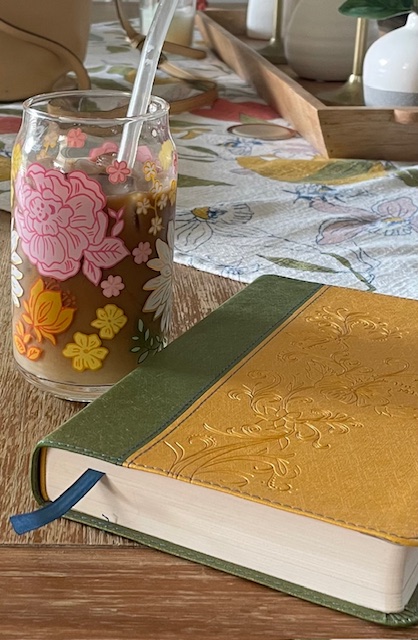
Black mold leached across the inside of the wooden lid of my floral painted glass tumbler. I scrubbed and scrubbed but was unable even with brushes to eradicate the mold underneath the rubber seal. There was nothing to do but throw the lid away. I was devastated; my thoughtful daughter, Maggie, had purchased this tumbler for my birthday. One of the best gift givers I know, she picked out something that was both cheerful and sustainable with a glass straw. For a solid month, I used the glass regularly. But one night, after an exciting book club meeting on Zoom, I left the glass, with water in it, on my desk, and forgot about it for about a week. And over the course of that week, mold developed and ruined the lid.
For the past few years, I have struggled with finding where my faith intersects with my political views. For years, I believed that my party held high moral ground when it came to supporting candidates. We took a strong stance when one president had an inappropriate relationship with an intern, and even moved to impeach him (I struggle with using the words “inappropriate relationship” when power dynamics are involved). But then came 2016 and the Hollywood Access tapes, and all the same issues that plagued former President Bill Clinton seemed to be ignored when dealing with Donald Trump. I heard again and again, vote for the one who supports causes Christians believe in, it doesn’t matter what his character has been. I watched while fellow Christians who voted for Donald Trump, and as he gained office and passed legislation, they seemed to put him on the same pedestal as Jesus.
Four years later, when protestors stormed the Capitol, these same Christians justified his actions. As more allegations have come against him, including credible sexual assault, Christians have chosen to align themselves even closer to former President Trump. They ignore all the hate speech, white supremacy connections, and belittling comments he makes. Instead, they focus on his candidates for the Supreme Court, some of his policies, and create memes where angels and Jesus are watching over his candidacy.
I have found some Christian community that doesn’t support Trump. Russell Moore, David and Nancy French, Tim Alberta and others take a strong and EDUCATED stance against Trump because of their faith. They articulate their views on various podcasts, op-eds in different newspapers, and have even written some books that explain how we as Evangelicals have gotten to the Trump era. They don’t profess that as Christians we have to be perfect. But they do believe that as Christians, we need to be ethical in who we support in politics.
By now, we have all heard of the assassination attempt on former President Donald Trump. As much as I oppose Donald Trump and have major concerns if he is elected, I am thankful that the assassination was not a success. Russell Moore stated on the social medial platform X that “Political violence is evil to the core and is an attack on everything this nation represents. Attempted murder is an attack on the image of God.” David French commented on Threads, “In moments like this, it’s imperative to condemn political violence, full stop. Don’t what-about. Don’t measure which side is worse. Just say it’s wrong, loudly and clearly.” They are the middle of the road voices that believe in God, rule of law, and decency.
Unfortunately, on both sides of the political spectrum, there are extremely loud voices that don’t hold themselves to these same standards. Instead, conspiracy theories are running amok in social media, wild assumptions about the hand of God and where the bullet should have gone are also being articulated, and more memes are shared about the wings of angels guarding certain individuals.
The mold on my lid spread because it had the perfect environment. Our air conditioning was on the fritz for the past few weeks. Therefore, the hotter temperatures in that room were causing the water to condense on the inside of the lid. It probably only took a few days before the mold developed, and within that few days my lid was ruined.
A week after the assassination attempt, President Biden has chosen not to seek reelection. With this new election drama, just like the mold, hyperbole is spreading from extremists on both sides. They each claim that democracy is at stake and accuse the other side of being fascist or socialist.
A few Sundays ago, my husband spoke boldly when leading prayer in our church. He asked the church at large to truly follow Jesus, instead of making certain hot button issues our religion or a certain politician our messiah. When I reflect on Terry’s focused prayer, I pause to consider what my personal rhetoric endorses.
As a Christian, I have asked myself some hard questions in the last few years. I continue to wrestle with these questions amid a divided nation, assassination attempts, and suspended campaigns. Do I follow Jesus, or do I follow a political party? Do I recognize the Bible as truth, including its consistent advocacy for the marginalized groups, or do I continue to vote in a way that further marginalize these groups? Finally, do I educate myself on these issues, instead of just accepting the views from certain perspectives, whether right or left?
This has been a journey for me, and in my community, I often feel alone with some of my views. I struggle with the urge to persuade others to take this journey with me. I try to hide my expressions as I cringe when Christians share a belief that I find contrary to my faith. I know my reactions, both verbal and nonverbal, should reflect Christ.
Where does this leave me in this upcoming election? First, local elections are far more important than I have ever believed. I am going to take the time to educate myself on who is running for school boards, council positions, and state offices. I think these positions can have a more direct impact than I initially believed on some of the causes I support. I also recently heard on a few podcasts a theme of hope, no matter who wins this election. This hope is not in a particular party, platform, or agenda. My hope needs to rest in Christ. Therefore, the outcome of the November election is not going to determine my joy or my peace. I am going to place my hope in the only place that sustains—in the arms of a just and gracious God, the only place I can find peace.
Terry was right to challenge me to follow Jesus; only He can save and lead!!
“I can do all things through him who strengthens me.” Philippians 4:13
Once again, I submitted my resume for a part-time position with a non-profit where I would be coordinating volunteers and connecting with the community. It was also for a cause I believed in: helping the unhoused in various ways. I knew it was a long shot, but I was hoping the part-time nature would limit the prospective applicant field, increasing my chances. To my surprise, I had a phone interview which led to an in-person interview. I grew excited and really hoped I would receive an offer. So, I waited, and on my way to Rhode Island I was offered and accepted the position. For the first time in 27 years, I was entering the work force on a professional level.
My husband and I made the decision for me to stay home with our children and later home educate them as well. My life was busy, creating lesson plans, writing some of my own curriculum, and researching the best methods to give my children a solid education. To make ends meet in our budget, I occasionally took on part-time jobs, including working as a direct seller for Pampered Chef, cleaning an office building, and working at Target. But most of my supplementary income came in the form of childcare, and in those 27 years, I have taken care of over sixty children, fifteen of which were long term stints. But lesson plans, church volunteering, and working retail 15 years ago don’t fill a resume with eye-catching work experience or marketable skills.
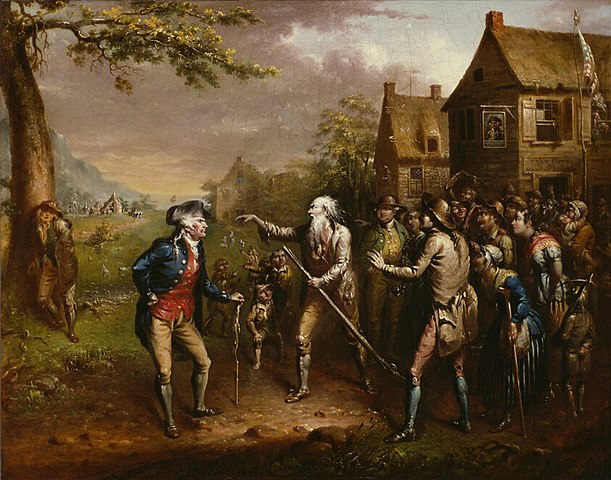
My first week of work, I packed my lunch, wore professional clothing, and left my house early in the morning. I was excited and nervous, but confident that I could do the job. But my confidence quickly dissipated when I started filling out forms and having conversations about drives, CRMs, mastering Outlook, and creating an email signature. For the first time, I felt exactly what I looked look like to the world: Rip Van Winkle (aka domestic servant and home educator) wakes up after having slept away the last twenty-seven years.
I don’t want to minimize the work I did at home. For many years, I successfully budgeted, meal planned, and prepared three meals a day for a family of four, including a few extras on a consistent basis. I was the master scheduler: organizing family events, managing activities, and doctor appointments, while making sure that all of us had clean underwear on a regular basis. Additionally, I taught my children how to read, write, and do arithmetic. I exposed them to art and music, explored nature and science, and made history come alive for them. I successfully prepared them for college, and both are still lifelong learners. I was busy leading a full life and still found time to be a Sunday School teacher, VBS coordinator, Bible Quizzing coach, and lead a girl’s group.
But all decisions have costs, and although my decision to stay home was best for our family, it led to a thin resume. When I last worked professionally, email was just starting to become a form of communication. I had a basic program I used for logging my activities, but it didn’t connect with the rest of my staff, and we only used one drive. My foray into the professional world made me feel unprepared and unqualified.
I have felt this way before: as I entered college, after I got married, bringing my first child home, picking a phonics program for my children, starting a blog, and writing my book. With each of these challenges, I felt inadequate and unsure. Those feelings are not bad, they position you to take the necessary steps in the right direction. I researched, asked a lot of questions, pivoted when I took a wrong step, and continued to work towards my goal. I wanted to be successful in college, marriage, parenting, home educating, and writing, and that meant taking risks. Just like in the past, I couldn’t let my Rip Van Winkle persona stop me from attempting to do my best in this new position.
It’s been a huge adjustment these last few weeks. I still feel like I am immersing myself in new skills: creating events for my Outlook calendar, formatting Excel databases to fit my needs, and creating procedures for me to do my work more effectively. My husband quietly smirks as I ask him about Excel spreadsheets, which I used to refer to as “my nemesis” (Terry is an Excel groupie and looks for coffee mugs or T-shirts to display his undying love). But at the same time, I feel like I am getting into a groove. I have had some insightful conversations with volunteers about what motivates them to sacrifice their time for our organization.
What has surprised me the most is all the support I have been given by women who have been professionals all their adult lives. They offered technical support, a safe place to share my insecurities, and, most of all, encouragement. I have heard consistently from these women that they believe that I will succeed and that the position sounds perfect for me.
For so many years, there seemed to be a divide between women who stayed at home and women who worked. Both sides felt like their side was being slighted, and competition ensued for whose job was the hardest. Today, it seems like we have turned a corner, and instead of working hard to validate our choices, more women are cheering each other on in their choices. And for someone who needed some extra reinforcement when insecurities flared, it was refreshing that so many successful, professional women were there to cheer me on!
By the way, for the first time in my life, I am going to get business cards…I am so excited!!!





 By Sherry Collins