Page 8 of 28

Sourdough MESSages

“And do not be conformed to this world, but be ye transformed by the renewing of your mind, that you may prove what is that good and acceptable and perfect will of God.” Romans 12:2

I am done! A few Saturdays ago, I came home to find my sourdough starter exploding all over my counter. It bubbled over, looking like a cave-dwelling ogre hugging the outside of the glass jar. I sighed with disgust as I scrubbed the dried sourdough cement off my counter. Despite its reviews and the Amazon algorithms, the thin, well-shaped glass was not designed for sourdough. At least once a week, my sourdough feasted, causing it to overflow, resulting in a mess for me to clean up. I was tired of trying to fit my dough in a glass that didn’t work. It was time to change jars!

Just like my sourdough fiasco, I have spent a lifetime trying to fit into places that didn’t fit me. I tried to be demure to compensate for when my extroverted nature was seen as offensive. I stifled my opinions and ideas, knowing they wouldn’t be welcomed. I curbed my passions when they would be seen as “too much”. And I ignored the voice of God because I thought others were more in tune than I was. Now, in my early fifties, I declare, “I AM DONE!”

This doesn’t give me a pass to be overbearing or prideful. But it does change the amount of energy and attention I put towards trying to fit in. I need to look for places where I am loved and valued for who I am. I need to trust my gut and my ability to discern the voice of God. But even in this declaration, I know I am battling lifelong patterns of minimizing and judging myself.

I find these same patterns developing in a group of young tween girls that I love, with the age-old messages most women wrestle with; messages like “I am too fat”, “I am not smart enough”, or “I don’t fit in.” Generation after generation, these comments corrode a young girl’s sense of worth like acid. They create well-trod paths in her brain leading to self-doubt and lack of confidence. These paths prevent her from recognizing who she is in God and from moving forward.

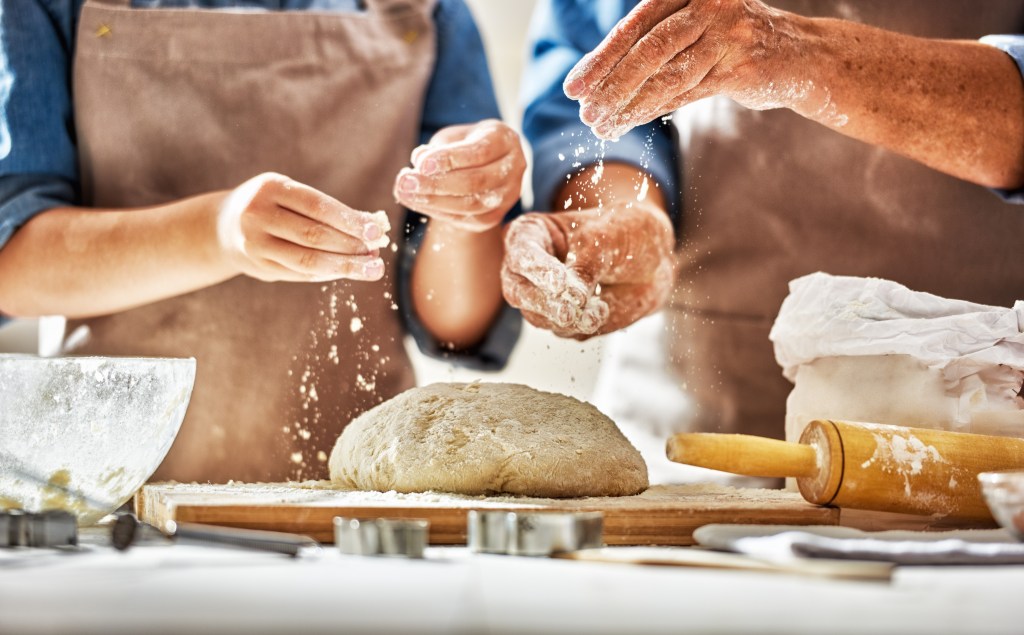
Despite the explosions, when the sourdough is feeding and growing well, I have made some delicious, crusty loaves of bread. I have also made delicious, flaky sourdough piecrust to cover individual turkey pot pies. My grandchildren have indulged in the sourdough discard crackers my daughter-in-love has baked. And, although I haven’t yet tried them, I have pinned recipes for sourdough cookies, cakes, and pancakes. This dough, when in the right jar, has endless possibilities. But that Saturday afternoon, I just saw a mess.

I see the “mess” created by the messages that young girls receive about themselves, along with the messages I have received about myself. And before I choose a different jar, I need to clean up my mess. This starts by examining how I live my life and the messages I believe about myself. What I say can and will influence those younger women in my circle, including my nieces and granddaughters. And even more importantly, I need to evaluate the messages I convey to younger girls and how those messages may reinforce the negative views they have of themselves.

Honestly, I struggle with how much or how little we should comment to a young girl on her appearance. Being the young girl who rarely received comments on how pretty she was, I felt that void in a big way. This slight becomes glaringly obvious when your peers are praised for their beauty, and you are mostly ignored except for the occasional “You have a pretty face.” Comments that would have made me feel beautiful and feminine and would have been a balm for my broken soul were withheld. It took me twenty-five years into my marriage to a committed husband to really believe he found me attractive.

On the flipside, these comments can make a young girl feel like her appearance is the only valuable thing she has to offer. It objectifies her as something to be put on display and viewed. It ignores her talents, strengths, character traits, and intelligence. And when we don’t praise those traits in young women, they will also feel the void.

And this puts us back to where we started. How can I help future generations stop trying to fit into places that don’t fit them? How can they work on changing those destructive messages in their teens and early twenties? And how can we prevent those destructive messages from even being contemplated?

Along with cleaning up my own mess, I need to understand how I define beauty and how my definition contrasts with God’s definition. Do I see beauty as being a certain size, hair style, or type of dress? Do I recognize that God made everyone in His image, and His image is not limited by height, weight, or bone structure? The closer I get to God’s definition, the more inclusive and encouraging I will become.

Next, I don’t think eliminating all affirmations about appearance is the answer. Instead, it’s making the jar large enough to encompass all the beautiful traits that make each woman valuable. This means an honest evaluation of the type of compliments I give. Besides complimenting a young girl on her appearance, am I pointing out times she is kind, courageous, and demonstrating perseverance? When she is sweaty and playing hard, am I cheering her on while she is engaging in habits that promote wellness? Most importantly, when she is modeling Jesus, am I encouraging her with praise? These simple acts of affirmation can help her see that she is beautiful both inwardly and outwardly.

The more I deal with my own mess, align my concept of beauty with God’s, and take an honest evaluation of how I am complimenting young women, the more I believe I can make a dent in this mess that we have created in our society. And I think the more women who join me, the more we can impact future generations with the idea that anything is possible.

It’s Women’s History Month. We should look back and honor the women who have made an impact on our lives historically. But it’s also a time we can pave the way for younger women to make a future impact in our society. So, let’s look at our jars!

Two Snows

“But whoever hates his brother is in the darkness and walks in the darkness, and does not know where he is going, because the darkness has blinded his eyes.” 1 John 2:11

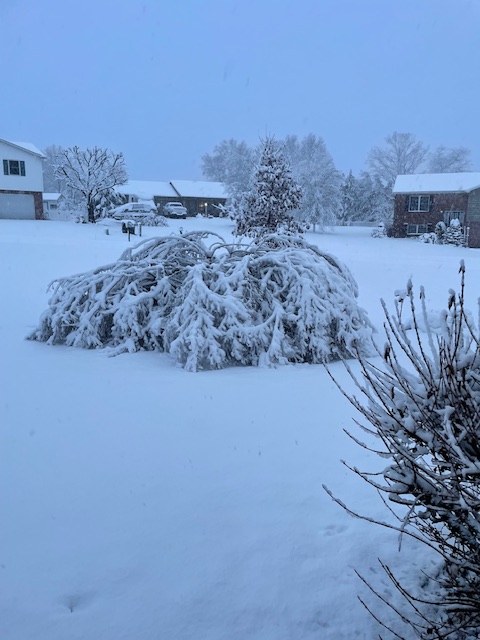
Last Tuesday, I awoke to a winter wonderland. Heavy snow blanketed all the trees and bushes in our yard. One bush laden with snow created an umbrella sanctuary for all creatures, both real and imaginary (the fairies I wish existed). I snapped a few pictures and sent it to my family remarking on the beauty God had landscaped. Throughout the day, I gazed out the windows, soaking in the views. The world felt magical, fresh, and peaceful.

Five weeks ago, this same scene didn’t evoke any feelings of beauty and serenity. I awoke to my alarm at 5:00 am, bundled up, and started the herculean task of shoveling my driveway. Later, my husband joined me, and after shoveling for over an hour, I walked into my house as he headed off to work. After pouring myself a cup of coffee, I turned on a podcast, and dozed off in our recliner. An hour later, still half asleep, I answered the phone to my ordinarily calm husband’s panicked voice, “Honey, I had a car accident! I’m not hurt but I’m waiting for the police to come.” He quickly described how he hit some slush on the interstate, and ended up spinning around three times, staying in his own lane. He knocked into a concrete embankment several times during his spin-out. This interstate is normally filled with tractor-trailers and other vehicles. But due to the conditions, and the size of our car, Terry managed not to hit anyone else. We both believe this was a miracle.

Hazy and shaken, I called my children to let them know about the accident. Maggie promptly took charge, calling her dad for more details. Within twenty minutes, she and Will were on their way to pick up Terry and bring him home. For the next two hours, I paced around my home, staring out into my yard at the treacherous snow. Tears fell as I imagined the “what if’s”. And when Terry walked in and I hugged him tight, so thankful that he was alive and well.

Snow, like many things in life, can be beautiful or deadly. Last Tuesday, my son and his family played in the snow and created a snowman that Joel called “Frosty”. Others may have chosen to go sledding or ride the trails with a snowmobile. This winter wonderland turned into a playground for many delighting in winter. But this same day, I am sure there were more severe accidents than the one my husband had had five weeks earlier. And the results could be lifelong injuries or the loss of a family member. And with this tragedy, these family members may never look at a snowstorm the same as before.

Even if the advent of snow doesn’t result in a life-changing accident, the very fact of snow can illicit different responses. Although I have no desire to live in Anchorage where they have received 101.9 inches of snow, I still love the accumulation of etched snowflakes. Like a child, I look forward to snowy days. I conjure feelings of Hygge and can’t wait to curl up on my couch with a cozy blanket and a book. I light candles, dim the lights, and drink coffee, alternating it with hot chocolate. It’s a day when my extroverted nature is pushed aside, and I embrace the solitude that a snow day brings. I don’t even mind shoveling and love the sound of the snowplow going through my neighborhood.

Prior to the accident, my husband didn’t share my sentiments. He finds snow to be cold, messy, and stressful, especially with his hour-long commute. And although he found the snow fall last Tuesday beautiful, long term snow piles make him feel claustrophobic. Yes, he likes curling up with a good book, wrapping up in a throw, and drinking coffee.  But he doesn’t need snow to add to the ambiance of Hygge. He concedes that one snowfall on Christmas Eve is all he needs, and then he’s ready to move on and embrace spring. And with the accident, his lackluster attitude towards snow has diminished even more.

It’s Black History month, and as someone who identifies as a white American, I have my view of the world. But those who are African American have a different view of the same world. And although God gives salvation to all of us freely, we live in a fallen world where others are not treated the same nor given the same freedoms. And although God sees us as equals, too often our world has treated others less than equally.

Just like my husband sees snow differently than I do, it doesn’t mean his perspective is wrong. This is based on his experience of having to navigate icy roads on a regular basis. I rarely drive in snow and can relax in the comfort of my home while watching the snow fall. But until his accident, I hadn’t acknowledged how dangerous snow can be. And for that day, I walked in his shoes and saw how my magical snow could be treacherous.

I haven’t experienced the blatant racism African Americans face along with the microaggressions they deal with on a regular basis. I may understand trauma on a personal level, but I haven’t experienced the trauma of slavery, Jim Crow laws, lynchings, and police brutality that has been passed on for generations. Their experience has created a sense of hopelessness, lack of agency, and anger towards any expression of racism, blatant or not. But this lack of experience doesn’t give me a pass on expressing empathy and understanding. As a Christian, I am called to love as Jesus loved, unconditionally, regardless of gender, race, or ethnicity.

I just finished my book this week but am a long way from publishing it. We have lots of editing, a cover to design, and formats to be decided. I hope to publish it by the end of summer. This as-yet-untitled memoir is about God’s restoration from a childhood fraught with sexual abuse. My daughter suggested that I make it clear who my intended audience is. I believe the book is for everyone. I am inviting readers into my suffering so that they have a better understanding of how sexual abuse affects a person throughout their life. I hope it dismantles some of the myths of sexual assault and the ludicrous idea that a person just needs to “forgive and move on.” I hope that the reader comes to the book with an open mind and is changed by my story.

For me, reading is a gateway into understanding different viewpoints. Last year, I read a few books about the black experience in prison, George Floyd’s life, and Tyler Merritt’s experience as an African American. These books helped me walk in their shoes for a little while, seeing the reality of their struggles and challenges. This year, I am planning on reading two of Esau McCaulley’s works. As a professor and theologian, his Reading While Black: African American Biblical Interpretation as an Exercise in Hope and How Far to the Promise Land will help me reform some of my ideas of race within the context of Christianity. McCaulley challenges, “If the church is going to be on the side of peace in the United States, there has to be an honest accounting of what this country has done and continues to do to Black and Brown people.”

In addition to reading, I listen to podcasts and follow Instagram accounts of other thinkers in the Christian world who offer a more nuanced perspective on race. Jasmine L. Holmes’ Instagram feed is full of myths with scholarly research combating some of those ideas that have plagued Christian circles, particularly the homeschooling circuit, for years. These include the idea that the Civil War was not about slavery, but mostly about states’ rights, and most slaves were treated like family and given the gospel. The daughter of a major speaker at home education conferences, Holmes has insight into some of the racist material that was being marketed to home educators. In her book Mother to a Son: Letters to a Black Boy on Identity and Hope, she writes “The truth of the gospel is not threatened by the truth we learn elsewhere, but highlighted by it.”

It’s been almost four years since George Floyd’s death, and I don’t believe we have resolved the racial tensions in the United States. White supremacy groups continue to flourish, and hate is marketed. I am not called to justify my position before Christ, but to present myself as a person who needs sanctification. And this sanctification looks like being honest about my own privilege and inviting myself into the sufferings of others through their stories. And if I hope that my own memoir moves the dial in being more empathetic towards rape victims, I need to do the same about race. Black History month might look very different for everyone. Take the opportunity and be open to changing your view, maybe through a podcast, an Instagram feed, or even a book. And like both McCaulley and Holmes state, we must reckon with both the history and current treatment of Black and Brown people and how it illuminates the gospel and our response to it.

Football, Donuts, and Flowers

“Let us consider how to stir up one another to love and good works, not neglecting to meet together, as is the habit of some, but encouraging one another, and all the more as you see the day drawing near.” Hebrews 10:24-25 ESV

The Super Bowl, Fasnacht Day, and Valentine’s Day have hit the calendar this week with a bang. Wings, donuts, and flowers packed shelves in the grocery stores. Travis Kelce and Taylor Swift, Madri Gras, and restaurant menus fill my social media feed. It’s a week of feasting, partying, and celebrating. Although all three events are supported by food, these three days are distinct with very different vibes. But if you set aside the commercials, beads, and flowers, they all point to the importance of connection. And with our polarized nation, we all need more opportunities to connect.

Because of my Wisconsin roots, I call myself a Packers fan, but I am not a football aficionado. I may have watched two Super Bowls in my entire life. And this year, even though we didn’t watch the game, we still made mini appetizers to enjoy while spending the evening together. I fully recognize that we are in the minority here. This year, the Super Bowl had the largest viewership ever at 123.4 million. If I am doing my math right, this means one out of every three Americans watched the big game. And I am sure that those who were not watching were like me, still checking their phones for updates and to hear the buzz about the commercials.

Now some may argue that it’s just a game unworthy of all the hype. Others may say viewership was up due to the “Swifties” showing interest. But whatever the case, this is one of the only major events that Americans seems to come together and share collectively. And I think it’s important we have these types of events, whether it’s football, the Olympics, or the Barbie movie. It forces us to put aside our differences and have fun. And this “fun” or play is valuable because it helps to create camaraderie. It reminds us that we are not so different, and as a Christian, it reminds me that everyone is created in His image.

Whether you call it Fat Tuesday, or Fasnacht Day, Tuesday, February 13, 2024, is another day that most people recognize on the calendar. Historically, this was the last day before the start of Lent. People would empty out their pantries of sugar, butter, and lard to prevent spoilage over the next forty days of fasting. An easy way to do this was to make donuts, named Fasnacht by the Pennsylvania Dutch. Even if you were not a liturgical Christian, you would still benefit by indulging in donuts due to your neighbor’s excess. The point of this indulgence was not to eat as many calories as you can, but to mark the upcoming season of remembrance of the death, burial, and resurrection of Jesus.

Since moving to Pennsylvania, the Collins family has celebrated Fasnacht Day by sharing donuts with our family and friends. I discovered this day thirteen years ago, a lonely month and half after leaving Wisconsin. The idea of a day set aside for donuts made the hard move seem more palatable. It’s hard to eat a donut and not be joyful. And a donut shared in the company of others makes the donut even sweeter. Additionally, my first Fasnacht day gave me hope that my move to Pennsylvania could be sweet. I could make new friends and new traditions.

Traditionally, Valentine’s Day has been set aside for couples to celebrate romantic love. But like all holidays, the love has spread with Valentine gift exchanges in schools and Galentine Day celebrations. Today, we don’t celebrate with just a card and an appropriate sentiment. Instead, the National Retail Federation estimates that Americans will spend an average of $185.81 per person letting their loved ones, including pets, know that they are special with cards, flowers, candy, and gifts. And if money is an indicator of importance, it seems many Americans believe this day is as valuable as our relationships!

At different points in our marriage, we have prioritized this day to a greater or lesser extent. How we celebrated was often an indicator of the healthiness of our marriage. This year, we are not spending the average amount, but we are still taking time to be together as a couple and celebrate our love of 28 years. In no way do I think flowers or chocolate will heal a broken marriage, but I do think setting aside days to celebrate love is important. It signals to those you love that they are valuable and cherished.

All polls, whether related to politics, economic satisfaction, or mental health indicate that there is a prevailing sense of apathy, anxiety and loneliness across all ages, genders, and backgrounds. The average American feels a general sense of hopelessness for the future. And with that lack of hope comes a higher rate of suicide, depression, and substance addiction. Additionally, our avid use of devices, whether for social media or news headlines, increases our anxiety and sense of being alone. How does one look to the future with an impending election that guarantees more divisiveness? How does one look past the genocides and wars happening across the world? How does one find support if they are struggling or support others who are struggling with mental health issues?

I don’t have all the answers, but I think a little football, donuts, and flowers are good ways to start. I need to find ways to connect with others in larger gatherings centered on fun. This may involve a game night at my home or watching a movie with friends. This checking in with people can help others feel less isolated or alone. It also reminds us not to take everything so seriously, but to spend time just enjoying each other’s company. Plus, whenever you have a group together, laughter is both likely and contagious!

On a smaller note, connecting with small groups is another way to combat hopelessness. Joy is not found just in a bundle of fried sweet dough; it’s found in meaningful conversation that glorifies God. Although my extroverted nature thrives in large gatherings, my most meaningful connections are with a small group of friends. These connections not only contain laughter, but also moments of truth and beauty found in deep abiding relationships. This is where I refuel and glean from others. It’s a place of safety, where I am known and loved. And if I feel this from my friends, I am confident that others feel this as well in small groups. And just like buying a box of donuts gave me a glimpse of hope, I can cultivate small groups in my life as well to bring hope.

Finally, the health of my most treasured relationships should reflect where I spend my time, money, and energy. If I value my husband, my adult children and in-loves, and my grandchildren, they should receive the best of what I have to offer. This doesn’t require extravagant gifts, but it does require me to be intentional in my relationships. It is all too easy to take for granted those you love the most. And the gift of Valentine’s Day is that it is a reminder to put those you love front and center.

Like most people, it is easy for me to fall into despair over the upcoming election, the state of our world, and the myriad crises we face. But this week is a gentle reminder to me that there is a lot to celebrate and, more importantly, lots of ways I can personally build connections. And if football, donuts, and flowers can’t get you out of the doldrums, watch the Dunkin’ Super Bowl commercial. I promise the Dunkin’ tracksuits alone will make you laugh!

Shadows and Groundhogs

“Every good gift and every perfect gift is from above, coming down from the Father of lights, with whom there is no variation or shadow due to change.” James 1:17 ESV

Last Friday, men in top hats and tails gathered in front a huge crowd to see Punxsutawney Phil, one of the world’s most famous rodents. Music played, speeches were made, and cameras clicked as this groundhog crept out of his man-made burrow. Everyone held their collective breath, awaiting the groundhog and the view of his shadow. Soon, an early spring was declared with pomp and cheers. Due to the cloud cover, Phil did not see his shadow, and a 137-year tradition continued.

Years ago, I met a woman and her two children at the library. We struck up a conversation and immediately found a common interest with both of us being home educators. Soon, our families were eating dinner and playing games together. She seemed eager for community and would often bring little gifts of appreciation or write kind notes. Our husbands got along, and I was looking forward to building a lasting friendship.

Within a few months of the budding friendship, I opened an email from her but addressed to her husband and mistakenly sent it to me. I was confused, and the confusion only grew as I read the contents of the email. It was an angry tirade about a Walmart employee who had made a simple mistake. My new friend used expletives that I had never heard her use. Her anger seemed out of proportion, and she even threatened to call management and possibly sue the store. I was stunned! Was this the same lady who had just brought over blueberry muffins the week before? I realized this message was sent to me by accident, deleted it, and tried to believe that this was an outlier incident.

But it wasn’t. Within a few more months, other similar incidents happened, and this time her anger was directed towards me and my family. It got ugly quickly, and my husband and I decided, with prayer, that it was in all our best interests to end the friendship peacefully and go our separate ways.

We all have ways we want to be perceived by others, it’s the ideal version of ourselves. I want others to perceive me as friendly, joyful, and a good listener. I pray that they actively see Christ working in me. This is what psychiatrist Carl Jung referred to as our ego. Yet, I can be distracted, and am sometimes irritable and talk more than I listen. This unpleasant version of Sherry most often appears within the four walls of my home in front of the people I love the most. Carl Jung refers to this as our shadow side.

Recently, I heard writer John Mark Comer talk about this ego and shadow side in the context of Christianity. It’s good to pursue Godly character, to cultivate goodness, patience, gentleness, and joy in life. But often, our true nature, our shadow side comes out. We are humans and make choices that don’t always align themselves with Christ. And often this is the side we try to hide from others. Comer went on to say that the most integrated people are those who have the least amount of difference between their ego and shadow side. They are who they present, and they don’t have hidden sides that people would be startled at if they read an unexpected email.

In the case of Punxsutawney Phil, his shadow’s visibility is due to a law of physics. For a shadow to appear, an object needs to come between a light source and a surface. On a cloudy day, with no light, Phil would not see his shadow, thus predicting an early spring. Although physics can explain shadows, they are not often seen as neutral in life. In literature and films, shadows suggest something sinister, while children discovering shadow puppets find shadows humorous and delightful.

In the Bible, the apostle John compares God to being light, “and the light shineth into darkness”. This was more than just a metaphor, seen both when Moses was on Mount Sinai and the mountaintop transfiguration of Jesus. In both cases, the light from God was so blinding that it affected the face of Moses and the clothes of Jesus, reflecting His glory. And this same light continues as I listen to sermons, read His word, spend time in prayer, and meditate on God. And as I see the glory of God, it moves me to sanctification by illuminating the shadows in my life. The more I know God and am in relationship with Him, the more my shadow side is visible. I see where I fall short, where my character is lacking, and where sin has crept into my life.

Recently, I made a dark chocolate cheesecake. The dark cocoa and the melted chocolate are in direct contrast with the pure white cream cheese and sugar. If the cream cheese is not softened well, no matter how well I mix, it is likely that small white chunks of cream cheese will remain when baked. Then when I serve the cheesecake, instead of a uniform creamy chocolate consistency, a person will taste the sharp tang of unmixed cream cheese.

I may have the light of God shining on me, but if I don’t allow humility to soften my heart, that shadow side will dominate. I am not likely to send an email filled with expletives, but I can still be sharp with unkindness and unloving behavior. And to be humble, I must be focused on God and less on my own image. Theologian Timothy Keller defines humility this way: “I cannot feel superior to anyone, and yet I have nothing to prove to anyone. I do not think more of myself nor less of myself. Instead, I think of myself less.”

God is exactly who He said he would be. James records in 1:16-17, “Do not be deceived my beloved brothers. Every good gift and every perfect gift is from above, coming down from the Father of lights, with whom there is no variation or shadow due to change.” And although I will never be perfectly like God, I can allow His light, coupled with my humility and my pursuit of Him, to help me become more like Him.

Brown or Copper

“Judge not, that ye be not judged.” Matthew 7:1

One of the many reasons I love my husband is his love of trees. Terry enjoys hiking through the forest under the canopy of trees. He marvels at big oak trees with their gnarly branches. While living in Wisconsin, he discovered a ginkgo tree at his work and couldn’t wait to show me their fan shaped leaves. Once, he joined our then teenagers and their friends in climbing a tree in Kitty Hawk, North Carolina. Even if a tree is diseased and dying, he mourns the inevitable cutting down. As we are driving, he remarks on the ghosts of trees that have met their demise on our usual routes. And one of his greatest dreams is to see the majestic redwood forests.

When we moved into our house, our yard had only one small maple tree that has more than doubled in size and breadth in the last twelve years. Though we did have some privet bushes and climbing roses, and we added a lilac bush, the yard had only that one solitary tree until six years ago. That spring, Terry wanted to plant some trees. It had been a particularly hard fall and winter for us personally, culminating in the devastating loss of his mother. Eva Jane, his mother, loved trees as well. She, too, remarked on trees and the beauty and shade they provided. And in honor of his mother, Terry wanted to grow something despite the great loss he felt. And maybe, in nurturing something, he would find peace and hope.

As with most decisions, we had very different ideas. I love anything that flowers and produces fruits. Terry, on the other hand, loves cedar trees, stately oaks, and other shade trees. We went to the local nursery and walked around, oohing, remarking, and maybe even debating a little on what trees we wanted to purchase. We finally compromised. We found a magnolia tree that seemed destined to be in our yard, with the species name “Jane Magnolia”, in honor of my late mother-in-law. We also found a crabapple tree, and Terry got his wish: an oak. Soon, he was digging holes and planting trees. He faithfully watered the trees all that summer to ensure they were well established before the coming winter.

The trees have grown since that spring. The magnolia blossoms each spring, and a sweet bird has built her nest in the tree for the last three years. The crabapple has spread its branches, while the oak thrives having added a protective layer of bark to its trunk as it also branches out across the yard. I often see my husband staring out into the yard, gazing at the trees with wonder and satisfaction.

But I am going to let you in on a little secret: I have borderline despised the oak tree each fall. The first year, despite turning a flat dull brown, the tree didn’t drop her leaves in late October. Instead, she clutched the leaves throughout the winter, appearing like she was in her final stages of life. Then in spring, when everything was brimming with life, the tree dropped her leaves, with new growth and new buds appearing. The dead brown leaves lying on the grass polluted my ideas of spring. As she continued to grow, her clutch of dead brown leaves grew as well. This pattern has continued for the last five years, the oak gripping its dead leaves in an apparent act of defiance. And in my mind, it was an eyesore in winter, when I look forward to fresh snow artfully covering the bare branches.

Terry researched briefly and found that some species of oak hold onto their leaves with no apparent explanation. This bothered me. Why didn’t we do research ahead of time and pick a proper leaf-dropping oak? He continued to love his tree, but I had major buyer’s remorse. He continued to remark on its’ growth, and I half listened to his praise.

Last week, I saw an Instagram post from Michaux State Forest casting Terry’s oak tree in an entirely new light. The post stated “here’s a reminder to look beyond the drab winter landscape on your next forest trek”. The post changed my dull brown leaves to “persistent copper-colored leaves” explaining that these oaks offer visual interest and a bit of mystery. They don’t lose their leaves like all the other trees due to a “quirk known as marcescence”. Scientists offer some possible explanations. It might be a way for a young tree to protect its lower branches from hungry deer. Or when the leaves do drop in spring, it might help protect the forest floor by aiding with moisture retention. But, for whatever reason, God created this tree with this apparent quirk for good reasons.

I like to believe I champion differences in people. I embrace cultural differences and love to hear stories about others’ traditions. I choose books that expand my knowledge and understanding of the world. I encourage others to follow their passions, even if it falls out of the norms of what is popular. And fundamentally, I believe that God has created us in His image, and that our way of making the world beautiful reflects His character.

But as much as I try to champion people, I still fall into the trap of being judgmental. Recently, someone I love reminded me of times I had pushed him to be something he wasn’t. I didn’t support his God-given personality trait of being an introvert. Yes, even as an introvert, you need community. Yes, even as an introvert, you need to be friendly and have good communication skills. But the need for space and solitude recharges an introvert so that they can be in community, be friendly, and communicate well. When that space is taken away, it can leave the person feeling trapped with a need to close off. But out of misguided love, I pushed this person too hard. It left him feeling uncomfortable and unsupported.

On the flip side, for a time in my life I was in a space dominated by introverts. My need for socialization was deemed needy, my outgoing enthusiasm was too much, and my communication skills too loud. And, like the introvert that I was pushing, I felt trapped, uncomfortable, and unsupported. I tried to be calmer, less outgoing, and quieter. But inside, I was withered and dying. And until I changed my space, where I could be more of who I am, I wasn’t flourishing.

Despite my previous disdain for that tree, the oak is thriving. It has grown several feet and even produced a few tiny acorns this year. But what if the tree had dropped its leaves? Is it possible that the deer would have stripped it of its tender branches during the winter? Is it possible that the tree would have stopped growing and flourishing?

God has made all of us unique. Some of us are extroverts who thrive at parties and meeting new people. Others are introverts, who need smaller spaces to connect. Some of us love spontaneity and flexibility, others like Excel spreadsheets and day planners. These are just a few of the ways we are different. And all these differences reflect the characteristics of God. I need to recognize that and not see the differences in others as “dull brown”, wishing or pushing them to be something they are not. And just maybe if I suspend judgment, what might seem like dull brown is actually beautiful copper, exactly the way God intended.

Sabbath Unplugging

“Remember the Sabbath day, to keep it holy.” Exodus 20:8

As I was beginning my parenting journey, I ran across a recommended book, The Plug-In Drug, written by Marie Winn. The book, although dated, proposed that television disrupted family life and hindered the imagination of children. It suggested that children’s developing brains became addicted to television and had a hard time transitioning into other activities. She mentioned that some children started to gaze dazedly, becoming slack jawed when watching a screen.

While reading the book, I observed both my children, with glazed eyes, watching a video that I deemed educational. Although I limited the kinds of media they watched, along with the amount they watched, I realized that even within my limits, my children, ages 2 and 3, were on their way to being addicted to a screen. With the support of my husband, I did a radical intervention. I took a piece of butcher block paper, taped it to the television with the words “No TV October.”

The first week was challenging, some for the children, but far more for me. Yes, they whined a little bit, but I redirected them to a different activity, and they quickly moved on. I found the time while I was prepping dinner the most difficult, where they both wanted my constant attention or needed my intervention. In the past, I plopped them down in front of a television as a “babysitter” while I made dinner. Without my babysitter, I had to help them develop ways of entertaining themselves while I chopped onions or grated cheese. And this training took time and patience on my end.

After the month-long challenge, the paper came down, but the television stayed off. Our family had developed new rhythms, and we didn’t need the television. Instead, we spent time as a family playing games, putting together puzzles, and reading. We still watched movies, but this was an outlier instead of a regular occurrence.

I am not judging anyone for their family’s decisions on how to handle screens. My approach was right for me and my family at that point in time. I didn’t handle all screens with the same diligence as I had with the television screen. I was ignorant about the internet and some of the dangers it posed to my children, therefore, was not as careful. And finally, children and screen use are not the point of my post, because I am writing about my own screen addiction. Yes, I am addicted to my screen.

Years ago, I stated unequivocally that I was never going to go on Facebook or have a smart phone. I saw Facebook as a place for people to air their dirty laundry and a smart phone as an unneeded expense. Just like most Luddites, I eventually caved, drawn to connecting with friends and family that live far away. And my smart phone has in many ways made my life easier. It’s where I shop for groceries, discover new places, and see photos of my grandchildren.

But that little device is always with me. I pounce on it as Terry and I discuss something, googling the answer in a few seconds. Although I have curated my Instagram, I still find myself endlessly scrolling artists, chefs, and writers. I have even downloaded a word game that I play when “I need a break”. And if I wake up in the middle of the night from menopausal insomnia, I pick up my phone.

Terry and I lead busy lives. I could go into the details, but most of us understand busyness and could fill in the blanks with different responsibilities that take up our time. At the end of last year, we found ourselves approaching burnout. We love the different activities we are involved in and find them fulfilling. But at the same time, we needed to find some ways to reclaim some space in our lives free of distractions. We decided that in 2024 we would observe Sabbath from Friday at dusk to Saturday evening. Sabbath was originally set aside as a day of rest for God’s people. God recognized that setting aside one day from constant “producing” would help His people see that all their needs were ultimately met by God. And this day of rest was for worship and rejuvenation.

We already set aside Sunday as our day of worship. And as much as we often find aspects of the day inspiring and life-giving, we also end the day tired, and not rejuvenated. We have chosen to use some of our giftings to serve in our church and have no desire to change that. It just means we often come to church with a list of things we need to do to be present during the service. And in some ways, our volunteering falls under the “producing” mode, even if God is inspiring our efforts.

We are still unpacking what observing the sabbath means for us. But we did decide to be screen free for twenty-four hours every week. This means no mindless scrolling, listening to podcasts, playing games, and responding to texts. This frees us to be present with one another and choose other ways to spend our time. And with only three weekends in, I have not done so well. I find myself forgetting and automatically picking up my phone. I feel a bit agitated while I wander around the house in silence, preferring the distraction of podcasts with ear buds planted in my ears. And I find it difficult to leave questions unanswered, hoping I’ll remember the question at the end of the sabbath.

I wonder, if my children looked at me today, would they see my eyes glazed and my mouth slack jawed? I know they would see me hunched over staring at a screen far more than I want to admit. And the Apple weekly screen updates don’t lie. They tell me exactly how much time I spend on my screen. Additionally, have I missed the whole point of the Sabbath with my endless desires to go to my phone? Theologian Timothy Keller stated, “The purpose of Sabbath is to enjoy your God, life in general, what you have accomplished in the world through his help, and freedom you have in the gospel-freedom from slavery to any material object or human expectation.” Have I become a slave to a material object?

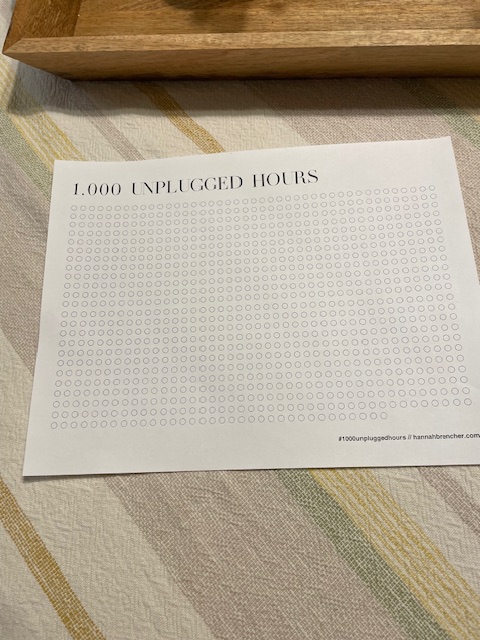
Hannah Brencher, author and podcaster, has created the 1,000 Hours Unplugged challenge with a downloadable tracker. On her website, she reports some startling statistics. According to Pew Research, on average, people will spend five years and four months of their lifetimes on social media. Trendhunter claims that 66% of people show signs of nomophobia, the fear of being without their phone. Additionally, it wouldn’t take much time to google how the algorithms on social media are designed to hit you with dopamine so you will continue to scroll. Hannah challenged herself because, during the pandemic, she found the phone to be what she called her “mini savior.” After hitting the 1,000 hours unplugged mark on her tracker, she found that “It wasn’t just a call to be unplugged. It was a call to be relentlessly present in my life and the lives of others. It was a call to create, rather than just consume. It was a call to see the blessing in the mundane of daily life.” And isn’t this the whole point of Sabbath?

For me, if I truly want to engage in Sabbath, I need to stop my addiction. I am starting late in January on this challenge. If I break it down, it means I must choose to be unplugged for an average of almost four hours each day. I want to be called to something else instead of being chained to my phone. I want to be present, rest in my curiosity without needing to find an answer on Google, and see the blessing in mundane chores in my home.

And finally, I want to create, not just consume, And not in a productive mode, where I am perfecting my writing craft, or working on skits for Vacation Bible School. This is creating for the sake of creating, dabbling in things that bring joy and satisfaction. It may be spending the weekend making morning buns with laminated dough. It may be repotting some plants. And it may involve the watercolor paints and book sitting on my dresser since Christmas. I don’t know where you are with your devices, but if you are curious, feel free to download your own tracker. I will update you throughout the year on how being unplugged is transforming me.

Behold

“One thing have I asked of the Lord, that will I seek after: that I may dwell in the house of the Lord all the days of my life, to gaze upon the beauty of the Lord and to inquire in his temple.” Psalm 27:4

For seven whole days during the holidays, our grandchildren were staying in our home with our son and daughter-in-love. It was perfect: we took items out of our pantry, playing grocery store with the toy cash register. We made homemade marshmallows, ate lots of pancakes, and smelled spices. We read books, snuggled, and painted nutcrackers. But much of the time, my husband and I just gazed with delight and wonderment at the two little ones who have completely captured our hearts. Watching them play, explore, and interact with one another brought us pure joy. It was more fulfilling than any movie I have ever seen, any book I have ever read, and any place I have ever visited. And this feeling coupled with the action of gazing can only be captured in one word: behold.

The word behold feels like intricate lace doilies from your favorite grandmother’s home or the warm glow from a kerosene lamp. It’s an old-fashioned word with all the warm feelings you can conjure. According to the Oxford dictionary, “to behold” is to see or observe a thing, especially a remarkable or impressive one. Amazingly, this antiquated word is used about 1,300 times throughout the Bible, often followed by an exclamation point. In the Greek, the word means “pay attention, look, open your eyes”, preceding a principle or idea towards which God wants us to direct our attention.

Recently, I heard something on a podcast that forced me to ask myself some hard questions. How did my children and any others that were put under my care see my gaze when they walked into a room? Did they see me excited and delighted to spend time with them? Did they see me shift my attention from whatever menial household task I was doing to one of interest and investment in them? Or did they see me ready to offer a critique and criticism about their appearance or action? Did they see me frown with disdain or annoyance? Did they see in me a lack of interest in what they had to say?

I am ashamed to admit that some of them would answer affirmatively to some of the latter, more negative questions. I remember times that I offered more criticism than praise, more annoyance than delight, and more disengagement than interest. And I am sure these little people felt deflated, ignored, or devalued at the expression on my face and the inflection in my voice.

Our facial expressions are not as masked as we would like to think. How often does the perky greeting of our favorite smiling barista make our day start off better? Or, in the other hand, how often does the grouchiness of a customer service representative make our challenging problem even more frustrating? As often as we pay attention to the facial cues and vocal inflections of others, are we aware of the facial cues and vocal inflections we are portraying to others? Do we stop and behold the face of someone for a few minutes as they converse with us?

Wednesday evenings are often crazy busy for me. I arrive at church early, eat a quick dinner and run quiz practice for some children. I usually have a few minutes to spare before church starts, where I am handing out lesson plans for Sunday School or following up with someone about one thing or another. And after church, again, I am following up on a conversation that I need to have.

Despite this chaos, this doesn’t excuse me from paying attention to those around me. Last week, Marie, a young woman in our church was delighted to show me a book bag she had embroidered for Lyla, one of the younger girls in our church. She embroidered Lyla’s name along with some extra flourishes that captured the younger girl’s sweet nature. But in my frantic state, I took a quick glance, and said it was nice, and rushed off.

Later, I had a few minutes to process what I had just done, and I felt awful. Marie had spent a considerable amount of time creating something beautiful for someone else. And her desire to share this with me deserved more than a cursory glance. It deserved my full attention; it deserved some moments of me “beholding” it. As soon as possible, I apologized and took a few minutes to look at the bag. I saw her care and design and complimented her on what she had created.

This concept of beholding is not limited to my relationships with others, but also applies to my relationship with God. I wonder how God would respond to these questions: does Sherry really pay attention to Me as she is reading My word? Does she invest quality time with Me in prayer or is she just counting the moments until she can move on? Does she delight in worshiping Me?

Again, I think I would be ashamed of God’s honest answers to my questions. All too often, I am distracted while reading His word, instead of clearing my brain so I can hear God speak. I am rushing through prayer, moving on to the next task, or my mind is focused on difficult situations instead of praising God for His goodness. And as beautiful as my grandchildren are to me, my relationship with God is far more precious, deserving the best of my attention!

When I think about children, I am amazed at how often just a few moments of undivided attention is all that they require. They are busy little humans who quickly move on to other things as they play and explore. But when they seek you, all they are asking is for you to behold them for just a little while. They just want to know that they are seen and valued.

God is different, He wants all our attention. At the same time, He doesn’t expect us to relinquish our responsibilities while cloistering ourselves in prayer and studying His word. He knows that dishes need to be washed, bills need to be paid, and mouths need to be fed. But our attention can be on Him while we are doing those tasks. We can express gratefulness for our home while washing dishes at our sink. We can work in a way that our employers see our Christian witness with our integrity and commitment. And we can demonstrate God’s love to those He has entrusted us to care for while preparing dinner. All of this, coupled with our personal rhythms of worship, prayer and studying His word, are ways we can behold Him.

That week with our grandchildren flew by. Seven days later, Terry and I waved goodbye to the little ones who had enraptured us. And for days afterwards, we talked about the time we spent with them, counting the days until our next visit. The more we behold someone, the more time we want to spend time with them. And this applies to our relationship with God as well. The more I behold God, the more I delight in Him and look forward to moments spent with Him.

This year, I want to spend less time checking off the boxes. I want to be less distracted and more focused. I want to behold both God and others. And it doesn’t have to cost me much, just a shift in what I deem important. And I am curious about the results if more of us made this our mission for the year. If we spent more time beholding God and others, what would shift in this world of chaos and stress? I have no idea, but I intend to do my part to find out!

Fifth Annual Book Review

“Make me to know your ways, O Lord; teach me your paths.” Psalms 25:4 ESV

The celebrations in my blog just keep coming. Today is my Fifth Annual Book Review post!!! It started in January 2020, when I wrote Technophobia, Apps, and Books, highlighting some of my favorite books. I had so much fun, it has now become an annual post and one of my favorites to write. It has grown to include a few podcasts and some shows that have made my life better as well.

Mid-year, I start the process of thinking about this post by opening my Goodreads app and looking back on some of the books I’ve read. I close my eyes and relive some of the sensations I felt when reading. It may be a book that caused me to think and change my perspective on life. It may be the delight I felt about a book that I couldn’t stop talking about it. It may be the smell of cardamon or saffron that filled my senses as I read an Indian cookbook. Or it may be a character that I rooted for who finally made sense of their troubled life. At this point, I make a mental note about which are my favorites thus far, and then I continue to read, finding more books to delight, inspire, and cause me to grow as a person.

In 2024, I read 91 books, one more than my initial goal. And it was a great year for reading. Looking back, I know I have referenced a lot of the books in my previous blogs, and most of them won’t even make my top five. And that’s when the difficulty begins: how do I choose the top five books? Do I base it on enjoyment or inspiration because those are two very different conclusions. Do I try to pick books across genres, because again that will result in different choices. And just maybe, I go with my gut, and pick ones that really speak to me, whatever the reasons.

Two of these books, after I finished, I declared aloud to my husband that they will be in my annual post. And although I finished these books early in the year, they remained on the list. The first is Just Mercy: A Story of Justice and Redemption by Bryan Stevenson. This book took all my opinions about criminals and our justice system and turned them upside down. Stevenson is a lawyer who works at freeing wrongly convicted felons. He takes cases where race and socio-economic background prejudiced law enforcement, prosecutors, judges, and juries. And even in cases where one is guilty, he reminds us “Each of us is more than the worst thing we’ve ever done.” He challenged me by saying, “The true measure of our character is how we treat the poor, the disfavored, the accused, the incarcerated and the condemned.” His book resonates with the mission of Jesus, to free the captive from a life of hopelessness. I wept at some of the cases he highlighted, sick to my stomach in others, and had blinders fall from eyes after I finished the book. I recently heard him speak on a podcast, Everything Happens with Kate Bowler. This podcast would be a great introduction to his book.

Braiding Sweetgrass: Indigenous Wisdom, Scientific Knowledge, and the Teaching of Plants, by Robin Wall Kimmerer fell into my lap at the right time in the right place. I had just connected with more siblings on my biological father’s side, and it awakened my curiosity about my Native American heritage. My brother-in-law handed me the book while I was visiting my sister and her family in Nebraska. The book compelled me to keep opening its pages with Kimmerer’s beautiful writing and challenging suppositions. I took pictures of passages and sent them to my husband. And I wept after I closed the book, as if a journey had ended, forever changing my ideas about the earth and my place in it. She shares the concept of Honorable Harvest where “to take only what is given, to use it well, to be grateful for the gift, and to reciprocate the gift.” Although she is not a Christian, ideas like “leadership is rooted not in power and authority, but in service and wisdom” ring true. She also says “But the beauty of the partnership is not each plant does what it does in order to increase its own growth. But as it happens, when the individual flourish, so does the whole.” It’s a book I own and will reread.

The Body Keeps the Score: Brain, Mind, and Body in the Healing of Trauma by Bessel van der Kolk is a book that has been referenced by so many people and recommended highly by two adult daughters of a dear friend. It is a hard book that often felt like I was treading through mud to get to hope. He highlights how trauma changes your brain, affects your body in the form of a myriad of auto-immune disorders, and how current models for treating trauma have fallen short. It confirmed so much of what I had been processing in the past few years: not only am I not responsible for my trauma but I can only do so much to mitigate the effects it has on me long term. But the book ended with some things I can hold onto. He says, “Trauma victims cannot recover until they become familiar with and befriend the sensations in their bodies.” He also emphasizes the importance of imagination, where he believes it is “absolutely critical to the quality of our lives—it is an essential launchpad for making our hopes come true.” So, I continue my journey of embodiment and cultivating my imagination for the purpose of healing and wholeness.

The next two books delighted me for different reasons. Ingrid Fetell Lee’s Joyful: The Surprising Power of Ordinary Things to Create Extraordinary Happiness sprinkled confetti, bubbles, and art installations into my purview.  She says, “We dream of a durable kind of happiness —sometimes we have to accept that joy moves through our lives in an unpredictable way.” I resonate with her when she talks about her apartment with “buttery yellow walls” that “felt like the sun was shining, even in the dead of winter.” This book added a welcome buffer amid hard books dealing with racial tensions sexual assault, and poverty. It also led me to deep dive on the concept of joy from the Christian perspective with my series of interviews and subsequent writings.

The last book I am going to highlight is one of the many great fiction books I read this year. Saturday Night at the Lakeside Supper Club by J. Ryan Stradal rose to the top because it captured my Midwest roots with both food, family, and legacy. I quickly devoured his other two books, Kitchens of the Midwest and The Lager Queen of Minnesota, hoping he is working on another one soon. His books are quirky, and a good combination of tragedy and hope. In Kitchens of the Midwest, I was instantly homesick when he wrote “After decades away from the Midwest, she’d forgotten that bewildering generosity was a common regional tic.”

Besides reading, you will often find me with ear buds in my ears listening to a variety of podcasts that cover spiritual growth, food, culture, nature, and news. I am going to share three podcasts that I found to be a source of encouragement for me.

The Bulletin from Christianity Today. The moderators discuss current events in context of the gospel. It is a balanced approach that brings me hope.

Everything Happens by Kate Bowler. Based on her own cancer diagnosis, Kate interviews others about the hard areas of life in the context of hope. This podcast is not one where you will hear life’s problems solved with a colorful bow and a quick cliché. Instead, you will hear truth that resonates in your soul.

Wiser Than Me with Julia Louis-Dreyfus is a bit salty, but very funny. She interviews older women asking them about the secrets of life. My favorite parts are when Julia discusses the interviews with her eighty-year-old mom.

Finally, I want to share one television show that I absolutely loved this year. Padma Lakshmi’s Taste the Nation had me hooked from her second episode in Milwaukee. Her exploration of the immigrant experience through food is hopeful in a polarized world. I can’t wait till she releases season three. You will find her show on Hulu.

I love to see the little people in my life read. Some of them are always carrying a book with them, catching moments in car rides reading a few pages. Others, like my grandson, check out piles of books at the library, devouring them as fast as their parents can read them. Even the twin boys I love smile with delight when I open a book to read to them. I hope this passion for reading continues throughout their lives because it will open their world to ideas, places, cultures, and hope.

I say this to remind all of us that reading is important even as an adult. What younger children see me doing demonstrates to them what I value. If I truly value reading, they should see me reading.

Finally, I want to challenge you reader. How many books did you read last year? Maybe some of you read more than me, and maybe some have read none. There is no shame or judgment in your answer. My challenge is a simple one, just read one more book than you did last year! Let yourself get lost in words, images you create, and ideas that help you grow. And feel free to always share with me what you are reading, I’m forever adding new books to my TBR!

200th Post and 35 Year Milestone

“For I will restore health to you, and your wounds I will heal, declares the Lord,” Jeremiah 30:17a ESV

On Monday, fireworks exploded on my screen as I opened messages wishing me a Happy New Year! At midnight, for those who were awake, balls dropped, confetti fell, and people kissed ushering in 2024. In my corner of the world, Chambersburg celebrated by dropping Martin’s Rolls and nearby Carlisle dropped a Hotchee Dog. I missed both with no regrets. Both Terry and I were out by 10pm, catching up on much needed sleep after a wonderful week filled with family and memory-making moments.

Dear reader, I wish when you opened this blog, confetti would fall and fireworks would explode, because you are reading my 200th post! Yes, I have written 200 posts. For over four years, I have been sharing with an open heart my triumphs, struggles, and most importantly, my journey into being a whole and healthy person rooted in God. I have been transparent about areas in my life that I have previously reserved for my inner circle. I have explored ideas about self-image, body shaming, sexual abuse, marital difficulties, and dealing with menopause and empty nest. I have celebrated people who have impacted me and dived deep into understanding joy. I have been honest about regrets and some of my shortcomings. And most importantly, I have always tried to glorify God. This is not me trying to “Christianize” everything in a neatly wrapped packaged with a pretty bow, but instead identify with the real people in the Bible, who are flawed and full of questions. This includes reminders of God’s character and sometimes its resting on my hope in God with no apparent answers.

The end of December came with another milestone, one that most wouldn’t think confetti or balloons should mark. But for me, it is a celebration, nonetheless. Thirty-five years ago, on December 20, 1988, I reported about the dark secrets in my home that changed the trajectory of not only my life, but those of everyone in my family. That afternoon, after hinting at it with one of my teachers, I went to the guidance counselor and poured out about the hidden sexual abuse that I had endured for years. Trembling, I spoke about a lifetime of incidents that I had covered up by over-eating, talking excessively, and joining every club imaginable, desperate to have a separate identity from the little girl who faced a living nightmare. And within a few hours, I was put into a safe home while an arrest was made of my perpetrator: my stepfather.

A lot has transpired since then. After the arrest was made, a guilty plea was entered, a sentence was given, and I did some counseling. Later, I had a life-changing experience with God that gave me a foundation, and a group of friends provided safety for the healing journey to begin. I completed college, married, had two children, and now have two grandchildren with a third on the way. I have a fulfilling life, but I still have the shadow of the abuse impacting me in ways I keep discovering.

I have now lived twice as long without abuse as I did with the abuse. And yet I identify with Maya’s lamentation about her own rape in Us Against You, a novel by Fredrik Backman. “When people talk about rape, they always do so in the past tense. She “was.” She “suffered.” She “went through.” But she didn’t go through it, she’s still going through it. She wasn’t raped, she’s still being raped. For Kevin it lasted a matter of minutes, but for her it never ends.”

My last actual incident of rape occurred over 35 years ago, but I still live with its impact, its shame, and the internal negative messages that l received. Through counseling, a lot of hard work, and mostly the hand of God who is always orchestrating my life for good, I am lessening its impact. I no longer feel like the rape never ends and I feel like I am moving from being not just a survivor but to being an overcomer. I keep moving the bar further away from being shattered and closer to wholeness.

I don’t think it is a coincidence that the writing of my 200th blog post coincides with the 35th anniversary of me reporting. While writing both my blog and my memoir (which I hope to have published this year, it really is almost done), I have continued my healing journey. Sharing the most vulnerable stories of my life with my readers has been transformative. Your responses and support have made me feel less alone and part of a community of not just survivors but overcomers.

Maybe you personally don’t identify with being a rape victim. But all of us have felt rejection in some fashion, whether it’s in the form of being bullied, verbally abused, betrayed, or a myriad of other situations. We all face the hard internal work of changing the negative messages to ones of hope and truth. And the more we share our most vulnerable moments, the less isolated we feel. It also creates the safety for us to do the hard work of healing and wholeness.

For me, Graceful Transitions continues to be a place of healing and transformation. I echo Brene’ Brown when she says, “Vulnerability is the core of shame and fear and our struggle for worthiness, but it appears that it’s also the birthplace of joy, of creativity, of belonging, of love.” Reader, I pray that my blog continues to be a birthplace of joy, creativity, belonging, and love. For what was stolen from me, God keeps redeeming back partly through my writing. I can’t rewrite your story, but I can be an example through my transparency of what a story redeemed can look like. So, Graceful Transition will continue maybe even for 200 more posts!

My Grown-Up Christmas List: Part 5: Less and More

“To every thing there is a season, and a time to every purpose under the heaven;” Ecclesiastes 3:1

Terry and I discovered The Great British Baking Show about a year ago. We love to see the humble bakers get a handshake from Paul Hollywood, a judge. We admire their showstoppers in the form of sponges, bread, or pastries. And we are delighted when Prue Leith gives advice about the flavor combinations. Recently, I heard Prue Leith being interviewed on the podcast Splendid Table. As a Michelin Star restaurateur, her advice on cooking is valuable. She remarked about the importance of less ingredients done well. She says often when you are trying to hit all the flavor notes in one dish, the flavors get combined and muddled.

This problem of “too much” crosses all disciplines in life. When Joel, my three-year-old grandson, paints with watercolors, the more colors he puts wildly on the paper, the more likely they will blend into a mucky brown. We have all been to a house where the walls are covered with pictures and the shelves overflow with knickknacks, and we instantly feel a need for fresh air. Even scientists and psychologists who study the importance of specialization versus generalization of knowledge are finding that specialization is more effective for society. But for some reason, the idea of too much gets lost in the Christmas chaos.

Christmas is in full swing; our calendar is full of festive activities and get-togethers. My tree is trimmed, cookie list made, and gifts are brought. I’m listening to all my favorite music and have started our Christmas reads. Yet, despite all this flurry of activities, I am determined to maintain my calm and peace. And this sense of tranquility has taken years to cultivate.

I saw a meme from the “Simplicity Habit” of a holiday wish list contrasting less with more. It says less gifts, more memories; less busyness, more peace; less stress, more joy; less chaos, more calm; and less excess, more gratitude. This has been a theme every Christmas I have had this blog, but I never seem to achieve the nirvana of less. But maybe this is the problem! Maybe it’s not about achieving a certain level of less but about achieving the right amount of Christmas that I need for this year. And that looks different from year to year, depending on the season of life I am in.

When my children were little, the flurry of activities seemed appropriate. We leaned into the season, capturing the magical moments but keeping the emphasis on the birth of Jesus. My children fondly remember Christmas movies, books, and places we visited during the holidays. They looked forward to the abundance of cookies, and Christmas music on repeat at home. We played games, did puzzles, and laughed a lot during the holidays.

But they are now married, and the flurry of activities seems less important now. We still look forward to some festivity, like having our annual Hot Chocolate Party. We still play Christmas music, but we lean towards more classical Christmas hymns or instrumental music. We spend more time reading Advent lessons, reflecting on hope, peace, joy, and love. The holidays still feel magical, but in a quieter, calmer way.

A few years ago, when my uncle had passed away, Christmas was hard for me. I struggled plugging in my lights, listening to music, and embracing the season. And my husband graciously let me celebrate Christmas in a way that seemed right for me. Last year, Terry struggled with our first empty nester Christmas, and I had to let him work through his feelings. Christmas still came those years, but it was more important for us to acknowledge our feelings instead of covering them up with packages and bows.

My final Grown-Up Christmas List item this year is for all to celebrate the season in a way that is meaningful for you. Maybe this is the year you feel like giving extravagantly to those you love; do so. Or maybe this is the year you focus more on creating memories, with less trappings; do so. Maybe this year you say no to invites, and curl up reading in your chair; do so. Maybe this is the season you say yes to invites and enjoy the time together. Whatever you do, do it from your heart, not from a sense of obligation or tradition. Don’t give from a place of emptiness, whether it’s overdrawing your budget or expending energy you don’t have. Finally, take moments to pause and reflect on the birth of Jesus and how it has transformed our world.

Merry Christmas, my dear readers! I hope this series of blogs helps you create hospitality at the table, encourages you to shop small, chase beauty, and celebrate Christmas in a way that works for you. Incorporating these practices in my life may not “end wars,” or result in “time healing all wounds” like the lyrics of the song that inspired this series. But I do think it will make a difference in those lives near and dear to me.

On that note, for the next few weeks, I’ll be sharing some of my favorite older pieces I have written during pasts Christmas. This will free me up to be present with those I love for the rest of the season. I’ll be back in January with my top books and podcasts of 2023 and other thoughts about life! Thanks again for all the time you have taken to read my thoughts along life’s journey.