“Give her of the fruit of her hands, and let her works praise her in the gates.” Proverbs 31:31
I have a magazine subscription that is a splurge in my life. The path that led to this magazine started with stumbling upon a podcast. I am not sure how I found Radio Cherry Bombe. It could have been an Instagram post, another podcast, or a chef I was curious about. But somehow, in 2021, I started to listen to host Kerry Diamond interview women in the food industry. These interviews exposed me to the ingenuity of women despite barriers and how camaraderie and collaboration helped women become more successful. It was more than the delightful aprons created by Ellen Bennet for Hedley & Bennet, or the celebrations that Elisa Sunga hosted with her Cake Picnic. It was coming together as women, recognizing the obstacles that have held us back, and moving towards the future where women can be creative, lead, and live fully.
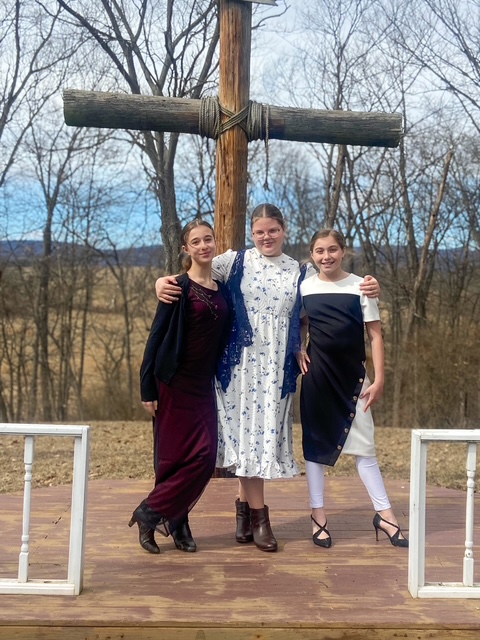
Last Sunday, I prayed with three young women. Our pastor instructed us to pray over one another a blessing of some sort for their future lives. I had been sitting behind the three young women in church, watching them interact with one another. Laughing, worshipping, and praying, I saw them connected in a way only tween/teen girls can be. They giggle at the same things, pretend disdain at adults’ attempts at humor, share heartbreaks and challenges with one another, and love each other fiercely. They are on the brink of womanhood, with so many dreams, goals, and ideas. When I came up to them, I didn’t have anything profound to say that spoke to their future. Instead, I felt led to bless their friendship and ask God to help them be hospitable whenever new tweens/teens entered the group. I prayed that God would help them enlarge their circles despite their strong connections. After a group hug, I felt as blessed as I hoped my prayer would be for them.
When I became a Christian, I was one of the outsiders coming into a group of friends that shared a history. They all attended a small Christian school while I attended public school. They could all sing beautifully and even had matching outfits for a vocal ensemble they were competing in. When I sang, it was less than harmonious. Yet, despite their connections, they were able to invite me to be a part of their group. I never felt like an outsider. They celebrated my wins and helped shape the woman I am today. Today, I am still in a relationship with two of these women, our friendship spanning almost 40 years.
This past Sunday was International Women’s Day. It was affirming to see women across different industries celebrating other women in their industry. Reese Witherspoon paid tribute to other actresses, Ina Garten honored Julia Child and Martha Stewart, along with other women who “were fabulous chefs and food writers.” Other women praised their moms, aunts, and teachers who made an impact on their lives.
In this post, I wish I could list all the women who inspire me. From my aunts to my sisters, to my oldest friends, to my daughter and daughter-in-law, to my newest friends, to my co-workers, to my volunteers, to all the young women in my life—you are all amazing! I hope to always be your biggest cheerleader, to sit by your side when life is hard, and to advocate for you when life seems unfair. Thank you for being amazing women, and let’s continue to make this world a better place for all women!
“And the streets of the city shall be of boys and girls playing in its streets.” Zechariah 8:5
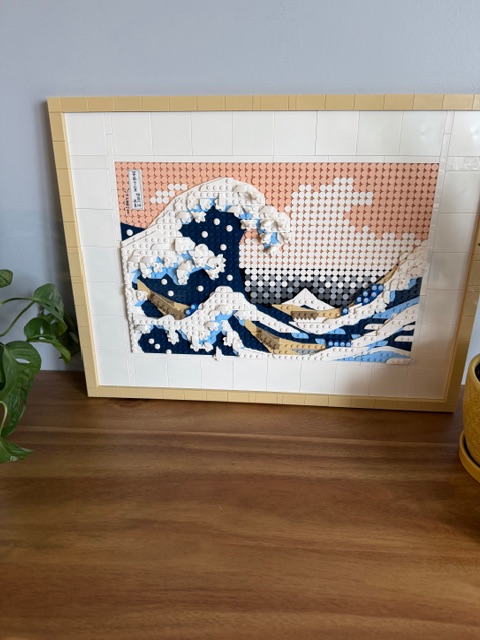
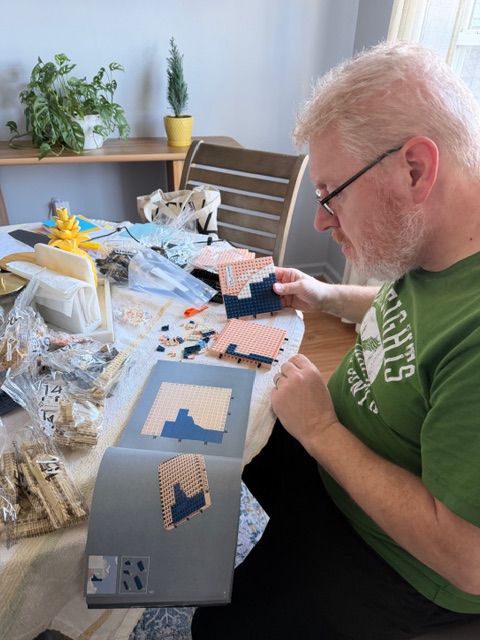
Four weekends ago, my husband played for hours. No, he was not playing the piano. No, he was not playing on his phone. And no, he was not playing with our grandchildren. All these things would have been perfectly acceptable. Instead, he was playing with Legos, a gift he had received for his birthday from our daughter and son-in-law. And for multiple hours across two days, Terry built the art piece The Great Wave by Hokusai.
Too often, as an adult, I viewed playing as strictly for children. I understood the importance of play for children, how it helps them develop their social skills, increases their creative muscles, builds strong neural connections, and helps make sense of the world. I invested in toys that fostered open-ended play and was careful not to overcommit my children to outside events. Simply, I let them play for hours uninterrupted.
As an adult, I forgot how to play, if I ever even knew how. I bought into the idea that as a Christian American, I needed to be constantly productive. I cleaned my house, prepared Sunday School lessons, read books that would help me grow as a Christian, and then started all over the next day. By the time I hit my mid-forties, I was exhausted. I had lost my joy, and I was measuring everyone else on their productivity. I did not know how to live differently.
Meanwhile, my daughter, Maggie, was in nursing school. Throughout the semester, she was extremely focused, studying and watching videos on the subjects she had covered in class. When spring break came along, Maggie decided to put the books down briefly and play. Over the course of two days, she baked and frosted a cake to look like a log with fondant mushrooms. The cake turned out amazing and I asked her why she made it. Her response was simple, “Just for fun!” It allowed her to express her creativity and provided a much-needed break from a semester of intense learning. She did not make the cake for an occasion, but simply for her own pleasure. It was a whimsical art piece in the form of a cake. It was play.
This awakened a desire in me to be more playful. I no longer saw her baking as a waste of ingredients and time. Instead, I saw how it brought joy to Maggie’s life. I started by dabbling with sketching flowers, bees, and artichokes with colored pencils. I cooked elaborate ethnic dishes with new spices, filling my home with exotic scents from around the world. I explored the idea of writing by both blogging and journaling. I was becoming more playful.
Research has indicated that playing as an adult is just as beneficial as it is for a child. Playing releases endorphins, reduces cortisol levels, and fosters relaxation. It improves cognitive flexibility and memory. Many play activities strengthen bonds between family and friends. Just like sleep and good nutrition, play is something we should prioritize in our lives.
Still, I struggled with playing, feeling like I was a bit of an outcast and still too judgmental. I was not a conventionally playful person: I don’t enjoy practical jokes, rarely get punchlines, find the Three Stooges stressful, and still thought video games were a waste of time. I did enjoy whimsy—driving an hour to explore a new indie bookstore or a pastry shop that featured canelé. I could sit for hours listening to people tell their stories. Yet I felt like I was still missing something, lacking the fundamental gene to be truly playful.
The National Institute of Play, a nonprofit organization that “recognizes, supports, and promotes the science of play” helped clarify my internal quandary. On their website, they had a link to a quiz to assess your “play personality.” This is “the style or mode we feel most comfortable being playful.” Just the concept of different play personalities freed me. It allowed me to celebrate who I was without trying to fit into the traditional modes of how others played. It was okay for me to not have a favorite Stooge. It also helped me see how my judgment of different forms of plays was just as harmful as how I viewed myself. People do find video games fun because their play personality is competitive, while others find attending car shows fun because their play personalities are wired to be collectors. Before taking the quiz, I knew instantly that I was not the joker or the kinesthetic play personality. I also knew I was not likely to be the competitor or the collector, but I was not sure if I was the director, explorer, creator/artist, or the storyteller. After answering a few questions, my play style leaned towards a storyteller. That seemed to fit since I readily indulge in books and podcasts.
The greater truth is less about my play personality, but more about the idea that play looks different for everyone. I have friends who love to go into our town’s cat café and pet cats for hours. This is their form of play. For me, cats pouncing on their cat gyms would be stressful and cause an allergic reaction. These same friends may not enjoy listening to our local bookstore owner’s pontifications about the history of our local library. Some people enjoy pranks with big stuffed dogs, others love to play board games, while still others enjoy digging in the dirt, creating flower beds that bloom all season.
I believe play is important to God. He created the world in six days and designed a day for us to rest. He designed lambs to frolic in the fields, otters to splash in rivers, and birds to have elaborate mating dances. Jesus’ first miracle was to turn water into wine, to ensure that the wedding was a success. Play is important, and I will continue to prioritize play in my life. I will no longer judge others by how I play but will celebrate their own version of play. Productivity is important, but productivity without play is living life as an automaton.
In general, I feel confident about walking into new spaces. I love to meet new people, and I thrive on hearing their stories. Today feels a little different. I am writing and sending this piece into a space where I am not sure how it will be received by some readers. I read some of the comments you have made and the posts you have shared on social media. I have had conversations with some of you, only to later find out I was labeled in a way meant to be derogatory. But as much as I feel slightly apprehensive about what I am about to say, as a Christian, I need to respond to some current events. So, bear with me, read every word, think about it before you respond, and if you are a believer, take your thoughts in prayer to God. And if you have done all these things, feel free to have a conversation with me.
As a young reader, I often looked across my mother’s bookshelves to see if I could read something new. She had an eclectic book collection, including Animal Farm by George Orwell, Roots by Alex Haley, and The Thorn Birds by Colleen McCullough. Among her books was a worn copy of The Diary of a Young Girl by Anne Frank, the story of a Jewish girl hiding in the Netherlands under Nazi occupation. In the book, Anne ponders the meaning of life while hiding. She penned, “In spite of everything, I still believe people are really good at heart.” She wrote, “Those who have courage and faith shall never perish in misery.” I remember sobbing as I finished the book, knowing that Anne didn’t make it out safely and died in a concentration camp. It was my first conscious moment of knowing that whole groups of people could be persecuted because of their status: whether it was their color, religion, country of origin, or gender.
As I became a Christian, I learned more about how Christians like Corrie ten Boom and Dietrich Bonhoeffer stood up against the Nazis during the holocaust. Bonhoeffer’s words challenged me: “We are not to simply bandage the wounds of victims beneath the wheels of injustice; we are to drive a spoke into the wheel itself.” I wondered, given the opportunity, would I stand up for a marginalized group of people like they did, or would I sit back like the countless masses, ignoring atrocities right before my eyes. Deep in my heart, I feared I might be a coward.
Today, I am standing up for immigrants, a group of marginalized people in the United States. Let me state unequivocally: I believe in strong borders. Just like I lock my door at night, I believe we should have borders where we are aware of who is coming into our country from all sides. But with those borders, we need to reform our current immigration laws so that it makes it easier for people to enter our country legally. We, who sit on the sidelines, need to educate ourselves on the policies of what it means to be a migrant, asylum seeker, immigrant, and refugee. For example, according to US immigration law, to seek asylum, a person must first enter the United States and then apply for asylum once they get here. The problem with this idea is that they are considered “illegal” by some until asylum is granted. For these asylum seekers, it can often be years before their cases can be decided.
My own views of immigration have been shaped by advocate Bri Stensrud, Director of Women of Welcome and former employee of Focus on the Family. Bri came to understand immigration when challenged about her pro-life beliefs by a colleague. Bri was asked if she believed in dignity for all life, including immigrants. Bri did a deep dive both into the Bible and into our past and current immigration laws. As a Christian, she was convinced that the Bible spoke to this issue. Throughout the Bible, scripture admonished people of faith to support families and individuals who leave countries for desperate situations in hopes of leading a better life. Her conviction led to starting a nonprofit, Women of Welcome, where Christians could start conversations about immigration and find ways to support immigrants in our communities. Her book, Start with Welcome, is one of the most influential books I have read in the last five years.
I have been following what has been going on in Minnesota, and my heart grieves for these people. As a nation, we have quickly trained a group of people to act as immigration enforcers (ICE). In previous administrations, it took 5-6 months before a person was considered properly trained for ICE. Now training is completed in 8 weeks. I have so many questions. Why are we fast-tracking individuals to hold a firearm in highly volatile situations? Are we pairing them with more seasoned ICE officials who have learned how to successfully de-escalate these situations?
Why are we creating a fear-based culture, where ICE officials are showing up at schools, following buses, and detaining anyone with brown or black skin? I understand the need to arrest those who are criminals and start the process of deportation. But we are a country of law; we have processes where we can legally deport them, not detain a 5-year-old and use him as bait to get to his dad. Thank God he has been returned to his home in Minnesota.
Another good question: how did Christians respond to the deaths of Renee Good and Alex Pretti? Personally, I was horrified seeing two people made in the image of God, shot and killed right before my eyes from many different camera angles. Yet the response from many was that they had no business protesting or that they were instigating the shooting. I have no doubt that ideology shapes how people interpret what they saw in the multiple videos. Furthermore, it will also be shaped by the algorithms of where people get their news. But as a Christian, I need to show the same disgust and horror I felt when Charlie Kirk was killed as I do when Renee Good and Alex Pretti were killed. I should also stand against any comment in favor of any of these killings, including ones made by the vice president and the ICE official who shot Good and called her a derogatory name.
I am all for peaceful protests, and for the most part, that is what is happening in Minnesota. Individuals are marching in the streets protesting ICE. They are working as a community to help protect families who are too scared to get their groceries or take their kids to school. Some of these frightened people have the proper papers but are afraid they will be detained anyway. And for good reasons. Over 100 refugees who have been vetted under US immigration law have been detained, sent to Texas, and, if released, left to their own means to get back to Minnesota. Christian churches that welcome immigrants have empty pews because the Trump administration has authorized ICE to enforce immigration policy while people worship in churches, hospitals, and schools since early 2026. Yes, one group did unlawfully protest inside a church because one of its pastors worked for ICE. The protest was ugly, and I agree, we should not be protesting in a place of worship. But we also should show the same disdain when our government is encouraging ICE to raid hospitals, schools, and churches.
I could go on and on. But I want to close with scripture for readers to ponder. I encourage you to go to Bri Stensrud’s Instagram page, listen to the Russell Moore podcast titled What Happens When You Look Away From the Minneapolis Shootings, and pray. For me, my heart breaks for what is happening in Minneapolis. And I hope if ICE comes to Carlisle, I will stand up and do the right thing—because all life matters!
‘They slay the widow and the foreigner; they murder the fatherless. They say, “The Lord does not see; the God of Jacob takes no notice.” Psalm 94:6-7 NIV
“I was a father to the needy; I took up the case of the stranger.”’ Job 29:16 NIV
‘“Cursed is anyone who obstructs the legal rights of immigrants, orphans, or widows.” All the people will reply: “We agree!”’ Deuteronomy 27:19 CEB
“But our citizenship is in heaven, and from it we await a Savior, the Lord Jesus Christ,” Philippians 3:20 ESV
“For I was hungry and you gave me food, I was thirsty, and you gave me drink, I was a stranger and you welcomed me,” Matthew 25:35 ESV
“Not that I am speaking of being in need, for I have learned, in whatever situation I am, to be content.” Philippians 4:11 ESV
One of the benefits of living in Carlisle is that we no longer have to take care of a yard. It also means the HOA takes care of all snow removal, including shoveling our walk and driveway. Honestly, I did not mind shoveling. But weather forecasters predicted bitter cold to follow the snow, and I was relieved to know neither Terry nor I would have to deal with the ice-clad snow.
Monday morning, I was still dreaming of snow-covered landscapes and hot coffee when I heard shovels scraping pavement outside my bedroom window. Next, what I assumed to be a Bobcat with a plow groaned while pushing snow across our cul-de-sac. I heard Terry rustling and asked if he thought the noise was plowing. He stood up and confirmed the grating noise was indeed the landscaping crew working hard to clear the driveway. I lifted my phone and the time 5:28am swam into view. I started to grumble and caught myself before uttering a complaint. Instead, I verbally reminded myself to choose gratefulness and contentment.
Throughout my writing, I have repeatedly stated that contentment is the most important trait one can develop. It is not something that people are naturally born with. Instead, it is what Paul refers to as a secret in Philippians 4:11. He says, “I know what it is to be in need and I know what it is to have plenty. I have learned the secret of being content in any and every situation, whether well fed or hungry, whether living in plenty or in want.” This is not a top-secret clearance message Paul received from God. Rather, it was something Paul also needed to cultivate in his own daily life.
Paul’s name may have changed after conversion, but his personality did not. This man was recorded as being zealous in his belief that the people who followed Jesus were committing blasphemy. He was on his way to Damascus to hunt them down when God spoke to him. Like most new believers, Paul may have been ready to jump to the streets to share about his encounter with God. Instead, the Bible records that he spent 3 years praying and studying the life of Jesus. I can imagine Paul thinking to himself after 2 months, I am ready. But instead, God clearly had another plan in mind. He waited another month and inquired of God whether he was ready. But just like a child who asks if we are there yet, Paul was repeatedly denied and waited for God to release him. This gave Paul time to learn contentment in God’s plan, not giving in to his zealous nature to take on the cause of Christ.
This waiting time helped Paul learn how to manage challenging situations later in life. His ministry reached the greater part of the known world at the time. He was welcomed by some communities, while in others he was chased out of town. Paul was whipped, stoned, and shipwrecked. At the time of his letter to the Philippians, he was in a Roman prison. Yet, after Paul stated he had learned to be content, he continued to say in verse 13, “I can do all this through him who gives me strength.”
For me, contentment is not based on my bank balance, the vacations I do or do not take, or whether I am having a good hair day (curly, frizzy hair is a real issue in this current season of life). Instead, I have to trust God daily to supply my needs, and I try to express gratitude in all circumstances. I recognize I come from a place of privilege; I have shelter, food, clothes, and healthy relationships. But Paul was in some terrible situations where he didn’t have his basic needs being met, and he still chose to pursue contentment. I only pray that I can do the same.
This week has been super cold with temperatures dropping below zero. It reminds me of Wisconsin, and it is the first time that I have not been homesick for my lake. It would be easy to fall into the trap of complaining about the bitter cold, wishing I were basking in the sun. So, I bundle up in warm sweaters and cozy socks, and drink warm beverages. I continue to curl up on the couch with extra throws while reading by the glow of my fireplace. And I remember daffodil season is only two short months away.
“My dear brothers and sisters, take note of this: Everyone should be quick to listen, slow to speak, and slow to become angry.” James 1:19
For writing, last year was a dismal year. I can make all kinds of excuses, but the reality is, it was easier to scroll than to process. I thought my November Formations series would help, but I forgot that December is a crazy month in the non-profit world. Therefore, my Christmas Genes series will be postponed till 2026 Christmas.
My reading life also took a bit of a hit, but again, I am not going to bemoan this. I still managed to read 43 books. Looking over my Year in Books on Goodreads, I read over 13,235 pages. I indulged in poetry, reading poems aloud with my husband at night. I immersed myself in fiction that helped me escape some of the tough situations I was navigating. And I read books that made me laugh, despite the tough topics they addressed.
This is my 7th Annual Book Review List, and looking back over past years, I see a list of books that still impact my life and that I continually recommend to others. I always evaluate my choices with Terry, partly because he is my favorite person to talk with about books. The other part is that he helps me keep the list diverse. He also reminds me of my reading experience. For example, he mentioned a book I finished earlier in the year that I repeatedly discussed with him.
I did something this year that I won’t do again. I finished a book I hated. It was lent to me by a friend, and I felt an obligation to complete it. The book was fiction and was written from a Christian point of view. I found the themes of misogyny and abuse being justified by the author, elevating the trope of the pious, long-suffering Christian woman. I kept hoping the book would redeem itself. Instead, I finished the book disappointed and will never recommend this author to anyone.
So here is the list: -drumroll, confetti fall, and I wish I had a red carpet where the books could display themselves in their full glory. I hope my words entice you to pick up one or two of these titles.
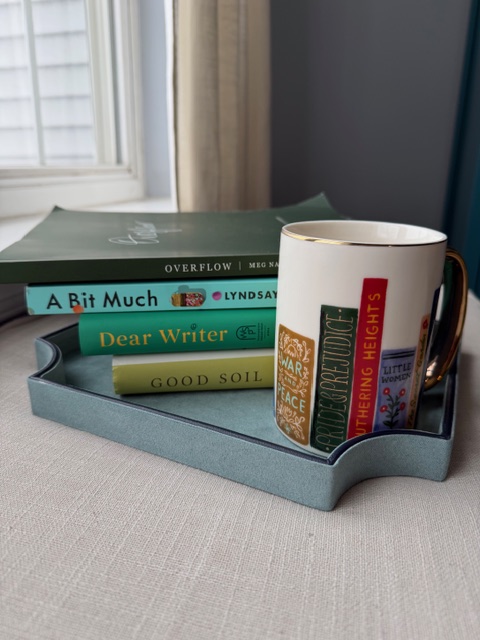
Poetry was a theme this year, with Terry and me completing 5 poetry books together. Although we both love Mary Oliver, A Bit Much by Lindsay Rush (#maryoliversdrunkcousin) took the lead. Her poem “She’s a Bit Much” affirmed me in ways that I had attempted to express in prose. Throughout the book, she takes insults or put-downs and turns them around to frame them in a positive way. The poems made me laugh, smile, and increase my wonder at the beauty of women and the way we live. Additionally, reading Maggie Smith’s Dear Writer also encouraged me to dabble in writing my own poetry.
My second book was the last fiction book I completed among all the great fiction I read this year, including Taylor Jenkins Reid’s Atmosphere, Kiran Desai’s highly acclaimed The Loneliness of Sonia and Sunny, and Amor Towles’ The Lincoln Highway. The Correspondent by Virginia Evans is a bittersweet story written in letters by Sybil, an older woman in her third act of life. You uncover what life events have shaped her and how, even in your last days, you can rewrite your story. It is filled with hope, tragedy, and old-fashioned piety. I love how she nails all mother/daughter conflicts with this statement “I know you think of me as your mother only, but please remember, inside I am also just a girl.”
My third book recommendation is Good Soil: The Education of an Accidental Farmhandby Jeff Chu. Chu leaves his profession to enter a theology program at Princeton, which happens to have a working farm that theology students help tend and learn from. He tackles topics like forgiveness, love, and hope. It challenged some of my theology regarding the meaning of the parable of the good soil. Chu says, “What if the parable wasn’t about categorizing good versus bad, healthy versus unhealthy, sinners versus saints? What if the parable were understood less as a prescription—you need to be the good soil—and more of a description of what was actually happening, both in the ecosystem around us and in our own lives? What if Jesus was describing the realities of both soil and soul, which were ever-changing and subject to outside forces?” Chu intertwines nature, his Chinese heritage, and his own unique Christian faith. Although I may not agree with all his conclusions, I can still glean from some of the truths he illuminates.
I read quite a few memoirs that dealt with some tough issues, including Tyler Merritt’s This Changes Everything,which deals with cancer, and Melinda Gates’ The Next Day: Transitions, Change, and Moving Forward, which grappled with the ending of her marriage and pulling out of the Gates Foundation. But Jen Hatmaker’s Awake (who happens to be Tyler Merritt’s girlfriend) was everything I hoped it would be and more. Just as with Chu, I don’t draw the same conclusions Jen draws, nor would she want me to. Instead, her vignettes of the end of her 26-year marriage, along with the unraveling of patriarchy, purity culture, and misogyny, echoed my own thoughts of the last few years. She articulates how purity culture produced “a crop of women who hated their bodies.” She talks about how “the church that raised me bears almost no resemblance to the one dehumanizing refugees.” Jen also defines and addresses codependency in ways that felt all too familiar. Although Jen has chosen to stop attending church while still believing in God, I continue to attend. I also hope to be a voice in the church that offers a Biblical way to support those who are marginalized.
Finally, my last book is Meg Najera’s Overflow: The Fine Art of Cultivating Joy in Sorrow. This book kept me grounded when life was swirling around me. Meg’s faith is imprinted on the pages in her beautiful words, intertwined with scripture. She unpacks principles such as prayer and repentance and explains how they will help us cultivate joy. She then shares a journal entry she has written that applies to the principle. In Entry 15, Meg shares, “Gratitude is a pathway to contentment and helps guard against the sin of covetousness.” Her writing is poetic, thoughtful, and practical. This book makes an excellent devotion that I intend to reread.
I am also a bit of a podcast junkie and like to include a podcast or two that have inspired me. This year, I am including two political podcasts. Phil Visher, of Veggie Tales fame, has created a media company that addresses political issues from a Christian perspective. Along with Skye Jethani, Kaitlyn Schiess, and sometimes Esau McCaulley, Phil hosts a weekly podcast called The Holy Post. It addresses hard issues like the death of Charlie Kirk, RFK’s vaccine standards, and ICE enforcement from a theological point of view. These thoughtful commentators interview other thinkers and authors to examine politics and foreign policy through a Christian lens. And it doesn’t hurt that the theme song reminds me of my children singing along with Bob the Tomato and Larry the Cucumber.
I also enjoy Pantsuit Politicshosted by Sara Beth Silverman and Beth Silvers. These women offer thoughtful commentary on political issues. They may lean in one direction, but work hard to provide balanced views. Both have a legal background and offer both a historical and legal perspective. They also end the news with something that is on their mind outside of politics, ranging from books they are reading to thoughts on how to raise children. They are widely regarded for keeping us “informed without the overwhelm or anxiety.”
I want to acknowledge that some of my recommendations are not for everyone. Nor do I endorse every single thought the authors put on paper. But reading outside your comfort zone about other viewpoints is a good thing. For me, it has opened my mind up to new ideas, increased my empathy, and challenged me to draw closer to Jesus.
I also want to share a new project that could take me years to complete. I am going to read a book set in each of the 50 states, and eventually every country in the world. I know this is ambitious, but I think it would help me see more of the world from my armchair. Also, I find it fun to set goals and work towards something.
I would love to know what you read in 2025, and if you didn’t read anything, there is no better time than 2026.
I remember the first time I felt “othered”. I knew from little on I was not the same as my siblings; we didn’t have the same father, and my bone structure and the tone of my skin were disparaged by him. But this feeling of being “othered” was different than my daily experience. It was the last day of second grade, I loved school, and I was excited to read fluently. I don’t remember stealing the candy bar; I just remember the teacher asking me if I had taken an extra birthday treat. I remember denying it and feeling a wave of guilt, but the chocolate smear on my face gave me away. Lifting my desk, she saw the evidence, a crumpled wrapper. She gave me a note to take home. Handing it to my father, he sneered with disgust immediately. Despite normally being an obedient child, he instantly found a way to publicly humiliate me. He told my siblings I was a thief, and for the next two weeks, made me stay inside while the rest played outside. That summer, I wore my first scarlet letter.
Feeling “othered” is a universal feeling among women. Whether or not we are athletic enough, fit societal standards of beauty, or are talented enough in certain areas, at some point in our lives, we don’t feel like we measure up or fit in. Misty Copeland, principal ballerina for the NYC Ballet Company, despite her raw talent, faced scrutiny by critics that she didn’t have the “right look” for a ballerina. Oprah Winfrey was told she needed to lose weight by Joan Rivers. Jamie Lee Curtis was typecast as a horror actress and worked hard to find different roles for herself in Hollywood. The list goes on and on.
There are several Tamars in the Bible. The account of this Tamar takes place in Genesis 38. Judah’s mother, Leah, could never win her husband’s favor, even after the birth of three sons. Finally, after her fourth son was born, she decided to focus on the favor of God, naming her son Judah, which meant “I will praise the Lord.” Judah married a Canaanite woman and gave birth to a son, Er. She also gave birth to two other sons. Later, Judah arranged for Er to marry Tamar. Immediately, the Bible records that “Er was wicked” and the Lord took his life. Some commentaries point out how close this followed his marriage, believing that it might have something to do with how he treated Tamar.
In most of the world at that time, widows were left to fend for themselves. They often had to return to their father’s home and remain single for the rest of their lives. Hebrew law made provisions for the widows and for the lineage of the deceased husband. It involved the widow marrying her deceased husband’s brother. Judah arranged for Tamar to marry his second son, Onan. Displeased with this arrangement, Onan treated Tamar like a prostitute, ensuring she wouldn’t get pregnant. God was disappointed with Onan’s treatment of Tamar and took his life as well.
Judah secretly blamed Tamar for the death of his two sons. He never sought God, who may have led him to the truth about his sons’ wickedness. Instead, he led Tamar to believe that once his third son, Shelah, grew up, he would give Tamar to him in marriage.
So, Tamar, twice widowed, was sent back to her father’s house. I can’t imagine how othered she must have felt. Women her age were married and giving birth to children. Instead, she probably went to the market, with people whispering about how she was either unlucky or evil, causing the death of two husbands. Years went by, and Tamar got to see everyone else’s life flourish, while she sat on the sidelines, watching life pass her by.
Names were important in the Bible, and “Tamar” meant date palm. Date palms symbolize righteousness and vitality. Dates have a lot of nutritional value, including lowering bad cholesterol, being packed with Vitamin B, and helping balance the digestive tract. Because of their high sugar content, they require a lot of energy to grow the 200-300 dates in a season. Thus, they need to grow together and get a lot of water to flourish.
After a while, Tamar realized that Judah had no intention of honoring his word. By this time, she was probably aware of the promises given to Judah’s great-grandfather, that the one true God called this group of people into a covenantal relationship with him. She was tired of being othered and she was desperate to be a part of this Godly heritage. Deciding to take matters into her own hands, Tamar disguised herself as a prostitute, the very thing that Onan had treated her like. She seduced her father-in-law and held his seal as a promise of payment.
Judah later heard that his daughter-in-law was pregnant. In his mind, this confirmed his preconceived notion of Tamar. His immediate response was to have her burned. As they were taking her out to be killed, Tamar let them know that the father of her unborn child was the person who owned the seal she held. Judah recognized it as his own immediately and declared, “that she was more righteous than I.”
The story goes on to say that Tamar gave birth to twins. The midwife saw one of the babies’ hands reach out, and she quickly tied a scarlet thread onto the wrist, declaring this was the firstborn. This was important because he would inherit all the rights of the firstborn. But Perez pushed back his brother and came out first, with his name meaning “breaking out.” Perez’s name was more significant than breaking out first from his mother’s womb. Biblically, he was given the honor of the covenantal lineage, over his older brother Shelah. The Bible doesn’t say why, but Judah hinted at this when he declared Tamar’s righteousness over his own.
Today, women respond in one of two ways when feeling othered. Like Tamar, some women take matters into their own hands to get the outcome they desire or deserve. But it is interesting that Matthew doesn’t tell just Tamar’s story in the lineage. He includes three other women as well. This could point to the other way women can handle feeling othered. Women can collaborate with other women, bind together with supportive men, and change the false narratives of society. I have seen women athletes champion all women across different sports. I see it when writers encourage other women to write and mentor them along the way. I see it in the church when older women mentor younger women to grow in godliness and character.
I want to reiterate that date palms only flourish when well-watered and in community with other date palms. Jesus wants women to flourish well in healthy spiritual communities that support all women: single, married, widowed, or divorced. He created women to have all different personalities: some are bold, while others are quiet. He created women of all different shapes and sizes. He created women to express their creativity in different talents. And all these women should be celebrated and treated like valuable members of the community, not only by other women, but by men as well, especially those who are spiritual leaders.
How does one gauge the healthiness of their community? A good place to start is to ask the women in your circle if they feel “othered.” Only ask this question if you are willing to suspend judgment and exercise curiosity. The answers may surprise you, and you may find yourself challenged to be more supportive of women. Judah quickly saw the folly of his own judgment and declared Tamar’s righteousness without blame-shifting. Next, ask God to help you see women the way Jesus sees women. Finally, start implementing changes in how you speak to and about women in general and work towards creating a more inclusive environment.
In the Christmas story, Matthew ensured for eternity that Tamar would no longer be “othered.” I am forever grateful for that!
“For unto you is born this day in the city of David, a Saviour, which is Christ the Lord.” Luke 2:11
My husband loves investigating his genealogy. After subscribing to Ancestry.com, he learned that his Scottish family arrived in the US in the mid-1700s. Further back, he discovered that his ancestors lived in a castle and he is distantly related to England’s Queen Camilla. Less than two weeks later, he also found that one of his more recent ancestors was convicted of murder.
Learning about your ancestry can help people feel rooted. Reading the names of my own indigenous relatives helped me connect with my biological father’s family in unexpected ways. I even discovered some more siblings. Some people prize these roots so much that infamous people are cut out of their family trees. It is as if their entire existence is erased because their relatives don’t want the family tree marred by a rotten branch.
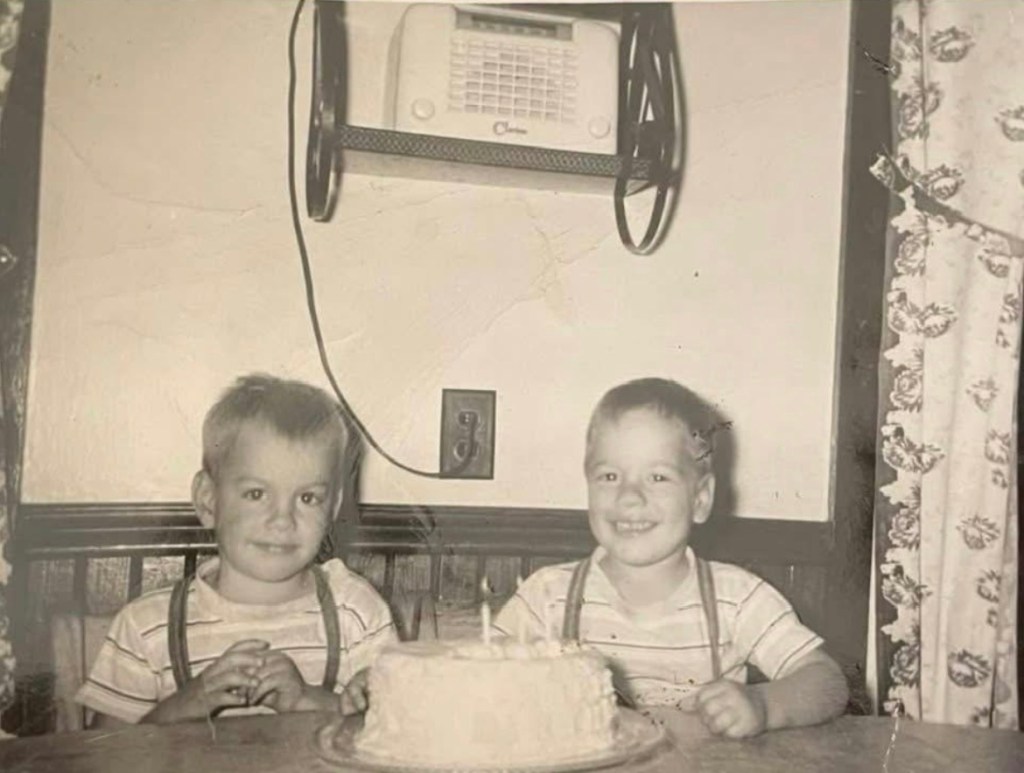
I went to the same high school that my mom and her siblings attended. Because I had my mother’s maiden name, the high school principal, Mr Havey, asked if I was related to Dennis and Dave Walter. My twin uncles were amazing men, but had a reputation for being a bit mischievous in high school. Quite often, Mr Havey would call my grandmother to report on their escapades. I replied yes to his question but quickly reminded him I was also related to Kenny and Debbie Walter, my uncle and aunt, who were much more studious. I wanted him to know who I identified with as a high school student.
For the next few weeks, I will be writing about the genealogy of Jesus. Specifically, I want to examine the four women that Matthew chose to include in his account of Jesus’ birth. First, the fact that he was willing to include women in the genealogy says something significant about Jesus. Matthew was trying to prove the “Jewishness” of Jesus by tracing his lineage back to Abraham. But, inspired by God, Matthew included women in Jesus’ genealogical record, which was controversial in those days. Furthermore, all four women had stories filled with brokenness perpetuated by the misogynistic society in which they lived. Again, inspired by God, Matthew included these women for a reason, and that reason gets at the heart of who Jesus is.
Another woman, Mary, the mother of Jesus, said it best in what is referred to as her “Magnificat.” Mary offers this praise after her cousin Elizabeth confirms that Mary is indeed carrying the Messiah. This praise came when so much was still unknown in her future. Her betrothed, Joseph, had not yet indicated how he was going to manage this scandalous pregnancy. According to Hebrew law, he had the right to publicly shame her by legally divorcing her. Despite her uncertain future, Mary was confident in God, declaring “My soul magnifies the Lord.” She goes on to say, “For he took notice of his lowly servant girl and from now on all generations will call me blessed.” Jesus was lifting women up for future generations.
On the surface, it’s obvious that women were treated unfairly in biblical times. Many Christians have perpetuated that in the modern church. They have minimized women’s roles in ministry, marriage, and life. However, reading deeper, you can see that Jesus was trying to raise up women. Peter declared that salvation was for men and women. Jesus declared he came to set the “captive free.” Women were, and continue to be, captive by limitations contrived by society. Jesus intended salvation to bring women liberty and freedom.
My husband reminded me how significant it was that Matthew added these women in the Bible. Matthew knew firsthand how the prejudices of society could impact a person. As a tax collector on behalf of the hated Roman government, Matthew was an outcast among his own people. It is likely he was called names, shunned, and spat upon. He may not have been welcomed in the temple or allowed to share Shabbat with his family. Jesus saw how loneliness and bitterness had broken Matthew’s spirit. But Jesus also saw beyond what others labeled as an outcast and called Matthew to be his disciple. Over the next few years, Matthew was an eyewitness to how Jesus treated those devalued by society, especially women, several of whom were named as followers of Jesus.
Join me and hear the stories of Tamar, Rahab, Ruth and Bethsheba. Note: I want to give credit to Raymond Woodward for inspiring this piece with his message “Broken Christmas.” You can find his message on YouTube. I disagreed with his interpretation of Bethsheba. Read my upcoming piece on her to see my interpretation
This is a picture of my uncles, Dennis and David, who have since passed away.
“They are like trees planted along a riverbank, with roots that reach deep into the water.” Jeremiah 17:8
Terry and I drove by our old house and were devastated when we saw the maple tree we love had been massacred. Yes, this is a slight exaggeration; we were devastated because our maple tree had been trimmed to fit the stereotypical tree shape most HOAs dictate. Gone were all the branches that countless children had dared to climb. Gone were the low-hanging branches that we ducked under while we mowed the lawn. Gone was the canopy that provided backyard shade on hot days. Yes, the tree was still there, and I am sure it will fill out beautifully next year. But right now, it is half the tree it used to be, and I mourn the memory of the maple tree that was.
My husband loves trees and shares this passion with me. His absolute delight is contagious, and I, too, have fallen in love with these majestic monuments of nature. They provide many benefits for us: cleaner air, cooler temperatures, better stormwater management, improved health by reducing stress, and the creation of habitats for wildlife. I have done a deep dive on trees with books like The Hidden Lives of Trees, Reforesting Faith, and the most recent, Tree Collectors. These authors have helped me see how trees are communal, distinct, and important to God.
But more than reading about trees, I love taking walks among trees. Whether it is a park where a weeping willow is swaying in the wind, or down a city street where Ginkgos have been planted. I love to explore the woods where I walk on needles and smell the scent of pine trees. Like a child, I stop to pick up leaves, run my fingers across the bark, and gaze up to look at the crowns of oaks, birches, and elms.
“Share each other’s burens, and in this way, obey the law of Christ.” Galatians 6:2
Research indicates that having three to five friends is associated with high life satisfaction. Other studies have demonstrated that having at least six friends can improve overall health. I know I have more than six people in my inner circle, and that makes me a blessed woman.
I am so thankful for my lifelong friends who have been with me at every major milestone in my life. They accepted me as a messy teenager and still love me in my middle age. I am blessed.
I am so thankful for the family that I call friends. Some of them came with titles: sisters, cousins, and aunts. But somewhere along the way, that relationship has moved from an obligation to a rich friendship, and I am blessed.
Moving from Wisconsin to Pennsylvania was one of the hardest things I have ever done. It took some time, even moving churches, but I have found a group of friends that I am so blessed to do life with. Whether it is sending messages on a text stream, going out for coffee, or just having a game night, these people know, accept, and love me. I am so blessed.
I may not have a lot of money in the bank or a vault full of jewels. I may not be able to travel to Bali or Blackberry Farm for a week’s stay, but my life is rich. It is rich with relationships, old and new. And when appraised, the value is priceless.
“I will shout for joy and sing your praises,” Psalms 71:23
Alexa has reawakened my love of music. Sometimes, I ask her to play worship music, and I get lost in communion with God. Other times, I bop around to 80s music from my own teenage era or start my morning with modern music from Forest Frank or Cain. Sometimes, Terry and I play Sinatra or Bublé and dance slowly in our living room. (I would dance to Ed Sheeran, but Terry doesn’t share my love of him). Other times, I sing off-key to Broadway hits or belt out Adele or Taylor. Music inspires, motivates, and transforms me. I love old, new, indie, pop, classical, and jazz. And yes, I know it is only November, but I am blissfully indulging in Christmas music (this is the only time I don’t want any comments from the “no Christmas before Thanksgiving” people; let me live my life the way I want). I believe that music is a good gift from a good God. So, bring on the banjo, cello, and keyboard, just maybe not at the same time.







 By Sherry Collins