Page 10 of 27

Three Inch Hems

“And we know that those who love God all things work together for good, for those who are called according to his purpose.” Romans 8:28

My great-grandmother, Emma Holtzman, was a stern woman, stingy with smiles and laughter. Instead, she embodied industriousness with her rapid use of a paring knife when peeling potatoes and her skillfulness in rolling out the perfect sugar cookies. Always working, she prided herself on keeping the house neat and clean. Most of her grandchildren, including my mom, found her intimidating. My mother kept her room loosely organized (aka a bit messy), not meeting the standards of Grandma Holtzman. On some occasions, Grandma Holtzman would come over to visit and “organize” my mom’s half of the room. She would gather all the items lying on the floor, including my mom’s prized Nancy Drew books, and throw them into the burn barrel. Returning from school, my mother would be distraught at the missing items, only to find out her own mom had rescued the items from incineration.

My mom has never liked coffee, preferring Coke instead. As a generous hostess, she offers everyone something to drink, but cheekily reminds her guests to leave her the last can of Coke. She keeps a coffee maker on hand for her guests and, last week, it died. On her behalf, Terry took a quick trip to Target to replace her coffee maker. Later, while making coffee, my mom shared a new story about Grandma Holtzman. As her grandmother was pinning the hem of my mother’s dress, she said, “You will always get taller, you will get use to scalding water, and you will learn to like coffee.” My mom chuckled as she told us this, because she never got taller, topping out at 5’1”. Additionally, she never got used to scalding water or developed a taste for coffee. But her grandmother thought she knew best, leaving my mom to go to school with three-inch hems, never letting them out because of a growth spurt.

Many years ago, a tragic story of a local woman impacted my life. In one car accident, this woman lost her husband and two sons, while her oldest son survived with serious injuries. I didn’t know this woman, but my heart ached for her. Along with a group of friends, I put together a care basket filled with candles, lotion, a book on grief, a journal, and some gift cards for local restaurants. We fully recognized that this basket wouldn’t make a dent in her sorrow, praying only that it would be a small reminder to her of God’s unfailing love.

With the intent of just dropping off the basket, the woman invited me into her home. What followed was a holy moment for me. She began to share with me the details of the accident, including that her children and husband were in two different hospitals with life threatening injuries. She had to make a terrible choice, the choice of being with her children or her husband, as they all were facing possible surgeries and/or death. She made the choice any mother would make and was with her sons as they took their last breath. Minutes later, she received a phone call that her husband had also passed away. She knew God was with her although recognizing she had a long grief journey ahead. She, along with her oldest son, had to build a new life. She contemplated selling their home and moving back to where their family lived for support. I feebly tried to utter words of hope and encouragement, but the words came out stilted and unwieldy. Quickly, I felt God nudge me to just listen. She continued to talk about her boys and their passions. One was a budding artist while the other created with Legos. She smiled as she talked about the whirlwind romance with her husband that led to this beautiful family. Already feeling this family’s pain, her last story shook me to my core. While she was in college, her identical twin sister had also been killed in an accident. At the time, she believed that this was the worst thing she would ever face in her life. Now, she believed God used that incident to build and strengthen her faith to survive her current tragedy.

I left an hour later than I expected, giving her a hug, and promising to pray for her. As I got into my car, all my choked-back tears gushed out. I came expecting to minister, instead, her story ministered to me. I kept my promise for many years, but then life got busy, and soon I forgot her name. I still can see her house, and the pictures of her boys, and occasionally I still call out to God, praying for her and her son. I hope that this woman has created a new life for herself, and I pray that she had found some joy again.

But her story speaks to a truth that we don’t always want to hear. Life is hard and it doesn’t mean we will have happy endings to all our stories in life. No matter whether this woman has chosen to remarry or lead a fulfilled life as a single woman, she will always feel the loss of her sister, husband, and sons. Her oldest son is probably starting his own family now, maybe even has children, but he will never forget the accident that changed his life. And although I have forgotten their names, God has not, and is still writing their story.

I want to repeat what I said in the last paragraph, life is hard. I don’t say this flippantly, but with a heavy heart. Cancer and unexpected accidents have changed the trajectory of my life, and what I expected to be a happy ending now looks very different. For example, cancer robbed my children of having their beloved grandmother attend their weddings. Her absence was felt, despite the joy of those days. Life is hard and I see this truth not only in my life but played out again and again in the lives of my friends and family.

Despite life being hard, I also believe that God works out everything for our good. This doesn’t mean the hard things don’t happen, it just means that there is peace and hope on the other side. But saying those words to a person in the middle of tragedy seems trite and uncompassionate. How do I love someone well in the middle of their hard, without coming across as dismissive and insincere? How do I convey God’s words as hope and peace for the other side?

I recently finished a Louise Penny novel where a likeable character from Three Pines was convicted of murder. It bothered me, even though the honorable Armand Gamache, the Chief Inspector, found all the evidence pointing to this character. Yes, this person was a bit greedy, and yes, he moved a dead body, but murder seemed farfetched. And if this was true, could I trust Louise Penny in the future to end the stories well without destroying my faith in the characters? Spoiler alert: I looked online and read the synopsis of the next book in the series and found out that the character was innocent. Instantly, I felt relieved. The ending of this book was unhappy, but I had faith in the future book to reconcile my angst.

I came across a quote recently that helped me reconcile the reality of life being hard with my faith that God is good. Orson Welles said, “If you want a happy ending, that depends, of course, on where you stop your story.” That woman chose not to end her story when her sister died. Instead, she built a beautiful life with her husband and three children. And once again, I saw that woman actively choose not to end her story at the funerals of her family. Instead, she was looking to the future of building a new life on the other side of tragedy. She chose not to stop at the hard points in her life but went on letting God finish her story.

I can’t guarantee my grandchildren will be tall. I doubt anyone likes scalding water. I sure do hope they like coffee because I want to take them to some of my favorite coffee shops. But if they don’t, we will find other places to have adventures. And I can’t promise them that hard things won’t happen in their life. But I can promise that if they allow God to write their story, He will help them find hope, peace, and joy!

Can Mimi Read a Story?

“Grandchildren are the crowning glory of the aged;” Proverbs 17:6a

“Daddy, can Mimi read me a story?” Joel asked his dad as he was getting him into his pajamas. Ethan replied yes, and Joel ran into the living room saying, “Mimi is going to read a big book.” As much as Joel loves for me to read to him, I am aware the length of the book was his tactic for stalling bedtime. Not being called out by Mimi, he picked a longer picture book from his library basket. We cuddled together on the couch and read about duck, cow, and sheep’s tractor ride through town while his little sister, Eva, crawled around at my feet. As I read, my heart swelled, savoring this moment with my grandchildren. And all too soon the long book was finished, just as our long weekend was wrapping up as well. And soon, once again, I would be 422 miles away from my two favorite little people.

Timothy Keller passed away on May 19, 2023. For those who don’t know this name, Keller was an influential preacher of the gospel in the evangelical world. Although he has been around for a while, my first introduction came two years ago when one of my pastors played a recording of Tim Keller explaining the gospel. His intellectual pursuit of God along with his compassionate delivery resonated with me. I began regularly listening to his Gospel in Life podcast, where recordings of his past messages are shared. He wasn’t charismatic with a delivery full of pomp and flash. Instead, his voice was calm, wise, and confident. He presented scripture from the premise that everything pointed back to the gospel. He believed “the gospel says you are simultaneously more sinful and flawed than you ever dared believe, yet more loved and accepted than you ever dared hope.” He pointed out that “the irony of the gospel is that the only way to be worthy of it is to admit that you’re completely unworthy of it.”

Keller was different than a lot of megachurch pastors that have become instant celebrities only to crash later due to either moral failures or narcissism. Instead, he quietly raised a congregation of size in the heart of New York City. In the beginning of his ministry, he didn’t start publishing books pontificating about how he planted his church. Instead, his first book was published when he was close to sixty years old, articulating his answers to others’ questions about God. His influence is not measured by the books he wrote, or the messages he preached, but more by the relationships he developed and people he mentored. After receiving his cancer diagnosis, he was asked how he wanted to be remembered. Tim Keller never cared about legacy or his reputation, it was all about pointing back to the God who had saved him. But he did answer that question in an interview with these words: “I hope my grandchildren remember me.”

This same thought has echoed through my world from a few different sources. In my final MOPS meeting of the year, we watched a video of an older mom reminding younger moms to keep their inner circle of relationships a priority. Next, I started reading Jean Stoffer’s memoir Establishing Home where she echoed the importance of prioritizing her role as a mother over her growing business. And then, on another podcast, I heard the concept “live your eulogy, not your resume.”

I’ve been wrestling with life choices we made in the past and how they impact our future. I grappled when putting together a job resume, and my experience was limited to childcare. I imagine the possibilities of having made different choices. Maybe if I had chosen a career over being a home-educator, I could be going to Italy next year. Maybe if I had chosen to start graduate school ten years ago, the possibility would seem more cost effective. These “what if’s” have left me feeling disillusioned and unsatisfied.

Tim Keller’s words, along with the persistent voices of others, reminded me of the truth in my life. Like most mothers, I prioritized the little ones in my home. For me, that looked like choosing to stay home and educate my children. It looked like welcoming countless children into my home, providing a safe and nurturing environment for them while their parents worked. And these decisions along with countless others lead to the life I live today.

And it’s a good life. It’s a life where I can write a memoir that I am hoping will impact others. It’s a life where I can use some of my gifts to minister to others in my community. And it’s spent with my two favorite little humans sitting on my lap, listening to me read stories about ducks and pigs.

Italy is still a goal and graduate school is still a possibility. But at the end of the day, my grandchildren won’t remember the magnificent artwork Mimi saw in Florence. They won’t remember that she went for her master’s degree in counseling in her fifties. They will remember the time she spent with them, reading, exploring, and sharing with them the goodness of God.

Timothy Keller left behind seven grandchildren. No doubt, some day they will Google their grandfather’s name and read all the wonderful accolades about him. They will see the list of books he wrote and see places where he is quoted. But I am confident that they will have their own special memories of times spent with their grandfather. And these memories are what will help them see the Gospel in a life well lived. My wish, is that Joel and Eva, and any future grandchildren, will see that reflected in my life as well.

Third Act

“So we do not lose heart. Though our outer self is wasting away, our inner self is being renewed day by day.” 2 Corinthians 4:16

A few weeks ago, I started The Last Thing He Told Me by Laura Dave, an intense drama about Hannah’s disappearing husband. That night, I shared with my husband how engrossed I became in the story. I attempted to finish it later that evening, but my melatonin-induced haze overtook me. So, I reluctantly closed the book. The next morning, Terry found an audio book, and within the same day had the audacity to finish the book before I did! With a smirk, he teased “the ending took me by surprise.” I begged him to give me a hint. Of course, he refused, this same scenario having played out many times in our marriage. That night, I fought the melatonin and found for myself the surprise ending.

The endings of movies, books, and TV shows can leave me feeling sad, satisfied, or surprised. Some tragic endings leave me in a puddle of tears or maybe a bit frustrated with the writer or producer. I sometimes feel satisfied with a tragic ending if the story overall was heartwarming and complete. And some endings take me by surprise, with my heart racing as fast as the words across the page. But no matter what emotions the story elicits, a good ending should wrap up the story, bringing the disparate pieces together. And then I can close the book, breathing a sigh of satisfaction.

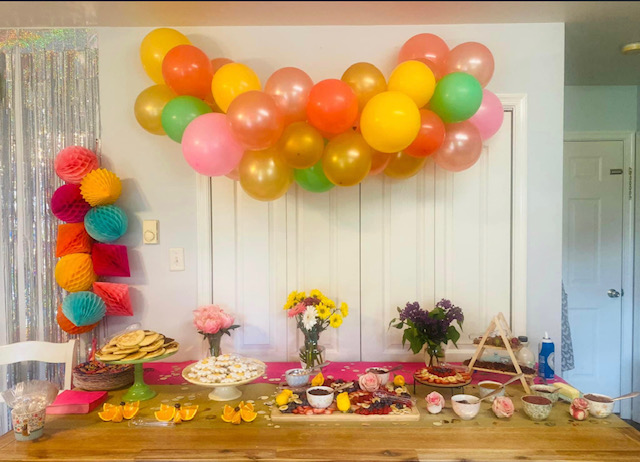
It’s my birthday this week. Last year was celebrated with confetti, streamers, and a party. This year, we will be in Rhode Island to celebrate a plethora of birthdays along with baby Eva’s dedication. With all my immediate family, and a visit to Groundswell (my favorite Rhode Island bakery), I find this quieter celebration a perfect way to mark turning 51.

Four years ago, I started writing this blog during what might be defined as a mini mid-life crisis. I felt a little displaced, having ended my role as a home educator and launched my children into adulthood. I was no longer a young married woman but was well on my way into the second half of my marriage. I started to address some of my health concerns, and although my body felt the strongest it had in a long time, visible lines etched my face. I wrote to share with others my struggles in adapting to this new phase of life. And through words, I began to find my place.

Around the same time, I discovered the world of podcasts. Podcasts help me think, explore, and write about my world. They open me up to new ideas, new interests, and add books to my TBR list. The list of podcasts I listen to is wide and varied. Some, like Confronting Christianity and the BEMA podcast align themselves with my Christian worldview, examining faith and how it informs our world. Cherry Bombe and Ruthie’s Table are related to food and women in the food industry. I listen to some podcasts that are book related and others that explore nature.

A month ago, as I was mowing my lawn, in my peripheral vision, I noticed a hole in the ground that looked like it was moving. I abhor anything rodent-related and was convinced that a bunch of moles would run out of the hole and chase me because I had disturbed their slumber. I quickly found my husband, informing him of my fear. He went out with me, and after a closer inspection, we saw a baby bunny meander out of the hole. It ambled over to the uncut grass, munching on clover. With the sun already setting, we decided to stop mowing to prevent any baby bunny mishaps. The next day, I finished mowing only to discover a few more holes in my yard. Apparently, this bunny and his relatives have decided to create a bunny warren under my lawn.

Just like the rabbit trails in my yard, my podcasts often lead me to discover other podcasts. Last week, I started listening to Julia Louis-Dreyfus’ Wiser Than Me podcast. As a sixty-two-year-old woman, she interviews older women to tap into to their wisdom. This newest podcast has had me laughing out loud while taking notes and pondering new ways of looking at the world. Her first interview was with Jane Fonda. At age 85, Fonda is still acting in both movies and a hit TV show. Additionally, she still takes her role as an activist very seriously. In this interview, she talked about being in her third and final act, where she wants to continue to live her life to the fullest. At the same time, she wants to end well by making sure she cleans up her messes. This included apologizing to her children for not being a great mom. Despite all her accomplishments, Fonda believes that the third act might be the most important in her life.

I really hope I live to be at least 90 years old. But if I look at life expectancy for the average woman, I am technically in my second act, fast approaching my third. And, like Jane Fonda, I want to be mindful of how I finish.

At fifty-one, I am no longer in a mid-life crisis. Instead, I am more confident in who I am and who I want to be. I no longer expend energy striving to be a good Christian, checking the boxes of my to-do list for gaining approval. Instead, I spend time with Jesus through prayer, worship, and His word. This leads me to a greater understanding of His character, including His mercy and grace. I have embraced my sense of curiosity, which not only leads me to interesting podcasts, but to a more well-rounded view of life. Finally, I keep cleaning up the messes I have made as a wife, sister, daughter, mother, and friend. This looks like honesty, apologies, and ownership. And, like Fonda, I want to live my life to the fullest, embracing opportunities to connect with those I love. I am not looking for a surprise ending or one that is tragic, but instead one that is complete.

*Just a friendly note, Wiser Than Me may be a little salty for some of my readers. Personally, I am choosing not to stay in my own lane with podcasts so that I don’t’ live my life in an echo chamber. This may or may not be a podcast for you.

Peonies and Ants

“We should help others do what is right and build them up in the Lord.” Romans 15:3

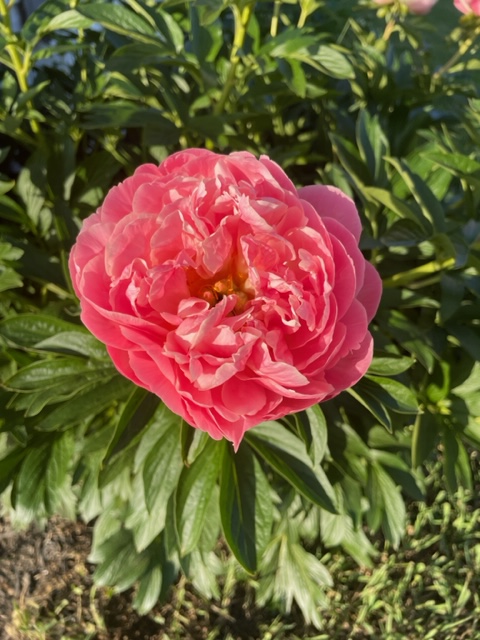
Five years ago, I planted my first peony bush, a Mother’s Day gift from my children. I faithfully watered it, patiently waiting until the following spring to see it bloom. The next year, the peony came up with a few beautiful blush pink ruffled flowers, so I decided to plant another one. I chose a soft white peony with delicate yellow centers. A year later, that one also produced a few blooms, while its older sister’s pink blooms arrived a bit taller and more numerous. This spring, both have exploded with buds cloaked in lush foliage. Every time I step outside, I visit the peonies, delighted with the elegant flowers flanking the side of my home. Mary Oliver’s poem, Peonies, echoes in my brain when she says, “This morning the green fists of the peonies are getting ready to break my heart as the sun rises, as the sun strokes with his old, buttery fingers, and they open – pools of lace, white and pink—.” I cut a few buds, filling vases with peony magic throughout my home.

When I share with others the joy my peonies bring me, I get two contrasting responses. One matches my joy with long oohs and gushes about how much they too love peonies. The other has been a curt response, “You do know that peonies are covered with ants, don’t you?” The person may or may not go on with a story about ant-filled peonies in their home and how it invaded their food pantry. I leave the conversation a bit dejected, as if my balloon of joy has been pricked with a tiny needle, and the air is slowly leaking out, leaving behind only wilted peony petals.

I have heard the tale of ants and peonies from at least ten people. Even Mary Oliver continues her poetic imagery with the next line in her poem, “and all day the black ants climb over them,”. I half expected an ant invasion of my delicate peonies only to be pleasantly surprised to find only one or two strolling aimlessly across the petals. When I share that fact with the naysayers, they are astounded. Some have suggested that I must use a pesticide to prevent the ants, but my negative reply sends them away shaking their heads in disbelief.

Some of the stories about the ants have been relayed in a less negative manner, sharing with me that ants are necessary for peonies to propagate. But my peonies remain relatively “ant-less” and still manage to explode. I did some research on ants and peonies to get to the bottom of the mystery. It is a myth that ants are needed for peonies to bloom. People with rooftop gardens can successfully plant peonies that will bloom without needing to transplant an ant farm as well. But ants do have a special relationship with peonies. They are attracted to the sugary nectar, and once a scout finds a peony, he will inform other ants to join in the feast. These ants are beneficial to the peony bush, because they help ward off aphids, thrips, and other pests that will destroy the buds. Scientists refer to this relationship as biological mutualism, each benefiting from the presence of the other.

Biological mutualism happens throughout the natural world. We see oxpeckers, a bird riding on large mammals, eating parasites like ticks. This provides an easy meal for the bird and helps reduce disease in the mammals. The Disney movie “Finding Nemo” helped educate us on the relationship between clownfish and anemones. Botanists are finding that trees can communicate with one another through the presence of fungi who thrive near their roots. The key to biological mutualism is that both species benefit from the relationship.

While this may benefit the natural world, I wonder how often this idea of biological mutualism shapes the paradigm of how I interact with others. Do I look at relationships with others through the lens of what I receive? And most importantly, how does Christ want us to treat others?

These are hard questions, convoluted with a lot of different nuances. It’s important to have healthy relationships in your life, where you are both giver and receiver. These relationships fill you, allowing you to be vulnerable and transparent. They also help nourish you, providing you with a healthy foundation. For me, these relationships include my husband, family, and close friends.

But not every relationship will be that mutually beneficial. Does this lack of mutual benefit give us a pass on being in a relationship? The Message Bible answers this question by paraphrasing Paul’s words in Romans 15. It says “Those of us who are strong and able in the faith need to step in and lend a hand to those who falter, and not just do what is most convenient for us. Strength is for service, not for status. Each one of us needs to look after the good of the people around us, asking ourselves how can I help.” Different translations of the Bible affirm that we need to help others. They do not ask us to assess how much we are going to receive back from helping. They don’t ask us to do a cost benefit analysis, asking what their responsibility is and what is just enabling. The scriptures simply state that if we are strong, we are called to help those who are weak.

I have not always done this well. There are times I have been frustrated in helping others, annoyed with what seemed like ingratitude. Other times I have counted the cost and set boundaries because I felt others were taking advantage of me. And even worse, I have grumbled while helping, making my good deeds ugly in the eyes of God.

I agree, we need to set healthy boundaries in life. We can’t give from an empty well. Just this week, I recognized that my RA was affecting my body in such a way that I needed extra rest. I had to let my dear friend know that I couldn’t watch her sweet twin boys on Monday. This was a wise decision not based on convenience. But how often have I used excuses in the past to only do what is convenient?

I am called to sacrifice, and this includes both time and resources. Only I know, through prayer and honesty, when I am truly sacrificing. There are some questions I need to ask myself. Am I helping in a visible way so I can receive accolades? Am I only reaching out within my circle, or am I stepping outside of my circle to help? Am I being close-fisted or open-handed with what God has entrusted to me? Am I grumbling while helping?

The answers to these questions don’t always show me as a stellar example of Christianity. Instead, my actions often lead me to repentance. And I keep moving forward, trying to live out Romans 15 in a way that aligns me with the example of Jesus. When I think about how Jesus would answer these questions, I see a man who ministered to others even when no one else was around. He ministered continuously to the marginalized of society. He regularly gave so fully of himself that he was exhausted to the point of sleeping through a storm at sea. Finally, although in his flesh He asked for the cup to pass, He walked willingly to the cross without complaint.

Mary Oliver continues her poem by asking a question, “Do you also hurry, half dressed, and barefoot, into the garden, and softly, and exclaiming of their dearness, fill your arms with the white and pink flowers, with their honeyed heaviness, their lush trembling, their eagerness to be wild and perfect for a moment before they are nothing, forever?” My peonies may have another week or so of blooms before they fall silent for the rest of the summer. It’s a few fleeting weeks of joy for me, where I gather the blooms with delight. I also have a few fleeting moments to gather with and bless those around me with the love of Jesus. Will I run to do His not-always-convenient will, or will I shrink away from the ants on my peonies?

Truth, Goodness, and Beauty

“Finally, brothers, whatever is true, whatever is honorable, whatever is just, whatever is pure, whatever is lovely, whatever is commendable, if there is any excellence, if there is anything worthy of praise, think about these things.” Philippians 4:8

In the 1990s, Mary Engelbreit’s artwork appeared on cards, calendars, and even fabrics. Her designs included cherries on a black background speckled with white polka dots that captured the hearts of many Americans. Her cards had witty sayings, leading to her illustrating a few children’s books as well. Terry read a book about her design aesthetic, which was a collected, curated look. She believed in the motto of William Morris, leader of the British Arts and Craft movement. He said, “Have nothing in your house that you do not know to be beautiful or believe to be useful.”

Once a week, Terry and I indulge in a few shows on the Magnolia Network. We love story-themed shows about food, home décor, and gardening. This differs from the fast-paced competition shows where a few chefs receive a box of food and are expected to create an incredible meal. It also differs from the house flipping episodes where predictably the foundation is slipping or there is something wrong with the plumbing. There is nothing wrong with these shows, and we still occasionally watch those as well. But we love the stories behind artisans and farmers who create and produce unique products.

Recently, Jean Stoffer from The Established Home talked about the importance of a well-designed room. She believed that three elements were needed: something old with patina, something alive such as a plant, and a piece of art. In this episode she highlighted the work of a local painter who captured still life in oil. Stoffer used a few small pieces of her art to decorate a large kitchen she was remodeling.

Her comment in conjunction with William Morris’s quote made me think about the importance of art and my relationship to art. I didn’t grow up appreciating fine art. Instead, my elementary art class reinforced my lack of coordination when I struggled to color within lines or draw simple objects. I never went to an art museum, believing that art didn’t speak to the masses, but was only for the wealthy who lived in big cities. And although I knew some of the main artists, I didn’t understand the different schools of art or how major artists influenced the art world and beyond.

This started to change when I was exposed to art in college by my favorite professor, Dr Hans Bader. In 1991, Dr. Bader turned off the classroom lights to show us slides of Russian art. My college experience happened in the ancient days before the caffeinated latte craze. Thus, my afternoon slump left me struggling, pinching myself every so often to stay awake. I knew that he would ask us to describe a few of these art pieces and their importance for a future test. Dr. Bader described the paintings, sculptures, and architecture in ways that made it all come alive. And as the class went on, I found myself no longer pinching, but awake and listening with wonder.

Around this time, my Aunt Brenda started painting and teaching some of my friends to paint. They created beautiful pieces and I saw how art was a form of expression for these budding artists. When I moved to the Chicago area, I remember hearing that The Art Institute of Chicago was a premier museum housing original pieces by Monet, Seurat, and Van Gogh. I took advantage of my location and visited this museum several times, including during the largest touring Monet Exhibition. And then I had children and was intentional in making art accessible to them through museum visits and learning art history. Eventually, I realized that art was not limited to a certain socio-economic status but was for everyone to enjoy. More importantly, art became important to me.

Art, like beauty, is often believed to be in the eye of the beholder. I love the fuzzy images of impressionists; it makes me feel like I have stepped into an imaginary land where anything is possible. I love how Van Gogh’s use of color expresses his evolving emotions. I have even discovered some modern artists like Makoto Fujimura who collaborates with Japanese artisans to use materials to layer and paint images of the gospel. I also love the finger painting my grandson made me, especially when he specifically told his mom he was painting this one for Mimi! I have even tried my hand at art, sketching flowers, and plants.

Russ Ramsey, author of Rembrandt Is in the Wind, Learning to Love Art through the Eyes of Faith, argues that “The pursuit of goodness, the pursuit of truth, and the pursuit of beauty are, in fact, foundational to the health of any community.” As a Christian, I started my faith journey by pursuing truth. I viewed every sermon, every reading of the Bible, and every experience with the task of exposing the truth of who God was and how I should live my life. This view narrowed my world, hyper focusing on truth and principles. And then a few years ago, my faith hit a major crisis, and I needed to rest in the goodness of God. I recognized that mercy and grace were fundamental to the Christian faith. Without them, my faith would have long since collapsed in a pile of legalistic rubbish!

Now, I am focused on the pursuit of beauty. Elaine Scarry, author of On Beauty and Being Just, says, “Beauty quickens. It adrenalizes. It makes the heart beat faster. It makes life more vivid, animated, living worth living.” I have purposed to have art on my walls, believing it adds beauty to my home. But all too often, I move around my home, focused on the tasks of life. I see the shelves that need to be dusted, the floor that needs to be vacuumed, and the pile of papers that needs to be organized. These tasks are important; clean, organized spaces allow art to shine. But are my art pieces just accessories, or do they help make living worth living?

And this is where I pause to focus on the art in my home. I have two prints from a Pennsylvania artist that Terry and I discovered on a trip to the Brandywine Art Museum. These landscapes prints flank a window in my living room, adding color, beauty, and peace to my space. I can look out my window and see bunnies hopping around in my yard, or a bird resting in the grass. And then my eyes can bounce to my pictures, expanding my view of the outside world. I am also privileged to have some original artwork from my Aunt Brenda. These pieces meet me every day when I climb the stairs at bedtime. Again, I can pause and gaze on the cypress trees against the Italian sky she drew for my husband and remind myself of dreams I still hope to live.

I am currently looking to redo the décor on the walls in my kitchen. I know on one wall; we want a white board calendar to help us get a better handle on our busy schedule. Not only will it record our responsibilities, but it will be a space where we can be intentional in carving out time for beauty. On the other wall, I want a piece of art to reflect my growing awareness of the importance of beauty in my relationship with God. I haven’t found the right pieces but am on the hunt for something that draws me closer to God.

Seeking beauty is just as important to me as seeking truth and goodness. It reminds me that my hope is not in this world, especially when ordinary living feels challenging. I have been struggling with my Rheumatoid Arthritis and all the other disorders I have in conjunction with it. Most days, I struggle just to get out of bed. And most evenings, I struggle to find a position in bed that doesn’t hurt one or more of my joints. It would be easy for me to wallow in my pain. But I believe that lifting my gaze to beauty that God has created, or endowed an artist to create, helps me see past my pain. As Makato Fujimura writes in his book Culture Care, “Beauty is a gratuitous gift of the creator God, it finds its source and its purpose in God’s character.” And in looking at art, I find the peace and hope that I know is in my God.

Names, Labels, and Identity

“Therefore, if anyone is in Christ, he is an new creation. The old has passed away; behold, the new has come.” 2 Corinthians 5:17

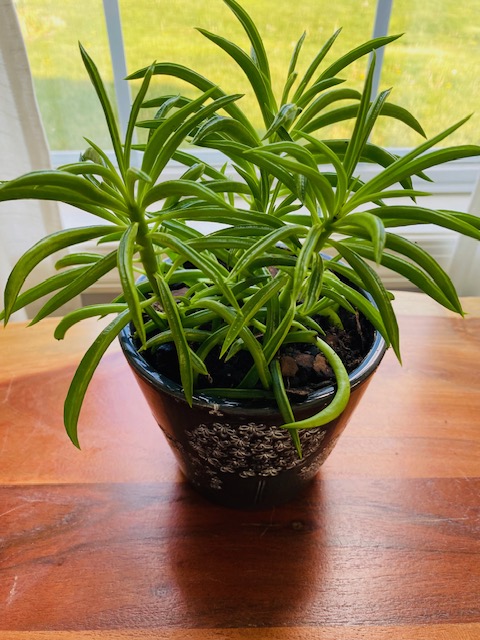
I have a new plant. I took a picture of it and sent it to my grandson, asking if the name “Spencer” was suitable. I know asking an almost-three-year-old to help you name a plant seems a bit ridiculous. But there is a history of us naming plants. Before Joel could talk, we cautioned him to be careful around Phoebe, a big floor plant next to my white shaggy ottoman. He then would go towards Phoebe and pet her. I bought a new plant a month ago, and Joel was on FaceTime when I showed it to him. We threw out a few names, and he had definite opinions of what he liked and didn’t like. So, we settled on “Camilla.” And now my newest plant is waiting to be christened.

Names are important. They are our identity, both legally and relationally. They are what we respond to when called, and often we have strong associations with names. I have a friend who worked as a prison guard in a county jail. In anticipation of becoming a father, he had a difficult time picking a name because he didn’t want the names of his children to be associated with anyone he had dealt with in the context of his job.

It’s interesting to me how names come and go. In my generation, Jennifer, Michelle, and Lisa were popular. Now, I see girls named Olivia, Emma, and Ava. Popular books, singers, and TV shows can also influence or “make” a name. Right after Prince William married Kate, there was a surge in popularity of the names Kate and Catherine. Even the pandemic had an influence on names, with people choosing names that had to do with the outdoors, like Forrest and Willow. In large part, however, the names are decided based on what the parents like. I know that, for us, having an Irish link in the names for our children was important.

My mother-in-law was named Eva Jane Easley, after both of her grandmothers. She never loved her first name, partially because it was the name of the grandmother that she didn’t like as much. Additionally, her temper elicited teasing by her siblings with yells of “Evil Eva!” So, she went by Jane most of her life. She enjoyed the commonality of the name and associated it with the kind grandmother she loved. But at the time of her death, due to all the medical procedures, she ended up going by Eva, because that was her legal name. The name on her birth certificate stuck until her death, and her obituary was entitled “Eva Jane Edmonds.” Despite her dislike of it, my son and daughter-in-law love the name, and their first daughter is named Eva after her great-grandmother.

Although the name Sherry was on my birth certificate, who I am as a person can evolve and grow. And this growth is contingent not only on how much effort I put towards it, but also how much I submit to God in humility. And sometimes this growth is painful and challenging.

In the past few months, I realized how much of my identity was tied up in not fitting the fat person stereotype: lazy, dirty, and dumb. Not to appear lazy, I kept an exhausting schedule, filling my day with lots of activities. I kept my house clean so that I would not appear dirty. I was also self-conscious when meeting people who had professional titles, making sure I engaged in conversations that highlighted my intellectual interests, not wanting to appear uneducated. I was all about portraying the image of a smart, tidy, industrious woman!

But then I lost weight, and who was this new Sherry? For a while, I was the exercise-obsessed person who lived and breathed my jaunts to the gym, Pilates routines, and daily walking adventures. I was also very conscious of what I put into my mouth and often not-so-subtly shared this information with family and friends. This new Sherry wanted desperately to be accepted as what I deemed normal.

Now, I have put some weight back on and who am I now? And the bigger question is why did I let these stereotypes loom so large in my life? I would never let others label people based on their race, age, or gender. But for some reason, I have bought into the belief of what a fat person is and have worked hard to dispel the stereotype. Why haven’t I spoken up for those whom society calls fat? Many of us are productive members of society. We care about our communities. We have interests that are not food related. Many of us may be genetically predisposed to a higher number on the scale even though we are moving. And many are disciplined people whose weight may have nothing to do with a lack of discipline.

I am plugging along with my memoir, currently writing the part on restoring the kitchen, which centers on my obesity. I did a deep dive into my childhood and some suppressed memories have come to the surface. Based on pictures, my rapid weight gain was in direct proportion to my trauma. I remembered stuffing cupcakes and brownies into my mouth to deal with shame, anger, and despair. As I moved from a healthy weight to obesity, I hoped that my rolls and cellulite would cushion the pain from the weekly assaults. Food protected, numbed, and became my closest companion during those hard years.

Today, I realize that my ultimate protection lies in my faith in a good God. And my closest companion was never those sugar-addicting snacks, but Jesus who was there all along. And the hard emotions that I continued to cover up as an adult, I can take them to Jesus. There have been some repercussions from these hard emotions. It has taken a considerable amount of time to process when and why I feel certain feelings. And then, I need to be honest with others about those feelings and occasionally set some healthy boundaries. I wish I could say I have always done this well, but honestly, it has been messy. However, I keep moving toward being a healthier person, owning my mistakes, and repairing relationships as needed.

Recently, I shared with someone that I was considering graduate school for counseling. Immediately, she cautioned me that I might have a hard time finding a job due to my age. I finished the conversation feeling deflated, less than, and disappointed. I sat down for a few minutes, analyzed why I was feeling this way, and called her back. I shared my feelings, and immediately she recognized that, although it wasn’t her intention, her response came off as discouraging. We talked about some other hard things that I had been feeling, and I believe it helped us both understand each other better and move towards healing. Moments like this have me convinced that all those years of stuffing have never left me satisfied or fulfilled. They have left me feeling hurt, misunderstood, and have added to the difficulties I have felt in relationships.

I no longer feel a need to dispel any stereotypes. And I no longer define myself by the numbers on a scale. I am no longer “fat Sherry” or “thin Sherry”.  I am not even “in-between Sherry”.  I am the Sherry who is learning to define herself by the principles laid out in the Bible, not by the past messages I have received and internalized. This Sherry is so much more than my past trauma, my roles, and status. She is an ever-evolving person committed to Jesus!

Sherry Ann Walter was the name on my birth certificate. Someday, my obituary will read Sherry Ann Collins. But neither name really matters, it is who I am in between that makes all the difference. And I want to see who this Sherry becomes!

Honorable Harvest

“When you reap the harvest of your land, you shall not wholly reap the corners of your field, no shall you gather the gleanings of your harvest. And you shall not glean your vineyard, no shall you gather every grape of your vineyard; you shall leave them for the poor and the stranger:” Leviticus 19:10

My brother-in-law handed me “Braiding Sweetgrass” on my first day in Nebraska. I had heard of the title before, believing it was already on my TBR list. I paged through the chapters, read the back cover, and was instantly intrigued. Written by an indigenous botanist, the author examines her relationship to the earth through her culture and science. I had carried with me on the plane some other books which I hoped to finish. These books had due dates, stories in which I already had invested time. Yet, this white paperback beckoned me, moving me to take every spare moment to read while I was in Nebraska. Enraptured, I reread beautiful lines of prose that challenged my way of thinking. And in seven days, I finished the book, feeling like something within me had changed.

The book came at a time when I have been examining my own relationship to my culture, being one-quarter Native American. My biological father deserted me as an infant, leaving me with questions about my heritage. I knew that I had a grandmother with the maiden name of Whitefeather. My dark hair, high cheek bones, and olive skin tone always made me feel slightly out of place in my homogeneous hometown. I knew I was partly Native American, but I felt like an impostor, since I had no stories or connection to this part of my heritage. In the last few months, I have discovered I have more siblings, some of whom have been officially enrolled in the tribe to which my family belongs. I asked a question of Howie, my brother: “When did you identify with your Native American culture?” He replied that he was at a young age, when a teacher recognized his heritage, and encouraged him to be proud of his indigenous ancestry.

My favorite farmers’ markets will be opening soon, along with the abundance of vegetables and fruits. I have managed to curb my impulse buying in the dollar section of Target. But when it comes to a bundle of ramps, Swiss Chard, or radishes, I get dizzy with delight. I see the basket of nectarines next to the pint of plums, and think to myself, I can totally eat these this week. I forget about the other berries I also have sitting at home. I grab bags of fresh greens, tomatoes, and imagine the salads I will have for lunch, forgetting that on three of those days I will have leftovers that also shouldn’t go to waste. The reality is that I buy more food than the two of us can eat. And I end up wasting some of it.

Food waste is a national problem, and one that we are totally unaware of, or maybe we are in denial. It is estimated that a family of four throws away about 31.9 % of their food. We buy too much, over-consume, and then waste. But with food prices going up, I think more of us are becoming aware of how food affects our budgets, making us more conscientious of waste. But “Braiding Sweetgrass” made me aware of a deeper issue. I realized that I as a consumer, regularly take and waste with little consideration for the producers or my community.

Native American cultures, likely because of their hunting and gathering lifestyles, were keenly aware of their food and its sources. They believed in the principle of honorable harvest. This means they took only what they needed for their family, and left the rest, so that future generations would also be able to harvest. Robin Wall Kimmerer, the author of “Braiding Sweetgrass” encourages us to learn from indigenous people and their way of harvesting. Their practices kept the earth healthy, full of nutrients necessary for plants to grow, animals to eat, and life to flourish. She continues these ancient practices when she sees wild leeks growing. She harvests in the center of the leeks patch. This is where leeks are over-crowded, and the thinning of the patch will allow it to spread and grow. Kimmerer also takes the time to carefully dig for the leeks, and if they seem plentiful, easy to harvest, she continues, but only taking what she needs.

Kimmerer also reminds readers of the importance of sharing. When she forages, she often uses what she finds in the wild to nourish others. If she makes a bowl of soup from the wild leeks, she makes it a practice to share the soup with others. She recognizes that this food, some of which she did nothing to produce, is a gift, and that it’s her responsibility to share that gift with others.

Finally, Kimmerer writes about the concept of reciprocity. She says, “One of our responsibilities as human people is to find ways to enter into reciprocity with the more-than-human world. We can do it through gratitude, through ceremony, through land stewardship, science, art and in everyday acts of practical reverence.” This may at first seem contradictory to my Christian world point of view, but when I think about God giving us dominion over the earth, it wasn’t to destroy it or over-consume it. It was to keep the earth flourishing with the good gifts our God gave us in the way of clean water, food, and nature to enjoy.

When I think about how God is sovereign, and His goal is to help me live life abundantly, I must model his style of ruling in how I take care of the earth. My dominion should take the form of helping the earth flourish abundantly. He even gives us models of how to do this with his gleaning principle. Mosaic law encouraged landowners to leave some produce in their fields for widows and other marginalized people to harvest. In this same way, Ruth gleaned wheat, catching the interest of Boaz. And later, this foreign woman became a central figure in the lineage of both King David and Jesus. God’s principle of “honorable harvest” can benefit my world and future generations.

Where do I start? How do I engage in honorable harvest practices? It seems overwhelming: our overuse of plastic, waste food, soil depletion, clean water issues, and use of pollutants. For me, it starts in small steps. And one of those steps involves food waste. I have been thinking about my current food shopping habits. I am trying to be realistic about how much fresh fruit I buy, and whether I can consume all of it before it goes bad. Would it be better to limit myself to two or three different types of fruit before I purchase more? It seems reasonable. Also, I am really thinking about menu planning. If I purchase a vegetable that will be used for one recipe, but will have some of the vegetable left over, how can I incorporate that unused veggie in another dish? Finally, when I make a pot of soup or a main dish that is meant for more than two people, I can be more intentional in inviting someone over to share the meal with us or set aside a portion to take to them.

The last area of intentionality will be addressed later this summer. I love making jam and fruit butter with produce I pick or gather throughout the summer. But again, I tend to make more than the two of us can consume. The solution is to give some away, and this simple act of sharing can be a blessing to others, sharing the goodness of God.

Currently, I am looking into whether I can be enrolled in the Red Lake Nation, my family’s tribe. The draw for me is to find ways I can connect with my heritage. Unfortunately, it looks like a longshot due to a couple of reasons. But God finds ways to answer out heart’s desire. The lessons from “Braiding Sweetgrass” have made me proud of how my ancestors lived and treated the earth. Now, it’s my job to continue some of their practices.

Beauty and the Hundred Acre Wood

“One thing I have desired of the Lord, that will I seek; that I may dwell in the house of the Lord, All the days of my life, to behold the beauty of the Lord, and to inquire in His temple.” Psalms 27:4

It’s full-blown spring in south central PA, no more hints or snippets. Cheerful daffodils are popping out of flower beds, while purple and pink hyacinths display their splendor. Cherry and dogwood trees are in full bloom, while other trees are starting to put out glimpses of spring green foliage. The birds’ morning conversations are loud and melodious, making it easier to crawl out of bed. Delighted, bouncy, and energetic seem the perfect adjectives to capture my mood and mobility.

In January, a lot of people claim a word as their motto for the year. This word, whether it be “intentional” or “cultivate” sets a tone for the upcoming year. It might appear on their refrigerator, mood boards, or social media posts. The purpose behind the word is to help set direction for the year, to keep this word at the forefront. Sometimes, I jump on the bandwagon and come up with a word. And some years it impacts my plans, but other years I can’t quite remember what the word was.

This year, my mind was blank, something that doesn’t happen often. I always seem to have ideas or thoughts swirling around in my head. I did set some goals for myself for the upcoming year but had no overarching theme and I felt a little directionless. I know my seasonal slump probably contributed to this, but it seemed to drag, making my vision for the future cloudy. My post about confetto was the beginning of coming out of the slump, but I still felt a little like a slug, having a hard time moving and making my way forward. I had no momentum or bounce. In the world of the Hundred Acre Wood, for the first time in my life I would describe myself as a little Eeyore-ish, less like my normal Pooh or Tigger demeanor.

My sister sent a post from a conference she attended; it was exactly what I needed to move forward. It said, “Stop thinking so much, you’re breaking your own heart.” I realize, although I have been doing hard work, I have been fixated on my trauma, and not fixated on the healer of my trauma. I had been spending time in my past, which is good, but not spending as much time in the present with God, where I can receive strength when things are hard. I had gotten things completely out of balance. And in looking so much inward, I forgot the beauty of looking up.

I recently heard about an amazing project called “The Growing Kindness Project”.  Deanna Kitchen started growing flowers and had an abundance of sweet peas in bloom. She cut her flowers, put them in vases, and along with her children, delivered them to a senior center. She knew that flowers brought beauty and joy to her life and wanted to spread the happiness. This simple act became a mission for her family, where now she gives away dahlia tubers, so that others can spread the kindness. The testimonies are beautiful of how the lives of both the givers and the receivers have been changed.

She could sell the flowers to raise money, a tangible way to help the community. One could argue that she could have grown vegetables and given away some of the produce. This would have been a tangible way to fight hunger in her community. But that is discounting the importance of beauty and why it is so valuable to our souls.

Studies have shown that when we gaze upon something beautiful, it lowers our anxiety and depression. It calms our busy brains and activates our creativity. Some studies indicate that when feasting on something beautiful, whether its art, music, or nature, it opens space for us to come up with solutions. Beauty changes the way we process information and is essential to our well-being. But often it is the one thing we forget.

The past few years have been hard for our nation: a global pandemic, political and social upheaval, threats of war, school shootings, and growing inflation. I have been transparent how my life has been in transition for the past few years as well, from an unexpected job loss, some physical challenges, empty nest, and a change in where we worship. Some of these changes have been good, but with all the changes, I have experienced some anxiety and stress. And I think it has reduced my capacity to bounce back from each change. Some days, I have found myself endlessly scrolling or listening to podcasts, sitting in a chair, without any movement forward, just kind of stuck.

I am currently reading a book “The Natural World of Winnie-the-Pooh.” Kathryn Aalto, the author, explores the forests in England where A.A. Milne and E. H. Shepherd were inspired to write and illustrate the characters of the Hundred Acre Wood. The book reminds me that getting unstuck requires intentionality. One of my favorite Pooh stories is how his love for honey gets him stuck in Rabbit’s hole. For a few weeks, Pooh stays stuck until his tummy thins out. He’s intentional about avoiding honey even when he just wants to taste it.

My answer lies in the word God gave me this week to get unstuck: beauty. Currently, my favorite verse in the Bible is Psalms 27:4, “One thing I have desired of the Lord, that will I see, that I may dwell in the house of the Lord all the days of my life, to behold the beauty of the Lord and to inquire in his temple.” I need to focus on the beauty that God has created for me to enjoy. And as I look for beauty, I find myself filled, inspired, and propelled.

This beauty can be found in the nature poems my husband and I read each night. It can be found in my yard, looking at my magnolia bush blooming out. It’s captured in a picture of Eva’s sweet smile sent to me by Rachel. It is heard when I listen to the violins in Vivaldi’s “Spring.” I taste beauty as I bite into fresh asparagus. And it is felt when I spend time with God, sharing with Him my gratitude for the beauty He has given me.

I should have seen this word coming already on January 2 when Terry and I were prompted to become members of Winterthur Gardens. Despite the rainy wintry day, we both felt peace and tranquility as we explored the gardens. We heard the tour guide describe how the garden would enfold in the upcoming seasons. We felt this anticipation of the beauty, and membership seemed the best way to explore the garden in the upcoming year. I have already planned an outing with a friend later this week, and Terry and I are planning to explore the gardens at the end of this month.

Spring is here, and along with it are opportunities for me to capture beauty. This means less time scrolling and more time looking up and around. And I believe that even though the word came late to me, I still have eight solid months to focus on the beauty of the Lord!

Cake Stand Artifacts

“Better is a little with the fear of the Lord, than great treasure with trouble.” Proverbs 15:16

Tuesday nights brighten our week. For about an hour, we FaceTime with our grandchildren (and their parents). It starts off with Poppy and Mimi gushing over Joel while he finishes his dinner. After a few minutes, he pops off and on to the screen, showing us his toys, stuffies, and guitar. Sometimes we sing with him or ask him questions about his day, and maybe even read a book to him. Eva is new to this routine. Being held in the arms of one of her parents, she gazes into the screen. Again, we gush with sentiments that sometimes make her smile. This modern technology connects us with our grandchildren who live 7.5 hours away, making us more familiar to them.

As a child, I wanted to be an archaeologist. Books and movies informed my view of archeology, a life full of adventure, mystery, and treasures. But it was more than a life of intrigue, digging up artifacts to learn about an ancient culture that truly fascinated me. What did they use as utensils, and how did they cook their food? Did they really sleep on rock platforms as beds, and do we have any indication of what kind of natural fibers they used for clothing? As archeologists discover more about ancient cultures, we learn more about what they valued.

I often wonder what my grandchildren will think about my life and the artifacts that they may find in my home. Will they look at my collection of cake stands and fondly remember holidays with cookies and cakes sitting upon the pedestals? Will they look at some of my books and wonder what in the world was Mimi thinking when she read about the hunt for the Imperial woodpecker? Will they read the letters and cards I kept and see them as historical evidence of a life that valued relationships? Will they look at some of the things that I deemed precious and see it as junk?

My stuff, and my relationship to it, is something that I have been unpacking over the past year. It’s so easy to see my collection of cake plates as valuable while I look at another person’s collection as useless. What sparks joy in my life may not be what sparks joy in another person’s life. But that leads to a bigger question, why do I value what I have? Does it add or take away from my life? And what does it reveal about my priorities?

We once planted a few packets of wildflower seeds in a garden bed. We decided to let nature take its course, with no weeding, just waiting for the pops of color to bloom. By July, we did see a few blooms, but mostly what came up was a tangled web of weeds choking out the wildflowers. One day, I was outside playing with some children when out of the corner of my eye I saw a long creature scrambled into the garden bed. Bravely, I grabbed a rake and started poking around, and I saw it move again. I dropped the rake and ran in fear. I have no idea what the creature was, probably an opossum, but I was not taking any chances. Later that evening, at my insistence, Terry started cutting the bed down, and eventually mowing it completely. Weeds and unidentified creatures made the few pops of color no longer important.

When Terry and I started downsizing our stuff, I feared my home would end up stark and drab with no personality. When I set aside the Valentine signs that seemed more country than my style, I was uncomfortable. When I got rid of almost all the Christmas wall décor, a tinge of anxiety twisted my stomach. And when I discarded old oil pastels and charcoal art supplies from my children’s early elementary years, I felt like an era had ended.

But the holidays have passed without discomfort or anxiety. Instead, the items I kept seemed to make a bigger statement when not “caught up in the weeds.” Getting rid of the art supplies gave me more space in my desk for the items I use in my own creative endeavors. Additionally, all the myriad of stuff I have gotten rid of informs future purchases. I think longer and with more clarity about what I want to add to my home today. Do I really need that cute basket, or is it something that, two years from now, I’ll add to my growing pile of stuff to give to Goodwill?

I am also more conscious of the messages about stuff that I pass onto my children. I lovingly passed on a collection of books that my son loved as a child. These books enchanted him as a beginning reader. But as a young father, he is conscious about what kind of books he is putting on his shelves, and these books no longer seemed as important to him. I had a moment of sadness, but reminded myself that this is his choice, and I will always have the pictures in my mind of him and his books. Without guilt, I took the books back and passed them on to my niece and nephew. The jury is still out whether they will love the books, but there is no pressure. If they don’t, my sister can pass them on to another family.

I know that everyone has their own idea of what kind of home they are trying to create. Some want a home that exudes tranquility, with neutral colors that calm and soothe. Others may want a home with beach vibes, reminding them of vacations. But I think all of us want a space that brings joy. Even minimalist guru, Marie Kondo, asks you to evaluate and store your stuff in a way that “sparks joy”. For me, Tuesday nights bring me joy, and what is in the background is less important.

One Size Does Not Fit All

“Therefore encourage one another and build each other up, just as in fact you are doing.” 1 Thessalonians 5:11

Working second shift, my mom often left dinner on low in the oven. Sometimes it was a pot roast and other times it was pan of bubbling scalloped potatoes and ham. Along with these dishes, we enjoyed our share of processed food. Hamburger-based meals with stroganoff seasoning packets were a staple in our home. Orange-tinted jar sauce coated spaghetti along with Parmesan cheese shakers, satisfying our Italian longings. And frozen individual potpies seemed fancy with their creamy gravy in flaky pie shells. I thought all cakes came from a boxed mix and made instant microwavable oatmeal for breakfast. My mom did practice her culinary skills on potato salad, cream cheese brownies, and split pea soup. But she left macaroni and cheese to the blue box experts and pizza to the flying war hero.

When I got married, my husband introduced me to old fashioned oats made on the stove. At first, I missed the sweet peaches and cream additives. But eventually, I liked the chewiness and wholesome flavor of ordinary oats that I could sweeten to my liking. This opened my world that not everything had to come prepackaged. Homemade cakes, macaroni and cheese that involved a Bechamel sauce, and pancakes from ordinary ingredients became staples in my home.

I didn’t make pancakes often for my children, but often enough that they knew it took a little time. I started out with a sour cream-based recipe, moving to a buttermilk, and eventually a whole grain pancake recipe. The kids loved pancakes, and they often requested them when they had sleepovers. Once, after flipping sixty-five small pancakes for a group of boys, their insatiable appetites were finally satisfied…temporarily.

Several years ago, Terry was craving pancakes. Wanting a quick fix, he went to the store and bought a complete boxed mix. Maggie, who also loved pancakes, was appalled! She didn’t understand how one could have pancakes without milk, oil, and eggs. She remarked “Just water!” Unashamed by her response, Terry made his pancakes, sharing a few with her. To her surprise, they tasted good. Not only did she like them, but she also preferred the convenience, and likely has a boxed mix in her cabinet, today.

This past month, I have focused on issues women deal with, including boundaries, confidence, joy, and mentoring. I want to close this month by making room at the table for all women to carry out their roles in the way that works best for their lives. This means removing judgment and trusting that God is giving women direction in their own lives.

As a woman, I often define myself by my roles in life. Like most women, I want to have a healthy marriage where Terry and I enrich each other lives. As a mother, I wanted to raise my children to live a life centered on Christ, to be lifelong learners, and to be good stewards of all that God has given them. As a Mimi, I want to impact my grandchildren by being a place where they feel loved and valued. As a woman, I want to make contributions to other people’s lives through my work and volunteering. As a member of the body of Christ, I want to use my giftings to bless my community. I don’t think my ideas are radically different from those of most women I know. Maybe some don’t share the same faith I have, but most women want to be good wives, mothers, grandmothers, employees, and citizens.

In recent years, I have noticed that shawls no longer say one size fits all. Instead, they are often tagged with “one size fits most”. This considers the different heights, shapes, and sizes of women. It feels like such a more inclusive tag, without making others feel less than. I think the idea applies to womanhood in general. It is not a one-size-fits-all model. I chose to be a stay-at-home mom, make homemade pancakes, and home educate my children all the way through high school. But, although this was best for my family, it may not be the best choice for others. I have friends and sisters who choose to be working moms. I don’t think any of them had different goals in mind for their children, they just had a different style of carrying out their goals. I have friends who bought boxed pancake mixes, this doesn’t make them less interested in their child’s nutrition. I have friends who have chosen public school for their children, and they are still actively involved in their children’s education by volunteering in their classes and being a part of the PTA.

I wish I could say that I always believed this. But, for a long time I believed my method was best. This was judgmental and hurtful to those I loved. I looked for evidence to support my beliefs and wasn’t afraid to share it, trying to elevate my choices. But this attitude doesn’t champion others or make room for others to see things differently. It doesn’t champion my friend, Liane, who feels a calling to her profession as a lawyer and uses some of her time to advocate for and represent victims of domestic abuse. It doesn’t make room for all my friends who are single mothers working to provide for their families. It doesn’t make room for my friends who are public-school teachers impacting not just her own children, but a whole classroom as well.

I have been on the other side, where my choices were judged. As a new mother, I tried breast feeding for a week. Exhausted with a crying baby, I made the difficult decision to use formula to feed my baby. I remember a friends’ comment when my son developed an ear infection a year later, “That’s right, he didn’t get the good antibodies of a breast-fed baby.” I already felt guilty about my choice, knowing all the research supported her opinion. Her comment didn’t champion my choice. It made me less than, just like my judgments on other’s educational choices made them feel less than.

In the 1990s, the seasonal wheel dictated the colors of a woman’s fashion choices. Depending on your hair color, eye color, and skin tone, you were either a winter, spring, summer or fall. My dark hair and skin tone supposedly made me a winter, and I was relegated to the jewel tones on the wheel. For years, I followed that advice, staying away from soft pinks and gray. I longed for the mint sweaters and crisp yellow shirts, feeling limited because it wouldn’t bring out the best in me. And then in the early 2000s chocolate brown became stylish. I decided to break protocol, and purchased a brown skirt, with a belted brown and copper shirt. And to my surprise, despite what the color wheel indicated, I looked and felt great!

I have the privilege to be a part of a local chapter of MOPS as a mentor, what I lovingly refer to as the older or seasoned mother at the table. All of the moms I have encountered care passionately for their spouses, children, friends and community. They often question if they are doing enough and if they are making the right decisions. Some work part time, others are going back to school, and one is even home educating. My mission is not to say what I did was the best, but to champion these women in their choices and help them feel more confident without all the guilt.

I no longer wear just jewel tones; I wear colors that make me feel confident. I may make homemade pancakes, but I also love the microwavable Indian foods I find at my local grocer. I no longer judge others for decisions that are different than mine. Instead, I look for opportunities to assure other women that their choices are valid. Women’s History Month has shown us that being women hasn’t been easy. I don’t want to make the lives of my sisters and friends any harder than they already are. I am here to support them in any way I can!