Page 24 of 28

Once Upon A Time: Part II

“And ye shall eat in plenty, and be satisfied, and praise the name of the Lord your God, that hath dealt wondrously with you.”

When I was five years old, I attempted to fly like Superman.  I have no recollection of ever watching Superman or reading the comic, but, somehow, I knew he could fly.  My Aunt Debbie, who I idolized as a child, jumped from the fifth step down to the landing in my grandparent’s farmhouse.  So, when she jumped, I just had to do what she did.  I remember her trying to convince me that it was a bad idea, reminding me that my grandparents had just gotten new carpet in the living room.  I didn’t heed her advice, told her I was going to fly like Superman, and jumped.  The next thing I remember was blood everywhere and my grandmother rushing me to the doctor’s office.   The resulting five stitches ended not only my attempts to fly, but any future attempts at risky behavior.

That incident may seem minor, but I realized the impact of it on my identity years later.  I have defined myself as “clumsy” at worst, or “not graceful” at best.  This identity was reinforced by my failure to complete a back somersault in gym class, breaking a few bones over the course of my life, and never mastering roller skating.  Furthermore, it has impacted choices I have made in my life.  I sometimes wonder, what if I had succeeded in that attempt to “fly”?  Would I have been more apt to try different activities, not fearful of getting hurt?  Would I have had been graceful enough to figure out how to roller skate?
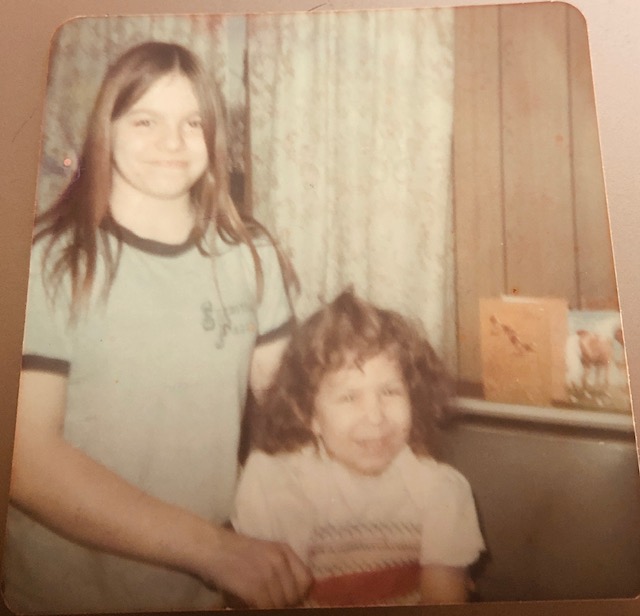
My Aunt Debbie and me!

We all have stories in our childhood that impact our lives, both positively and negatively.  Often, these stories shape our identity, self-confidence, and sense of security.  They often determine the things we care about, what drives our passions, what triggers anger and depression, and how we handle conflict.  Although these stories often have similar themes, how they impact us is not a mathematical equation that can be calculated.  Even within the same family, although people can live the same story, how the story affected each individual family member is as different as the fingerprints that identify us.

About six years ago, a young teenager was asking me about my childhood.  He specifically asked what made my childhood wonderful.  I was a bit startled and unable to formulate a response.  While I do have some good memories, I would not describe my overall childhood experience as wonderful.  A lot of the good memories were marred due to the secrets I was forced to keep.  I stumbled and said to the young man, “Honestly, I don’t have a lot of good memories, my childhood was not so great.”  My fifteen-year old daughter, who was sitting next to me, was a bit surprised and said, “Mom, you never told me that!”

 My daughter was right, I did not tell her anything about the negative parts of my childhood.  To protect my children from information that was too much for them to handle, I had come up with a general statement about my childhood that was truthful, but vague.  It was the right decision at that point.  Yet, the question about my childhood forced me to pray and reconsider this decision made years earlier.  I asked myself some hard questions.  What is my story?  Why share my story with my children?  What purpose would it serve in their lives?  Why bring up ugly, painful memories?  Why rehash ancient history?
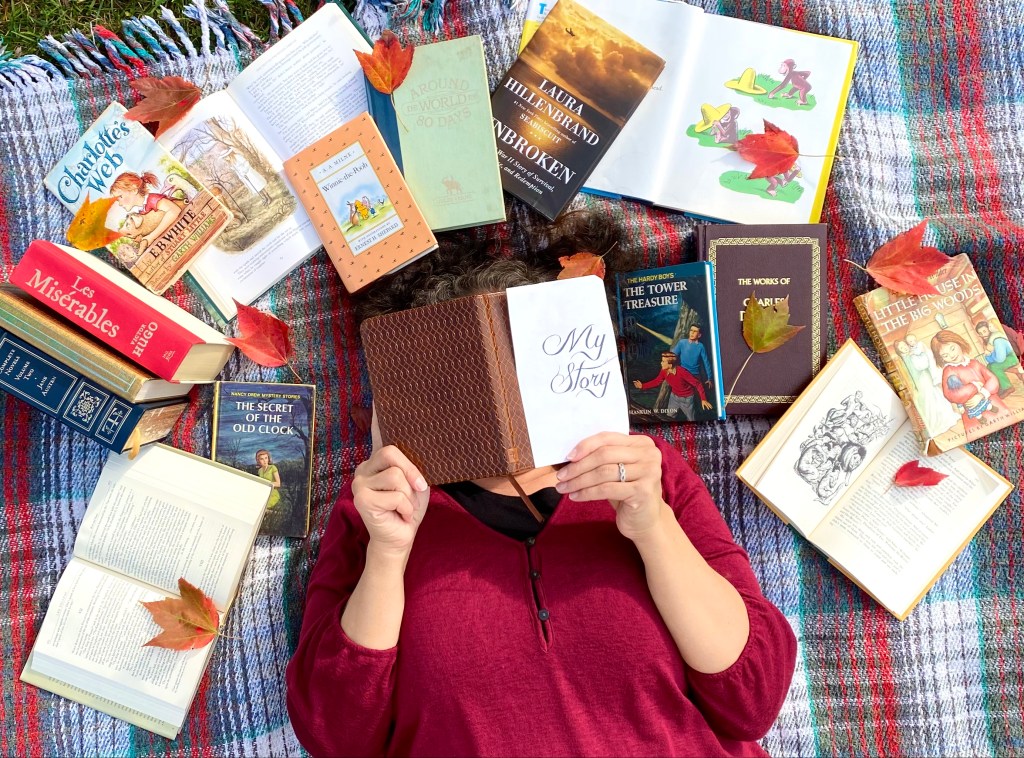
I have always been rather vocal about my opinions.  In the last few years, I have gained some self-control by choosing not to share every opinion or thought that runs through my head.  Yet, there are a few subjects that still fire me up!  One of those subjects is related to history.  Like a cartoon character with steam coming out of her ears, I cringe when I hear, “I hate history and find it boring.”  I instantly want to get on my soapbox and extol the virtues of learning history.  Now, I recognize not everyone has been as privileged as me to have Mr. Bemis, Mr. St. Pierre and Dr. Bader as teachers who made history come alive through stories.  I know that, for some people, history has always been just a list of battles, dates, and rulers.  Yet, I feel passionate that history is not just ancient information, dusty and worn out.  History is an epic story filled with adventure, intrigue, plot twists, plagues, and romance.  Furthermore, I believe we can apply the lessons of history to our lives today.  We can learn from Neville Chamberlain that appeasement does not work and leads to harm.  We can learn from Abraham Lincoln to surround ourselves with people who have different opinions to help make us more effective leaders.  We can learn from Martin Luther King Jr. of the importance of taking a stand for equality.

Philosopher, George Santayana, once said, “Those who do not remember the past are condemned to repeat it.”  I have often used this quote when I discuss the importance of history with others. I think an adaptation of this quote can be applied to our own individual stories.  It might not make the latest edition of Bartlett’s Quotations, but I believe that “those who are not aware of the stories that shape them are not likely to move towards wholeness with God.”  We need to be aware of our stories and recognize how they shape us.  We need to be aware where our lives are broken, allowing God to do a work of restoration in those broken places, moving us toward wholeness.  We then need to share with others the restoration work God is doing by sharing our stories.

So, in thinking about remembering my own “history” with my children, I thought it could illuminate the work God has done in my life, and in turn, in their life.  One evening, I sat down with them and shared my story.  I told them about the physical and emotional abuse that ensued in my home.  I spoke about the fourteen years of sexual abuse that I was forced by my stepfather to keep hidden.  I didn’t burden them with the gritty details, instead sticking to generalities.  But I did detail the restoration God did in my life starting with reporting my abuse to the police.   I shared with them about the three visitors I had in the hospital that impacted my life.  I described the incredible peace I felt when God filled me with His Spirit.  I shared how God redefined my distorted image of a father by observing their father, my husband, love his children unconditionally.  I shared how, over time, God has taken the broken parts of me, and lovingly repaired the damage, creating a masterpiece.  Although my story started off tragically, I closed by pointing my children to a God who is my Redeemer!!!

Both of my children were glad I had shared my story with them.  It helped fill in some blanks that they did not understand.  Furthermore, it gave them a greater understanding of who I was and what I had become with God’s hand on my life.  Finally, it serves as a reminder to them that there is always hope.  God can take any brokenness that they might experience and bring about restoration.

As a writer, I have the ability to self-edit as I write.  I might start with one story to illustrate a point and realize that the story doesn’t work, only to choose a better illustration.  When the reader sees the final product, they are unaware of how many times I have deleted a word, sentence or even a paragraph.  They only see the final product, the words I have penned.

The beginning of our story is often penned by others.  Our lives our shaped by events, people, and circumstances that we don’t have control over.  Unfortunately, we cannot hit backspace to delete the painful stories, erasing them from our memories.  We cannot create new characters that rescue us from the bad events penned by others, but we can rewrite our future stories.  We can allow God to speak into those painful places and restore what was lost.  We can allow God to rewrite our future, no longer allowing those beginning stories to define us negatively.

One of my favorite literary characters of all time is Jean Valjean of Victor Hugo’s “Les Misérables”.  It is a long book, but so worth the investment of time to read.  If the book is too daunting for you, I encourage you to listen to the dramatic adaptation from Focus on the Family Radio Theater.  Jean Valjean was born in France in poverty.  He was caught stealing bread for his starving sister and her children, sentenced to prison, and attempted to escape, resulting in a longer sentence.  When finally released, Valjean had to carry the stigma of being an ex-convict for the rest of his life.  Yet, a kind priest shows Valjean mercy which allows him to redefine himself for the rest of the book.  This is such a powerful depiction of God, who shows us mercy and offers to rewrite our story.  Just like Jean Valjean, we do not have to live with the stigma of our past.  Throughout the rest of the book, Jean Valjean wrestled with the effects of that stigma.  Yet, he did not let it define him, instead choosing to lead others to restoration from their own pasts.

In this post, I have shared a little about my story and the restoration work God has done.  I am still working on my book about this restoration that I hope to complete sometime in 2021.  A scripture that has inspired my book is found in Joel 2:25.  Joel prophesies to Israel that God “will restore to you the years that the locust hath eaten, the cankerworm, and the caterpillar, and the palmerworm”.  He goes on to say in verse 26, “And ye shall eat in plenty, and be satisfied, and praise the name of the LORD, your God, that hath dealt wondrously with you”.  What is your story?  What events, people, or circumstances have shaped your life?  How has the stigma of your story affected your life and those you love?  What scenes or stories do you want to delete?  What areas do you need to allow God to restore so you can be satisfied and know that God has dealt wondrously in your life?  Spend some time thinking about this, write it down in a journal, share it with those you trust, and ask God to heal those places.  Remember, your story is important to you and to God!
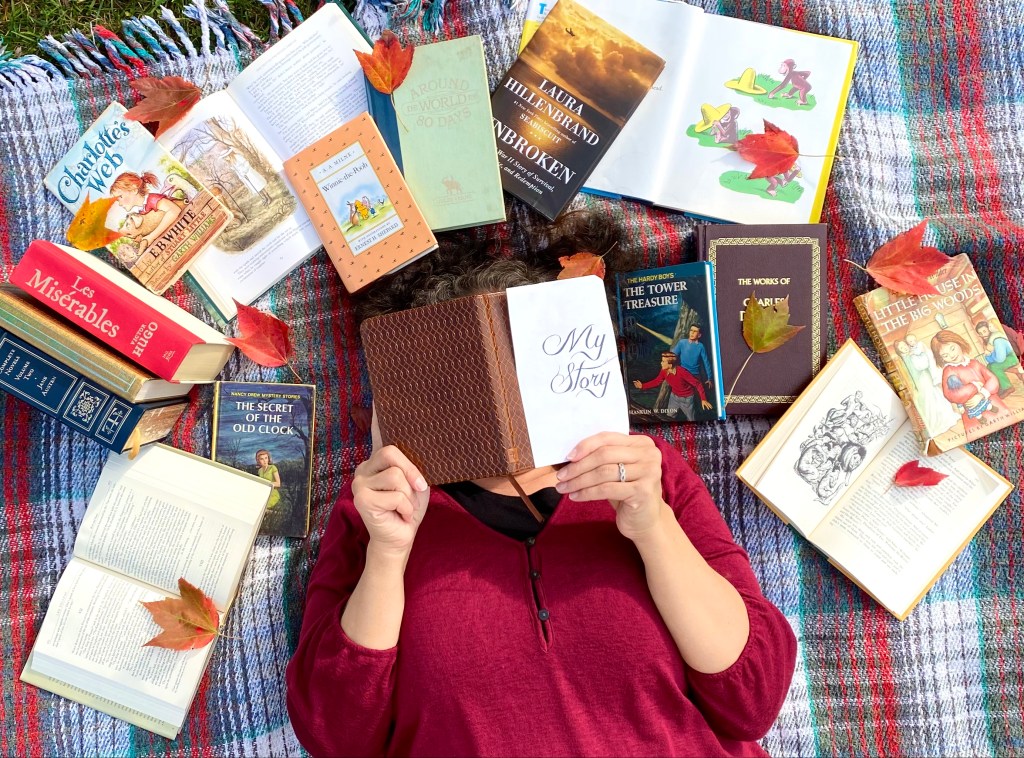
Once Upon a Time

“And they overcame him by the blood of the Lamb, and by the word of their testimony;” Revelation 12:11

I have loved stories my whole life.  As a little girl, I read about Sam’s dislike of green eggs and ham and laughed at Curious George’s antics.  I pretended I was Laura, playing in the attic with my corn cob doll while Pa played his fiddle.  I searched desperately for a magic wardrobe so that I could enter Narnia and meet Aslan.  I looked for Charlotte in every spiderweb and wished I could float down a chocolate river with the Oompa-Loompas.  As a parent, I shared my love of stories with my children, making frequent trips to the library, returning with piles of books.  We giggled at Pooh’s simple brain, traveled around the world with Phileas Fogg, solved mysteries with Frank, Joe, and Nancy, and fought dragons with Bilbo Baggins.  As an adult, I still love stories, cheering with Emma when she finds her Mr. Knightly, hoping Jean Valjean is vindicated, chuckling at Don Quixote’s assumptions, and hoping Frodo finishes his quest.

The love of stories transcends all cultures, ages, and times, capturing the hearts of people everywhere.  Heroes and heroines fill our imaginations with hope and awaken in us the desire for adventure and significance.  Even cultures with no written language have oral traditions rich with stories.  What is even more amazing is how often similar themes of stories exist among different cultures.  For example, the story of Cinderella, as depicted by Disney, is based on the Western European version written by the Grimm brothers.  When my daughter was little, we discovered Native American, Korean, and Indian versions of the same story, written by different authors in different places and times.

Even the various authors of the Bible, inspired by God, wrote large portions of the Bible in the form of stories.  We learn about the plight of all humans in the Garden of Eden.  We see the rescue of a baby boy by an Egyptian princess, only to see him grow up to challenge Pharaoh.  We see the redemption of a faithful daughter-in-law.  We watch David start off as a shepherd playing a harp, grow into a young man who defeats a giant and later a king with a rebellious son.  As the Old Testament continues, kingdoms rise and fall with various rulers and prophets playing lead roles.  In the New Testament, three gospels recount the story of a simple carpenter and his teenage fiancé giving birth in a dirty stable to the Savior of the whole world, Jesus.  Miracles happen throughout Jesus’ ministry with the biggest miracle unfolding in his death and subsequent resurrection.  Shipwrecks, poisonous snakes, and jail breaks due to worship service are a few of the stories we read in the book of Acts, as different people are changed by the Holy Ghost, later becoming disciples of God.  The Bible ends with an exiled disciple’s vision of fantastical beasts, battles, and the end of the natural world.

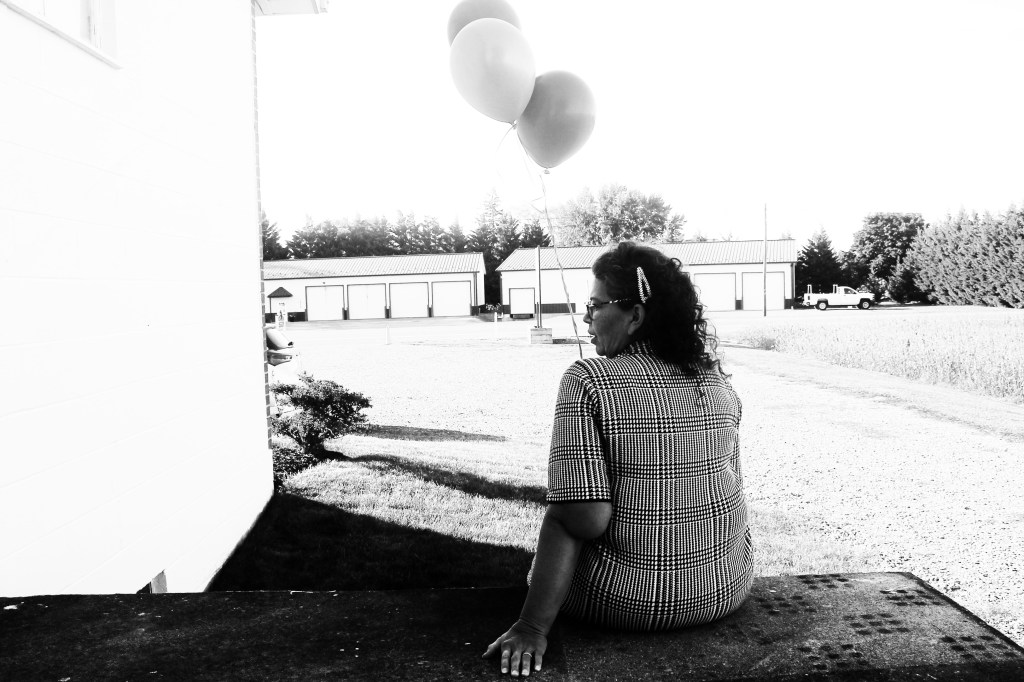
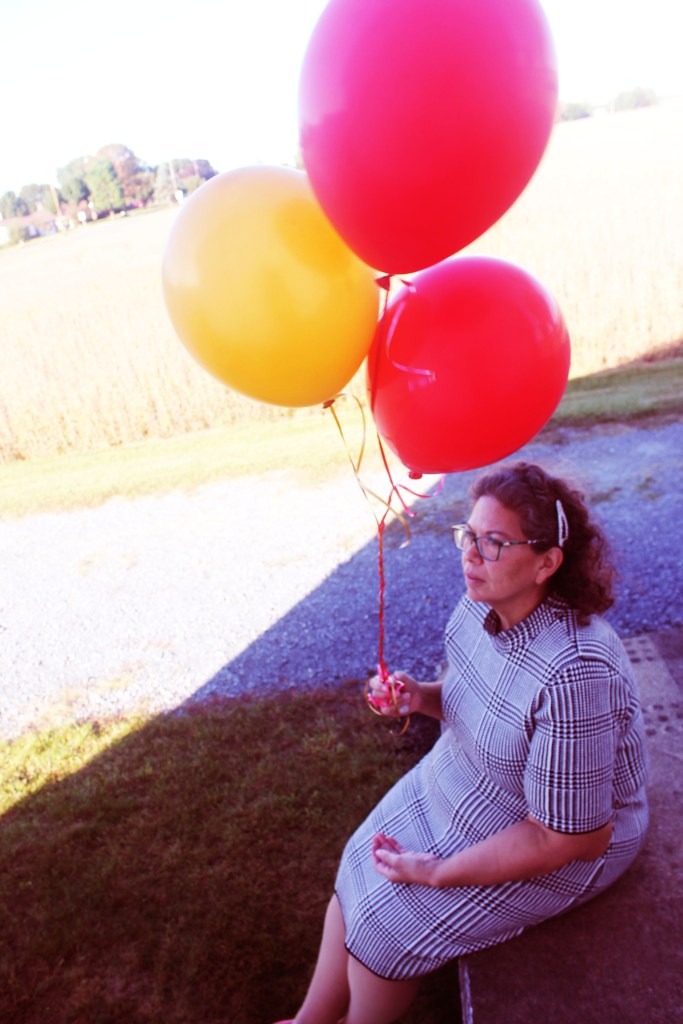
Photo Creativity and Credit to Margaret Collins

We cannot forget that God had an overarching theme to the whole Bible, all the stories are part of a bigger picture, the story of God.  It tells about His creation, humanity’s fall, His redemption, and His restoration: the metanarrative of the whole Bible.  God cares about stories!  More importantly, He cares about the parts each of us play in His story.

Over the course of four years, I read biographies of each of our presidents.  These were men who shaped policy and the direction in America.  It was an incredible scope of American history seen through the stories of these men’s lives.  But more than just American history, these were the stories of the events that shaped them as men.  For example, Teddy Roosevelt was devastated when he lost his first wife and mother in the same day.  He disappeared from the political landscape for a few years.  Yet during this time of escape in the Badlands, he rekindled his love of the outdoors, along with a renewed sense of purpose, eventually leading him to the presidency.  As a young man, Harry Truman, worked for his Jewish neighbors while they practiced their Sabbath.  This later influenced his decision to recognize Israel as an independent nation.  These stories, and many more, changed my own perspective on the presidency.  It helped me to see them as ordinary men, like you and I, who had extraordinary opportunities to do great things.

Like these men, we all have stories, stories that have power in our lives.  These stories shape and mold us into the people we are.  They define our passions, determine our strengths, push our fear buttons, trigger our anger, and sometimes hold us captive.  In the past few years, my husband and I have spent some time understanding our own individual stories and each other’s.  Sometimes, this work was hard, exposing character flaws and leaving us feeling vulnerable.  Yet, this understanding has led to healing and wholeness that we needed individually and in our marriage.  Furthermore, it has helped me overcome destructive habits and patterns in my life.  In Revelations 12:11, the Bible states, “And they overcame him by the blood of the Lamb and by the word of their testimony.”  Knowing my story helps me overcome!!!

Over the next three posts, I am going to explore the power of stories through the following topics:

I. The importance of knowing your story, as well as how it impacts you and your relationships with others

II. The importance of acknowledging that others have a story.  This acknowledgement frees us from judgmental attitudes and increases our empathy towards others.  I hope to explore the importance of creating communities that are safe for people to share their stories

III. The importance of relating your story in the context of God’s story.  Our lives are so much larger than the few years we live on this earth.  We have the power to impact others by reflecting Christ in our lives

The following quote from Christian therapist and author, Dan Allender, sums up what I hope to convey in these upcoming posts.  In his book, “To Be Told: Know Your Story, Shape Your Future”, Allender says, “So take seriously the story that God has given you to live.  It’s time to read your own life, because your story is the one that could set us all ablaze.”

Yes, “reading your own life” can be hard work, akin to reading Leo Tolstoy’s “War and Peace” and deciphering the many Russian character names.  Yes, it can leave you feeling vulnerable, like Louis Zamperini did in the Japanese POW camp in “Unbroken.”  But it can also result in finding a treasure beyond imagination like Mary did in the “The Secret Garden” or Oliver did in “Oliver Twist.”

Graphic Design by Margaret Collins

Autumn Abundance

“Now unto him that is able to do exceeding abundantly above all that we ask or think, according to the power that worketh in us.” Ephesians 3:20

Fall has arrived, arraying the trees with reds, yellows, and oranges, while fields turn golden as harvest is nearing completion.  My favorite farmer’s markets are filled with pumpkins, squash, and apples.  Ingredients for soups and chili fill my pantry shelves.  My heart echoes the same sentiments of Anne in L. M. Montgomery’s Anne of Green Gables, “I’m so glad I live in a world where there are Octobers.”

Although I appreciate all the seasons, autumn is my absolute favorite.  I have fond memories of going to Waldo Apple Orchard as a child and eating a caramel apple.  I love hiking, hearing the crunch as I step joyously through the leaves.  I love wearing warm, cozy clothing and sipping mulled apple cider.  It stands to reason that I also love to decorate my home for fall.

My fall decorating started off very humbly.  Having a limited budget, I started with a homemade leaf garland.  My husband and I cut out hundreds of leaves in different fall shades of construction paper.  We then misted them with water, crumpled them and let them dry.  After attaching them to twine, the leaf garlands graced our home.  For years, this was our only fall decoration.

Then I discovered Hobby Lobby.  As I had more disposable income, slowly I started adding to my fall decorations.  This included a more elaborate leaf garland, some fall signs and even a few critters.  I continued to make some of my own decorations, including a thankful tree and a short acorn garland to hang above my kitchen sink.  My fall décor collection now fills two large storage crates.  Every year, shortly after Labor Day, my home transitions into autumn while “Punky Pumpkin” by Rosemary Clooney plays.  When its all done, I sigh deeply, ready to embrace the cooler weather and my fall traditions.

For the past few years, I have attempted, unsuccessfully, to decorate my front porch.  To be honest, my “porch” is not really a porch at all but just a small slab of cement in front of my door, lacking any curb appeal.  In summer, I typically have a few flowerpots greeting guests as they enter my home.  As the weather cools, I place a few pumpkins and mums on my front porch to create a fall ambience.   For some reason, my fall ambience seems to fall flat.  Being a bit spatially challenged, my pumpkins and gourds are either too small or too few and my mums are too low or wither quickly because I forget to water them.

This year, I decided to go big.  Instead of grocery store mums, I went out to a local Mennonite market and purchased two large pots of bright yellow and wine-colored mums.  I then went to my favorite farm stand for pumpkins.  It is such a great time to be alive, where we are no longer limited to only traditional orange pumpkins!  Now, they come in all shades, including white, green, gray and my favorite “warty pink”!  I gathered a few pumpkins and gourds and headed home.  As I started decorating the porch with my treasures, I realized something was still missing.  A week later, I made a second trip, purchasing more pumpkins along with a small hay bale.  As I loaded them in the car, I realized I might have gone a tad bit overboard.  In jest, I sent my husband a text saying, “Remember how much you love me.”  After unloading the stash and rearranging my porch, I realized I needed one more small orange pumpkin to make it complete.  So, I made one more trip, grabbing the last pumpkin (or two), to complete my porch display.

Photo credit to Margaret Collins

When all was said and done, I somehow ended up with thirteen pumpkins and gourds on my small porch.  I won’t tell you how many fake pumpkins are inside my home or you might start to think I have a problem.  Now, I know the current philosophy is “less is more”.  There are books written about the concept of minimalism along with new vocabulary like “Konmari Method” and “Capsule wardrobe”, encouraging us to be mindful of how much stuff we have.  In fact, the opposite of minimalism is looked down upon.  We have reality shows depicting the shocking lives of hoarders!  Thrift, resale, and vintage stores abound, helping us to get rid of our excess “stuff”.  Even restaurant menus and food labels are embracing the concept of simplicity with emphasis on fewer but better ingredients.

Even as a Christian, we are encouraged to live in moderation.  Paul challenges Christians in Philippians 4:5 by saying, “Let your moderation be known unto all men.”  He also says in Galatians 5:23 that temperance is one of the fruits of the spirit.  Temperance is defined as self-control, and no one could argue that a hoarder is modeling that fruit of the spirit.  In 1 Timothy 6:6, God also encourages us to live in contentment by linking it to godliness, concluding that we will have great gain.  The scripture continues in verse seven with Paul’s words, “For we brought nothing into this world, and it is certain we can carry nothing out.”  This implies that we must be careful not to attach ourselves to “stuff”.  God clearly wants us to avoid materialism!

For the Christian, the contrast to materialism is living an abundant life. Jesus told a crowd of Pharisees in John 10:10, “…I am come that they might have life, and that they might have it more abundantly”.  Paul reiterates Jesus’ words in Ephesians 3:20, “Now unto him that is able to do exceeding abundantly above all that we ask or think, according to the power that worketh in us.”  Jesus came so that we can live an abundant life.  This life is not measured in possessions or status, but rather an abundance of love, peace, joy, and hope.  We can show unconditional love to others, not because we are self-righteous, but because God has shown us love.  We can have abundant peace in our relationships, not through the absence of conflict, but because we know that God will work it all out for our good.  We can have joy overflowing in all situations, not through a lack of sadness, but joy in knowing that God has it all under control.  We can have abundant hope in desperate situations, not by being eternal optimists, but because our hope is not in this world but in heaven to come.

My sweet mother-in-law had a dismal view of fall, she saw it as a season of dying.  She dreaded the cold Illinois winters, and saw the changing of leaves as the first indication that winter was on its way.  I always found her perspective a little sad and depressing.  From my perspective, fall is the opposite of dying.  It is the time to celebrate the abundance of our natural world though harvest and the plethora of colors on display. The fruit of the harvest spilling from the cornucopia, the horn of plenty, depicts the season so well!  Furthermore, fall climaxes with Thanksgiving when we acknowledge all of God’s blessings at a meal with family and friends.  I may have gone a little overboard with my pumpkins this year, but maybe, just maybe, it is a reminder to us all of God’s desire for us to live in abundance!

Green Thumbs and Pride

“Be not wise in thine own eyes: fear the Lord, and depart from evil.”

Proverbs 3:7

I love houseplants despite my thumb being a shade of not-quite green.  I do manage to keep flowers alive on my patio, although they are never quite as vibrant as those of my neighbors.  A few years ago, I started adding foliage as décor in my home, one by one, with reasonable success.  Instead of the traditional flower bouquet for Valentine’s Day, I received a big floor plant that I had been longing for, quickly naming it “Phoebe” (my daughter and I have a habit of naming birds, squirrels, ducks, plants, etc.)!  Feeling confident in my ability to care for it, I bought an English ivy.  I found a cheerful yellow pot on clearance, envisioning my ivy, properly named “George”, spilling over the sides.  I carefully transplanted it, set it near the window and watered it faithfully.  Over the next three months, “George” slowly withered and died a painful death, after dropping all its leaves, one by one.  I was so hopeful each time I watered it until the last few brittle leaves took the plunge.

Disheartened, I went to my favorite local greenhouse, searching for a new plant to fill my now empty pot.  Finding something I thought would work, I brought it to the counter, inquiring of the young clerk how big it would get and described the yellow pot in which I intended to put it.  Then I made the mistake of telling her about “George”.

She seemed genuinely baffled.  “You killed an ivy?  They are really easy to grow, in fact they grow on the sides of buildings.  Did you water it, and how much?”  When I told her my approximate measurement of water, she replied, “Are you sure, was it near a window?”  Again, I responded favorably, and then she said, “I have never heard of anyone killing an ivy!”  Sheepishly, I handed her the new plant I now wondered if she would allow me to purchase.  She admonished, “This plant needs a lot of TLC, I’m surprised they are still in the greenhouse, I thought the owner was going to remove them.  This plant really needs a lot of TLC!”  The implication was clear: she didn’t trust my skills or ability to care for this plant!  I muttered that I would be careful, listened to her advice, and walked out with the plant.

Photo credit to Margaret Collins. In the spirit of being somewhat of an anglophile, I am going to name this plant “Henry”!

Although I felt a little demeaned by the clerk, her questions were legitimate.  Being a plant expert, she was trying to troubleshoot my problem.  Instead of letting her questions derail me, I listened carefully to her suggestions for caring for this new plant.  I even bought a different soil mix she recommended to ensure the plant’s growth.  After a few weeks, it is starting to perk up and flourish!

To be honest, a few years ago, I would have been annoyed with the clerk’s response and likely have ignored her advice.  At the time, I would have let my pride hinder me from further learning and growth.  In my twenties and early thirties, I actively sought information to improve my marriage, parenting skills, and knowledge in God.  I listened to radio programs and discussed principles with friends.  I recognized I was young and needed the wisdom of others to help me grow.  As I grew older, I eventually formed some core philosophies and principles and became locked into my beliefs.  And then I made a mistake: I sought out sources that only supported my way of thinking and agreed with my ideas.  Letting pride creep in, I ignored anything that might challenge my way of thinking.

Anyone who owns a front-loading washer knows the challenges of preventing mildew from growing on the rubber seal.  After every use, I must dry the seal and door carefully, leaving the door of the washer open for twenty-four hours.  I also clean the machine with a special product monthly.  I stay on top of these tasks because, if I slip up, mildew will not only form but grow, eventually ruining my washer and clothes.  Like mildew, once pride creeps in, it starts to grow.  It clouds your vision and keeps you from recognizing your weaknesses.  It leads to sin, and it can destroy relationships and hinder potential.  It permeates every area of your life!  Caleb Holmgren, my good friend’s 23-year-old son, said it best in his vernacular, “Pride sucks. It keeps me from admitting when I’m wrong, and hinders me from reaching out for help as well…”

My pride stopped me from growing.  I became judgmental of others’ shortcomings, elevating myself in my own mind.  Outwardly, I acted humble, but inwardly I thought my principles were not only the right way to live life, but the only way!  I stopped seeking wisdom for my marriage, parenting, and my life, in general.  I became stagnant and arrogant in my way of thinking.

Then a series of events happened that crushed my pride.  Problems arose in my marriage and I started to see flaws in how I had parented.  I was faced with the ugly truth; I had relied on my own knowledge instead of God’s.  I had chosen to direct my own path, instead of realistically evaluating my own lack of skill.  I basked in the glow of my so-called “perfect life”, ignoring signs indicating that something was wrong.  One morning, feeling completely broken, I felt God was revealing that pride was at the root of my sin.

Generally, I have seen two responses when pride is brought to light.  The first response is to remain prideful, either by persisting with an arrogant attitude, or living in shame.  This paralyzes you from dealing with the problems.  The second response is to be contrite, admit your sin, and take full responsibility for it.  On that morning, it was only by the grace of God that I chose the second response when faced with the revelation of my sin.  I swallowed my pride, examined my heart, spent some time in repentance, and made a lot of apologies to those I had wronged.

Pride is a common theme throughout the Bible.  It is a major character flaw in both antagonists and protagonists in the Bible, including Saul and Hezekiah.  In the New Testament, both James and Peter state, “God resisteth the proud.”  God also makes an interesting contrast related to pride.  In Proverbs 8:13, Solomon says, “The fear of the Lord is to hate evil: pride, and arrogancy, and the evil way and the froward mouth do I hate.”  Based on the way this verse is punctuated, one half of the things that God thinks are evil are related to pride.  Both pride and arrogance, although they are different words, are rooted in the same Hebrew word “ga’ah”, which means “to be exalted in triumph.”  The fear of the Lord is to hate exalting ourselves.

God not only revealed to Solomon what the fear of the Lord hated, but also what the fear of the Lord looked like in practice.  He remarks in Proverbs 9:10, “The fear of the Lord is the beginning of wisdom.”  He continues in Proverbs 13:10, “Only by pride cometh contention: but with the well advised is wisdom.”  God contrasts exalting oneself and relying on your own opinions with being well-advised by others in the pursuit of wisdom.

It follows that one of the keys in developing wisdom is to be well-advised.  So, one of the steps I have taken to prevent the “mildew” of pride from spreading further in my life is to be well-advised.  First, I have made studying the Bible a priority.  God’s word can magnify my prideful attitudes and show me examples of how to remain in a posture of humility.  In addition to the Bible, I have spent the last two years reading some books that address marriage, parenting adult children, and growing as a woman of God.  I have also listened to podcasts, paid attention to sermons that have pricked my heart and have talked over some of my problems with people who could speak wisdom into my situation.  I have actively chosen to be well-advised!

One of the most popular passages every Christian memorizes is Proverbs 3:5-6, where it says, “Trust in the LORD with all thine heart and lean not unto thine own understanding.  In all thy ways acknowledge him, and he shall direct thy paths.”  Recently, I heard someone say that this was their life verse.  Verse seven, which is less quoted but just as important, continues, “Be not wise in thine own eyes: fear the LORD, and depart from evil.”  Again, God is contrasting wisdom with pride.  In writing this post, I have decided to make this plant in my yellow pot a prayerful reminder to me. This is my prayer:

God, I am so grateful that You revealed my prideful attitude and Your kindness led me to repentance.  Help me to continue to fear You by seeking Your wisdom.  Challenge me on a regular basis to grow in wisdom through Your Word, sermons, books, and podcasts.  Let the wisdom of the well-advised transform my way of thinking to align me with Your way of thinking.  God, as this plant flourishes and grows, let it always remind me to remain humble in Your eyes.  In Jesus’ name, Amen!

Celebrating 38

“My tongue is the pen of a ready writer.” Psalm 48:1

I was not your typical sixteen-year-old, dying to start driver’s education and itching to get behind the wheel.  For some reason, I was extremely afraid to handle a large machine that could potentially kill me and those around me.  It could be that my step-father repeatedly told me that I would be a bad driver; it could be that I wasn’t even good at bumper cars, often ending up pinned by others; or it could be that I was just afraid.  Whatever the reason, I put off getting my learner’s permit until I was eighteen.

Then I had the ill-fated accident.  If it had happened today and someone managed to catch it on their phone camera, I am sure it would have gone viral.  I was backing up my mom’s beloved aquamarine Mitsubishi in our driveway when the crash of metal assaulted my ears.  I realized that I had just backed into my uncle’s brand-new car.  Visibly shaken, I pulled the car forward as my mom ran out of the house to see what had caused the commotion.  I jumped out of the car to inspect the damage, forgetting to put the car into park.  As the car inched towards the garage, my mom yelled at me to get back into the car and hit the brake.  Panicking, I slammed my foot on any pedal within reach.  Unfortunately, it was the accelerator.  The car crashed a second time within a few minutes, this time into the closed garage door!

Fortunately, no one got hurt, but I was paranoid about driving afterwards.  A few friends offered to teach me, but I made only halfhearted attempts, afraid of having an accident again.  Despite this handicap, I attended college and moved to another state, relying on friends to “chauffeur” me.  Finally, my job required me to have a valid license, forcing me to overcome my fears.  So, a few weeks after getting married, my new husband took me out daily and patiently taught me how to drive.  Despite my trepidation, I learned to make left turns without tears, and within a few weeks, I passed my test and became a licensed driver at age twenty-four!

We all have fears that can paralyze us, keeping us from moving forward or discovering more about the world around us.  For six years, my fear of driving hindered my ability to be independent and made my world smaller.  I had no idea the sense of freedom I would feel once I held a license in my hand!

A year ago, I had to overcome another fear: the fear of failure.  The previous two years had been challenging with all sorts of transitions and new situations.  I had been praying that God would help me grow from these challenges.  After praying for a while, I felt led to share some of my challenges with others in a blog format.  I was not presuming to come to any life-altering conclusions or great spiritual insight.  Instead, I felt like God was asking me to be transparent and authentic, sharing some of the journey that I have been on.  So, I put fingers to keyboard, and started blogging!

It was scary publishing my first few posts.  Was my writing good enough?  Would anyone else read it?  How transparent should I be?  What if I failed?  I began to panic and thought about quitting.  Then I had an epiphany: if God is really in this, then I should let His Word define my success.  I found a few verses that allayed my fears and gave me a clear direction.

Psalm 45:1-2 acted as a plumb line for the direction of my blog.  Here the psalmist declares, “My heart is inditing a good matter: I speak of the things which I have made touching the king: my tongue is the pen of a ready writer. Thou art fairer than the children of men, grace is poured into thy lips: therefore God hath blessed thee for ever.”  When I found this passage, I set three guidelines for my writing.  First, like the psalmist, I need to let my words be a source of encouragement for others.  This was not a space to be venting my frustrations or ranting my views.  Instead, my words need to uplift others and give them hope.  Second, I need to “touch the king” by speaking of Jesus in every post.  Not only does Jesus need to be the center of my blog, but I want God literally directing my words.  Often, I have started with an idea of what I was trying to convey, only to start writing and see it move in a direction completely different from what I originally envisioned.  The final post turned out better than I had hoped for because the moving was appointed by the Lord.  Finally, I want the grace on my lips, or my pen in this case, to be a blessing to others.  I want my blog to minister to others and be a blessing.

The second verse that God used to help me define success was found in 1 Corinthians 3:6. Paul told the Corinthian church to be careful in trying to attribute success.  He reminded them, “I have planted, Apollos watered but God gave the increase.”  My role as a writer is sometimes to plant and sometimes to water, but the increase belongs to God.  I have had almost 1,000 views of my blog over the course of the year.  I am truly humbled and grateful that my blog has been read by others, but in the cyber world, that number would not be impressive.  Although I would like to increase my readership, the number of views doesn’t determine my success.  Success is a card in the mail letting me know that my writing has ministered to someone.  Success is a Facebook comment that my blog challenged someone.  Ultimately, this success belongs to God for He has allowed my words to bless others.

Today, I celebrate one year of “Graceful Transitions”!  Including today, I have posted thirty-eight blogs over the course of the past year.  I have covered many different topics including my health journey, loneliness, adoption, death, self-worth, and brokenness.  I have included some humorous stories, milestones in my life and even a few recipes.  I have done a book review, shared some favorite quotes and have mused about some scriptures.  At times it has been cathartic to write, and other times I felt a little nervous about sharing my failings and struggles in cyber space.  Every time I have hit the “Publish” button, I prayed that God would use my blog to speak to someone and point them back to Him!

I want to thank a few people who have been instrumental in this journey.  First, my amazingly talented daughter, Maggie, who has taken the credit-worthy photos for my blog.  Without her photography skills, my readers would have blurred images lacking creativity.  She also manages to take pictures of me without my eyes closed, which is an accomplishment in itself!  In addition, she was the first person to tell someone else that her mother was a writer.  That simple statement changed how I define myself.  Next, I want to thank my sister, Monica, who has shared most of my blogs on her Facebook page.  Because of her shares, I have gained a few additional readers which has encouraged me to keep writing.  Last, but not at all least, I want to publicly thank my incredible husband.  Not only was Terry instrumental in helping me overcome my fear of driving, he encouraged me to make the leap to writing.  Together, we decided that this season in my life was going to be devoted to writing and see where God takes me on that journey.  Furthermore, he takes the time to edit my weekly posts by not only correcting the obvious flaws, but also by giving me pointers on how to improve my writing.  He has also encouraged me to own my writing instead of timidly sharing my conclusions.  I could not have done any of this without his support and stellar editing skills!

I also want to thank you, my readers.  Some of you have faithfully read all my blogs, others have read only a few, and still others may have read only one.  Some of you I know, others I have met on social media, and some of you I have never met.  Whichever camp you fall into, thank you!  Thank you for taking the time to hear my heart!  Thank you for the comments you have shared!  Thank you for letting me be transparent with you!

I have no idea where “Graceful Transitions” is going in the future.  I have set some goals for the upcoming year. I want to continue to write posts weekly, trying to post fifty in this upcoming year.  I also want to continue to find my voice and refine my writing skills.  I also have plans for including more book reviews, potential lifestyle posts, and continued transparency about life transitions.  Along with writing my blog, I am also writing a book about restoration from childhood sexual abuse that I hope to publish by the end of 2021.  So, although I don’t know the future, I do know that, as long as God continues to give me the words, I will continue to be brave and write!

Pumpkin Spice and Giant Red Squirrels

“Let’s see how inventive we can be in encouraging love and helping out.” Hebrews 10:24

The “pumpkin spice everything” season has arrived, invading coffee shops, bakeries and Pinterest, and indicating that summer is ending.  Soon, warmer temperatures will cool, flannels will cover up t-shirts, and boots will replace sandals.  Despite this ending, I have a bounty of summer delights filling my freezer and pantry: frozen peas, fire-roasted tomatoes, corn salsa, strawberry-honey butter, blueberry-orange syrup, mixed berry jam and homemade ketchup.  With the pop of a lid or the unzipping of a bag I can be instantly transported to the hazy days of summer with the smell of sweet strawberries, blueberries, and tomatoes.  Along with this flavorful bounty, I have spent my summer preserving memories with my loved ones.

Despite COVID-19 restrictions, I traveled a little this summer, using common sense and following social distancing guidelines, including wearing masks.  All my travel involved seeing family and friends, including a wedding, and meeting my grandson for the first time.  The pandemic forced me to prioritize my time, slow down to savor moments and create memories.  In the past, I have enjoyed my trips to major cities, hustling along with crowds to catch glimpses of memorials and famous buildings.  But this summer was not about tourist attractions, or cultural experiences, it was about relationships.

One of my visits this summer was to not-so-exotic Lincoln, Nebraska.  I am not disparaging Lincoln; it is clean city with beautiful old houses, tall oak trees, and frolicking red squirrels the size of small dogs.  Yet, it is not a major tourist destination where everybody “likes” the photos of your big summer vacation.  It doesn’t appear on most bucket lists unless you are a college football fan or attempting to hit all 50 states.  It is just your typical, flat, friendly mid-west city.  But Lincoln holds a special place in my heart and not just because it was where I discovered my love for Indian food.  Lincoln is home to my sister and brother-in-law and their two children, affectionately known as A and E.

Maggie, Auntie Cho and my niece, Emma!

My sister, Cheryl, and I both moved away from Wisconsin within a year of each other.  She moved west and I moved east.  At the time, she had the distinction of being everyone’s favorite aunt.   My children and their cousins all loved their “Auntie Cho”!  She would swoop into town and the children would surround her, listening to her sing silly songs and make funny faces with her.  She would buy them suckers with insects inside, set up petri dishes around the house to collect bacteria, and tell them funny stories.  She introduced them to skiing and ice skating.  She sent them postcards from her world travels and tried to create cultural experiences with them by introducing them to foods such as prosciutto and borscht.  She was the Pied Piper, leading them on adventures and enriching their lives.  Even my children’s friends loved her and were delighted when she showed up at birthday parties where they all clamored for her attention.

After moving to Lincoln, “Auntie Cho” got married in 2012 and soon had two children of her own.  The distance between us has been challenging because I am unable to be a part of the daily lives of my niece and nephew.  Yet, if I have any hope of a relationship with them, I need to be intentional in building and maintaining a connection with them.  Over the past year, I have been sending them homemade cards, sometimes including stickers, in the mail.  I try to FaceTime with them regularly, occasionally reading a story to them.  I even demonstrated how to make jam for my nephew, who is a miniature sous-chef and lover of all things jam!

A and E with snacks and a pile of games for our “Game Night”!

Recently, this intentionality brought me to Lincoln while my sister and her husband took the opportunity to get away for a few days alone.  I used that time to create memories with A and E by myself.  We had a blast baking cookies, taking walks, reading books, playing games, and building Lego creations.  I was introduced to Barb, the hard rock Troll, pancakes on a stick, and Guess Who.  We listened to a lot of music on Alexa, planned adventures for next summer in Pennsylvania, and told silly stories right before we went to sleep.  It was a fun-filled, few days that I hope created lasting memories.

I have learned something in the last few years: it is too easy to make excuses as to why important relationships fade.  For about two years, I made excuses as to why I didn’t try to connect more strongly with A and E: the distance was too far, they were too little, and I was too busy.  All of that is true, and, honestly, there was a time when I had a lot of personal issues that needed my full attention.  I did not have the energy to actively contribute to anyone else’s life.  But that time has passed and establishing a relationship with them why I still can is important to me.  Therefore, I am making it a point to connect with them!

The other thing that I have learned is that it does not need to take a huge amount of planning or energy to connect to people.  A short text, a simple home-made card, a phone call or just some time carved out of your day are all that is needed to make those connections.  Extravagant dinner plans with Pinterest worthy charcuterie boards are fun to create, but not necessary when entertaining friends.  Elaborate craft projects are exciting to do with little ones, but sometimes, just sitting down and coloring with them, is all that is needed.  Raking your neighbor’s leaves might be a blessing to them, but even a simple hello and asking them how they are doing can brighten their day.

Jesus was a master at connecting with people.  He met a woman at a well, asked her a few simple questions, and changed her life.  He went to the homes of people with questionable reputations, ate dinner with them, and made connections, leading them to repentance.  He was never too busy for children, instead welcoming them into his arms and taking the time to bless them.  He looked for simple opportunities to make profound connections!

A and E with me in Wisconsin for a wedding.

Even his disciples carried on his ministry by making connections.  Paul spent a lot of time in his epistles greeting different men and women with whom he had cultivated relationships.  Furthermore, he said in Hebrews 10:24, “And let us consider how we may spur one another on toward love and good deeds”.  I love how The Message Bible translates this passage with these words, “Let’s see how inventive we can be in encouraging love and helping out.”  I know that, in context, it continues to imply that we should not avoid worshiping together, but I think Paul is trying to convey a bigger principle in this passage.  Taking the time to connect with others, whether over a cup of coffee or an elaborate dinner, creates an atmosphere of love for others and encourages them to be better people.

The time my sister spent with my children was invaluable.  She could have made excuses: she was pursuing a master’s degree at the time, traveling all over the world, leading a full life.  Yet, she still took time to spend with my children which added to their lives.  I, too, could make excuses on this rainy Sunday afternoon.  I have three captivating books from the library I am looking forward to reading.  I could organize my pantry or curl up and take a nap.  Instead, I have two little cards to make and send to A and E, along with the promised paper puppets so they can perform a puppet show for their mom and dad.  These puppets are not Pinterest worthy, but hopefully they will show A and E that I love and care for them.

Empty on Bread

“Jesus answered, “It is written: ‘Man shall not live on bread alone, but on every word that comes from the mouth of God.” Matthew 4:4

I made a tough decision the other day: I quit the gym that I have been attending for almost two years.  It is a temporary decision based on a state mandate of wearing masks while working out.  I agonized over the it, desperately trying to figure out if I could make it work.  I did okay with the masks during the weight circuit but struggled with breathing during my normal cardio routine.  Ultimately, I had no choice but to quit the gym and find a different way to stay fit.  Although I felt panicky as I signed the paperwork, I heard God speak these words “Trust Me”.  I walked out of the gym, confident that I would continue my path of healthy living.

I know some may think that this weight loss journey has been all about my ability and my willpower.  For those of you who know me, I won’t deny that I have a strong will, some may say I’m a force of nature.  Yet, this healthy journey has not been about my will, my ability, or my knowledge.  If it were all about will, I would never been morbidly obese.  If it were all about my ability, I would never have struggled with exercise.  If it was all about knowledge, I have known for years the science about healthy living yet, never applied the information regularly to my life.

This healthy journey, losing 167 lbs., has been less about me and more about letting God into the process.  You see, one other time, in my mid-thirties, I lost a significant amount of weight.  That time, the journey was all about my ability.  But because I didn’t let God deal with my motives, my heart and my reasons for gaining the weight in the first place, when I hit a plateau and stopped being successful, I quickly gained all the weight back.  When my ability failed, when my will faltered, and when my knowledge did not work, I shoveled food in my mouth to avoiding dealing with problems.

                We all have default coping mechanisms for dealing with crises.  Some coping skills are healthy, but often, most of us use unhealthy coping methods.  I used food to deal with childhood abuse and it later became my default way of dealing with life, in general.  No matter what situation came up in my life: stressful parenting situations, marriage challenges, busy schedules, relationship struggles, or even just wanting to reward myself for a good job, I turned to food.  Food became the center of all major events in my life, from planning parties, hanging out with friends, holidays, and seasonal changes.  I defined my life by what I was eating!

 Not only was I stuffing my face with food, I was stuffing all my emotions with food.  More significantly, I was trying to avoid feeling empty.  When I was empty, I not only felt hunger pains, I struggled with emotions like loneliness, frustration, anger, and disappointment.  I was uncomfortable with these emotions because they made me feel exposed and vulnerable.  So, I avoided this emptiness by eating another slice of pizza, another magic cookie bar, or another of whatever else was nearby.

                Food was an easy fix to the feeling of emptiness.  Food is everywhere!  Even in the Bible there are many references to food.  For instance, the Hebrews wanted to return to slavery in Egypt because they remembered the fish, cucumbers, and melons.  David met Goliath on the battlefield because he was delivering cheese to his brothers.  Daniel and his friends turned down a diet of rich food for vegetables to please God.  Even in the book of Revelation, John sees a vision of the marriage supper of the lamb.  It is obvious that God created food for us to enjoy.  As Asheritah Cuicui says in her book, “Full: Food, Jesus and the Battle for Satisfaction”, “Food is a good gift from a good God.”

Yet, God never intended food to satisfy our emotional needs.  Asheritah Cuicui remarks in the same book, “Food cannot fix anything—God is the only one who can satisfy us because He created us to find our satisfaction in Him.”  This is illustrated early in the ministry of Jesus.  After a forty-day fast, Jesus, weak with intense hunger pains was tempted by Satan.  He, having all power, could have easily turned stones into bread.  Yet, he declared in Matthew 4:4, “It is written, Man shall not live on bread alone, but on every word that comes from the mouth of God.”  The word “live” is translated from the Greek word “zao”.  According to Strong’s Concordance, “zao” means “to enjoy a real life, to be active, blessed, and endless in the kingdom of God.”  God’s word helps us to lead an active, full life that is blessed, whereas a candy bar creates a longing for more and never satisfies.  God never intended for us to fill our emptiness with food.  Our emptiness can only be filled by activating His word in our life.

I have “about” twenty-five pounds more to lose.  I say “about” because I am letting my body dictate the stopping point rather than some arbitrary goal that I have in mind.  I also am not defining success based on whether I achieve that goal.  Instead, success for me is defined as learning to cope with my emotions in a healthy manner.  It is learning to find new strategies to stay fit instead of letting circumstances derail me.  It is learning to find my completeness in God instead of a cheeseburger.  It’s learning to make relationships, not food, the focus of celebrations.  Ultimately, success is not a piece of bread, but living a full, active life that is blessed by God!

Puffed Sleeves and Kindred Spirits

“Perfume and incense bring joy to the heart, and the pleasantness of a friend springs from their heartfelt advice.” Proverbs 27:9

I discovered Anne Shirley of Green Gables in my late teens, first in the movies, and later in the books.  Prince Edward Island, puffed sleeves and raspberry cordial were part of my lexicon, along with the hidden desire to rename the Sheboygan Falls lagoon, “The Lake of Shining Waters”.  This quirky, adventurous, red-headed orphan, who romanticizes the trials in her life, desperately wants to fit in somewhere and longs for a bosom friend.  She finds this friend in a neighbor, Diana Barry, who Anne declares is her “kindred spirit.”

I think Anne’s plight resonates with so many of us because we all have a longing to feel connected with others, to have that “kindred spirit”.  This kindred spirit will not only know that we have a deep love for the color yellow, books and good coffee, but will also know that you don’t like fishing, are nervous around dogs, and have terrible handwriting.  More than that, this friend will know your heart, and despite the times you make mistakes or fall short, he or she will love, support and encourage you.

Deana, Michele and I celebrating Tanner and Elizabeth’s wedding together.

Recently, my husband shared some thoughts from a podcast about friendship that he had been listening to.  The speaker in the podcast shared that the typical lifespan of a friendship may only be three to five years.  She went on to say that a lifetime friendship that has spanned decades is a rarity and a special blessing.  This concept of transitory friendships has little to do with our shallowness as human beings, but rather with the seasons of our lives.  For example, while I was in college, I made some good friends.  These friends were the ones with whom I shared meals, inside jokes and college stresses for four years.  After college, we continued our friendships for a little while, but as our lives changed and went in different directions, the friendships faded.  Although I can keep up with their major life moments on social media, I would say these friendships have moved more into the category of acquaintances now.  Despite the shift, I am forever grateful for that season of friendship during college; they blessed my life, enriched me as a person, and left a mark that changed me.

In addition to my seasonal friendships, I have been blessed to have not just one, not two, but three friends who have reached lifetime status!  Two of the friendships have lasted for over 30 years and the third has spanned more than twenty-five years.  Despite not always living in the same place, we have shared major milestones together: college graduations, marriages, baby arrivals, home education, parenting journeys, children transitioning into adulthood, children getting married, and one of us becoming a grandmother.  Along with the milestones, we have shared some major losses: job transitions, moving, deaths of parents, health crises and marriage challenges.  No matter the milestones or losses, these friendships have remained a constant in my life that has provided me with balance, a listening ear, years of inside jokes, and decades of photos together, including some unfortunate fashion choices!

Bonnie and I in Aurora, Illinois,

In today’s vernacular, some would call these three ladies “my squad”.  But I don’t want to reduce them to just a trendy hashtag because they are so much more than that.  They are not only my bosom friends and kindred spirits, but friends who have proven themselves to be some of my greatest treasures.  Upon reflection, I have learned some truths about friendship from these relationships.

Bonnie and I with our husbands in Colorado about 17 years ago.
  1. First, lifetime friendships must be based on some fundamental principles not just a shared set of interests.  All these friendships have been based on our personal relationships with God.  It has kept our friendships centered by a set of common beliefs that shape and mold us.  It helps us to reach beyond our own personal capacity to give, but in a supernatural way, to pray and serve one another.  At different points in our lives, these ladies and I have prayed together at an altar.
  2. Second, lifetime friendships need to be intentionally cultivated and maintained.  In the beginning, as in all relationships, we had some growing pains.  I know you may find it hard to believe (wink, wink), but I have not always been a good friend.  At times, I could be self-righteous and judgmental.  Yet, I have learned to ask for forgiveness, and I have worked to grow and change.  Offenses will come, even with the most wonderful friends.  Yet, I have learned to look at the hearts of my friends and be open to repairing the friendship.  Weeds will sprout up, but they do not have to choke the friendship. Once a friendship is established, I must maintain it by putting forth some effort.  Right now, only one of these friends lives within forty minutes of me, but for almost seven years, I was at least eight hundred miles away from each of them.  Despite the distance and the busyness of each other’s’ lives, we kept in regular contact.  We made a point of connecting, not just through texting, but through phone calls, letters, cards, and visits.  Social media was also a tool I used to keep updated on their lives.
  3. Third, real friends help sanctify you.  All these women have helped me to become the women that I am today.  They have done this by not only sharing a common history, but also by not being afraid to speak truth into my life, each in her own unique voice.  Sometimes, God has used them to speak in gently, sometimes more directly, to point out a flaw in my thinking or character, and other times by just being an example of a Godly woman handling difficult situations in her own life.  From these women, I have learned to set healthy boundaries, to be more graceful, gentle, consistent, principled, and loving.
Michele, Deana ad I at my wedding twsenty-four years ago!

There are certain scents that instantly bring a feeling of pleasure to my life: the smell of coffee in the morning, chocolate chip cookies baking in the oven, and the smell of wood burning in a fireplace.  Solomon recognized the pleasure of scent when he wrote in Proverb 27:9, “Perfume and incense bring joy to the heart, and the pleasantness of a friend springs from their heartfelt advice.”  Etsy creators and Hobby Lobby designers have summed up this proverb with these simple words, “Sweet friendships refresh the soul and awaken our hearts with joy.”  I am forever grateful for the lasting fragrance these three women have imprinted in my mind.  As surely as the smell of chocolate chip cookies tingles my taste buds, the friendships of these women refresh my soul and awaken my heart with joy!

Airplane Quilts and New Life

“Rejoice with them that do rejoice, and weep with them that weep” Romans 12:15

A few weeks ago, I threw my son’s airplane quilt into the garbage.  It signified the end of an era: the quilt was battered and frayed, worn out after covering my son for eight years while he slept.  I vividly remember searching eBay for the perfect quilt for Ethan, saving my pennies for just the right purchase.  Then, this quilt appeared in my feed, stitched airplanes framed in denim blue, exactly what I envisioned.  I placed my bid and waited not so patiently for me to win my purchase.  When the quilt arrived, Ethan picked out his favorite plane, then I placed the quilt on his bed for the next eight years.  As Ethan grew, I packed away the quilt, secretly hoping to repurpose it someday for his son!

That someday has arrived!  My first grandchild was born on July 16 at 5:00AM.  “Joel Daniel Collins has arrived!!!” was the text my son sent me early that morning.  My bleary-eyed husband beamed at the first pictures just as much as he had when he held his own children for the first time.  Soon, more pictures followed with more details.  Calls and texts were sent, and congratulations were given.  A week later, my husband and I traveled to meet this little man who had preoccupied our minds for the last eight months.  As we held him in our arms, we knew that our lives had been forever changed, just as they had when we held his daddy for the first time!

In anticipation of Joel’s arrival, his doting Aunt Maggie helped repurpose the soon to be discarded quilt.  She cut out one of the treasured stitched airplanes and framed it with the words, “Fly high little guy!”  This beautiful gift will hang in his room, along with the airplane shelf my husband has been building.  He also has great aunts on his mother’s side who have lovingly crocheted blankets for him, along with a crib that his dad and Rachel’s father carefully put together.  His drawers are filled with gifts of clothes, towels, and books from the shower that Rachel’s mom planned despite all the COVID-19 restrictions.  Rachel had carefully planned every detail of the nursery while anxiously anticipating his arrival.

This has been a stressful year for all of us across the world, with an illness we had never heard of, the increasing restrictions, learning how to function while social distancing, wearing masks, toilet paper shortages and social unrest.  Many of us have known people who have been sick with the virus, and some have lost loved ones.  Some of us have faced job challenges or have experienced severe deficits in our bank accounts.  Some have experienced major losses: weddings canceled, vacations put on hold, virtual graduations celebrated, or favorite summer traditions postponed.

Yet, one thing that has not been postponed is new life.  Joel made his way into this crazy world despite a pandemic, social unrest, and restrictions.  His first cry announced to his parents that he was here and that he needed them to care for him, providing him with shelter, food, and love!  Our “new normal” will just be normal for him.  He came with no expectations of what his world should look like.  He just came!

The day of Joel’s arrival, I sent out a picture to some of my dearest friends and family who rejoiced with me as I became a Mimi for the first time.  After gushing over the pictures, one of these dear friends, later sent me a message asking me to pray for her husband, who had been rushed to the hospital with severe back pain.  We both had been up all night, but for different reasons.  I was texting with my son’s mother-in-law, eagerly waiting for updates on Rachel and the baby.  My friend had been up all-night praying for her husband, waiting for updates from the hospital while consoling her young son who was worried about his dad.  Yet, despite her tiredness and concern, she still found time to congratulate me.

This friend is a beautiful example of how we should be treating one another, not just in a pandemic, but in every situation.  In Romans 12:15, Paul cautions believers, “Rejoice with them that do rejoice, and weep with them that weep.”  It is easy to get caught up in our own situations, whether they be moments to celebrate or moments to mourn.  We can become self-involved, focused on our own emotions, forgetting that someone around us might being experiencing the complete opposite.  I admit I have enjoyed some aspects of the pandemic.  My husband now works from home, eliminating his long commute, allowing me more time with him.  Yet, some of my friends have husbands who have been laid off, struggling to meet their monthly bills.  I must be careful that rejoicing over my blessings does not diminish my ability to weep with my friends in their struggles.

I think Paul’s advice reminds us that in any given moment, our friends are going through a wide variety of situations, and that we as loved ones, need to be mindful of others.  I have had a few friends go through infertility problems.  Despite trying to get pregnant for a few years, one of those friends made a conscious decision to support me in my pregnancy by being a major player in throwing my baby shower.  She chose to rejoice with me despite her own fertility struggles.  I have seen other friends who have also struggled with infertility choose not to attend someone else’s baby shower because it was too painful for them.  It would be easy to judge between those ladies and say that the one who took part in the shower was a “stronger Christian.”

But Paul does not say to us that we should only rejoice with those that deserve rejoicing, or only weep with those that deserve to be wept with.  He just says to respond with the same emotion that the person is displaying now.  Yes, it was selfless of my friend to throw me a shower, and yes it was selfless of my friend to congratulate with me on the arrival of Joel.  I am so thankful that both friends were able to rejoice with me in the moments.  But I can still weep for another friend who does not feel emotionally strong enough to celebrate a birth and weep for a friend’s whose husband is suffering severe back pain.

I do not know what the rest of 2020 holds for us.  I do not know if restrictions are going to increase or decrease.  But I do know, despite circumstances, that something wonderful can still be birthed in a moment of chaos.  “Joel Daniel Collins has arrived!!!” was a reminder to our family that, despite all the losses in 2020, there is new life!  And with this new life comes the promise of God’s faithfulness!

Rise and Shine

“But I will sing of your strength, in the morning I will sing of your love; for you are my fortress, my refuge in times of trouble.” Psalm 59:16

As far back as I can remember, I have always been a morning person.  Early morning sunshine streaming through my windows invigorates me.  The birds’ chirping inspires me to sing tunes like “Good Morning” by Mandisa!  (I challenge you to find the song and listen to it: it will make you either gleefully dance in your kitchen, or, for you non-morning people, hurl in disgust.)  I wake up cheerful, ready to face the world, and engage in enlightening conversations, much to the dismay of some of my family and friends.  I am truly at my best in the morning!

Along with being a morning person, I have always loved breakfast.  I have fond childhood memories of being the first one up, opening the box of Corn Pops and eating my cereal while watching CNN News.  (My nerdy news love as a teenager is a blog for another day.)  When I was in college, I rarely missed the cafeteria breakfast, devouring the cheesy egg casseroles.  Pancakes smothered in syrup or toasted bagels with puddles of butter were some of my favorites as an adult, along with salty bacon and the occasional indulgence in southern biscuits and gravy.

When I started my journey to being healthier, I assessed my first meal of the day.  My “go to” breakfast meal was laden with empty calories, saturated fat, and unnecessary carbohydrates.  Yes, it tasted great and filled me up, but it provided little or no nutritional value to help me through my day.  So, I decided to make some changes.  In the last two years, I have developed different habits, introducing healthy fats, whole grains, vegetables, and fruit regularly into my breakfast routine.

I want to share with you five of my favorite regular breakfast meals.  Most of them are quick to make with little prep.  Along with the picture of the breakfast dish, I will share the recipe and some tips/tricks I have learned.

  1. Smoothie Bowl
Photo credit to Margaret Collins

This has become one our family favorites, not just for breakfast.  I am always smoothie ready, keeping all the ingredients on hand in my pantry*.  A typical smoothie bowl consists of 1 cup frozen fruit, half of a banana, 1-2 T. orange juice or almond milk, and 1/3 to 1/2 c. Greek yogurt.  I mix all of this in a blender and pour it into a bowl.  It should be thicker than a drinkable smoothie, so you might have to add more frozen fruit to get it to the right consistency. Next, my inner Michelangelo comes out, topping the smoothie with slices of the banana, fresh fruit, and granola in patterns.  Some members of my family swirl almond butter into the smoothie as well.   

*Feel free to play with the ingredients, adding Chia seeds, spinach, or Swiss Chard to your smoothie.    

  • Egg, Avocado, and Bacon English Muffin Sandwich
Photo credit to Margaret Collins

Some people can eat sandwiches neatly, dabbing their napkin at the corners of their mouth.  I am not one of those people, usually my sandwich falls apart, with a pile of used napkins at my side.  This scrumptious sandwich is no exception.  I start by preheating my oven to 375°F, and then cover a small pan with foil.  I then cut a piece of thick sliced bacon in half and place it on the pan and into the oven for 7-8 minutes.  Cooking the bacon in the oven saves you time and clean-up.  My sister, Cheryl, taught me the trick of cutting your bacon in half.  It will cover your sandwich and it tricks your mind into thinking you have had 2 pieces of bacon.  I then thinly slice a tomatoes and sauté’ 2 slices of it in a hot pan for about 15 seconds on each side.  Sprinkle the tomato with fresh or dried thyme.  Next, I thaw a few pieces of avocado (I’ll share my tip for that at the end) in the microwave and put my English muffin in the toaster.  I fry one egg to medium-hard, in grapeseed oil or olive oil, seasoning it with salt and pepper.  After the egg is fried, I assemble my sandwich, starting with mashed avocado on the bottom of my English muffin, adding the tomato and bacon on top.  I then add the egg and top it with half a slice of cheddar cheese (I find the half piece of cheese satisfies my Wisconsin-bred taste buds, while cutting down the calories significantly).

*Tip on Avocado:  How many of you have wasted avocado because it browns so fast?  My amazing daughter discovered that tray freezing avocado chunks or slices works well, with minimal discoloration.  Now, I always have avocado on hand, popping it out of the freezer for salads, sandwiches, or guacamole!

  • Overnight Oats
Photo Credit to Margaret Collins

This has become one of my favorites and provided me an excuse to buy a pretty glass.  You mix 1/2 c. old fashioned oats with 1 T. Chia seeds (Google the benefits of Chia seeds, it will blow your mind).  You then add 1/2 c. almond or coconut milk (or any favorite milk) and 1/2 c. Greek yogurt.  Finally, you stir in 1 T. of your favorite sweetener (honey, maple syrup or jam).  You stir all the ingredients together, cover and leave in the refrigerator till the next morning.  In the morning, top it with sliced banana and other fresh fruit, and breakfast is ready.  You won’t believe how satisfying this dish is, full of protein and fiber.  It’s my “go to” Sunday morning breakfast, since it is not socially acceptable to eat a snack in church!

  •  Scrambled Eggs with Veggies and Goat Cheese
Photo credit to Margaret Collins

I love adding color to my food in the morning. This dish is no different. I start by preheating my pan, add some olive oil, and quickly dice into it half a shallot and a few mini bell peppers.  While they are sautéing for a few minutes, I whisk two eggs together with a little milk, season it with salt and pepper, and pour into the skillet.  I then add a small handful of baby spinach to the pan with the eggs.  When the eggs are close to being done, I add a few sliced cherry tomatoes and about 1 oz. of crumbled goat cheese into the pan.  It’s done when the cheese is melted and incorporated into the eggs.  I typically serve with 1 slice of bacon and a piece of Dave’s Killer Bread toasted.  Occasionally, I top it with arugula, lightly dressed with lemon juice, extra virgin olive oil, and salt.  I discovered the European habit of serving a light salad with breakfast was another way to increase my veggie intake.

  •  Double Chocolate Banana Muffins
Photo credit to Margaret Collins

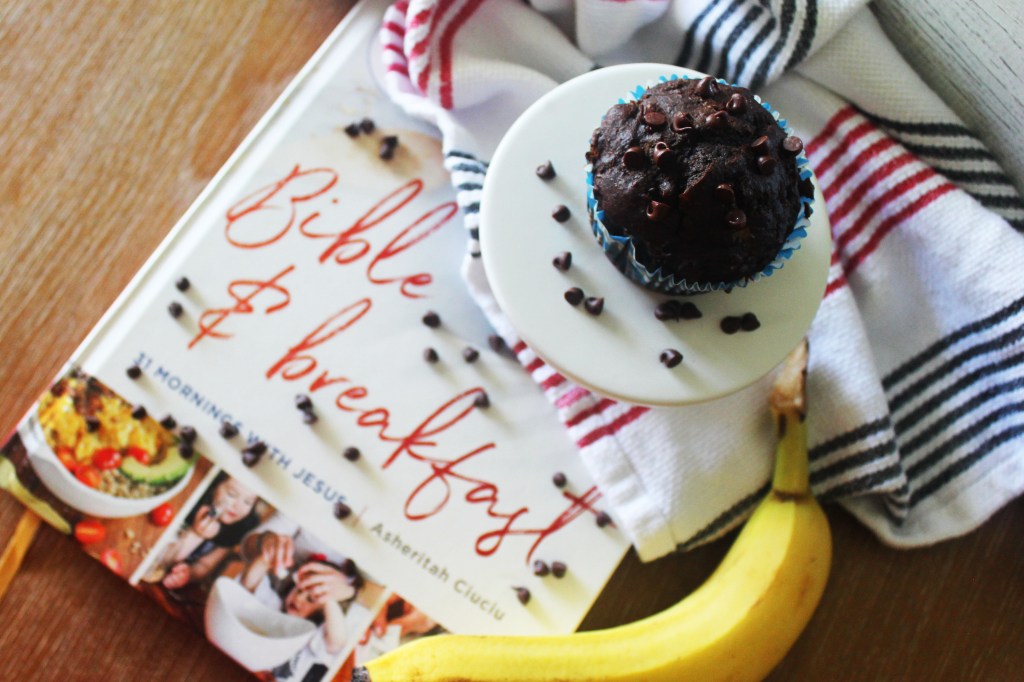
I tend to prefer savory breakfast foods over sweet, but every so often, I want to indulge in something decadent but still a bit healthy.  This muffin recipe is perfect!  I found it in a great devotional/cookbook by one of my favorite authors, Asheritah CiuCiu.  A few months ago, she did a month-long online devotional based on this book** and I was able to interact with her when she demonstrated one of her recipes.  She is the real deal and uses ingredients from Aldi, a discount grocery store.  The following recipe is directly from her cookbook.  

2/3 c. all-purpose flour                                          2/3 c. whole wheat pastry flour*

1/2 c. cocoa powder                                               1 tsp. baking soda

1/2 tsp. kosher salt                                                 1 tsp. instant coffee, optional

3 ripe bananas, mashed                                1/4 c. maple syrup

1 tsp. vanilla extract                                               1/3 c. Greek yogurt

1/3 c. coconut oil, melted                                     1 large egg, beaten

1/3 c. mini chocolate chips, plus more for topping.

  1. Preheat oven to 375°F.  Line a 12-cup muffin tin with baking cups.
  2. In a large bowl, stir the dry ingredients together, except chocolate.  Use a spatula to gently push the dry ingredients against the sides of the bowl to make a well.
  3. In a small bowl, mix together wet ingredients just until combined.  Pour wet ingredients into the well and mix carefully, running the spatula around the edge of the bowl and pulling dry ingredients over and into the wet ingredients until barely combined.  Some lumps are okay.  (This method of mixing ensures your muffins turn out tender.)  Gently fold in chocolate chips.
  4. Divide batter equally among muffin cups, topping each with a few extra chocolate chips.
  5. Bake for 15-17 minutes or until toothpick inserted into the center comes out clean.  Cool on a wire rack.  To freeze, wrap cooled muffins in plastic wrap.  Store in freezer in airtight container up to 3 months.

*With COVID-19 affecting grocery supplies, I was not able to find whole wheat pastry flour, so I substituted King Arthur Whole Wheat flour.  The first time I made the muffins, it was a little dry, probably due to the difference in flour.  The second time, I added a dollop more of the Greek yogurt, and it turned out perfect!

**I am linking her website to this page so you can check out her cookbook.  It not only has great recipes but will help you dig deeper into the Word of God. https://onethingalone.com/bibleandbreakfast/

What you eat for breakfast can often set the tone for the rest of your day.  I know that when I start off strong and healthy, I feel more inspired to continue in that direction for the rest of the day.  I think this applies to our spiritual lives as well.  David penned these words in Psalms 59:16, “But I will sing of your strength, in the morning I will sing of your love; for you are my fortress, my refuge in times of trouble.”  I challenge you to try one of these recipes and while making your breakfast, spend some time listening to worship music and meditating on the love of God.  I am sure, even for some of you non-morning people, your day will start off better!