Page 25 of 28

All About Him

“Be ye therefore followers of God, as dear children;” Ephesians 5:1

We all have known that one annoying person who hijacks the conversation by inserting him or herself in the center.  They haven’t progressed beyond the toddler stage, thinking the world revolves around them.  For example, if someone is talking about their recent European vacation, “that person” jumps in by telling about the vacation they took to not-so-glamorous Gary, Indiana.  Or if one person shares with the group a devastating cancer diagnosis they just received, “that person” jumps in about their latest splinter.  I think you get the picture.  Often, “that person” is not as rude and self-involved as they come off because this need to be the center of the conversation probably stems from insecurity and lack of confidence.  But they are still challenging to be around.

Recently, as I have been reading some books and listening to various podcasts, I discovered a transformative idea that has changed how I view the Bible.  The metanarrative, a fancy word for the overarching theme of the whole Bible, or the big picture, has nothing to do with me.  Instead, it has everything to do with the story of God in relation to creation, the fall, redemption, and restoration.  This revelation of the metanarrative made me realize that I am “that person”!  I have spent most of my Christian life reading the Bible from the perspective of trying to understand how it relates to me.  What principles do I need to learn, and how should I apply it to my life?   In every psalm, prophecy, and parable, I have searched for God’s message to me, desperately trying to become the ideal Christian.  All the while, God has been trying to get my attention, desiring me to know Him!

My daughter, Maggie, was the one who decided the timing and circumstances when she was going to reach a milestone in her life, including walking, reading, and riding a bike.  As parents, we couldn’t bribe, cajole, push or motivate her in any way to accomplish our desired outcome.  Some may call this a stubborn streak; I call it determination and grit.  Despite this trait, once Maggie made up her mind to accomplish something, nothing stopped her from achieving her goal.  For example, she loved riding her first bike, as long as her training wheels were still attached.  What Maggie failed to realize was that the training wheels were so worn and badly bent that they no longer touched the ground.  Terry knew that they were no longer needed, so, as any good father would do, he removed them.  She was livid with her doting daddy and told him that she was no longer going to ride her bike and walked away sulking!  Despite Terry’s encouragements and faith in her ability, she refused to try again.  But the next day, he came home to see his little blonde, pig-tailed daughter flying down the sidewalk on her bike!

Maggie’s determination and grit runs in her bloodline, as I share those same qualities, although I would label myself as stubborn!  I have served God for more than thirty years, and I know that ministers might have presented this concept of the metanarrative to me in sermons.  I am sure that many of my Bible scholar friends have discussed this principle with me before.  But, like Maggie, I was content with trying to balance my life on a broken concept, making it all about me when reading scripture.  You see, I was using God’s Word to fix me.  Jen Wilkin, in her book, “Women of the Word”, points out the flaw in this way of thinking by this quote: “We ask it (the Bible) to tell us about ourselves, and all the while it is telling us about “I AM”.  We think that if it would just tell us who we are and what we should do, that our insecurities, fears and doubts would vanish.  But our insecurities, fears and doubts can never be banished by the knowledge of who we are.  They can only be vanished by the knowledge of “I AM”.  We must read and study the Bible with our ears trained on hearing God’s declaration of himself.”

I remember when I first fell in love with Terry, I wanted to know everything about him: his favorite dessert, the places he wanted to travel and what goals he wanted to accomplish in ministry.  In learning these details, I also began to discover that he was a quiet, contemplative man who liked order and clear direction.  Learning about Terry’s need for order and clear direction shed light on how disorderly and chaotic I was.  By getting to know Terry, his nature shed light on my nature and the areas where I needed to find more balance.

When I first fell in love with God, I learned a lot of Biblical facts.  I understood doctrinal truths and the scope and history of Biblical stories.  I learned about His character, but because of my past, I had some distorted ways of thinking about God.  For example, I knew God was good, but I did not honestly believe that He would be good to me.  Instead, I thought I would have to earn my way by being a “good Christian”.  For years, I lived trying to earn God’s affection by staying in His good graces.  This revelation of the metanarrative has exposed me to God’s true nature.  He says that he is our Father, and as any good father, I don’t have to do anything to earn His love.  He loves me unconditionally, no matter what state I am in, including my sinful attitudes and actions.

At the time this blog was written, I was still waiting for news of the birth of my first grandchild.  Since the day I knew of his impending arrival, this little boy has had to do nothing to earn my love and devotion.  Just the fact of his existence has sparked an overwhelming flow of love from my heart.  I can’t wait to hold him and get to know him.  I know that, within a few short years, he will be occasionally disobedient like any child.  I am sure that as he grows, I will see flaws in his character, areas where he needs guidance from the Lord.  But none of his flaws or moments of disobedience will change my love for him.  Nor will they affect my desire to bless his life with goodness.

The Bible gives me a glimpse into the character of God in the words of Jesus when he says in Luke 11:11-12, “If a son shall ask bread of any of you, that is his father, will he give him a stone?  or if he ask a fish, will he for a fish, give him a serpent?  Or if he shall ask an egg, will he offer him a scorpion?”  Jesus goes on to say that if we, who are sinful, want to give good gifts to our children, how much more shall God give us.  I am not talking about God showering us with possessions, like new iPads or Nespresso coffee machines.  I am talking about filling our lives with relationships, community, and creation itself to bless us.  God wants to bless us!  His desire to give sheds light on areas where I remain selfish and want to withhold.  It leads me to repentance and then, with a desire to be more like Him, I can sanctify my life.

Since the revelation of the metanarrative, I have read the Bible with a new perspective.  I look at every book, chapter and verse to see what it reveals about the nature of God.  Jen Wilkin makes this statement, “The heart cannot love what the mind does not know!”  I want to know God more, know what He likes and what He hates.  This knowledge will help me to love God more and grow in my faith.  I want to see His character in the anointed word that He has provided for us, to understand that His story is all about restoration.  With this knowledge, I can, as Paul says in Ephesians 5:1, “Be ye therefore followers of God, as dear children.”  The word “follower”, translated from the Greek “mimetes”, is defined as an imitator.  My calling is not to see myself in the Bible, but to learn to imitate God, and this perspective changes everything!

Strawberry Anniversary

“Let us therefore come boldly unto the throne of grace, that we may obtain mercy and find grace to help in time of need.” Hebrews 4:16

Pennsylvania summers delight me!  Warm sunshine floods the sky, colorful flowers bloom in pots on my patio, birds, bunnies, and squirrels scurry around my yard, and my personal favorite, an abundance of produce fills the farmer’s markets.  It starts at the end of May when peas, rhubarb, asparagus, and strawberries hit their peak.  Soon, blueberries, apricots, cherries, and zucchini appear in bins.  Then, raspberries, peaches, and nectarines, along with peppers, corn, melons, and tomatoes dominate the baskets at some of my favorite local stands.  Finally, squashes and apples make their debut towards the end of the summer.  This abundance of produce reminds me of how good God is, creating this colorful assortment of foods to thrill our taste buds with flavors, along with the bonus of nourishing our bodies with essential vitamins and minerals.

This year, I picked strawberries in a local patch. After devouring a few of the perfect berries, the ones that are deep red right through to their centers, I had a moment of pure bliss! I couldn’t believe how sweet the flavor was in the handpicked strawberries. I immediately contrasted them to the ones I had been buying in stores for weeks. Those strawberries, often white in their core, lacked flavor, just teasing the taste buds with a hint of strawberry essence. I immediately understood my son’s resolution on strawberries.  For years, Ethan has refused to eat any strawberries unless they were handpicked from a local farm, referring to the ones in the stores as imposters! I understood his resolve on some level, but strawberries are one of my favorite fruits. And although I had a moment of absolute bliss, strawberry season and my memory are short. Within a couple of weeks, I went back to buying the imposter strawberries, content with the lackluster flavor.

Photo credit to Margaret Collins

Terry and I will soon be celebrating twenty-four years of marriage, and I would say that, overall, we have had a good marriage. Like most marriages, we had our honeymoon stage where we marked every first moment with romantic sighs, thinking that life could not get any better. Within in a few years, we had two toddlers, and we had partnered together to raise our kids in a loving home. We had some incredible moments creating memories and marking milestones in our lives. We loved and encouraged each other, having the occasional date or weekend getaway. If marriage was a strawberry, we had a good strawberry!

But then life happened: job changes, moving to a different state, children becoming adults, illnesses, and the death of my beloved mother-in-law.  With all these changes, we spent less time investing in our marriage and more time going through the motions. Soon, we were satisfied with the tasteless strawberry, no longer craving the best. We relied on years of producing good fruit to sustain our marriage. But we all know that good fruit does not last long untended. You leave a fresh-picked strawberry in the fridge for more than a few days, it will soon develop mold. This mold will spread to all the fruit around it.  Because we were no longer investing in our marriage, our tempers were short, our words were sharp, and our selfishness grew. Quickly, even this tasteless strawberry started to rot.

Fortunately we both know a God who is faithful and merciful. He used some “tough”, maybe even “rotten”, situations to help us redirect our diverging paths back towards one another. We started investing more in each other, learning to listen in love, not out of self-interest. We shared life together again, developing new mutual interests and rekindling connection. We found new and healthier ways to deal with conflict. We reaffirmed God as the center of our marriage and made each other our priority.

The hard work cultivated a “perfect” strawberry again.  I have learned some valuable lessons from that time that I don’t want to ever forget!

  1. If you want the perfect strawberry marriage, you must work for it.  I spent two hours in the hot sun looking for the perfect strawberries. I didn’t pick the strawberries out of drudgery, instead, I enjoyed my time in the patch, knowing that I would benefit from the results. If I want a great marriage, I need to be working at it. This work shouldn’t be done out of obligation, but out of love with a servant’s heart.
  2. Strawberry season might be short but preserving the strawberries will help the season last!  I picked about ten quarts of strawberries and there was no way we could eat all of them in the few short days they were perfect.  So, I found different ways to preserve the strawberries: making freezer jam, strawberry honey butter and tray freezing some to use for pies and smoothies in the dead of winter. It is amazing to open a bag of strawberries in the middle of a blizzard and smell the sweetness of summer permeate my kitchen!  Marriage is not always the high moments where you feel like you are living out the best romantic movie scenes.  Sometimes, life is hard, and these tough times can take a toll on your marriage. Yet, if I take the time to invest in creating good communication skills and positive conflict resolution techniques, when the tough times hit, these skills will help preserve a good marriage.
  3. A perfect strawberry is only sweeter when covered with chocolate.  This year, we saved some of the best strawberries and dipped them in chocolate. These were a decadent treat!  When rotten situations hit our marriage, God’s mercy and grace covered our lives as we worked towards restoration. Even though we spent time doing some hard work, it was not enough to fix some of the wounds we both felt. This was the perfect place for God to step in and fix those broken places with His unconditional love and gentleness.  As we moved towards the “perfect strawberry”, His “chocolate” grace covered places that might otherwise have resulted in bitterness. I am forever humbled that the God who created all, cares enough about Terry and me to show us a better path.

I do not want to leave you with the impression that our marriage is perfect; we still have our moments of sharp words and tempers.  However, even though we are still human, we are in such a better place than we were three years ago.  After sharing our story with Ethan, he responded with something like this, “I have never seen you and Dad happier.  Genuinely happy, not only with each other, but with God”. His description brought me to tears. You see, the rotten fruit that was developing could very well have destroyed our marriage.  It took courage to stop the rot and invest in producing good fruit again. During that time, I stood on this scripture found in Hebrews 4:16, “Let us therefore come boldly unto the throne of grace, that we may obtain mercy, and find grace to help in time of need.”  This anniversary, while I am choosing to celebrate us, more importantly, I am celebrating God’s grace!

If you are interested in making the strawberry honey butter, please follow the link to the recipe: https://www.growforagecookferment.com/strawberry-honey-butter/

Restoration

“Being confident of this very thing, that he which hath begun a good work in you will perform it until the day of Jesus Christ:” Philippians 1:6

Last Sunday marked another year; another year I did not buy a Father’s Day card for my father.  In fact, I don’t recall ever buying a card for either my biological father, or my stepfather.  It is possible that in grade school I may have made a card, but I have no clear memory of doing so.  Now, I have purchased cards for my husband, celebrating the wonderful, nurturing father he has been to our children.  I have also bought cards for my grandfather, my father-in-law and my uncle, who acted as positive male role models in my life.  Yet, I will never make a warm sappy post highlighting that I am still a “Daddy’s girl” on Instagram.  I will never share a picture of my father walking me down the aisle on my wedding day, instead it was my uncle who fulfilled that role.  The harsh reality is that I don’t have a father to celebrate or honor!

For you to understand my situation, I will share a brief history of my family.  My biological father signed away his parental rights when I was a baby.  I did meet him once and subsequently decided the relationship was not worth an investment.  I was raised by my stepfather, an alcoholic who sexually abused me.  He was later arrested and convicted of sexual assault.  Its easy to understand why I don’t buy a Father’s Day card for either of them.

I could close my blog right now, and I am sure comments of sympathy and empathy would ensue.  I might even get questions about the details, or about forgiveness.  But not spending $5.99 for a Hallmark sentiment on Father’s Day is just a prologue to the main story.  It doesn’t tell the story of a woman in her late forties who cherished and treasured every picture her friends shared on Father’s Day with their own amazing dads.  It doesn’t tell about the woman who loves to plan a full day celebrating her husband on Father’s Day.  It doesn’t show the restoration that has taken place.

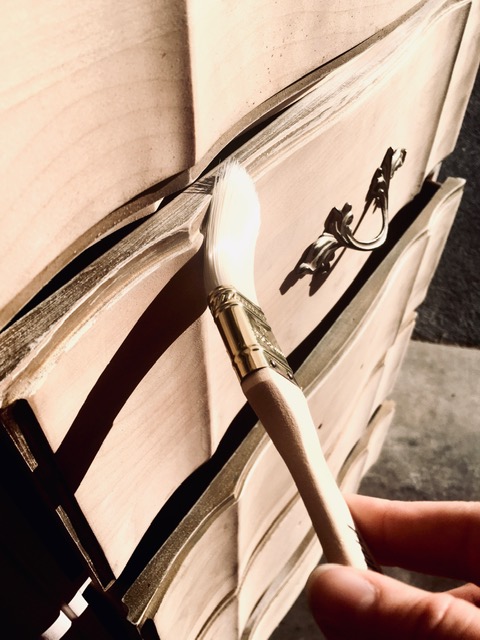
Restoration is defined as the action of returning something to a former condition.  I love old furniture, but to antique purists, like my father-in-law, I don’t love to restore furniture.   Instead, I love to paint it a fun, new color and replace the old hardware.  It fits my décor style and takes less time.  And a good coat of paint can cover up a lot of damage.  But true restoration takes time and effort.  Often, you have strip away the old finish, sand the piece down, and carefully stain it to its former glory.   My husband and I toured The Breakers, an old Vanderbilt mansion in Newport, Rhode Island.  The curators of this mansion did an amazing job trying to find as many original pieces of the time period to furnish the house.  The restoration of these pieces was carefully done and is priceless, demonstrating the amazing craftsmanship of the designer!

Photo credit by Margaret Collins

Imagine with me that when I was born, I was a beautiful table, designed and carefully carved by God himself.  My wood grain was stained carefully to let the beauty of the piece shine through.  Yet, within a few short years of my life, this table was damaged beyond recognition by misuse and abuse.  In some areas, the beautiful wood grain was marred with scratches that cut deeply into the surface.  It no longer functioned as a table and most people would not have even bothered trying to sell it at their yard sale.  Its battered surface and legs looked worthless and unsalvageable.

Thirty-one years ago, my life, or my table, was on its way to the dump, all but crushed by the weight of worries and burdens I was never meant to carry.  I had just shared with the police and social workers the details of my years of sexual abuse.  My stepfather was arrested, immediately, and I was experiencing post-traumatic shock.  Yet, within a few months, I experienced the love of Jesus, an unconditional love that forever changed my life.  Being filled with the Holy Ghost, I felt peace amidst the chaos, pain and brokenness.

This infilling of God’s spirit was the beginning of the restoration process.  This involved therapy with counselors, but a lot of the process involved God using His word, His spirit, and His body of believers to restore me.  Some of the process involved stripping me of the wounds of abuse, carefully sanding my distorted thoughts and views to bring out the beautiful grain.  It included refinishing me with a new stain, restoring in me the trust and beauty found in a marriage, family and friends.  It entailed ripping out damaged places such as coping mechanisms that led to food addiction and replacing them with new, sturdier hardware, including the satisfaction and fulfillment found only in God.  This restoration didn’t happen overnight, and I can’t say that all the restoration is complete, yet.  I can’t say that there aren’t some scars underneath the table that still need to be uncovered and healed.  However, I can say that God has done an incredible work in my life, restoring me to what He had intended from the beginning.  I am not the same table that I was when I was born.  God, through his restoration process, has created a new masterpiece that reflects His amazing craftsmanship!

This is just a glimpse into a major project I am working on: writing a book about the restoration of a life.  In this blog I have used the metaphor of restoring a piece of furniture for simplicity’s sake.  In my book, I am relating my life to the restoration of a home, a deeper and more involved project than a simple table.  My goal in the book is to walk you through my restoration process, unfolding how God has ministered to me in different areas of my life.  This journey of restoration is my story, but I believe, whether it is childhood trauma, as in my case, or a failed marriage, an unexpected death or any situation that causes us to be broken, we all have areas where we need God’s intervention to help bring us back to a place of restoration.  In Jeremiah 30:17, the Lord prophesies, “For I will restore health unto thee, and I will heal thee of thy wounds.”  According to the Matthew Henry commentary, most of Jeremiah’s prophecies fall in the area of reproof and threats.  Yet, this chapter is one of two chapters that stand out as a source comfort and of hope.  Despite the effects of sin, whether self-induced, or inflicted by others, God had a plan to restore His people to health and heal their wounds.  This promise was not only for Israel, but for us, today, as well!

Father’s Day will arrive every year for the rest of my life, and there will always remain some “nevers” in my life, including never buying my father a Father’s Day card.  But this is not a source of pain or contention for me, but rather a reminder of God’s grace and love.  Like the Apostle Paul says in Philippians 1:6, “Being confident of this very thing, that he which hath begun a good work in “Sherry” will perform it until the day of Jesus Christ.”  God has begun a good work in me, and I can’t wait to finish my book so that you can read about it!

One Drop of Water

“And the second is like, namely this, Thou shalt love thy neighbor as thyself. There is none other commandment greater than these.” Mark 12:31

When my daughter was three years old, I found the perfect Christmas dress at a local store.  Crimson velvet trimmed in white fur, I envisioned Maggie in the dress twirling around while singing “Jingle Bells”.  As I ransacked the racks, I found every size but the one I needed.  I clung to the dress as I looked around to see if the right size had been inadvertently misplaced.  After looking down a few aisles, I despaired and put the wrong-size “perfect dress” on the nearest rack and walked away.

While I was checking out, the store owner approached me and demanded that I follow him and a clerk to the office.  Within a few minutes, I was being interrogated in front of my daughter: they wanted to know where I had put the dress.  Startled and confused, I tried to make sense of their questions, answering in a disjointed manner.  They informed me that they had me on the surveillance camera holding the dress and now the dress was missing.  My mind raced as I started to panic.  What if they couldn’t find the dress?  Would I be arrested for shoplifting?  I immediately worried about my daughter, who was blissfully unaware of what was going on and humming a tune to herself.  I told them I thought I remembered where I put the dress, so they followed me as I led them down the aisle.  After grabbing the dress from the rack, they walked away without apology, leaving me feeling violated!

This incident left me feeling angry and frustrated!  The owner of the store, even after a phone call, refused to acknowledge any wrongdoing, with no words of apology or any explanation as to why he was so aggressive.  I felt unheard and misunderstood!  Although this was a traumatic incident in my life, nothing like that has ever happened to me again.  It is a terrible feeling to be treated unjustly because you are absent-minded and simply put a dress in the wrong spot.  Yet, I can’t even imagine how terrible it feels to be repeatedly treated unjustly based on the color of my skin.

These past few weeks have again exposed terrible injustices faced by African-Americans.  We can sit back and debate about what happened, and whether or not these are isolated incidents.  We can examine whether or not the protests and ensuing violence have fueled the situation, or have they come as a natural result of decades of frustration.  We can discuss the responses of both political parties; are they defending, aiding, or helping create real solutions?  Yet, none of this debating is moving us toward any resolution!  It doesn’t examine the heart of the issue!  More importantly, these debates deflect responsibility onto a larger group, and don’t move us, as Christians, to self-examine and grow as individuals!

For the past few weeks, I took a break from writing.  I felt strongly that I should write a blog addressing racism; not because I have great insight, but because I have something to learn.  I have spent this time researching by listening to different Christian podcasts dealing with the concept of systemic racism and how Christians should be responding.  My very soul has been challenged, and I have come to some conclusions, which are by no means conclusive.  In order for us, as a society, to begin effectively dealing with racism, we, as individuals, need to listen, learn, and grow.

First, let’s set the record straight.  I am a white, Caucasian woman who grew up in a predominantly white community with little ethnic diversity.  I attended a small, predominately white, private college.  So, although I have worked in places where diversity was encouraged and celebrated, and I have a few friends that represent different ethnicities and cultures, the reality is that I have limited experience in this area.   I cannot pretend to understand the experience of the average African-American or, for that matter, of anyone else of non-white ethnicity.  I cannot fathom what it is like to live in a place where I am misjudged or mistreated because of my skin color.  I have never had to explain to my children that the reason they were treated badly by an adult or by other children is because their skin isn’t white.  I have no history of my ancestors being slaves and then being unjustly segregated after being told they were full, free members of society.  I have never experienced the harshness of systemic racism, but I have benefited from being a part of the majority!

These facts from my background have shaped my view of the world and placed limits on my perspective.  I can postulate all the opinions in the world about a typical African-American experience, but I haven’t walked in their shoes.  As a result, I need to be open to hear stories of the daily prejudices they face, whether it be overt racism, or racial insensitivity.  I need to listen with an open heart and mind.  I need to let others grieve over the injustices and work through their pain.  Not only do I need to listen, but I need to be willing to ask myself the hard questions.  Have I ever been racially insensitive?  Have I been as inclusive with others as I should be?  How can I be a more sensitive friend and a more effective Christian?

The next step I can take to stop racism is to learn.  Learning is an active process.  I need to read materials by authors who are different from me.  This will help me to understand, not only the challenges they face, but also the cultural histories that have shaped their lives.  I need to actively seek the other perspective, even if it is not from a Christian world point of view.  Trevin Wax, in his book “This is Our Time”, says, “…add to your news intake people who have vastly different worldviews.  Read articles and listen to podcasts from people with whom you differ, not just so you can critique and counter them, but to hear where they are coming from.”  He goes on to say that this will help you learn empathy.  Empathy will enable you reach across the divide and “engage in good conversations”, showing them true Christianity!

Finally, I need to grow.  For too many years, I have openly declared that I am not a racist and then shut down conversations about racism without really listening and learning.  I exposed my children to some different cultures, but should have been more intentional in my approach.  I denied the existence of white privilege without being willing to discover what that really meant, how I contributed to it, or even how I benefitted from it.  The deaths of George Floyd, Breonna Taylor and Ahmaud Arbery need to impact me and force me to change as an individual!  I need to search myself, examine my heart in light of scripture and repent!  I need to do my part in creating an environment in my local church and in my community where everyone feels welcomed.  I cannot remain silent when I see injustice!

               This quote, in relation to the events of the last few weeks, has impacted me: “No single drop of water thinks it is responsible for the flood.”  Initially, I saw the quote from a negative perspective: how have I contribute to racism?  Yet, after listening to other Christians having tough discussions, I felt hope rising in me.  I started thinking about the gospel and how it can change lives.  After all, in Mark 12:31, Jesus declares that the second greatest commandment is this, “Thou shalt love thy neighbor as thyself.”  If I can be one drop, a drop that demonstrates God’s love to all, regardless of ethnicity, I can be a part of a flood that impacts and changes our world!

Wonder, Curiosity and Joy

“Thou wilt shew me the path of life: in thy presence is fulness of joy; at thy right hand there are pleasures for evermore” Psalm 16:11

I recently took three children, aged 5-8, on a hike in a nature preserve.  Some may think I was a little crazy, but I found it to be absolutely delightful!  We stopped and counted the rings on an old tree stump to figure out how many birthdays the tree had celebrated.  We observed holes in the ground, imagining what animals might live there: maybe a groundhog or a small dinosaur.  We found a rock quarry and climbed up on the rocks, shouting with glee as if we had conquered a giant.  We lunched on a rock slab, devouring peanut butter and jelly sandwiches while popping juicy grapes in our mouth.  On the way home we found an old railroad boxcar.  I shared with the kids a dream I have of restoring a boxcar into a playhouse, a place for escapades with my grandchildren.  It was an exhausting morning filled with magic and adventure!

All too often, we adults lose this sense of magic.  I am not talking about hocus-pocus magic.  I am speaking about wonder, curiosity and joy!  We get caught up in the busyness of life, and forget to pause.  We let stressors take precedence, or a list of tasks rule our lives.  We start our morning with a mindset of what needs to get done, and at the end of the day fall into bed exhausted, feeling guilty about tasks left uncompleted.  We often say things like, “if only I could catch up and then I could relax.”  Even our ways of relaxing leave our minds numb: things like binge-watching TV shows, scrolling through our Facebook feed, or browsing Pinterest.  We forget to belly laugh, to enjoy doing nothing and to find pleasure in simple things.

Wonder, as defined in the dictionary, is a feeling of surprise mingled with admiration caused by something beautiful, unexpected, unfamiliar or inexplicable.  By its very definition we can’t find wonder if we are always busy.  One of the reasons I love to hike with my husband is that we often pause to listen to the birds or the rushing water of a creek, watch a turtle creep across the trail, and admire the moss carpeting our path.  We have a destination in mind, but we are not afraid to stop and enjoy the beauty around us.  Yes, we have an endless list of tasks that could be completed on a Saturday morning, but hiking restores and refreshes us.  Often, we return from hikes energized and more productive than if we had not gone.  Ultimately, it makes time for us to enjoy God’s gift of beauty in the form of nature.

One of my favorite children’s books is the series about “Curious George”.  I love the crazy antics that George, a little monkey, embarks on solely from being a tad bit too curious.  Curiosity is defined as a strong desire to know or learn something.  When my children were little, I saw a sign on a local children’s museum stating that the average toddler asks about 300 questions a day.  I always chuckled because my son typically used up that quota before lunch!  Upon reflection, my children’s curiosity awakened my narrow-minded adult thinking.  I researched carnivorous plants, laughed at the battles between the frigate bird and the blue-footed booby, and learned to speak like a pirate.  I continue to be inquisitive, diving into books about the Appalachian Trail and the hunt for the extinct Imperial Woodpecker, exploring museums and listening to people’s stories.  I had the privilege of sitting next to a blind woman on an airplane.  She was embarking on a skiing trip!  It was amazing to hear about her adventures skiing while blind.  Eleanor Roosevelt once said, “Great minds talk about ideas, average minds talk about events, and small minds talk about people.”  When you cultivate your curiosity, it’s easy to focus on ideas because you are filling your mind with answers, concepts and, ultimately, more questions.

Photo Credit by Margaret Collins

Joy is something that comes easy in my life.  Those that are around me for any length of time have heard me say, “This makes me happy!”  I use this statement for a myriad of situations, objects and people, such as eating a Caprese Salad with colorful heirloom tomatoes, reading on my patio surrounded by flowers and herbs, playing Monopoly with my family, week-long visits with friends, or finding the perfect coffee mug that sparks a smile in my morning.  I love to surround my home with things that are delightful and whimsical.  Instead of an expensive vase, I have a yellow gnome gracing my floating shelf.  I try to capture joyful moments in my life by setting reasonable expectations and remaining grateful.

I want to end this blog by sharing a list of things in the last few weeks that have sparked wonder, joy and curiosity in my life.  They is not in order of importance, but rather the top things that have provided levity in my life and delighted me.

  • Making a fruity yogurt popsicle in my new molds
  • Watching a group of neighborhood children climb our maple tree
  • Discovering a blue gingham pattern inside a “Bath and Body Works” package
  • Watching a pair of mallard ducks nap under my blackberry bush
  • Adding books from new authors to the Goodreads App on my phone
  • Listening to new friends share their love story
  • Folding my son’s newborn frog outfit as I prepare to pass it on to my grandson
  • Completing a bike ride that had defeated me last year
  • Listening to a five-year-old yell, “That’s epic!” while riding his bike
  • Watching the peonies unfold their blossoms in my yard
  • Focusing on a few scriptures during devotions that demonstrated the compassion of Jesus
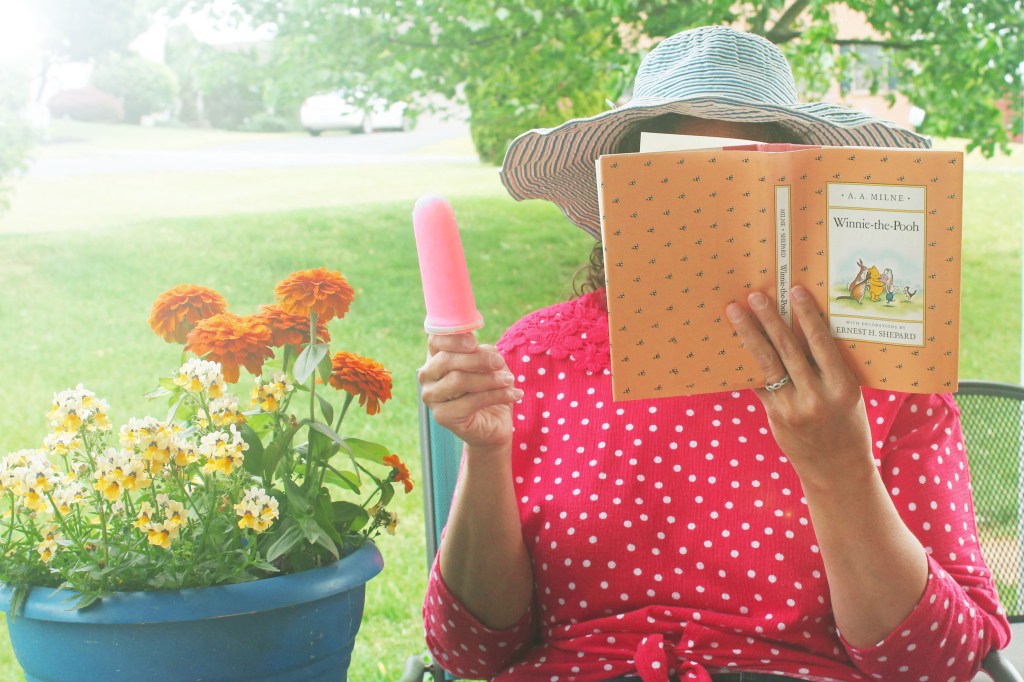
  • Rereading the classic “Winnie-the-Pooh” with my husband who has never read the book

None of these things are life-changing moments, but they are life-defining moments.  They won’t alter the course of my life, but they can alter my attitude.  They are small moments, or memories, that I can point back to when life is rough, to remind myself of the goodness of God.  I love what it says in James 1:17; “Every good and every perfect gift is from above, and cometh down from the Father of lights.”  Just like I can’t wait to shower my new grandson with gifts that provide joy in his life, God is constantly showering me with gifts in my life!  I just need to step out of my busyness and look for them.  So tonight, instead of browsing Pinterest, I am planning to giggle while reading about Pooh and Piglet!

48 Years!

“We will not hide them from their children, but tell to the coming generation the glorious deeds of the LORD, and his might, and the wonders that he has done.” Psalms 78:4

I just celebrated my 48th birthday.  I promise I am not hinting for more gifts or birthday wishes.  But I do believe birthdays should be celebrated, and we did celebrate mine on Sunday.  My daughter made me breakfast and I opened up a few surprises.  I received a few phone calls and a lot of birthday wishes on Facebook.  Yet, as this birthday passed, I realized I am getting closer to what everyone refers to as the “big 5-0”!  It makes me feel a little contemplative about my life and what it means in the big picture.  What do I still want to accomplish; what legacy do I want to leave; what do I want said about me at my funeral?  The most important question of all is how do I fit into God’s story?  I want to share with you some of my thoughts.

For starters, what does my life mean in the big picture?  I define the big picture as the world at large.  Like most people, I have not discovered a cure for a terminal disease; I have not written some important piece of legislation; I have not competed in a major athletic competition.  The reality is that when I die, I am not likely to have a Wikipedia entry.  This is not me degrading my self-worth, but rather taking a realistic look at my life.  Although I am not a major player in the big picture, I am major player in some people lives.  Starting with my family and friends, I need to demonstrate my love for them in both actions and words.  I need to be present with them and not allow lesser things to take precedence over them.  I need to put my phone away and actively listen to those I love.  I need to pray for them daily.  On a larger scale, I need to smile at neighbors I meet while walking.   I need to encourage young mothers when I see them wrestling with their toddlers.  I need to be aware of those around me who are hurting.  In essence, I need to always reflect Jesus.  My life influences those that I interact with daily; that influence can be positive or negative.  This influence is not predicated on money or power, but on being a loving wife, mother, grandmother, friend and neighbor.

This leads me to what I still want to accomplish. I know that bucket lists are the trendy thing to do, and I am not knocking that idea.  I have a journal called “Listography” that I have used, where I can list things like what places I want to see, museums I want to tour, and trails I want to hike.  For me, the things I still want to accomplish are more than a trip to Italy (although that would be nice), or hiking the Appalachian Trail.  I want to continue on my journey toward being healthy, reaching my final goal and then maintaining my weight loss by continuing the healthy habits I have formed.  I want to run a 5K and, eventually, a half marathon.  I want to continue hiking with my husband, finding restoration in God’s creation.  I want to finish my book on restoration from childhood abuse and see it published.  I want to continue to blog because it has meant something to some people.  I want to continue to read great books, keeping my mind active and always learning.  I want to finish writing out each of the Psalms in a journal, with a brief prayer on what it says to me and adding a small illustration.  It’s not enough for me to want to do these things; anyone can have goals.  I need to make time, set achievable steps, and work towards completing these tasks!

The things I accomplish are part of my legacy, but when I think of a legacy, I immediately think of my grandfather, Jerome Walter.  He was an ordinary man, completing only the eighth grade.  He worked hard as a farmer and as a factory laborer, spent less, and invested more.  When he passed away, he left a substantial inheritance for his children.  More importantly, he left a legacy that can’t be accounted for in a ledger.  These intangible gifts, like work ethic and simple living, were more valuable to his family than any amount of money they received.

To my children and grandchildren, I want to leave a legacy of faithfulness, contentment and gratefulness.  I need to remain steadfast in my relationship with God no matter what comes my way.  My faithfulness can’t be based on the hills and valleys of life; instead it should be based on the faithfulness of God’s character.  I want my children to see that I have learned to be content, like the Apostle Paul, in whatever state I am in.  I want them to know that I find delight in the simple things in life without always striving to attain more.  Contentment can’t be based on the size of my home, my bank account, or my possessions, but rather on God being my provider.  Finally, I want them to see that I am grateful.  For the past year, I have been writing three things that I am grateful in a simple journal each day.  This practice realigns my focus on gratitude instead of the problems and challenges I face.  When I practice gratefulness, I don’t make space for complaints or anxiety.  It centers me, reminding me that all good gifts come from God.

Photo credit Margaret Collins

When I think about my legacy, I often think about what my friends and family will say about me at my funeral.  I have had the privilege to help write four eulogies, including that of my beloved mother-in-law.  In writing a eulogy, you want to be honest about the character of the person, so that loved ones have a sense of closure, celebrating that person’s life and accomplishments.  The eulogy should memorialize the person, but not exaggerate their character.  Instead, it should include stories related to their quirks along with their impact on others.  This provides a balanced but honest picture of a person’s life.  When thinking about my eulogy, I am just as flawed as any other person.  I struggle with pride, lose my temper, am quick to judge, and have to repent, often.  I don’t expect my love ones to magnify my life beyond reality.  I do hope that my loved ones  are able to share that I am quick to repent, honest about my shortcomings, always striving to improve, and focused on loving others well.  I do have quirks and hope that when my eulogy is given, these quirks provide some levity in a time of grief.  In order for those things to be said with a clear conscience, I need to make sure that I am living that life now.

The most important question I have been asking is how I fit into God’s story.  I don’t know how many years I have left; prayerfully I will continue to live a long, full life.  I think there is a desire in all of us to lead a life of significance; moving us to excel in our careers or pour into our families.  This desire causes us to ponder accomplishments, eulogies and legacies.  We want to die believing our lives mattered and that we had a positive impact on others.  I am not saying that these desires are wrong.  But the more I read the Bible, the more I realize that this life I live is less about me and more about God and His character.  I have realized that God’s story, the whole Bible, is one of restoration.  He takes everything that is broken and lovingly restores it, from temples to cities to kingdoms to lives!  His greatest desire is to bring us into relationship with Him, healing our wounded places and making us whole, so that we can spend eternity with Him.  My life is full of brokenness that God has been lovingly restoring, another testimony to God’s goodness.  Anything I accomplish, anything good in me, is because of Him and is just my small part of His big story of restoration.

The “big 5-0” will be here in less than 712 days.  Personally, I am rooting for it to come with lots of glitter, good coffee and laughter, as I celebrate it with the ones I love.  But when the glitter is cleaned up and the celebration has ended, I want to continue to live a life that glorifies God.  As it says in Psalm 78:4, “We will not hide them from their children, but tell to the coming generation, the glorious deeds of the Lord, and his might, and the wonders that he has done” in my life!

Owl Pellets, Tables and Treasures

“For where your treasure is, there your heart will be also.” Matthew 6:21

About fifteen years ago, I had the brilliant idea to dissect owl pellets with my children.  It was a homeschooling project that I hoped they would enjoy and would spark a deeper interest in science.  For those who are unfamiliar with the eating habits of owls, these majestic birds swallow small animals whole, digest the flesh of the animal, and later regurgitate the fur and bones as a ball or pellet.  I ordered these pellets from a science supply company, so they did undergo some sort of fumigation process to make them safe to handle before they made it into my home.

I have to admit, I was a little apprehensive about how my children would receive the project.  We had already attempted to carve pumpkins, but both Ethan and Maggie were disgusted when holding gooey stringy pumpkin guts, leaving Terry and I to do the work.  However, to my delight, they were both fascinated with the project, meticulously dissecting the owl pellets at my dinner table.  Like detectives, they carefully separated bone from fur with a tweezers, hoping to identify the animal that the owl had devoured. Hours later, however, I started to panic when I realized it was time for Terry to come home from work.  I admonished the kids to hurry because this was one project we couldn’t just slide down to the other end of the table while we had dinner.  Terry would not have enjoyed the view of a bird skeleton and a pile of rodent fur with his spaghetti.

Our dinner table has always been the heart of our home, so much more than just a piece of furniture where we ate our meals and dissected owl pellets.  It has been the place where my children were educated; from learning to read to figuring out advanced algebra problems.  It is where we explored our creativity; from designing our own Christmas cards to decorating hollowed out goose eggs for Easter.  Intense games of Monopoly and long games of Canasta have been played out at the table.  It’s the place where we did family devotions together, taking turns reading and discussing portions of scripture.  Seated at the table we have had heart to heart conversations about life, and at other times, exploded in laughter about some inside family joke.

This table, the heart of our home, has been where we have welcomed family and friends.  Whether it has been over meals, including our famous fajitas, or over multiple cups of coffee, the table has been the place where we have discussed Godly principles, recalled old memories, mourned together over losses, and rejoiced over victories.  It’s the place where birthdays have been celebrated, holidays have been enjoyed. and new friendships formed.

Photo Credit by Margaret Collins

Our table has been the hub of many of our ministry projects.  At the table, Vacation Bible School scripts have been written along with craft projects prepped.  The table, covered with red and pink icing, was the decorating station for our Valentine cookie fundraiser for a few years.  In addition, the table has been the place where Bible quizzers have practiced for tournaments, Sunday school lessons have been planned, and church worship music has been prepared.  We have taught Bible studies, shared our testimonies and prayed with others while seated at the table.

The table has not looked the same over the course of our marriage.  In the beginning, we liked the retro 50’s style and purchased a used chrome table.  We quickly outgrew this table and our sense of style improved leading us to buy a used antique style oval table.  That table survived most of my children’s lives despite paint residue, permanent marker stains and the inevitable chips and scratches from daily use.  Unfortunately, somehow in the course of our move to Pennsylvania, we lost the leaf.  With hosting company on a regular basis, we bought another used table with a leaf, which allowed us to seat more than six people comfortably.  This unique table came with drawers that all the little people who came to my house found fascinating.  In their imagination it held all kinds of treasures, like Uno cards and bags of rubber bands.  The table wasn’t beautiful, but it served its purpose, giving me an excuse to purchase fun, colorful tablecloths to mark the beginning of each new season.

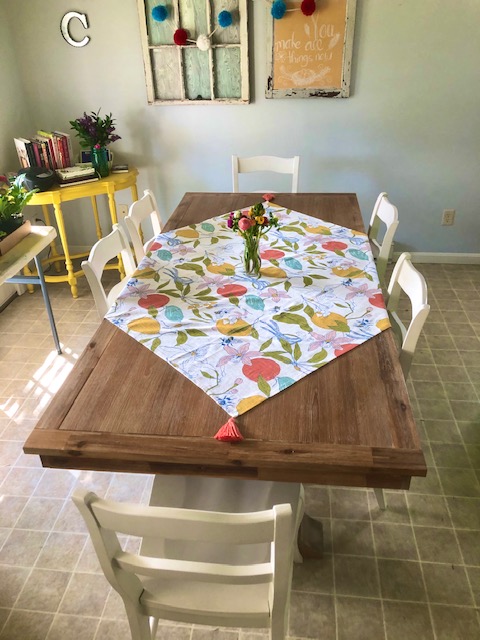
We recently purchased our first, and likely our last, new dining room table.  It is my dream table and it came with the right price at the right time.  It’s a farm style table and can fit my ever-growing family.  But for me, as were the old used ones, it’s so much more than a table.  It’s the place where our family can create new memories.  This is the table where my daughter and I will plan her future wedding.  This is the table where I will finish writing my book on restoration from my childhood.  This is the table where I will create memories with my future grandchildren; making homemade pop tarts, playing games, and maybe even dissecting owl pellets.  (I have a feeling my husband will not be on board with this idea.)  This is the table where my husband and I will continue to share our morning cup of coffee while discussing God and our daily scriptural readings.  It is the table where we will continue to welcome family and friends, celebrate holidays and “do ministry.”

Our first meal at the table! Photo credit by Margaret Collins

Jesus says in Matthew 6:19-21, “Do not lay up for yourselves treasures on earth, where moth and rust destroy and where thieves break in and steal, but lay up for yourselves treasures in heaven… For where your treasure is, there your heart will be also.”  As much as I love my new table, it is not the physical object that I am going to treasure.  From the chrome table, to the oval antique table, to the table with drawers, and now to my new farm table, what I treasure are the memories we have created, and will continue to create, as a family at the table.  I often imagine that if my tables could talk, they would tell a story of a family who loved God and each other, who were not perfect, but quick to ask for forgiveness, who laughed a lot and created an atmosphere where they could grow and develop.  The table would mention that this small family of four welcomed lots of other people to the table on a regular basis.  The tables would declare that life-long memories were created.

Yes, I have a new table, and I have had fun styling the table with my table scarf and flowers. But, my new table won’t stay new for long.  It will end up with dings, marks and maybe even paint residue.  It might even go out of style.  And some day, it might even end up in the trash pile. Yet, what will always remain is the opportunity to create new memories at the table.   Personally, I will always treasure the memory of dissecting owl pellets at my table!

Reflections, Distortions and Beauty

“For now we see in a mirror dimly, but then face to face. Now I know in part; then I shall know fully, even as I have been fully known.” I Corinthians 13:12

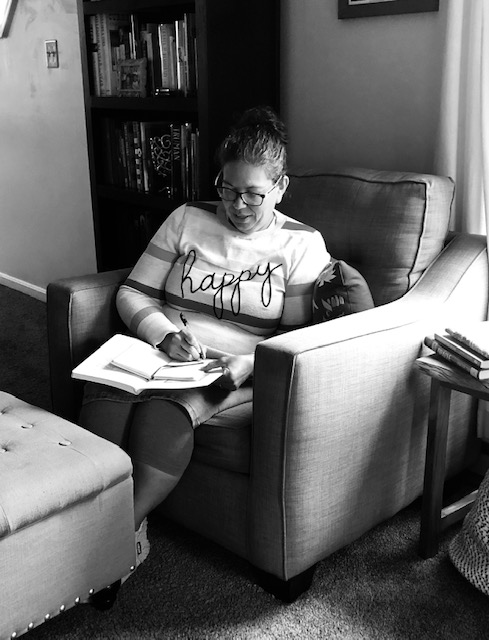
We recently bought a full-length mirror to put in the corner of our bedroom.  It is not a high-end mirror, but has metallic details that will complement the décor in my bedroom with a price tag that fit my budget.  It will also serve a purpose, making sure I have a clear reflection of myself before I leave the bedroom.  I will let you in on a little secret, I am not the most observant or organized person, often putting away my laundry inside out.  To make matters worse, I frequently leave my house with my shirt inside out.  To be fair, this usually happens when I am heading to the gym at 4:00AM, keeping the lights dim in order not to awaken my husband.  But on occasion, it happens in the middle of the day indicating that I’m a bit scattered.  Yet, this is not the only observation that I am making while gazing in the mirror: it goes much deeper.  I want to be able to clearly look at myself and be grateful for where I am right now on my weight loss journey!

In the last few weeks, as I get closer to reaching a major milestone in my weight loss journey for the first time in my adult life, I have been really struggling.  It seems as I get closer and closer to my goal, I battle more and more with my self-image.  I have spent a lot of time praying and analyzing my emotions and thoughts.  I have poured my heart out to God and my husband.  I can’t say that I have all the answers, or that I have won the battle, but I have learned some things that I hope will help.

First, I honestly believe that, as women, we are created with the innate desire to be beautiful and create beauty around us.  I am not talking about being the perfect Barbie doll or Hollywood’s ideal of beauty.  Staci Eldredge says it best in her book “Captivating”.  “We desire to possess a beauty that is worth pursuing, worth fighting for, a beauty that is core to who we truly are.  We want beauty that can be seen; beauty that can be felt; beauty that affects others; a beauty all our own to unveil.”  This desire manifests itself in how we dress, how we decorate our homes, and the food we serve.  This sense of beauty expresses itself in the words we write, the music we create, and the parties we throw.  It permeates everything we do!

I am confident that this desire for beauty, in ourselves and in our surroundings, is given to us by God because He is the ultimate creator of beauty.  Pay attention to the beautiful sunrises He designs, the vivid, jewel-toned plumage of the peacock he fashioned, and the shimmering reflection of moonlight on the water he envisioned.  He designed beauty all around us, not only for us to enjoy, but to help us discover the depths of His love for us.  We are created in His image, so it stands to reason that He would design us to love beauty and have a desire to create it our lives.

Recently, I was showing some paintings to a little girl I babysit.  We first looked at some modern paintings, where the faces were distorted, colors were sharp and lines were angular.  She noted that the pictures were odd and said, “I don’t like this, it looks scary.”  We then looked at some impressionist paintings where the color was enhanced by natural light; the lines were fluid and objects clearer.  She articulated that these pictures were beautiful.  I know that modern art has its place, but I have never heard someone say that the artwork was beautiful; instead words like “transforming” or “thought-provoking” often accompanied people’s opinions of modern art.

In many ways, our fallen world has distorted our concept of beauty, like modern art.  It distorts how God defines beauty and causes us to be dissatisfied with ourselves, especially as women.  We feel we need to measure up to a certain concept to be considered beautiful and are rarely satisfied with where we are at.  I recently was talking about weight loss with a beautiful, articulate woman who has greatly influenced my life.  She said some words that struck me.  “I have struggled with weight my whole life.  It has affected me and my confidence for years.  For years, I have defined myself by whether or not I had my weight under control.  A lot of wasted time!”

“A lot of wasted time!”  How many of us can be honest with ourselves about the time and energy we have focused on making sure we measure up: whether it relates to weight, skin care, preventing aging, hair maintenance and so much more?  It doesn’t seem to matter what size we are or how much time we spend taking care of our skin, it’s never enough.  We rarely look into a mirror and see ourselves as beautiful.  Instead, our flaws jump out at us resulting in negative critiques of ourselves.  We rarely take compliments well and often offer a caveat to the compliment by saying words like “but” and “if only” and “except”.  And this wasted time distorts our perception and robs us of our self-confidence, marring the beautiful picture we really are and replacing it with ugliness.

As I lose weight, there are some consequences to years of obesity that can’t be fixed by the weight loss alone.  I can only do so much toning, and in some places I will hit a wall.  As I get closer to my goal, these walls seem insurmountable and appear as prominent defects in my inner reflection.  If I could put this thought into a word picture, it is like looking into the mirror and hearing a voice that sounds like a foghorn blaring, “You have some major defects that prevent you from being truly beautiful.  You will never attain true beauty.  You will never look thin!”  This foghorn voice makes me feel defeated, condemned and guilt-ridden for years of living in obesity.

Defeated, condemned and guilt-ridden are places where many of us live concerning about our outward appearance.  This place often leaves us desperately looking for approval from others, fuels addictions, and covers our pillows with tear stains as we silently grieve what we think we lack.  This place cripples our attempts to achieve what God desires for our lives by consuming our energy with wasted effort.

I decided to look up some scriptures about how God defines beauty.  Song of Solomon, a book that mirrors the relationship between a husband and wife in addition to being allegorical of the relationship between God and us, declares, “You are altogether beautiful, my love; there is no flaw in you.”  If you look at the original Hebrew, the word “flaw” is translated as “defect”.  God sees us as beautiful and doesn’t see any defects in us!!  In Ecclesiastes 3:11, the writer declares, “He has made everything beautiful in its time.”  Everything includes me and you!!  Peter addresses women in particular in the passage found in 1 Peter 3:3-4 by admonishing us that our beauty should not come from outward adornment,…instead it should be that of your inner self, the unfading beauty of a gentle and quiet spirit, which is of great worth in God’s sight.”  Our “inner self” is what is in our heart: it’s our belief about who we are in God.  Often, how we feel about ourselves is reflected in our posture, our facial expressions and our countenance.  If we are confident in God’s definition of our unfading beauty, then we will see our value through His eyes.

Photo credit to Margaret Collins

If God sees us as beautiful, but our fallen world has bombarded us with messages with negativity, how do we replace the messages of negativity with the messages of God?  It’s easy to know on an intellectual level that our weight or are our aging skin shouldn’t define us.  Yet, most of us truly don’t believe it in our hearts.  We have no problems telling our daughters, sisters, and friends that they are beautiful when they express negative self-image statements, but we reinforce our own negativity by over-analyzing ourselves when looking in the mirror.  How many of our husbands have told us we looked beautiful and we respond with statements like “Really, are you sure this looks good on me?”

I don’t have a magical solution that is going to fix years of negative self-reflection, but I am going to work on doing three tangible things in my life, believing that, with God’s help, I can start to chip away at the negativity.

1. I am going to learn to take a compliment well.  I am not going to offer reasons, excuses, caveats, or any other additional information.  I am going to respond with the simple words “Thank you!”

2. I am going to memorize scriptures that help me recognize beauty as God defines it.  I have written down the three scriptures I referred to earlier and put them on my new mirror as a daily reminder.  I want to replace the thought patterns of the world with God’s word.  In Philippians 4:8, Paul encourages us to think on things that are lovely and are of a good report.  Negative thoughts keep me in a place of condemnation, whereas God’s word can lift me up and reinforce my confidence in the Lord.

3. Finally, I am going to offer some grace to myself in areas that can’t be fixed by weight loss alone.  The consequences of a life-long battle with obesity are real.  Despite this fact, I can celebrate what I have accomplished.  I can be grateful for the things I have learned about myself on this journey.

I am excited about my new mirror.  Hopefully, I will no longer walk outside of my room with my clothes inside out.  Prayerfully, I will look in the mirror and see the reflection that God sees and let the distorted, negative self-image fade.

Chocolate Chip Cookies, Hobby Lobby and Perfection

“Not that I have already obtained this or am already perfect, but I press on to make it my own, because Christ Jesus has made me my own.” Philippians 3:12

About a year ago, I went on a mission to find the “best” chocolate chip cookie recipe.  I read a lot of different articles from bakers with various opinions on ingredients and techniques: butter vs. shortening, how long to cream the butter, the ratio of brown sugar to white sugar, and whether or not to use chocolate chips or to roughly chop chocolate into chunks yourself.  I happened upon one recipe and decided to try it.  It called for browning the butter and using dark brown sugar.  It also suggested using good quality chocolate, so I splurged and bought Lindt dark chocolate bars.  When the cookie came out of the oven, my whole family was captivated with the results!  It raised chocolate chip cookies to a whole new level: rich, buttery and decadent.  I put aside my research and devoured my conclusion with delight!

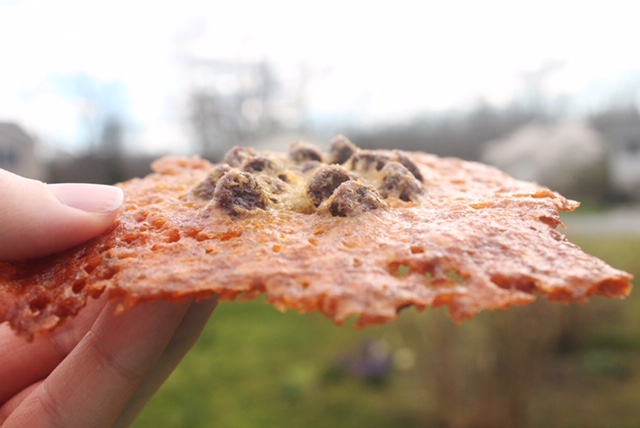
A week and half ago, just like the Grinch, I got “a wonderful, awful idea!”  I decided to try yet another recipe.  I thought this one would appeal more to my husband, since it was reviewed as an extra crispy chocolate chip cookie!  The recipe called for more butter than most recipes and a larger proportion of white sugar vs. brown sugar.  My baking experience made me apprehensive when the recipe called for adding water to the dough, but I forged ahead!  The recipe warned me that the dough would spread, but when I took them out of the oven I was astounded.  The cookies spread into a thin, lace-like substance, covering almost the entire pan in a thin layer.  The chocolate chips congealed in the center of the cookies and shrunk in size.  In addition, this is one recipe where the cookies tasted just as bad as they looked: greasy with lack-luster flavor.  I attempted to refrigerate the rest of the dough to see if it would improve the quality, but to no avail.  As a last resort, I threw the rest of the dough into a pan, hoping it would magically turn into edible bars.  Instead, the bars were gooey, sticking to your teeth with a weird gummy like after taste.  As far as appealing to my husband, he attempted to eat some, but most of them ended up in the trash!

This is what the cookies looked like after baking. Photo credit Margaret Collins

My epic cookie failure reminded me of the old saying, “If it ain’t broke, don’t fix it.”  I already had an incredible recipe, why did I feel a need to improve on it?  The recipe I found a year ago met everyone’s expectations in what a chocolate cookie should be: crispy on the outside, soft on the inside, lots of flavor, and decadent chocolate.  Nevertheless, I had the brilliant idea of attempting another recipe hoping to find even greater success.  Instead, I ended up with a lot of wasted ingredients (and we all know how hard flour is to come by in a pandemic) and a blemish on my baking record.

It made me wonder about myself, how often do I forge ahead with an idea without really thinking about the costs and whether or not I really need to improve on something?  How often have I jumped on the bandwagon of some trendy new home improvement concept or family-enhancing idea, without really thinking about whether or not this really fits our home and family?  The answer to that question is more often than I want to admit.

I love new ideas, and often read books that challenge me to not only improve myself, but also my home and relationships within in my family.  I love conversing with friends, sharing ideas and brainstorming on ways to better myself.  In addition, our society seems to embrace the concept of self-improvement in all areas of life with the advent of home-improvement stores to project supply stores like Lowe’s and Hobby Lobby.  The concept of self-improvement is good, but I have to learn to balance this with the importance of consistency and tradition.  Not everything should change and not every idea is the best fit for me and my family.

For example, I have a dear friend who does family worship time during their dinner meal.  Regularly, they would sing together after their meal and read the Bible aloud.  Our family already did our devotions in the morning, but I had this crazy notion that we should try it in the evening as well.  Yet, this just didn’t fit our family; we often had dinner guests and couldn’t develop a consistent habit of incorporating another devotion time in our day.  I quickly realized that this wasn’t going to fit our family.  Another example was the time I got the idea to sew a felt advent calendar that would be a family heirloom to pass on to future generations.  My sewing abilities resulted in a vaguely Christmas tree-like blob with five unidentifiable ornaments.  This project ended up in the trash, just like the chocolate chip cookies, along with my wasted time and energy!

I think it’s important to take an honest look at your life and evaluate what areas need some improvements.  We should always be striving to be more Christ-like while strengthening our families.  Even in our homes, we should be striving to create an atmosphere that is comfortable and represents us as a family.  This might mean investing time and energy into improving in our lives!  Yet, some improvements might not be needed, or might not fit your family’s disposition.  This is where we need to stop and ask ourselves some tough questions.  Am I trying to be the perfect Christian, trying to create the perfect family, fashion the perfect home, or, in my case, produce the perfect chocolate chip cookie?  If this is the root of our need for improvement, we need to stop and change direction.

This is my favorite recipe, although we didn’t love the M&M’s in the cookie. Photo credit Margaret Collins

In a recent Facebook post, Lysa TerKeurst wrote, “The pursuit of perfection leads to pretending.  Pretending encourages others to chase perfection.  And it’s just all so very exhausting.  Let’s give each other the gift of transparency and grace as we pursue Jesus.  Because perfection doesn’t exist on this side of eternity.”  That last statement is powerful!!  Perfection is unattainable this side of eternity!  It doesn’t mean we can’t work to improve upon things, but our goal should always be to bring glory to God by reflecting His presence in our lives.  This includes improving ourselves, our families, and our homes.  Paul says in 1 Corinthians 10:31, “So, whether you eat or drink, or whatever you do, do all to the glory of God.”  Bringing glory to God needs to be the heart of all self-improvements, not perfection.  Before forging ahead to make changes in my life, I need to make sure that it is going to bring glory to God!

In closing, I want to share one more thought.  The Bible talks about the marriage supper of the Lamb.  It is supposed to be this amazing feast where we spend time worshipping and eating with our Savior!  Can you imagine how beautiful the table is going to be decorated, centerpieces that pass any magazine cover!!  Being a foodie, I often wonder what amazing foods will be served at this table for us to share with fellow believers.  I can just imagine how amazing those chocolate chip cookies are going to be, far better than anything I can create on this side of eternity.  This will be the perfection we could never achieve in this life!

Peeps, Resurrection and Brokenness

“But he wounded for our transgressions, he was bruised for our iniquities: the chastisement of our peace was upon him; and with his stripes we are healed.” Isaiah 53:5

When I was a child, Easter was one of my favorite holidays.  I loved coloring eggs; it made me feel like Faberge designing eggs for the Russian Tsar, albeit with pastel swirls and stickers.  Easter morning, I would search for my Easter basket and dive into the candy; Brach’s jelly beans, marshmallow cream eggs and Peeps.  Those of us born before the 90s didn’t have the option of Starburst Jelly Beans, Reese’s Eggs, or Godiva Easter Bunnies.  Our Peeps only came in yellow, and the fake chocolate that coated the marshmallow eggs was considered a delectable treat!  After devouring the candy, we would go to my grandparents and eat the traditional ham, potato casserole and my grandmother’s famous fruit salad.

When I became a Christian, Easter came to mean more than just eggs, ham and cheap candy.  It is a celebration of Jesus’ resurrection, the basis of my salvation and the center of my hope.  I still carried on some of the old childhood traditions with my children.  We colored eggs and put together Easter baskets full of better candy, books, crafts and toys.  We had Easter egg hunts, although our children had to wear snow pants and winter coats while searching for plastic eggs in the bitter Wisconsin spring!  I searched for the perfect Easter outfits for my children, dressing them up in their best for Easter Sunday service.  We balanced these traditions with intentional teaching about the true meaning of Easter.  This included the Resurrection Egg hunt, reading the Easter story as a family, and worshipping together in our local church.

Maggie, Ethan and I coloring Easter eggs!

This year, I was really looking forward to Easter.  My husband and I had written and were directing an Easter drama for our church.  The final dress rehearsal was supposed to be tonight and the performance tomorrow.  It was amazing to see how the whole congregation pulled together, developing and using talents they didn’t know they had, and stepping outside of their comfort zones to minister to our community.  Obviously, the current pandemic has forced us to cancel the drama.  But I don’t want this to be another blog about loss, or what we can learn from this crisis.  Instead, I want to share with you what I learned by writing this Passion play based on Jesus’ life, death and resurrection.

By no means can I pen the words of Jesus’ life better than the actual God-inspired scripture found in the gospels.  I encourage you to spend some time reading the accounts for yourself.  As you read, I want to point out a few things that have struck me about the life of Jesus.

First, he spent his three years ministering to broken people.  These people didn’t have it all together, they engaged in self-destructive behaviors, and were deemed failures by society.  Their actions resulted in broken families, criminal behavior and terrible reputations.  Yet Jesus chose to spend time with them, and in some cases, went out of his way to find them.  He showed them kindness and compassion.  He didn’t condemn them, but encouraged them to be honest about their sins, telling them that their broken lives could be made whole.  Their lives, including the adulterous woman, the man with leprosy, and the Samaritan woman at the well, were permanently changed by just being in the presence of Jesus!

Second, Jesus loved his friends, his twelve chosen disciples, despite knowing that they would all betray him in the hour of his greatest need.  These twelve men spent three years with Jesus, witnessed him performing miracles, listened to him teach, and watched him minister to others.  They knew the true character of Jesus, beyond what the crowds saw.  They knew that this man was without sin, full of integrity and holding no bitterness against anyone.  His character on the shores of Galilee was the same as it was while praying in Gethsemane.  Yet when Jesus faced the crowds sealing his fate with rabid shouts of “Crucify him”, none of his disciples stood up to defend him.  Instead, they deserted him and, in one case, denied even knowing him!

Third, his death was brutal, bloody and painfully personal. There was nothing clean about his death: he was beaten, shredding his flesh and exposing bone.  He was hung on a cross with nails in his hands and feet and a crown of thorns pressed into his skull.  A spear was cruelly driven into his side until every drop of blood was wrung from his tortured body!  The painfully personal part is that he was completely innocent, yet he suffered all of this so that I, Sherry Collins, wouldn’t have to pay the ultimate price of death for my sins; sins like bad attitudes, lies, gossip, betrayals and so much more!  The consequences of my sin would have meant death and eternal separation from God!  Yet Jesus paid the price for my sin!!!  And through his resurrection, he gave me hope that I can overcome sin and spend eternity with Him!

These three revelations are not new to me.  I have been a Christian for over thirty years and have meditated on the gospel accounts before, drawing some of the same conclusions.  Yet, this year, I have spent some time examining my own brokenness in a little more depth.  This brokenness was a result of a childhood filled with abuse, causing deep wounds and much pain.  This brokenness led to self-image problems, obesity and relationship challenges.  In reading the accounts of Jesus, I have often wondered what brokenness was experienced by the people to whom he ministered.  For example, did the adulterous woman come from a home where her step-father sexually assaulted her?  Did the Samaritan woman at the well grow up in an alcoholic family?  We don’t know what caused any of them to sin, but it likely stemmed from brokenness, just as it did in my life.

My brokenness is not an excuse for sin, nor is it justification for any of my shortcomings.  Yet, despite my sin and shortcomings, Jesus was broken so that my brokenness could be made whole.  In Psalms 147:3, the psalmist records, “He healeth the broken in heart and bindeth up their wounds.”  This was a prophetic promise to me in my future.  Jesus’ death and resurrection would heal the brokenness in my life, and I am forever thankful for this healing!  This Easter, I will have my Peeps and my ham dinner, but more importantly, I will have the wholeness that the brokenness of Jesus has given!