“Every good gift and every perfect gift is from above.” James 1:17
The French peasantry looked to the extravagance of their king and queen with envy and resentment. They could barely feed their families, often making hard choices of which child would get the largest piece of carrot in an already thin soup. The peasants began to protest while begging for bread, the staple of their diet. This eventually led to the French Revolution, and the guillotine for the monarchy. Years later, the queen, Marie Antionette became immortalized with her callous response to the peasants, “Let them eat cake!” Although there is no historical record of her using these words, the euphemism has been used in any situation where someone is being oblivious to the plight of others.
Years ago, the leader of a weight loss program handed out a paper plate to each of us. She encouraged us to think about our goals and not let the holidays sabotage our efforts. We were to envision our Thanksgiving dinner and write down the foods that were most important to us, calculating to stay within our prescribed limits. She also suggested recipes to help us stay focused, such as crustless pumpkin pie. I left the meeting, taking my paper plate with me, resolved to stay in these preconceived limits. And it’s quite likely that I succeeded, that year.
But not all years have been what I deemed a success. I have vacillated between two spaces. The so-called successful years I spent time analyzing my caloric intake for Thanksgiving. Other years, I ignored calories, eating to the point I felt physical discomfort. The energy I spent analyzing my food intake was wasted by not being present with my family and friends. The amount of time I spent overeating and feeling ashamed of my discomfort also took time away from family and friends. One way or the other, I have either felt anxious about the impending holiday or felt guilty after the holiday.
I have heard a lot of interesting comments since I have lost weight. Most have been related to my appearance like, “You look great!” While I appreciate those compliments but the ones that have meant the most have not been related to my appearance. These included, “I bet you feel better” or “I am sure it is easier for you to get around.” But the compliment that stands above all others came from my sister, Cheryl. She said “Sherry, you are so much stronger than you were before.” That word “stronger” echoed in my mind, articulating the feeling that I hadn’t been able to name before.
I’ve been learning more about intuitive eating versus following diet culture. I’m just in the beginning stages of doing research and in no way have I formed any opinions. But I do know God doesn’t want me to live in this place of anxiousness and guilt. I do think it is important to be healthy, but I no longer want to define health by the numbers game. Feeling healthy should be defined by my energy levels, flexibility, and strength. God gave me a body as a blessing, to help me do the work He’s called me to do. As with all blessings from the Lord, He requires me to be a good steward.
What does it mean to be a good steward? It involves having a relationship with Jesus and allowing Him to speak into all areas of my life. Some areas include the principles of Jesus’ teachings like living in moderation, being anxious for nothing, making sure nothing becomes an idol, and seeking wisdom. I also think, “food is good gift from a good God”, as stated by Asheritah Ciuciu in her book, “Full”, is an important concept to remember. It’s also about finding the right balance, and not allowing either gluttony or deprivation, to control me.
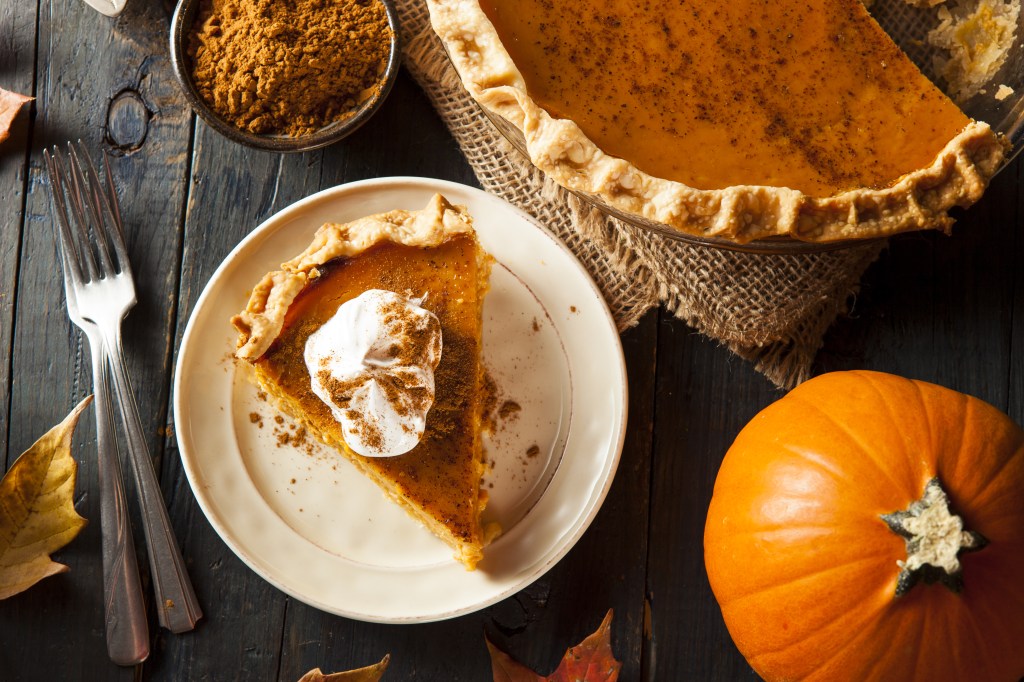
Thursday is Thanksgiving, once again. I am going to be surrounded by family and friends, enjoying each other’s company while feasting and expressing gratefulness. This Thanksgiving, I want to reclaim the phrase that embodied callousness. Instead, my cry for Thanksgiving is, “Let them eat pie” without judgment and condemnation. “Let them eat pie” without calculating how much exercise I will need to work off the whipped cream. “Let them eat pie” with a reasonable portion that satisfies and is accompanied by laughter and good conversation. Finally, “Let them eat pie” with God’s blessings without making the pie the idol!
“It is better to trust in the Lord than to put confidence in man.” Psalm 118:9
We have all seen the television ads for new drugs that will deal with any number of diseases. They typically show a video of a healthy woman or man whose lifestyle has been altered since starting this new drug. They are now playing with their grandchildren, building a deck, or dancing with their loved ones. At the end of the ad, for a solid fifteen seconds, the announcer rapidly reads off the list of disclaimers: this drug is unsuitable if you have any history of heart disease, any time in Southeast Asia, any history of high fevers, etc. The disclaimers are important, because not every drug works for every person. But as they rattle off the list, I start to lose confidence in the drug’s effectiveness.
Thanksgiving is next week, and my table will be spread with turkey and all the fixings. Preparation will start early, with some dishes being made a few days earlier. It is a challenge to get everything on the table at the same time, even if you have a double oven. Renowned chefs say it is one of the hardest meals to prepare well. After everyone is seated at the table, I find myself criticizing my food: apologizing for the turkey’s lack of flavor, or if the stuffing has too much celery. The “I’m sorry” or other similar disclaimers continue when I serve pie and coffee at the end of the meal. This habit is not just limited to the Thanksgiving table. I regularly apologize about the meals I have prepared for my family and friends.
It’s a habit that even carries itself beyond meal preparation. My daughter-in-law, Rachel, and I tripped over each other with the words “I’m sorry” when I was at her house for two weeks. Whether it was forgetting to thaw out a meal, or thinking a dish didn’t turn out right, it was a race to say, “I’m sorry.” At one point, we both recognized the absurdity of our apologies. She just had delivered a baby, and was navigating recovery, nursing, and lack of sleep. I was there to help make her life easier by cooking some meals, cleaning the house, playing with Joel, and getting baby snuggles. There was no need for apologies, and even though we declared a moratorium on “I’m sorry”, they continued.
The words “I’m sorry” are important. They signify a recognition that your actions were hurtful or disrespectful towards someone else. I should apologize when I respond harshly to my husband. I should display remorse when I treat a friend unkindly. I should ask for forgiveness when my actions were intentionally harmful. But they lose their meaning when I apologize for something that needs no apology.
Why do I feel a need to apologize to others when I am serving or providing a meal? By nature, I am not a perfectionist. I’m okay if my sheets are not folded perfectly, or if my silverware drawer is a little awry. And, although social media pressure to be a perfect hostess may play a role in my apologies, this habit was in place long before the inception of Instagram. Additionally, it’s a habit I see manifest itself more in women than men. If a man offers to help out his buddy with mowing his lawn, you will rarely hear him say, “Sorry, I didn’t get those perfect lines in your grass.” What are the roots of this obsessive need to apologize?
I can’t speak for anyone else, but for me, it’s my fear of disappointing others. I apologize in advance, because I want to lower the perceived standards I believe others hold for me. It’s my need to stay in their good graces and to find approval. And this puts unhealthy pressure on my relationships with family and friends. My approval needs to be found in my relationship with God, not with others. God calls me to serve, not to have perfectly salted chicken or chili with the perfect amount of cumin. I should always do my best, but God doesn’t demand perfection.
Julia Turshen, one of my new favorite cookbook authors, wrote in “Simply Julia”, ‘“Disclaimers don’t taste good. If something didn’t turn out how you planned it, there’s no need to tell your guests what the original plan was. Just say, “dinner’s ready!” You made someone a meal! That’s a gift.”’ Those words struck me! When I am hosting and serving, I don’t need to offer any disclaimers. I am offering the gift of help and/or hospitality. My goal should not be to create a perfect meal, but to create a place where the other person feels welcomed and important!
Finally, just like hearing the disclaimers of a new wonder drug, when I am on the receiving end of a friend’s disclaimers, it makes me feel a little uncomfortable and a need to praise excessively. Food then becomes the object of the hospitality, not the company of my good friends.
This Thanksgiving, I am hoping to offer no more disclaimers, but to enjoy the company of my family and friends. I will not apologize for my turkey or make excuses for the stuffing or make a disclaimer for the pie. Instead, I will be enjoying my family and friends, extolling the goodness of God!
“You are the God who works wonders; you have made known your might among the peoples.” Psalms 77:14 ESV
We sat across the table from each other, both of us eating our apples, dipping his into peanut butter. Landon, my favorite five-year-old, smiled with his vivid blue eyes and thick eyelashes and said, “Sherry, do you want to know something? Sometimes I feel magical!” He continued sharing with me how he feels like he has wings that allow him to fly over his world. I texted his parents and my husband, sharing with them this delightful insight.
I spend a lot of time with children. It seems as if God always puts little people in my path. I can take the high road and claim that I am a blessing to a lot of different families, often serving by providing childcare. This may be true on some levels, but these little people help me keep my sense of wonder, delight, and curiosity.
Landon Horne with his magical thinking, Credit to Frankford Photography
Feeling magical is a way of viewing your circumstances in a beautiful or delightful way, removing yourself from everyday life. I think this little man’s statement is not only delightful, but full of pure wisdom. Too often, I get so caught up in my list of things to do, goals to accomplish, and places I need to be, that I forget to dream and imagine life differently. I forget my limitations are not based on external circumstances, but on ones that I place on God.
Two weeks ago, I saw one of my favorite local farmers advertise a job for another organization they partner with. I followed the link and read the description. The job fascinated me, combining all my current passions in one position. I told Terry about the position but listed reasons I shouldn’t apply for the job: no experience, no recent positions to share transferable skills, and no applicable references. All I had was a lot of passion, energy, and a lot of research. Terry encouraged me to apply for the position. I wrote an interesting cover letter and submitted it with my updated resume.
For the past year, I have been living in a place of waiting: waiting to move, to finish my book, to start a new blog, to get a job, and to become more involved in my community. So many obstacles seem to be in my way, like the reasons I listed why I shouldn’t apply for the job. I ordered in my mind how things should happen: first, I need to move, then I will get a job and then I will get involved in the community. But if I apply Landon’s magical thinking to my circumstances, maybe A doesn’t have to happen before I do C. Maybe I just need to dream big, but still put my hands to work with all the opportunities that God has given me. Maybe I need to stop treating this like a waiting period, and trust God for good things to happen in my life.
The Bible is full of men and women who placed qualifications on how God should or should not do something. Moses believed that his stuttering would hinder him as God’s spokesperson, but God still used him to lead his people out of bondage. Esther was afraid that she didn’t have enough influence with her husband, the king, but God still used her bravery to save her people from annihilation. And Martha told Jesus that if he had been there earlier, her brother would not have died. All Martha could see was the dead, stinky body of her brother laying in the tomb. But Jesus envisioned a miracle of epic proportions, thanked God, and then called Lazarus forth. For the first time, a man who laid dead in his tomb for days, had risen from the dead. This miracle spread throughout the community, arousing more curiosity about the carpenter from Nazareth.
I received a reply for the position, and although I can’t say for certain, I don’t think I am in the running for the position. But applying for this position has opened my eyes to new possibilities. I am going to volunteer with some local organizations. I am going to stop treating this like a waiting period and organize my time better to accomplish the many opportunities God has given me. I am blocking time out to finish my book, so that I can move it towards publication. Finally, I am going to trust God in some of the big things we need to happen, including moving, and declare His miracles when it happens.
Landon, I, too, sometimes feel magical. It doesn’t involve any superpowers like having wings. Instead, it is learning to trust God and His plans.
“For everything there is a season, and a time for every matter under heaven:” Ecclesiastes 3:1
Terry’s family had a secret to “holiday-worthy mashed potatoes”. Being a new cook and wanting to incorporate their family traditions into our newly married life, I followed their secret: one can of evaporated milk. I had never even heard of evaporated milk before, unsure of where to find it in the grocery store. As a novice, I opened the can, spilling the thick grayish milk all over the counter. But I continued, wanting to impress my new family. I peeled seven pounds of potatoes, diced them, and cooked them until tender. I softened butter and began mashing them, adding the canned milk until the right consistency. Salted and peppered, I served them in my grandmother’s red Pyrex bowl on the table. But while others were indulging in the feast, I plopped the glossy looking potatoes on my plate, disappointed by the gummy texture and quickly apologizing to everyone, knowing I had made better potatoes in the past.
This tradition continued for years with the same results, until one year I had a revelation: it was the canned evaporated milk that ruined the holiday potatoes. And from that point on, I decided to break with that tradition: I was making mashed potatoes my way. I started by switching the potatoes from russet to golden. I added cream cheese, along with half-and-half and butter, to add a slight acidic tone to the potatoes and give it body. The potatoes were still served in my grandmother’s Pyrex dish, but they looked light and fluffy, and tasted amazing. That was the first year I didn’t apologize for my mashed potatoes.
November begins the holiday season for our family. I usually start breaking out Christmas music in early November. We typically have our Thanksgiving feast late afternoon and put up our Christmas tree the day after. In the past, our house was full of Christmas cheer, spilling out in every room. As a family, we watched certain movies and read certain books that, for us, embodied the Christmas spirit. I baked dozens of cookies and made candy that filled platters during the holiday season. And for eight years, we ended the season with a big bang: a huge Hot Chocolate Party with homemade peppermint marshmallows!
Traditions are important, they help anchor us and create a sense of community and family. But they are not meant to be so inflexible that they lose their value. I spent years making these “traditional family mashed potatoes”, hating one of the most important dishes of the Thanksgiving meal. The crazy part of breaking this tradition, my father-in-law, the inventor of the “traditional family mashed potatoes” commented on how delicious my new mashed potatoes were.
Change is hard and, like most people, I dread the notice Apple gives me when they say my phone is due for an iOS update. I know that along with the so-called benefits of these updates, I may have to adjust to a new way of operating my phone. These changes are uncomfortable and sometimes unwanted. The word change itself seems to evoke unpleasant emotions. But, like my iOS updates, seasons change in my life, and I have an opportunity to either embrace these changes or cling to the past. I’ve explored this topic before in To Everything There is A Season,but I think it is something that bears repeating. And I also think its time to choose a different response to change.
Resilience is a buzzword I hear often in podcasts on spiritual growth and mental health. It means the capacity to recover quickly from difficulties or the ability to spring back into shape. I believe it’s the antidote to change in my life. I can choose to cling to the past or be resilient, not only embracing the changes, but creating a different reality. Elizabeth Edwards faced a lot of changes in her life including the death of her son, a presidential campaign with her husband, and, later, her husband’s infidelity while facing a terminal cancer diagnosis. She said “Resilience is accepting your new reality, even if it’s less good than the one you had before. You can fight it, you can do nothing but scream about what you’ve lost, or you can accept that and try to put together something that’s good.”
This is our first holiday season as empty nesters, and I am choosing to be resilient. I am letting go of some old traditions and looking forward to creating new ones with our family. We are moving Thanksgiving to an earlier lunch and eliminating the huge brunch to accommodate schedules better. We will be celebrating our Christmas early, due to our Rhode Island family being here only at Thanksgiving. I have streamlined our Christmas décor, and we will be watching less Christmas movies. I will still bake, but am looking forward to maybe having smaller, more intimate groups of people over rather than the huge Hot Chocolate Party. And yes, I will still be making homemade peppermint marshmallows, because I love them! Finally, Terry and I are choosing to create a new Christmas Eve tradition, one with books, chocolate, and candles.
Reader, I recognize that being an empty nester and adjusting to new traditions during the holiday season may seem trivial to some. I know that some of you who read this blog may be facing the first holiday season without a loved one due to a death, or maybe you are facing a health crisis, or maybe life is just hard. I, too, have faced hard seasons. And maybe, this year, there is one tradition you need to continue with to make sense of the chaos swirling around you. But I encourage you, hard season or not, take some time to do an “iOS update” on your traditions. Do they serve you and your family well? Do they add to the chaos on your life, or do they bring joy? And if you decide to let go of some traditions, do something different to add joy to your life. And just maybe this new thing, will become a new tradition!
“I praise You, for I am fearfully and wonderfully made; Marvelous are Your works, And that my soul knows very well.” Psalms 138:14
Dear Eva,
You arrived in a whirlwind, a little over a month ago, forever changing the lives of those around you. With your dark hair, chubby cheeks, and rosebud lips, you have already enchanted us. We can’t wait to see your personality unfold, your interests develop, and your heart grow towards God.
I offer this letter as a prayer for you, sweet baby Eva. Not raised as Christians, both your Nana and I came to our faith as teenagers and young adults. Already shaped by our environments, we embodied inaccurate and wounding messages about our worth. We have submitted to the Holy Spirit, allowing God to change us, but this is a process. Unfortunately, some of those messages stuck hard, shaping us as wives, mothers, and friends. They influenced how we viewed ourselves in relation to God. And through the Holy Spirit, we are still dismantling those messages.
This world has a lot to say about how a young girl should measure her worth. Some measure her worth by her appearance: how she looks and what she wears. Some measure her worth by what she accomplishes: what her grades are like or what talents she develops. Still others measure her worth by their opinions, motivating a young woman to seek the approval of others. But God doesn’t measure your worth through your appearance, accomplishments, or approval of others. These are cheap imitations that lead to an unhealthy self-image, competition, and unfulfillment!
Eva Louise Collins arrived September 20. Picture credit to her sweet mama, Rachel Collins.
Eva, you are precious in the sight of the Lord, because God created you in His image. You reflect the image of God, and this reflection will be as distinctive as your very fingerprints. David, in Psalms 139: 13, records that God knitted you together while still in your mother’s womb. This majestic being took the time to craft you together. In the next verse, David goes on to say that wonderful are the works of God.
Someday, you will go to see a valuable piece of art in a museum. They carefully display these pieces in rooms under supervision, temperature control, and limited lighting. Irreplaceable, they preserve these artworks for future generations to enjoy their beauty. Any necessary preservation work is done carefully with state-of-the-art materials to keep the essence of the original artist’s creation.
Eva, just like those art pieces, you are valuable to God. Your parents are responsible for raising you in a safe environment where you can display the glory of God in your life. They will also share with you the gospel and how God’s light will lead you to comfort, peace, and joy. I pray this environment, in harmony with the gospel, will help you develop into a godly woman who is confident, compassionate, and seeks collaboration. I pray you will be confident, knowing who you are in God. I pray you will be compassionate, knowing that God is more interested in what kind of person you are than in what you do. I pray you will collaborate with the body of Christ, knowing that as you work with others, you are working together for the kingdom.
I pray you will be a strong woman like those depicted in the Bible. Be a Ruth, choosing to serve the one true God despite her mother-in-law’s despair, changing her lineage forever. Be an Abigail, choosing to be a gracious hostess, soothing a future king from making a fatal mistake. Be an Esther, courageously coming before a king on behalf of her people, declaring if she perished, she perished. Be a Mary, who declared definitively, “Be it unto me, according to your word” despite facing possible rejection and death from her future husband. Most importantly, be the woman God has called you to be!
Eva, strong women surround you, including your mama, your Nana, your Aunt Maggie, and myself. I hope that, despite our woundings, you also see the different ways God’s image is reflected in us as individual women of worth. But ultimately, I pray that we always point you back to the creator, who is the ultimate source of your worth!
“Therefore do not be anxious about tomorrow, for tomorrow will be anxious for itself. Sufficient for the day is its own trouble.” Matthew 6:34
The package was small and compact; I knew it was a book of some sort. Delighted, I tore open the wrapped gift, glimpsing the title, “Jane-a-Day”. It was a five-year journal prompted daily with a witty quote from one of my favorites, Jane Austen. And so, I started the journal in 2015, dropping it for most of the year, picking it up again in 2018, and then, in 2020, developing a consistent habit. Limiting myself to a few sentences about my day was hard. Sometimes I tried to spring off Austen’s quotes, quickly recognizing I am not witty. Other times, I wrote a brief prayer. Finally, a habit of writing short conclusions of my days, hopes for the future sprinkled in with major events of my life, filled my book. These events include the weddings of both my children, the births of my grandchildren, and visits from family and friends. But the events also include some hard moments, including accidents, unexpected deaths, and disappointments.
One of these events happened four years ago, marking an unwelcome anniversary of some sort in my marriage. Although this event changed us and our marriage for the better, it still isn’t the journey either of us would have chosen. I don’t want to celebrate this event, but inked words are an echo of what happened. And on that date, four years later, my shoulders scrunch up with tension as I desperately try to write something new, hoping to redeem the day.
It’s no secret: I love to read. I read across genres with old and new writers. My TBR list (for non-bibliophiles that means “to be read”) grows daily, aided by recommendations made by podcast hosts. I am often at the mercy of the library system, reserving books and waiting for whatever shows up. It might be a collage of fiction, cookbooks, or memoirs. There are few modern writers that I admire so much that I automatically purchase their new books instead of waiting for the library. This year, two of my favorite authors, Ann Voskamp and Shauna Niequist, came out with new material. I have already talked about Ann Voskamp’s Waymaker in a previous blog. Her poetic prose challenges and inspires me. No less talented, Shauna Niequist crafts words into sentences that make me pause and reflect. Her words seem to synthesize random thoughts in my head, like excellent coffee, sipped slowly to taste the undertones of citrus, blackberry, or bourbon. If you gulp the coffee, the flavors become muddled, but when I read her words slowly, clarity emerges in my life.
Shauna Niequist’s, “i guess I haven’t learned that yet”, was released in April (and, no, the lower-case “I” is not a mistake). It chronicles her last couple of years of hard moments and a major move to New York City with her family. Amid wedding planning, I put the book on my nightstand, hoping to read snippets of it in the evening. But time got away, and the book got shoved under other books, gathering dust. Recently, I rediscovered the book and began my journey of reading and underlining whole paragraphs.
On page 32, Niequist titles the chapter, Hello to Here. She tells us, “A wise friend of mine says that true spiritual maturity is nothing more and nothing less than consenting to reality. Hello to here -not what you wanted or longed for or lost, not what you hope for or imagine, Reality. This here. This now.” I took a deep breath as I read and reread her words again and again. Events in my past and future possibilities collided. And I stopped, thinking again about what she had to say, drawing some conclusions.
I need to stop pouring emotional energy into unwanted anniversaries. Mistakes I’ve made in parenting and relationships have no do-overs, only apologies and acceptance of forgiveness. I can’t change my past at all, none of it. And that is hard to swallow. But as long as I live in the past, I can’t move forward.
I also have some major uncertainties in my life for my future and the future of others I love. These uncertainties sweep over me like waves, threatening to pull me under. But the reality is they are completely beyond my control. I have pleaded with God asking him to reveal a glimpse of what the future holds, so I can rest in peace. I want to know that some things I have prioritized in my life and in others were worthwhile, yielding the outcomes I had planned. I want a sign so that what seems so difficult now is easier to process because of a hope I can see.
But God calls me to the present, not to my past or my future. Yes, I should learn from my past and prepare for my future. But I need to live in the here and now only moving forward second by second, minute by minute, hour by hour, day by day. The prophet Isaiah records in chapter 43, verses 18-19, “Remember not the former things, no consider the things of old. Behold, I am doing a new thing, now it springs forth, do you not perceive it? I will make a way in the wilderness and rivers in the desert.”
This living in the here and now is hard! So hard!! It’s letting go of both, the narrative of the past and the control of the future. It is positioning myself before God in complete humility, recognizing I don’t have the answers or solutions. But when I choose to live in the here and now, I learn to trust God, who has all the answers. He does a new thing, something unexpected, making a way in the wilderness and a river in the dry desert. He is such a good God!! And when I trust and recognize His goodness, I can rest with a hope that I can’t see.
Recently, I spent two weeks with my grandson and my brand-new granddaughter. There are not a lot of photographs to record my stay, partially because I am a terrible photographer. But the other part is hat I choose to be present with my family, not worried about photo ops. Maybe someday I will regret not having more pictures, but right now, I am choosing to be present in the here and now, and it feels good! My journal ends in two months. The idea of a five-year-journal is good. But I am glad that I will no longer have that day remembered. Instead, I plan to continue to journal, not wanting to change the past or predict the future, choosing instead to live in the here and now!
“However, as it is written:”What no eye has seen, what no ear has heard, and what no human mind has conceived”, the things God has prepared for those who love him.”
1 Corinthians 2:9
When I was in the fifth grade, I entered Narnia for the first time when I discovered The Lion, the Witch, and the Wardrobe on a shelf in the Sheboygan Falls Library. Taking the book home, I devoured the pages as fast as Edmund devoured his Turkish Delight. I imagined discovering a wardrobe, climbing inside, and being transported to a new land. I wanted to meet a faun and have dinner with talking beavers. I cried when Aslan died at the hand of the White Witch and rejoiced when he came back to life. I continued with the other books in the series, but they did not really capture my attention until later.
I rediscovered the land of Narnia as a new mother, when I was looking for some light reading while caring for two active toddlers. I quickly realized that what I thought was light reading was really a treasure trove of spiritual insights. I celebrated the beauty of creation reading The Magician’s Nephew. I longed for the boldness of Reepicheep, a little mouse, when defending the kingdom. I was moved to repentance when I saw Eustace, a boy who was turned into a dragon, have his pride stripped away along with his dragon skin by Aslan’s claws. I longed for heaven reading The Last Battle.
C.S. Lewis, the author of The Chronicles of Narnia series, is considered one of the foremost apologists of the twentieth century. He not only wrote children’s books, but also many books on Christianity, discussing, among other things, the concepts of faith, joy, and grace. He is often quoted by many modern theologians. Although his Narnia books can point someone towards God, Lewis would be the first to argue that the Bible, a rich living text, should be the ultimate source for understanding God. He had a rich understanding of the Bible and how it applied to the bigger picture, the picture of our story fitting into God’s story.
The whole Bible, from Genesis to Revelation, is the epic story of God. In Women of the Word, Jen Wilkin says, “the Bible is telling us about the reign and rule of God. Its topography speaks of creation, fall, redemption, and restoration in every vista.” It is not just a manual on how to live as a Christian or a map pointing our way toward heaven. It is God’s story, revealing His character. His majesty and artistry are displayed through His words as He speaks creation into existence in Genesis. He bestowed a special status on humans when He created them in His own image, longing to fellowship with them. Yet, this state of perfection was marred when sin separated man from his creator. Despite this fallen state, God had a merciful plan fully revealed in the life of Jesus. Jesus redeemed man from sin by dying on the cross, bringing to us the hope of restoration through His resurrection!
This epic story, the Bible, has lots of supporting characters, such as Abraham, Moses, Rahab, Esther, Daniel, Peter, and Paul. All these characters have different stories in different settings. Some spent their lives wandering in deserts while others lived in palaces. Some were fishermen while others earned their living through prostitution. Yet, despite the vast differences in these characters and their various circumstances, God ordained these stories to be a part of His written word because they played a part in His larger story. For example, Rahab, although she was a prostitute, recognized the power of the God and chose to hide the Hebrew spies. This simple act of faith resulted in her family being rescued from the fall of Jericho. Furthermore, her reputation was restored when her name was recorded in the lineage of Jesus! She had no idea that generations later, despite her past, her DNA would play a part in the redemption of the whole world.
It is easy to get a microscopic view of our lives. We get caught up in our day to day living, not realizing that our lives are bigger than the short years we live on earth. Our story, with God’s hand, plays a part in not just the lives of those immediately around us, but in generations to come, as well. Like Rahab, we have an epic part to play in God’s story.
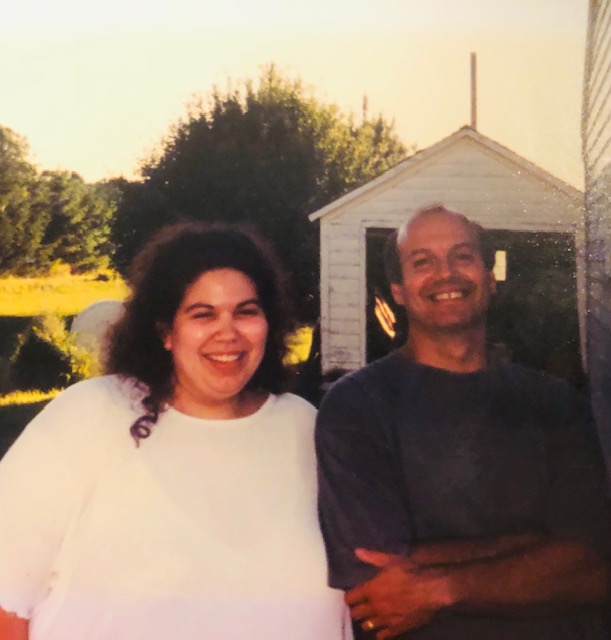
Although this is an old picture, it is one of my favorites of me and my uncle. We definitely need to update our photos.
Although I am in the process of writing a book about my own epic story, my story starts with my Uncle Dennis, as a young man searching for God in 1975. Dennis, my mom’s older brother, had his hunger stirred for God by a friend’s testimony. He attended a church service in a different city from where he lived and immediately saw his need to be baptized. He left that service, having given his heart to God and with a desire to know God more. He started reading the Bible, found a local church to attend, and has served God ever since.
Although Dennis has an extensive knowledge of the Bible, he never felt called to preach. He has never been a Sunday School teacher. He does not write a blog or make Facebook posts expounding on his faith. Yet, in his quiet faithful way, he has impacted many lives, including mine and, as a result, the lives of my children and my grandchild. First, as a little girl, I can remember my uncle being the first man to compliment me on my appearance. As a five-year-old, I would twirl around in my strawberry peasant dress, soaking in his compliments, grinning from ear to ear when he called me “strawberry shortcake.” These simple words acted as antidote to the insults I heard at home, giving me hope that I was something more. He was also the person who introduced me to God by bringing me to Sunday School as a child. For a short season, those few hours every Sunday morning provided me with peace from the swirling chaos at home. Later, after I stopped attending regularly, he continued to pray for me, sometimes prompted by dreams God had given to him. I believe these prayers provided a hedge of protection around me and my family. Finally, my Uncle Dennis and Aunt Brenda, despite being in the middle of one of their darkest moments, reached out to me when my brokenness came to light. They embodied the love of Christ by setting aside their own pain and reaching out to a shattered teenager, giving her hope when she felt hopeless. This simple act was the beginning of my restoration process!
My story was not the only story impacted by my uncle’s life. The obvious transformation of his life by Jesus gave him the boldness to invite a co-worker, Marvin, out to a revival service. Later, Marvin shared with his wife about the invitation, while their son, Wayne, who had been searching for God on his own, overheard the conversation in his room. Wayne instantly felt a stirring in his heart and, of his own volition, attended a revival service that Sunday evening. He walked into the church not knowing anyone personally, but knowing only the name of his father’s coworker, Dennis. Wayne was later instrumental in leading his whole family and others into a relationship with the Lord. In addition, Dennis and Brenda ministered to countless teenagers, mentoring them in their walks with God. Finally, Dennis provided a source of consistency and strength in the life of his wife and daughter. This quiet man would not describe his life as being epic, but his impact, like most supporting characters in the Bible, is impacting generational stories in the epic story of God!
As an adult, I understand more of the symbolism in the stories of Narnia. I get chills every time I read the last chapter of The Magician’s Nephew. The main character, a young boy named Digory, has brought darkness into the newly created world of Narnia by his sinful behavior. After partially redeeming himself for his mistake, Digory later plants a Narnian seed at his home in London. This seed grows into a magnificent tree, which is later cut down and the wood used to build a wardrobe. This same wardrobe becomes the gateway for others to enter the land of Narnia. My story and your story, just like my Uncle Dennis’ story, can become the gateway to the redemption of others by God, leading to their own story of restoration!
In The Last Battle, C.S. Lewis ends The Chronicles of Narnia series with the following paragraph:
“And as He spoke He no longer looked to them like a lion; but the things that began to happen after that were so great and beautiful that I cannot write them. And for us this is the end of all the stories, and we can most truly say that they all lived happily ever after. But for them it was only the beginning of the real story. All their life in this world and all their adventures in Narnia had only been the cover and the title page: now at last they were beginning Chapter One of the Great Story, which no one on earth has read: which goes on for ever in which every chapter is better than the one before.”
Our stories may have different characters, settings, and conflicts. However, despite these differences, we all need to find resolutions to our own individual conflicts through the life of Jesus, taking our place in His epic story. What is amazing is that our story can continue to be written for eternity, finding complete restoration with God. With our finite minds, we cannot imagine what God has in store for us. 1 Corinthians 2:9 declares, “What no eye has seen, what no ear has heard, and what no human has conceived, the things God has prepared for those who love him.”
Enjoying snuggles with my new granddaughter. For the next two weeks I’m posting done oldies. I hope you enjoy!
“Now unto him that is able to do exceeding abundantly above all that we ask or think, according to the power that worketh in us.” Ephesians 3:20
Fall has arrived, arraying the trees with reds, yellows, and oranges, while fields turn golden as harvest is nearing completion. My favorite farmer’s markets are filled with pumpkins, squash, and apples. Ingredients for soups and chili fill my pantry shelves. My heart echoes the same sentiments of Anne in L. M. Montgomery’s Anne of Green Gables, “I’m so glad I live in a world where there are Octobers.”
Although I appreciate all the seasons, autumn is my absolute favorite. I have fond memories of going to Waldo Apple Orchard as a child and eating a caramel apple. I love hiking, hearing the crunch as I step joyously through the leaves. I love wearing warm, cozy clothing and sipping mulled apple cider. It stands to reason that I also love to decorate my home for fall.
My fall decorating started off very humbly. Having a limited budget, I started with a homemade leaf garland. My husband and I cut out hundreds of leaves in different fall shades of construction paper. We then misted them with water, crumpled them and let them dry. After attaching them to twine, the leaf garlands graced our home. For years, this was our only fall decoration.
Then I discovered Hobby Lobby. As I had more disposable income, slowly I started adding to my fall decorations. This included a more elaborate leaf garland, some fall signs and even a few critters. I continued to make some of my own decorations, including a thankful tree and a short acorn garland to hang above my kitchen sink. My fall décor collection now fills two large storage crates. Every year, shortly after Labor Day, my home transitions into autumn while “Punky Pumpkin” by Rosemary Clooney plays. When its all done, I sigh deeply, ready to embrace the cooler weather and my fall traditions.
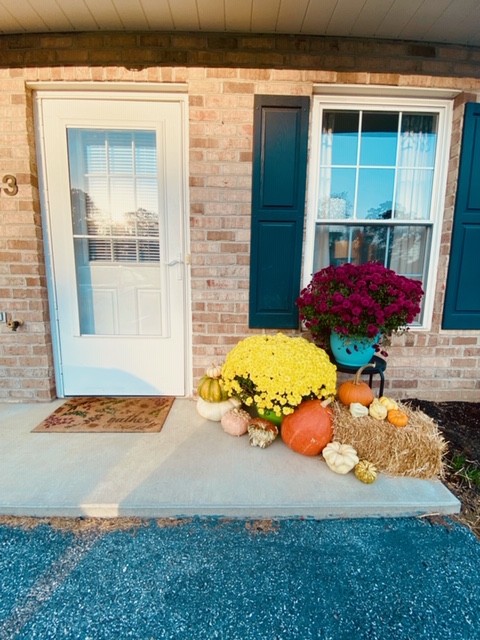
For the past few years, I have attempted, unsuccessfully, to decorate my front porch. To be honest, my “porch” is not really a porch at all but just a small slab of cement in front of my door, lacking any curb appeal. In summer, I typically have a few flowerpots greeting guests as they enter my home. As the weather cools, I place a few pumpkins and mums on my front porch to create a fall ambience. For some reason, my fall ambience seems to fall flat. Being a bit spatially challenged, my pumpkins and gourds are either too small or too few and my mums are too low or wither quickly because I forget to water them.
This year, I decided to go big. Instead of grocery store mums, I went out to a local Mennonite market and purchased two large pots of bright yellow and wine-colored mums. I then went to my favorite farm stand for pumpkins. It is such a great time to be alive, where we are no longer limited to only traditional orange pumpkins! Now, they come in all shades, including white, green, gray and my favorite “warty pink”! I gathered a few pumpkins and gourds and headed home. As I started decorating the porch with my treasures, I realized something was still missing. A week later, I made a second trip, purchasing more pumpkins along with a small hay bale. As I loaded them in the car, I realized I might have gone a tad bit overboard. In jest, I sent my husband a text saying, “Remember how much you love me.” After unloading the stash and rearranging my porch, I realized I needed one more small orange pumpkin to make it complete. So, I made one more trip, grabbing the last pumpkin (or two), to complete my porch display.
Photo credit to Margaret Collins
When all was said and done, I somehow ended up with thirteen pumpkins and gourds on my small porch. I won’t tell you how many fake pumpkins are inside my home or you might start to think I have a problem. Now, I know the current philosophy is “less is more”. There are books written about the concept of minimalism along with new vocabulary like “Konmari Method” and “Capsule wardrobe”, encouraging us to be mindful of how much stuff we have. In fact, the opposite of minimalism is looked down upon. We have reality shows depicting the shocking lives of hoarders! Thrift, resale, and vintage stores abound, helping us to get rid of our excess “stuff”. Even restaurant menus and food labels are embracing the concept of simplicity with emphasis on fewer but better ingredients.
Even as a Christian, we are encouraged to live in moderation. Paul challenges Christians in Philippians 4:5 by saying, “Let your moderation be known unto all men.” He also says in Galatians 5:23 that temperance is one of the fruits of the spirit. Temperance is defined as self-control, and no one could argue that a hoarder is modeling that fruit of the spirit. In 1 Timothy 6:6, God also encourages us to live in contentment by linking it to godliness, concluding that we will have great gain. The scripture continues in verse seven with Paul’s words, “For we brought nothing into this world, and it is certain we can carry nothing out.” This implies that we must be careful not to attach ourselves to “stuff”. God clearly wants us to avoid materialism!
For the Christian, the contrast to materialism is living an abundant life. Jesus told a crowd of Pharisees in John 10:10, “…I am come that they might have life, and that they might have it more abundantly”. Paul reiterates Jesus’ words in Ephesians 3:20, “Now unto him that is able to do exceeding abundantly above all that we ask or think, according to the power that worketh in us.” Jesus came so that we can live an abundant life. This life is not measured in possessions or status, but rather an abundance of love, peace, joy, and hope. We can show unconditional love to others, not because we are self-righteous, but because God has shown us love. We can have abundant peace in our relationships, not through the absence of conflict, but because we know that God will work it all out for our good. We can have joy overflowing in all situations, not through a lack of sadness, but joy in knowing that God has it all under control. We can have abundant hope in desperate situations, not by being eternal optimists, but because our hope is not in this world but in heaven to come.
My sweet mother-in-law had a dismal view of fall, she saw it as a season of dying. She dreaded the cold Illinois winters, and saw the changing of leaves as the first indication that winter was on its way. I always found her perspective a little sad and depressing. From my perspective, fall is the opposite of dying. It is the time to celebrate the abundance of our natural world though harvest and the plethora of colors on display. The fruit of the harvest spilling from the cornucopia, the horn of plenty, depicts the season so well! Furthermore, fall climaxes with Thanksgiving when we acknowledge all of God’s blessings at a meal with family and friends. I may have gone a little overboard with my pumpkins this year, but maybe, just maybe, it is a reminder to us all of God’s desire for us to live in abundance!
“The Lord is merciful and gracious, slow to anger and abounding in steadfast love.” Psalm 103:6
The year was 2007. In the middle of the produce aisle, I smiled sheepishly at the camera while holding ten bags of potatoes. I wanted to mark this occasion with something tangible. I had just lost one hundred pounds and was the smallest I had ever been in my adult life. Always my willing accomplice, Terry passed me the bags as I held in each hand five ten-pound bags of potatoes. As the camera clicked, I promised myself I would never again carry these “potatoes”, full of yellow globby fat. But promises to yourself can be broken, and in a few years, ounce by ounce, and later pound by pound, I was carrying those potatoes and more. I don’t remember being aware of gaining weight or when I needed to buy new clothes. I don’t remember ever discussing it with my husband. I just knew that, at one time, I felt thin and then I didn’t. Research has shown that fat cells have memory, and within those yellow fat cells lived years of memories of shame and hopelessness that I didn’t deal with until recently.
Last week, the calendar marked the official start of fall accompanied by a cool breeze blowing in my open windows. Pumpkin Spice has tantalized my taste buds for weeks, and fabric pumpkins and acorns are scattered throughout my home. If you have read my blog for any length of time, you know I celebrate each fall with gusto. It is my favorite season where the colors, smells, and sounds combine to form a harmony that makes my world brighter, clearer, and cozier.
I am in disbelief that 2022 is close to three-quarters of the way done. The year has been a whirlwind of family celebrations: Maggie’s and Will’s wedding with family and friends, birthday parties, and the arrival of a beautiful granddaughter. I can also see some things that I haven’t accomplished. Besides doing research, I have barely touched the memoir I am writing. We still haven’t found a place to move into, which makes my life seem in a holding pattern. I haven’t been spending as much time outside as I had last year. And I haven’t been able to get consistently back into the habits of eating healthy and exercising.
In the past, I’ve discussed the importance of reminding myself I am on a journey and to show myself grace. These are truths that I hold onto and would encourage my friends if they shared similar struggles with me. I have solid reasons as to why some of these things have not been happening. I was consumed with the wedding for the first half of the year. I pushed myself during that season, causing my RA to flare, depleting my energy, and leaving my body struggling to move. I have also been doing a lot of internal work dealing with my past. This has consumed a good portion of my emotional energy. All these reasons are good and plausible explanations.
But my clothes are tighter, my face is fuller in the mirror, and I am losing some of my strength and flexibility. This reality and my plausible explanations are forcing me to ask myself some hard new questions. When do explanations become excuses, and when does the journey look like I’m turning the wrong direction? When does not recording my food choices and hitting the snooze on my alarm become a sign of avoidance instead of engagement? When does grace look like enabling myself to stay where I am, comfortably eating to soothe myself with hard emotions, and sleeping to avoid doing hard things?
I’ve learned a lot about myself on this journey to better health. One of the areas I have discovered is that I didn’t have an awareness of my body. I wasn’t aware of the space I took up, often stepping into other’s personal space or bumping into things resulting in unexplained bruises. In the gymnastics unit of PE, I recognized that I couldn’t do anything on the uneven parallel bars. But I wasn’t aware of my awkwardness when channeling my inner “Mary Lou Retton” in the floor exercise routine. For years, I blissfully walked around without any discomfort until my friends pointed out that my socks were sideways on my feet.
After doing some research, I realize this was a result of my childhood. Often when a child experiences trauma, they can cope with the abuse by dissociation. This affects memories, emotional attachment, and, in my case, awareness of your body. I disconnected my mind from my body by not paying attention to signals of pain, discomfort, and fluidity of movement. This coping helped me to not only ignore the painful abuse but also avoid the truth of my morbid obesity.
By inviting God into this weight-loss journey, and with regular exercise, Pilates, and some deep breathing techniques, I am rediscovering my sense of space. I feel like I move differently, step more lightly, and pay more attention how my socks fit on my feet. Although I still get the unexplained bruises, I am fluid when I work out, feeling less awkward and less unsure of how to move. Along with this self-awareness comes the awareness of the weight slowly creeping back on. I feel the weight clinging to my body, feeling more bloated than I did 150 pounds ago. And that’s a good feeling, one that I am grateful for: a good God who loves me enough to address hard things.
God doesn’t use shame tactics or feelings of contempt to address any areas in my life. Instead, as I draw closer to Him by indulging in the spiritual disciplines, I will be less inclined to indulge in the bowl of caramels sitting on my counter. When I set my alarm at night, I will ask God to be with me when I work out in the morning. As I eat my meals, I will thank God for the good gift of nourishment and pleasure, trying to be aware of feeling full and satisfied. But all these things involve some movement of mine towards Jesus: I draw closer, I set my alarm, I ask God, I thank God and I pay attention. My movement positions me to receive from Him all I need from Him.
Grace is not just about showing myself kindness when things are hard. As Max Lucado says, “Grace is the voice that calls us to change and then gives us the power to pull it off.” My whole life, not just my healthy journey, is positioning myself to receive from Jesus, to be tapped into His spirit, so that I can change and grow.
“The Lord is near to the brokenhearted and saves the crushed in spirit.” Psalm 34:18
I brushed my fingers across the surface if the pool, the chilly water shooting shivers through my body. The Nebraska sun beat down with the thermometer reading around 98⁰. “Come on Auntie, jump in, we want to splash you!” cried my niece and nephew. I cautiously stepped down the stairs, feeling the coolness of the water against my skin. I knew that once I was in the pool, I would get acclimated and find the water refreshing. So, I took in a deep breath and plunged underneath. As I popped back up, the water felt invigorating. Immediately, I was splashed by my nephew, and an hour of chasing, splashing, and playing ensued.
As an adult, I hesitate before jumping in the pool. I’m usually waist deep when goosebumps cover my body, pausing to take a deep breath. Every single time, I know in my head that my body will acclimate, after all I’m diving into a pool not January’s frigid Lake Michigan. But for some reason, I freeze, not confident that the law of thermodynamics will work. And this moment of hesitation prolongs my uncomfortably, until I take the plunge.
Author and podcast host Jen Hatmaker posted something on Sunday that I have since read to three different people. Two years ago, she went through an unexpected divorce. She posted that its natural to work through your past dysfunctional patterns and to be “hyper-vigilant to relational danger.” But now that she is in a healthy relationship, she posed these questions: “Are you overreacting to something safe because you are remembering something traumatic? Maybe you aren’t in danger anymore. Perhaps you made it to dry land, and you are safe on shore.”
Hyper-vigilance is a place where I have taken up residence in the past year. I recognized some unhealthy patterns in my life, clinging to narratives that kept me in bondage. Messages like “I’m too much”, “I’m not worth the effort”, “it’s my fault when things go wrong”, and “all criticism is valid” have carved deep canyons in my brain. I have been setting up healthy roadblocks in my life, trying to circumvent these patterns. And it’s been hard work. It involves being curious with myself and examining what are the roots of these beliefs. This examination exposes my trauma response, my beliefs about God, and my beliefs about myself. I then create a new path based on the truth of Jesus and who He says I am. My husband has joined me on this journey, doing his own work, rewriting his own messages. But together, we are repairing and restoring our marriage.
But like the twenty-plus pounds that I have found hanging on in the folds of my skin, old habits are hard to change. Sunday, I responded badly to my husband’s simple honest question about pizza. I perceived his question to be full of innuendoes and judgment, and responded viciously, snapping like a rabid dog, attacking his character with the very tone I accused him of using. After taking a step back, acknowledging that I misread his tones, I brokenly asked, “Can you pray with me, I want to stop responding to you with my trauma lens.” Ten minutes later, I saw the Jen Hatmaker post, confirmation that I needed to see things from a different perspective.
I’m in a safe place with my husband. But like the pool, the waters of safety and trust sometimes feel cold, relieving trauma goosebumps of decades old hurt. I hesitate diving in, holding onto patterns that make me want to escape and not swim. But if I remove the trauma lens and dive into the pool, I can move towards my husband with my whole heart.
Maybe this post doesn’t resonate with you, sounding like therapeutic verbiage with esoteric concepts of safety, trauma, and patterns. Four years ago, I would have said the same thing. But current research indicates that trauma affects the brain, that parental attachment affects all future relationships, and how these patterns distort your way of seeing the world. This research is changing how healthy Christian churches are responding to each other as a body of believers and to our neighbors.
In essence, this research affirms how the gospel changes us. Jesus came to save those lost in dysfunctional patterns of sin leading to death. I may not have caused the trauma or wounding, but I am responsible for how I treat others based on that wounding. This salvation costs me nothing, it is a gift offering me freedom and an inheritance. He’s inviting me into a new way of thinking that sets me free. I no longer believe I’m not enough, or its always my fault. Instead, as I identify with my heavenly Father, I can see myself as He sees me.
Summer is over, and warm days by the pool have come to an end. But those memories of playing in the pool remind me that trauma goosebumps don’t have -to last forever. I no longer need to be “hyper-vigilant” in my relationship with God or my marriage. Instead, I can dive into a place of joy and peace. And that’s how the gospel changes everything!