Page 20 of 28

Worms: The Sequel

“But emptied himself, by taking the form of a servant, being born in the likeness of men. And being found in human form, he humbled himself by becoming obedient to the point of death, even death on a cross.” Philippians 2:7-8

With no inherent sense of direction, I am terrible at reading maps.  I still struggle with the basic kindergarten skill of knowing my left from my right.  Often, you’ll see my hands by my side making an “L” to verify the direction I should be going.  Last summer, after hiking in a nature preserve, my GPS was not picking up any signal, so I turned right (or was it left?).  By the time I picked up a satellite signal, I was going in the completely wrong direction, driving about 45 minutes of out my way.  Although I was lost, I genuinely enjoyed the drive, looking at old farmhouses, seeing a new apple orchard, and driving through a new town.

When writing for my blog, I often get lost in my research, running down rabbit trails to places I never expected.  My husband often helps me focus my thoughts, both verbally and through editing, just like he does when relying on my navigational skills (GPS technology has tremendously blessed our marriage).  In my last post, I started researching the lifecycle of worms.  I admit part of my fascination with worms stems from finishing the book The Sound of a Wild Snail Eating.  The book is the memoir of a woman who was incapacitated by a neurological disorder and spent hours watching a snail in a terrarium by her bedside.  Her observations inspired me to be more attentive to nature and the creatures around me.  Snails are cuter than worms, but God did not inspire me with a shriveled snail, so I researched worms instead.

A picture of the scarlet grub found in Israel.

My research led me to a fascinating scripture in Psalms 22.  This psalm, written by David, is considered a prophetic psalm since Jesus spoke the exact words found in verse 1 while hanging on the cross: “My God, my God, why have you forsaken me?”  David later makes a strong statement in verse 6, “But I am a worm, and no man; a reproach of men, and despised by people.”  It is natural to conclude that both David and Jesus are metaphorically referring to themselves as worms, conveying the importance of humility.  Most people, except for fishermen and gardeners, pay little attention to the simple worm.  These invertebrates get little news in the press for being an essential worker.  But after studying the verse more deeply, I discovered some amazing information that has led to this blog, “Worms: The Sequel”.

The Hebrew word “towla”, translated as “worm” in Psalm 22:6, is specifically referring to the coccus ilicis worm, sometimes known as the scarlet worm, found in the Middle East.  This is not the ordinary humble earthworm.  Instead, David purposely referred to this specific worm, or grub, which has some interesting characteristics.  To start with, the red dye excreted from this grub was used for the outer tents of the wilderness tabernacle.  It is also likely the same dye used for the scarlet thread stitching in the veil separating the Holy of Holies.  The symbolic implications seem obvious thus far, but we have only scratched the surface!

When the female worm is ready to lay her eggs, she climbs up a tree or fence and attaches herself to the wood by forming a hard crimson shell.  The shellac she uses to attach herself is so strong one would have to actively scrape her off the wood, killing her in the process.  She then lays her eggs underneath the protective shell of her body.  After the eggs hatch, the larvae feed on the living body of the mother for three days until she dies.  In her death, she secretes a crimson dye that permanently stains her offspring.  Her final act is to pull up her tail onto her head, forming a heart-shaped body that is no longer crimson, but has turned into a snow-white waxy shell attached to the wood.  It flakes off, dropping to the ground like snow, while her offspring leave their place of birth to start their new life.

The implications of “I am a worm” are so profound, even a great writer could not have so thoroughly connected the details of Jesus’ life to the life of this worm.  Jesus, like the mother worm, willingly attached Himself to the cross.  Throughout the whole ordeal, Jesus did not struggle against the beatings or the act of the crucifixion.  Instead, He knew that the cross was they only way to redeem a lost world.  Like the mother worm, Jesus sacrificed his life, including every drop of blood, for our sins.  The internal crushing of the mother’s body causes her crimson dye to be secreted on to her offspring just as Jesus “was bruised for our iniquities”, leaving a mark on our lives.  Even as the white flakes of the dead worm fall to the ground, scripture declares in Isaiah 1:18, “Come now, let us reason together, saith the Lord: though your sins be as scarlet, they shall be as white as snow, though they be red like crimson, they shall be white as wool.”  Our sins are made clean!  As the death of the worm signifies new life for her offspring, Jesus’ death and resurrection signifies new life for us and hope for eternity!

Today, scientists have discovered some new purposes for this insignificant worm that parallel the life of Jesus.  For example, the crushed worm has been used in medicines that help regulate the heart.  We often come to Jesus with brokenness and use phrases like “broken-hearted” to describe our pain.  Scripture declares in Psalm 34:18, “The Lord is near to the brokenhearted and saves the crushed in Spirit.”  Jesus’ death was not just for our redemption from sin, but also to heal those who were broken.  Also, the white wax shell has been used in making shellac to preserve wood.  Through the infilling of His spirit, we have a natural protection from anything that would harm us!  This does not mean we will not experience pain, hurt, betrayal or sin.  It just means, our hope Is not of this world!

Sometimes, we follow rabbit trails that lead to nothing, but my “worm” trail has reinvigorated my love for scripture.  I find myself opening my Bible and anticipating new discoveries that verify the authenticity of the inspired word of God!  I would love to hear about some “worm” trails you have found in scripture.  Please feel free to share in the comments below!  Also, don’t forget to subscribe to my blog.

Daffodils and Worms

“For behold, the winter is past; the rain is over and gone. The flowers appear on the earth, the time of singing has come, and the voice of the turtledove is heard in our land.” Song of Songs 2:11-12 ESV

This past week, I have been thoroughly enjoying spring in Pennsylvania.  Flanked by flowering dogwoods and daffodils waving hello, the warm sun puts a bounce in my step while walking in the neighborhood.  The birds chirp happy songs making me want to click my heels in the air like Dick Van Dyke.  Our little Jane Magnolia tree is blooming its blush velvet blossoms while the trees are budding out providing me with all kinds of creative inspiration.  It is the season of new beginnings and fresh starts!  But the circle of life dictates that for new life to continue, something must also die.

I suppose I should give myself photo credit for this less than stellar picture.

Just a few months ago, on a warmer-than-average February day, I was walking in one of my favorite parks praying about some situations weighing heavily on my mind.  As I passed a wet spot on the pavement, I glanced down to see a dead earthworm.  Barely registering the worm, I continued my walk when I felt God prompt me to go back and take a picture.  I knew this had to be a heaven-sent thought for two reason.  First, I am a terrible photographer, always ending up with blurry images.  Second, if I am going to attempt to take a photo of something, it would be something a little more interesting, like a groundhog or a squirrel.  As I was taking the picture, I heard a still small voice speak to me, “This worm is a reminder that winter is still here, but spring is coming.  For spring to arrive, some things have to die for new life to be birthed and new ideas to bloom.”

For the past few days, I have been pondering about this dead earthworm, investigating its life cycle and attributes.  This slimy invertebrate is a gardener’s favorite pet.  Active in warm weather, an earthworm recycles organic material in the soil into nutrients.  Her tunnel-making skills improve the soil structure, creating room for air, water, and plant roots.  As temperatures cool, she will burrow beneath the frost line for the winter.  Curling up into ball, she secretes a mucus to protect herself, before entering a hibernation state.  Scientists have discovered that the protective mucus is full of nitrogen, making the soil around it fertile for plants.  Likely, the warm temperatures in February awakened an instinct in this worm, causing her to peep above surface to begin her summer duties.  Unfortunately, she probably got caught moving across the pavement during the night when the temperatures dropped again, dying a quick death.  Despite her death, somewhere beneath the surface of the soil, she left behind eggs that will hatch in spring, carrying on her life-giving duties through future generations.  In addition, as her body decomposes, it provides nutrients to the soil, where future plants can grow and thrive.

I have been transparent in previous posts that these past few years of my life have been tough.  At times, I felt like I was being buried by various situations all stemming from areas of brokenness within me and those around me.  I, like the earthworm, crawled beneath the surface of life to hibernate from the harshness of the bitter winter surrounding me.  This hibernation led to isolation and depression.  Fortunately, God is good, prompting me to spend time memorizing scripture in the heat of the trials.  One year, during the toughest moments, I purposed in my heart to memorize 420 scriptures filled with truth.  I would spend about an hour a day writing scripture on note cards, quoting the words, and studying the meanings.  These anointed words of God created a protection around me, insulating me from the darts of the enemy manifested by shame, loneliness, and despair.

My spiritual winter has ended, just as it has on my calendar.  But like the dead February earthworm, some things in my life need to die, including pride, bitterness, need for resolutions and control, and constant replaying of some trauma-inducing situations.  Just like the living earthworm recycles in life, God used these tough situations to bring to surface areas in my life where I was relying on my own ability and strength.  As the earthworm makes tunnels, my submission to the work God is doing in my life has created room for his Word and spirit to do a transformation in me.  This, along with being a part of a life-affirming community rich in authenticity and truth, is allowing me to give birth to humility, wholeness, healing, empathy, and restoration!

In the Bible, Jonah left the city of Nineveh angry with God.  Yet, God still had compassion on Jonah, providing him with a plant to shade him from the hot desert sun.  The story gets interesting when the next morning, the Bible states In Jonah 4, “God prepared a worm that damaged the plant that it withered.”  God did not stop there, but also created a strong wind “and the sun beat on Jonah’s head so that he grew faint.”  Jonah responded by exclaiming, “It is better for me to die than to live.”  God then stepped in to address some areas in Jonah’s life, including his self-righteous attitude.

 God allows the worm-like situations in our lives, not to destroy us, but to draw us closer to Him.  What Jonah had determined to be a terrible situation, preaching to Nineveh, was salvation for over 120,000 people!  Although my situations were tough, I believe that, in time, the testimonies of God’s mercy can provide hope for other people around me.

Today, in full-blown spring weather, I took a walk again in my favorite park.  It had stormed the night before leaving the pavement wet, again.  This time, I noticed fat, long earthworms everywhere, slipping and sliding across the sidewalk.  The presence of the earthworms is an indication that the ground is ready to produce.  Although I didn’t take any pictures, I did thank God for what He continues to do in my life, and the new life He is producing!

Happy 100th Birthday!

“A good name is to be chosen rather than great riches.” Proverbs 22:1a NKJV

My children fondly remember the never-ending ice cream bowl at my grandfather’s.  After sharing a meal together, my grandfather, with a glint in his eyes, would say, “How about some ice cream?”  Ethan and Maggie would nod their heads with huge smiles as he scooped Schwan’s Chocolate Marshmallow Ripple into tiny pastel-colored melamine bowls.  Just as the kids were about to scrape the bottom of their bowl, he would offer them another scoop, filling it again to the brim.  This continued a few more times, until both were completely full.  I debated internally whether I should put a stop to this, but my grandfather and my children seemed to be enjoying blissful moments in an ice cream haze.  Besides, how does one say “no” to an octogenarian?

This month, my grandfather would have celebrated his 100th birthday.  He died six years ago in March, just before his 94th birthday.  I could discuss all the life events he has missed, including his youngest grandchildren’s’ graduations, marriages, and the births of his first great grandsons to carry on the Walter family name.  I am sure he would have had an opinion about the Trump presidency, although, with his libertarian views, I have no idea in what camp he would have landed.  He also would have experienced the pandemic and, sadly, the untimely death of his youngest son.  Although I am sad about the things he missed, he lived a long life, and he lived it well.  However, upon reflection, I am choosing to share a few lessons I have gleaned from his life.

First, you can lead a simple life and still have a big impact on others.  My grandfather lived in only two houses his whole life, the farmhouse he was born in, and the house in town he died in.  As far as I know, He held only two jobs: a farmer and a factory worker.  He did not dress in high end clothing, buy expensive cars, or hold any political office.  Instead, he lived within his means, dressed for the occasion, maintained his vehicles, and voted regularly.  He impacted his family by making them important in his life.  Whenever a child or a grandchild stopped by, he insisted on making a meal, usually grilled steak.  He never hesitated to attend his grandchildren’s events, including baseball and football games, drama performances and birthday parties.  He played Monopoly, scooped ice cream, and wrote out Christmas cards.  He took some of his grandchildren hunting.  I think all my cousins would affirm that they felt loved and cherished by their grandfather.  Despite his stature, being 5’6” at his tallest, my grandfather was definitely the patriarch of the family!

My grandpa at his old barn. Photo credit by Deardre Walter.

Secondly, he set an example of how to love well, without reservation.  My grandfather met my grandmother at a dance and was instantly smitten.  He expressed his desire to marry her rather quickly, but my grandmother thought she was too young.  He patiently waited for her to walk down the aisle a few years later.  Despite the wait, he was able to celebrate sixty-one years of marriage to her.  The last few years of my grandmother’s life, she developed some debilitating health problems.  My grandfather took over all the household responsibilities, including learning how to make Rice Krispies treats for company.  He took her to every appointment without fail.  We have no idea how much he was doing for her towards the end of her life, because he did whatever it took without comment or complaint.  He even passed up a dream trip to Alaska because he did not want to leave his beloved wife home alone.  During her last days, he spent most of his waking hours with her at the hospital, holding her hand as she took her last breath.

Thirdly, traveling helps you appreciate the beauty that God created.  My grandparents made it to all forty-eight contiguous states, starting off with their honeymoon in Niagara Falls.  Although my grandmother loved to tour the mansions in Newport, Rhode Island and Wall Drug Store in South Dakota, my grandfather particularly loved National Parks.  They traveled to the Grand Canyon, the Rocky Mountains and the Redwood Forest.  His eyes lit up when he would talk about seeing Old Faithful and the Grand Tetons.  I once asked him why he never traveled to Europe.  His reply was that the United States was rich in beauty and his goal in life was to capture the beauty in his own backyard!

This is an original postcard from my grandparent’s honeymoon, along with a photograph they took. Photo credit by Margaret Collins. .

Next, real whole foods add to the longevity of your life.  My grandfather never liked fast food, frozen meals, or prepared box dinners.  If you woke up early, most mornings, you could find him at the kitchen counter with a paring knife peeling whatever seasonable fruit was available.  He also enjoyed the occasional bowl of Grape Nuts cereal with whole milk and sweetened with honey.  His meals consisted of lean meats, vegetables, and potatoes.  He snacked on hickory nuts and fruit.  His one splurge in life was ice cream, yet he would even balance out that indulgence with handpicked, crushed strawberries as a topping.

Finally, my grandfather loved to learn.  His formal education was cut short by his father’s poor health, forcing him to take over the responsibilities of the family farm.  Yet, he continued learning throughout his life, whether it was about hunting, new farming techniques, automobiles, or world politics.  He demonstrated to me that learning is a lifelong journey, not just a destination with letters behind your name.

All too often, we memorialize a person after they die, putting them on a pedestal that maybe was not deserved.  By no means am I saying my grandfather was a perfect man.  He had his faults and idiosyncrasies like all of us.  Yet, if you weighed his life on a balance, you would find the positive he contributed to his family and community outweighed any of his flawed humanity.  In Proverbs 22:1, Solomon emphasizes the importance of having a good name by saying, “it is to be chosen rather than great riches.”  I am proud of my Walter heritage because Jerome Sylvester Walter made it a good name by living an honorable life!

Coffee and Chocolate Snobbery

“All things are lawful for me, but not all things are helpful. All things are lawful for me, but I will not be enslaved by anything.” I Corinthians 6:12 ESV

Last fall, Terry and I visited Asheville, North Carolina for a long weekend.  Although the rain hindered any opportunity to hike, we spent some time touring French Broad Chocolate, a local bean-to-bar chocolatier.  The tour guide explained how chocolate takes on the flavor profile of the region where it grows and explained how the beans are harvested, roasted, and made into a delicious treat.  Learning more about the chocolate-making process made the bars, cake and liquid truffles even more exquisite.  I remarked to my husband, “I’ll never be satisfied with Dove Promises again!”

Recently, I had a similar experience with coffee.  I discovered that fair trade brands roasted in small batches have better flavor profiles.  I love when the coffee bag notes the secondary flavors such as citrus and dark chocolate.  In addition, I tend to prefer local coffee shops over chains.  In the last year, I found myself buying more specialty brands of coffee.  As I grew more accustomed to the better coffee, I started to disdain a basic cup of Joe!

This became a slight issue in our home.  Terry can appreciate fine chocolate and great coffee but honestly, he enjoys a simple cup of coffee that tastes like coffee.  He is not always looking for secondary notes and still enjoys ordinary chocolate like Hershey miniatures.  I decided to break out the second coffee pot and we began to brew two pots to satisfy our different tastes.

This continued until I heard something interesting on the podcast A Drink with a Friend.  The weekly podcasters, Seth Haines and Tsh Oxenreider, discuss living sacramentally while sharing what they are drinking.  Seth lives near Onyx Coffee Lab, a popular coffee roaster in Bentonville, Arkansas which has the motto “Never Settle for Good Enough” and often shares his favorite blend of coffee on the show.  In one episode, he was drinking a blend of coffee from Aldi.  He did not really love this cup of coffee, but the ordinariness of it made him appreciate the good coffee.  It led to a discussion between Seth and Tsh wondering that if you always have the best, can you lose your appreciation for the best?

I have been contemplating this question.  I have relished the fact that I have cultivated a taste for good coffee and good chocolate.  But if I juxtapose that constant diet of great stuff with the possibility of losing the wow factor, it causes me to pause.  In addition, should I really spend my resources on the best all the time?  Most importantly, what does God have to say about this?

In examining the principles of God, we know that He has created in us a desire for good things.  He set his creation in the perfect garden with every available fruit and vegetable.  He created the beans of both the coffee plant and the cacao tree, and man has discovered how to use them to make an incredible drink and a delicious food.  He also instructed the Israelites to observe certain holidays and to celebrate them with food.  In addition, the early church modeled hospitality by sharing meals together while growing in their faith.

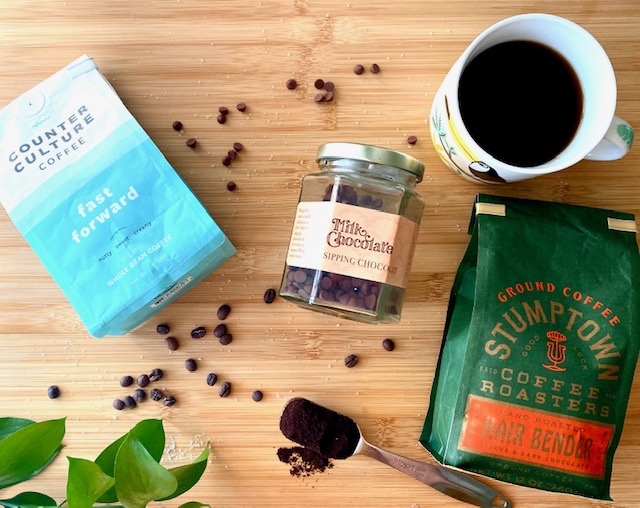
Photo credit Margaret Collins

The problem comes when we fixate on coffee and chocolate more than we fixate on God!  In several places, the Bible clearly states that we need to be careful not to be overly concerned with what we are eating and drinking.  Jesus also warns us in Matthew 24:38 that we will know His return is imminent when people are “eating and drinking” as in the days of Noah.  This “eating and drinking’ is not our need for caloric intake to survive.  Instead, it is referring to the pleasure-seeking mentality of the people in Noah’s day.  Matthew Henry proclaims in his commentary, “they were unreasonable in it, inordinate and entire in the pursuit of the delights of their senses.”  They spent a lot of time fixating on their food and drink, paying close attention to how it affected their senses to the point that they were ignoring the destruction of the world around them!

Jesus would be interested in the amount of money I could spend to maintain my high-end coffee and chocolate habits.  He illustrated truths to his disciples using parables, often related to finances.  He emphasized the importance of being a good steward and making good use of our resources for the kingdom of God.  I need to be responsible with my financial resources, and carefully use them to bless my church, the mission field, and my community.  I do not think the occasional French Broad Chocolate treat is wrong, but it needs to be an occasional budget expense rather than a constant indulgence!

Finally, the scriptures admonish us as to be moderate in how we live our lives.  In 1 Corinthians 6:12, Paul says, “All things are lawful for me but not all things are helpful.  All things are lawful for me, but I will not be enslaved by anything.”  I can enjoy the secondary notes of a good cup of coffee, but if I get to a point where I cannot enjoy an ordinary cup of coffee at a friend’s house, I have become enslaved by my coffee habit.  I need to fight against my propensity to be pretentious, and instead, remain humble in all areas of my life.

I decided to put my second coffee pot away.  (Why I have a second coffee pot is another story!)  Some days we indulge in great coffee, but most days, I have an ordinary cup of coffee.  I still eat Dove Promises, but occasionally splurge on a good truffle.  I am choosing to live by the words of Epicurus, a Greek philosopher, who said, “Be moderate in order to taste the joys of life in abundance.”

Kitchen Corners and Unlabeled Spices

“Be anxious for nothing, but in everything by prayer and supplication, with thanksgiving, let your requests be made known to God.” Philippians 4:6

I have a secret that I am going to share.  Until my kitchen flooring was recently replaced, once a week, I would get down on my hands and knees with a bucket of hot, soapy water and scrub my dingy, twenty-year-old linoleum.  Three buckets later, my floor would be clean, except one corner.  Out of steam, I would grab my mop and quickly finish that corner, recognizing the job was not perfect.  The following week, I would start cleaning my floor in that corner, alternating the unfinished corner on a regular basis.  Some would say this was lazy, while others might just laugh at my honesty.  I share this story to make a point: my corner is a reminder that it’s okay to be imperfect!

To be fair, I am not a perfectionist by nature.  It doesn’t bother me if my lines are crooked, my stamp is off center, or my pillows are not fluffed.  Still, I have struggled with wanting to have a spotless house, a comprehensive home education schedule, and well-balanced meal plans!  In essence, I have struggled with trying to be super at everything I do.  This need to feel accomplished has put undue pressure on me, my family, and those I lead!

I understand we should always do our best.  I am not advocating letting your house go completely to the dark side, or to eat Chick-Fil-A at every meal!  I think we can find a balance between being a super woman and just letting it all go.  I have found balance in my life by three simple principles: recognize your season of life, prioritize what is important, and let go of unrealistic expectations.  Kendra Adachi, author of The Lazy Genius Way, says it best, “Be a genius about the things that matter, and lazy about the things that don’t.”

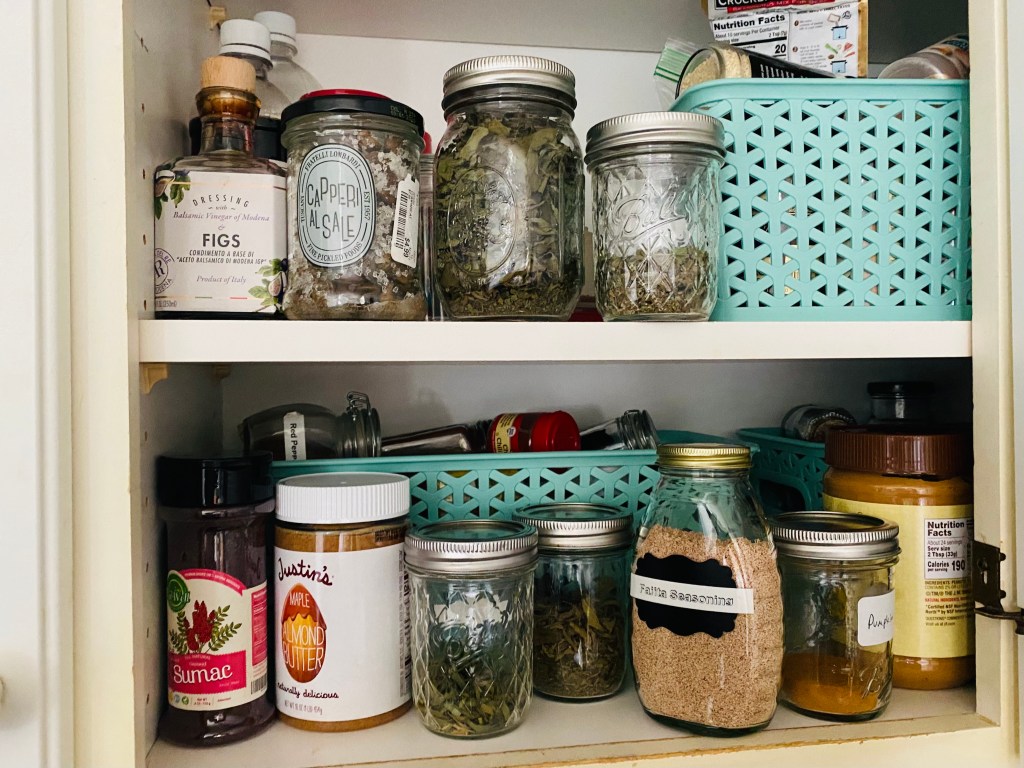
Yes, this is a real picture of my spice cabinet.

God gave us the seasons to help illustrate some principles in our lives.  Birds don’t build nests at the end of fall, and squirrels don’t gather nuts in the middle of summer.  In the natural world, each season has its blessings and disappointments.  I love summer, but with warm evening walks also come the not-so-occasional mosquito.  We need to apply these seasonal principles to our lives as well.  When I was in the season of raising toddlers, I cooked simple dishes with ample leftovers.  This way, during their nap time, I was not spending all my “free” time prepping for dinner.  Instead, I used that time to read an occasional book or close my eyes for a much-needed nap.

In some seasons, you need to show yourself grace.  I loved planning theme-based birthday parties for my children from “Knights of the Round Table” to “Candy Land”.  One year, I was struggling with a major RA flare with no energy to put together my son’s 8th birthday party.  This was a season where grace was needed to accept that it was necessary to simplify his birthday plans.  We opted for a roller-skating rink party with a store brought cake.  My son had a great time celebrating with his friends, not missing the elaborate themed party.

Even within seasons, you need to learn to prioritize what is important.  Right now, God is leading me to finish my book.  Therefore, my husband has taken over some of the household responsibilities, including making some meals.  I have also decided that having elaborate meals on a regular basis is not going to happen.  Instead, I plan easier menus because I care more about finishing my book than about making Harissa Chicken!

I think it is important to regularly examine my priorities because they can change, over time.  Last summer, we knew that we wanted to do more hiking and traveling.  As much as we loved the fresh tomatoes from our small garden, it was no longer a priority in our life.  Instead, we purchased our tomatoes from local farmers, giving us the freedom to hike more often while still being able to enjoy farm-gown tomatoes!

Finally, I have learned to let go of unrealistic expectations, instead choosing to invest in what is important to me.  Both my daughter and daughter-in-law love organizing and finding clever storage solutions.  They even have their own label makers!  On the other hand, I love the “illusion” of organization, but find myself always skipping those aisles at TJ MAXX.  I put things in particular spots but making everything look like Martha Stewart’s pantry is not important to me.  Instead, my spice baskets have different size bottles spilling out the top, sometimes labeled and sometimes not.  If my Pinterest boards are an indication of what I care about, it has never occurred to me to create a board on home organization!  What follows next is that I should not spend lots of time and energy trying to create systems of organization for me.  It is just not that important, so I will continue to play the game of guessing my herbs by their smell, unless I can induce my family to make labels for me!

I know I am not alone in the pressure of being a super-accomplished woman.  In the past few weeks, I have had three different conversations with women expressing angst by saying, “I should be doing ______” but finding it difficult to fit that desire into their already busy lives.  Instead of trying to squeeze more into our lives, we would be better served by asking ourselves, what season am I in, what are my priorities right now, and what do I really need to let go?  Answering these questions will give us more clarity in what we should be doing, and what we should not be doing!  Maybe that means tonight is Chick-Fil-A night, or maybe it means you perfect your lasagna-making skills.  And maybe you just get off your hands and knees and simply mop your kitchen floor!

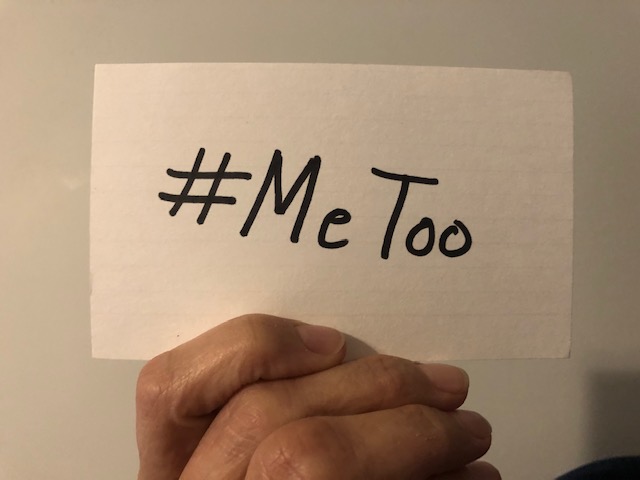
#MeToo

“O Lord, you hear the desire of the afflicted:you will strengthen their heart; you will incline your ear to do justice to the fatherless and the oppressed, so that man who is of the earth may strike terror no more.” Psalm 10:17-18 ESV

In October of 2017, the #MeToo movement was making headlines.  Women everywhere were showing solidarity with one another in response to systemic sexual harassment and abuse throughout society.  This simple hashtag, along with criminal investigations, finally ended the reign of terror of some powerful men across many industries, including Hollywood, the USA Gymnastics organization, news media outlets, and political circles.  Decades of sexual abuse and harassment implicated men like Bill Cosby, Matt Lauer, Harvey Weinstein, and Bill O’Reilly.  These men have been accused, and in some cases convicted, of assault, abuse, and harassment of countless women.  Yet, they were able to silence victims because of their positions of power and influence.

I read Rachel Denhollander’s harrowing account of sexual assault by convicted offender Larry Nasser in her book What is a Girl Worth?  It chronicles her desire to be a gymnast and how an injury provided the opportunity for Nasser, an Olympic doctor, to assault her right in his office.  This assault continued for a few visits, until Rachel ended the supposed “treatment”.  Shamed and humiliated, like most victims, Rachel kept her story silent for years.  Over a decade later, Rachel finally found the strength to confront him, paving the way for other victims to come forth, and eventually bring him to trial.  At his sentencing hearing, more than 160 victims read impact statements to the judge.

In addition to these organizations and industries, sexual abuse and harassment have impacted the Christian community as well.  Within the past two years, headlines have reported major mega church leaders forced to resign, not only for infidelity, but also for sexual abuse and harassment.  The latest headline implicates Ravi Zacharias, one of the most well-respected apologists of the 21st century, with years of sexual misconduct.  Just this past summer the Christian community mourned his death with tributes made by the likes of Vice President Michael Pence and Dr. James Dobson.  Yet, within a few months, his organization appointed an independent investigation into allegations by several women.  Last month, the results of the investigation lent credence to the accounts of many women claiming sexual abuse by Ravi Zacharias.  This man’s double life shocked the Christian world!

The part of all these stories that strikes me is how the perpetrators were able to silence their victims through their powerful positions.  Even though in most cases there were whisperings of questionable activity surrounding the perpetrator, through slander and fear, they were able to shut down any opposition that arose.  In the case of Ravi Zacharias, he destroyed one woman’s reputation and settled out of court with an iron clad non-disclosure agreement to keep her case sealed.  I can only speculate as to why she signed the agreement, but my best guess is that it was her only avenue of some sort of justice.

I find these situations troubling and have been wrestling with how to respond.  It is easy to look at things and come to obvious conclusions such as “there should be more oversight”, or to shrug your shoulders in disbelief at how this could have happened.  But in the case of Zacharias, who always had a personal assistant in attendance, oversight is just not the answer.  Obviously, complete disbelief and moving on as if there is nothing we can personally do is also not the answer.

I want to share a few thoughts as I continue to process my opinions on these cases.  First, I think it is important that I share my own story of abuse.  By no means do I think this is the case for every woman, or man, who has been raped, assaulted, abused, or harassed, but I have reached a place in my healing journey where I feel safe and confident in my ability to be vulnerable in front of others.  I think sharing my story, although it is different from others, helps remove some of the shame and isolation that other victims feel.

Second, I need to help create communities that are open and willing to address hard issues.  In a lot of these cases, there were people inside the organizations that questioned some of the activities going on but were later shut out for voicing their concerns.  This attitude always indicates an unhealthy organization.  For an organization to be healthy, the environment needs be open, with all leaders and members humble enough to hear criticism and concerns.  This means I need to posture myself with humility.

Third, I need to have compassion for all victims involved, including the perpetrator’s family.  One of my favorite authors recently wrote a response about the allegations against her father, the senior pastor of a mega church.  She apologized for not responding earlier, but also indicated that she was experiencing her own trauma in trying to process the disconnect between the father she knew and the man that abused other women.  My heart went out to her, and I realized at that moment that all these men had families who have also experienced this same trauma.  I do not think I have ever actively chosen to have compassion for these families.

Finally, I recognize that in our judicial system, all people are innocent until proven guilty.  I am in no way advocating that we change that fundamental principle.  At the same time, we must be careful not to dismiss these claims with the narrative that “some women bring false accusations”.  This attitude hinders victims from feeling safe and validated.  There is a balance and we just need to work on finding it.

I know that this is not typical theme for my blog.  Although I have purposed not to be another voice spouting out views on hot trendy issues, I believe this response fits into my blog’s mission.  It is important that I grow in aligning myself with God’s way of thinking!  Often in scripture, God expresses the importance of taking care of those who are oppressed.  The systemic abuse in some Christian circles is a form of oppression that should not only concern me but spur me to action!

Community and Dew of Mount Herman

“Behold how good and pleasant it is when brothers dwell in unity! It is like the dew of Hermon, which falls on the the mountains of Zion For there the Lord has commanded the blessing, life forevermore.” Psalms 133: 1,3

Nine months before Covid-19 hit, my daughter advised me to consider ordering my groceries online.  Her reasons were valid: it would free up my Saturdays and, at the time, our local grocery store was offering some financial incentives.  After picking up my first order, I was hooked, loving the convenience of it.  Later, a well-meaning relative remarked, “What does it mean when people can’t even take the time to shop for their own groceries?”  I sheepishly acknowledged that I ordered groceries and tried to explain my reasoning, but to no avail.

My relative’s slightly judgmental remarks were no different than what I have done on a larger scale.  As a single woman, I judged others on how they were wasting their time on frivolous activities.  As a newlywed, I felt superior to other wives when they criticized their husbands.  As a new mother, I looked down on how others parented.  As a homeschooling mom, I judged others by how they educated their child.  And as a Christian, I evaluated others on their Christian journey.  I judged in a way that, from the outside, it might have remained undetected, but inside, it was an ugly, snarly attitude that crept out with phrases like “I would never”, “if only they would get some perspective”, or “they will regret their choices.”  I justified my attitude because I had put principles above compassion.  This attitude continued for years, until God revealed to me my sinfulness, and allowed situations to humble me, bringing me to repentance.

Besides being the judge, I, too, have been judged unfairly.  I was judged as being a lazy, undisciplined person because of my obesity.  As I lost weight, I was judged as being vain and self-involved.  My motives have been questioned by other women, and my visible failures defined my value in some settings.  These “judgmental” attitudes stole my joy, pushed my fear buttons, and hindered me from being the woman God intended me to be!

Mount Herman in Israel

When I pondered what issues to write for Women’s History Month, hot button topics like self-image and gender discrimination came to mind.  Despite the importance of these issues and the need for discussion, I kept going back to the issue of community and what prevents it.  One of the conclusions I have drawn is that judgmental attitudes, whether we are the givers or receivers, hinders community.  In addition, these judgmental attitudes are a prevailing problem among women.  We judge other women and ourselves by impossible standards.  These judgements can be cloaked in subtle phrases like the ones I used, posts on social media outlets, or, worse yet, how we include or exclude others from our lives.  It strikes every place and platform where women exist, including ministry, motherhood, and marriage.  It affects women of every social status, from royalty to the single mother.  It tears down, destroys, and prevents us from being the women God has called us to be.  Finally, it prevents us from being effective together as the body of Christ.

Throughout the Bible we see the festivals and celebrations that God set in place for Israel, the early church breaking bread from house to house, and Paul’s reminders that we are the body of Christ.  By this, it is evident that God created us to live in community.  At the same time, God also recognizes that we are flawed humans and often act in ways that hinder community.  This, too, is evident in scriptures with the reminders to be unified, not to judge, and the proper way to handle conflicts with others.

Recently, a side effect of my Rheumatoid Arthritis (RA) disease, called a Baker’s cyst, has recurred.  This cyst is a pocket of inflammation that develops behind my knee.  It makes sitting with my legs elevated on an ottoman challenging and sleeping difficult.  Overall, it is generally painful with the occasional sharp pain shooting up my thigh.  Like all problems in our physical bodies, I must treat this condition tenderly.  It would never occur to me to stab a knife into the pocket of inflammation to relieve the pain.  I have no intention of cutting my leg off above my knee to sleep better.  Only in life-threatening situations do we remove limbs or organs.  My Baker’s cyst, although it is uncomfortable, does not require a drastic measure.  Instead, it requires some care, rest, and diligence in managing the pain.

Humanity lives in the diseased state of sin.  This disease is symptomatic in our lives. Even Christians, including myself, sometimes treat others unkindly, react in anger, or make poor choices that lead to additional problems.  In response to this sin state, I must choose to treat others with as much gentleness and kindness as I do my Baker’s cyst.  Paul, in Ephesians 4:1-3, urges believers “to walk worthy of the call…with all humility and gentleness, with patience, bearing with one another in love, eager to maintain the unity of the Spirit in the bond of peace.”  I am called to love others, especially when they are struggling, and to help bear their burdens.  This means that I should not judge their motives or attitudes, but instead love them with patience and understanding.  Paul emphasizes the importance of this by telling us to be “eager”, or in some translations, to be “diligent” in maintaining unity.  By loving other women well and not judging them, I can demonstrate God’s grace, mercy, and kindness.

On the flip side, when I judge others based on their diseased state, I can convey a message to that member of the body of Christ that they are not valuable.  This can result in “spiritual amputation”, potentially separating that person from Christ.  Furthermore, the Bible is clear that I will be judged by God with the same standard of judgment I have used for others.  Conversely, if I want to be shown mercy, I need to demonstrate mercy towards others.

As a woman, I blossom and grow best when I am surrounded by other women who encourage me.  When I feel judged or belittled, I struggle to find my identity in Christ.  If I want that kind of environment for myself, I need to do my best to create that environment for other women as well.  I love how David says it in Psalm 133:1, “How good and pleasant is it when “sisters” dwell in unity.”  In the same Psalm, he later relates this to the dew on Mount Hermon.  This snow-capped mountain provided much needed run-off for the Jordan River.  This made the land especially fertile and full of potential!  By choosing to encourage and uplift other women without judgment, I am choosing to create a fertile land where other women can grow and reach their potential in Christ!

Celebrating She-roes in My Life

“So even to old age and gray hairs, O God, do not forsake me, until I proclaim your might to another generation, your power to all those to come.” Psalms 71:18

It’s March and I am so excited for many reasons!  For starters, this month begins to thaw not only the frozen ground, but my soul from the dark heaviness of winter.  It is the month when Peeps appear, I surprise my husband with Shamrock Shakes, birds start chirping spring music, and I lighten up my wardrobe with bright colors and thinner fabrics.  This year, my excitement is even more elevated because, through my “Graceful Transitions” blog and social media pages, I am going to celebrate Women’s History month with you!  I will share with you about some women who have influenced my life.  Each Saturday of the month, I am going to feature some of my favorite women-owned small businesses.  Finally, all my writings will either feature women, or talk about issues that directly impact women.  As always, my goal behind the blog is to be authentic and point others towards God.

For many of us in my age bracket (yes, I am now in the 45-55 age bracket), Women’s History month is a relatively new calendar event, only recognized on a national level since 1995.  I do not recall any high school classes emphasizing women, or the library displaying books featuring women.  I certainly don’t remember Target merchandising Women’s History Month products in March!  Yet, my experience with Women’s History Month predates the official national declaration by a few years.  During my sophomore year in college, my hall director raised awareness about women and some of the struggles they had for recognition.  She also created an atmosphere where we could discuss issues facing women in the early 1990’s.  This awareness has carried on throughout my adult life.

Mayo Angelou once said, “How important it is for us to recognize and celebrate our heroes and she-roes”.  In essence, that is the point behind Women’s History Month, to honor those women who have contributed to society, making it a richer place not only future generations of women, but for the whole of humanity.  It is easy to name some of the great women who have influenced history, women like Jane Austen, Susan B. Anthony and Marie Curie.  I could have written tributes to some of these women, but I want to start this month a little closer to home by honoring two women who have impacted my history and are she-roes to me.

My sisters and my Aunt Debbie and I three years ago,

The first woman I want to honor is my Aunt Debbie, my mom’s younger sister.  Being only nine years older than me, Debbie was the “cool aunt” who bought me my first albums, took to me to the movies, and introduced me to Rocky Rocco pizza.  Even as a busy college student, she always made time for me by including me in her everyday life.  Spending the occasional weekend with her in Milwaukee made the idea of being a grown-up so enchanting.  But her impact was far more than just pizza, weekend getaways, and movies, it was also the words she penned on cards to encourage me.  Throughout my teens, Debbie would send me beautiful cards with inspiring messages urging me to reach for my dreams.  She would also point out my talents and congratulate me for my successes.  In addition, she would encourage me to go to college.  These cards were a lifeline for me during the years of my hidden abuse.  Whenever I felt hopeless or depressed, I would pull out my stash of cards and reread the words she had written.  They empowered me to see past my circumstances and envision a future life that could be beautiful.  Thirty-five years later, I still have her cards in my box of treasures.  Today, Debbie still inspires me.  While raising her children, she went back to school to complete her dream of being a teacher.  She now teaches kindergartners, inspiring future generations to dream big.  Her passion for education motivates me, today, to continue to learn.

This is picture of my Aunt Brenda and I at my wedding twenty five years ago, I need to take a trip to Texas and get an updated picture.

The second woman I want to honor is my Aunt Brenda.  Southern and artistic, with a remnant of California hippy, Brenda walks into a room and instantly fills it with breath and vitality.  Her enthusiasm is contagious, her stories inspire, and her energy motivates.  She impacted a generation of young women in my Wisconsin church through her Sunday school classes, sleepovers, and her cat-washing extravaganzas.  Brenda might be the only person alive who could convince a group of young women that it was a privilege to help wash and dry her Himalayan show cats.  She genuinely listened to your problems, encouraged you with scriptures, and pointed you in a positive direction.  Two pieces of her advice stick with me today: “Keep your eyes on God, not on people”, and “If you are feeling stressed, get at least seven hours of sleep and then reassess your situation”.  Brenda had the ability to speak truth into my life, inspiring me to want to be more like Christ.  In addition, my love for pops of color were influenced by her artistic flair for design.

Both women invested in my history, helping me to become the woman I am today.  They chose to be an active part of my life by pouring their time and words into a broken young woman.  This came at a cost for them, and I am not talking about the price of a stamp in 1987.  They had to set aside their own lives to make room for me.  I am sure Debbie could have found other things to do on a Saturday night than eat pizza and listen to music with me.  I am sure Brenda could have been working on some of her design projects or artwork rather than carving out time for me to come over on a Sunday afternoon to talk.  Yet, they both set aside their lives to make a place for me.  These precious moments made a huge impact on my life, helping me to overcome obstacles that seemed insurmountable.  And by their very lives, these women taught me to be compassionate and caring.  They are my she-roes!

I have thanked them both many times throughout my life, and, in essence, this is another way to express my gratitude.  Years ago, I realized that the best way to thank them is to pay it forward.  I have looked, and will continue to look, for other young woman in my life and actively make a choice to encourage and uplift them.  I, too, will make a choice to invest in their lives.  Just maybe, in some small way, I can impact others the way I have been impacted.

I would love to hear about your she-roes.  Subscribe to my blog and leave a comment about who that inspiring woman is in your life!

Once a Homeschooler, Always a Homeschooler

“An intelligent heart acquires knowledge, and the ear of the wise seeks knowledge.” Proverbs 18:15

There are a few subjects that spark passion in me, often resulting in talking excessively and saying my signature phrase, “I am so excited about (insert subject)”.  These subjects include God, books, history, and homeschooling.  I was recently introducing myself to our new pastors and realized I was still defining myself as a Home Educator, although I relinquished that role four years ago.  My daughter chimed in saying, “Once a homeschooler always a homeschooler”.  I realized at that moment how passionate I still am about homeschooling and how it has defined my life.  I thought I would share with you some lessons I have learned from homeschooling that have shaped me as a person.

First, be careful about labeling something weird and strange because you never know how God may challenge your perspective.  I had never heard of homeschooling until I met a wonderful family in Aurora, Illinois who had made that the educational choice for their children.  Although their children were polite, social, and intelligent, I still told a friend, “I will never homeschool.”  Typically, like all naysayers, I was concerned about the quality of their education and socialization, even though the evidence right in front of me contradicted the stereotypes.  Yet, God was already doing a work on my life, changing my priorities and life ambitions.  Over the course of time, He also changed my mind about homeschooling.  Eight years later, my husband and I made the decision to home educate our son and daughter.  My “never” became one of the best things I ever changed my mind about!

Second, home educating is less about imparting your knowledge to your children.  Instead, it is the rediscovering of the joy of learning.  I geeked out about subjects I had never shown any interest in before, including the unique traits of a platypus, learning how Native Americans hunted buffalo and the history of architecture.  I discovered the basics of drawing, uncovering a small artistic ability that had lain dormant.  I shared my passion for history and literature with my children, reading new favorites. This joy of learning continues even now, making my life richer every day.

Third, children’s books are the best!  They gently impart truths about life that can impact you even as an adult.  Charlotte’s Web gives you hope as an underdog and teaches you the value of friendship.  Olivia teaches you to be confident in everything you do, even how you accessorize your outfit.  My Side of the Mountain shows you the importance of solitude and learning to live off the land.  The Little House demonstrates that value of contentment.  Miss Rhumpius reminds you to make the world a little more beautiful by giving something back to it.  Even though my children are grown, I still look for opportunities to read children’s books to little ones.

Fourth, I also have learned about the different philosophies on how to educate children.  One of my heroes in the home education community is Charlotte Mason.  Miss Mason was not a home educator herself, but an English educator and reformer in England at the turn of the twentieth century.  She treated children as whole people and believed in creating an environment that promoted learning by surrounding children with materials to explore.  She also believed in the importance of cultivating good habits.  She emphasized that science and history should not be just a list of facts and dates, but that the knowledge should be acquired by reading whole books, including biographies about famous scientists and leaders.  Rather than dry textbooks, these should be “living books” that inspire children through the gift of story.  She was the impetus behind my five-year project of learning about American history by reading a great biography of each president.  She also believed that children should explore nature around them through observation and interaction.  As I taught my children to observe nature, I too, slowed down and found delight in the intricate designs of moss, melodious bird calls, and the painted sky during sunsets.

Fifth, I have also learned you do not always need to defend yourself but let the fruits of your life speak on your behalf.  Rarely is homeschooling a neutral subject in people’s lives.  Instead, it often evokes opinions on both sides of the fence.  Often, people would share with me the horror stories about their relatives who home educated, pointing out how deficient their kids were in spelling or how much they lacked social skills.  In the beginning, I would defend my choice and point out the statistics that proved that homeschoolers were successful both academically and socially.  As the years went by, I realized that I did not need to educate everyone on the virtues of homeschooling.  Instead, I listened to their critiques and concerns, and made the conscious decision not to try and change their minds.

This brings me to the final lesson I learned through homeschooling.  Even though homeschooling produced good fruits in my children’s lives, it did not lead to salvation for my children.  Jesus was the only way of salvation for my children, through a regular relationship that restores and refines them.   Homeschooling is a tool that Terry and I used to help bring about relationship, but it’s only a tool.  At one point, I made it an idol in my life.  I tried to appear humble when others talked about my children, but in my heart, I was prideful about all the time and energy I had put into our education.  God has a way of pointing out the idols in your heart and humbling you to the point that you realize any good in your life is due to Jesus.  I am so thankful the idol of home education was removed.

I am still passionate about home education.  I love to share my journey with people and point them to resources to get them started on their own journey.  I am thankful that both my children intend to home educate their children, and hopefully they will invite Mimi to attend the conferences with them.  I also realize that this is personal decision that every family needs to make for themselves.  But for me, I am so thankful that God used home education as not only a tool in my children’s lives, but also a tool to refine me and bring me into a deeper relationship with Him. So my daughter was right, “Once a homeschooler, always a homeschooler.”

Supporting Front Line Workers

“Bear one another’s burdens, and so fulfill the law of Christ.” Galatians 6:2

Maggie had an incredible imagination as a child.  She created “Mr. Bear” stories that amused her brother at bedtime.  When she was learning to read, she added adjectives to add color to the simple stories.  Pretending to be a spy, she kept a notebook full of observations of potential criminal activity in our neighborhood, including a sketch of a “suspicious” neighbor.  Her favorite pretend activity always involved serving others, whether it was taking an order on her waitress pad, or pretending to be a children’s librarian, reading a story to all her stuffed animals.  This desire has carried on into her young adulthood, serving whenever there was a need.  With her servant’s heart, we were not surprised when she chose a career in nursing.

After three and a half years of classes, case studies, clinicals, and validations, Maggie has completed nursing school and has been hired as an RN at the local hospital.  Her endless days of studying, viewing Nurse Blake videos, and taking practice NCLEX-style questions are over.  She is now doing what she felt called to do: assess patients and provide care and comfort for them during a medical crisis.  Yet, if you had asked her at the beginning of nursing school what the first day of her career would look like, she would have never anticipated working in the middle of a raging pandemic!

I have a lot of friends who are nurses or who work in some sort of health care capacity.  Although I have heard a few of their stories, I had no idea of the challenges they faced during the pandemic until my daughter returned home after her first shift.  These front-line workers are going beyond the call of duty to take care of patients.  Daily, they are putting themselves and their families at risk, especially if they work on a floor with COVID-19 patients.  In addition, the amount of PPE (personal protective equipment) they must wear adds to the challenges of their job, making it uncomfortable and hot.  Even the simple act of staying hydrated is challenging, when the only safe place for their drinks is in the break room.

Beyond their physical challenges, healthcare workers have had to change they way they do care.  They must assess the urgency of the needs of their patients and prioritize their responses to preserve the limited amount of personal protective equipment.  They also must speak louder through the various masks which, by the very notion of raising your voice, may overshadow the sense of compassion they are trying to convey to their patients.  Due to visitor restrictions, they are having to soothe angry and confused family members over the phone instead of in person.   Finally, they watch patients die surrounded by only two of their loved ones.

I know a lot of this weighs heavily on my daughter, and some would argue, “well she is a new nurse, that is to be expected.”  Yet, surveys and personal interactions with nurses who have been working in the profession for years indicate that they are all feeling the same weight.  They leave work exhausted and, in many cases, have anxiety when they return to work.  One survey indicated that 93% of healthcare workers were stressed, while 86% reported feeling anxiety.  A different survey indicated that 48% have considered either retiring, quitting, or changing careers!

These statistics are alarming and, not only as a concerned mom, but as a Christian, they should challenge me to some sort of action.  It is not enough for me to say, “we are all in this together.”  I do not face the same challenges that they face on a daily basis.  So, I have been thinking about some things I can do.  First, I need to pray for healthcare workers, not just a simple sentence, “God bless all the healthcare workers.”  Instead, I need to bring the names of those individuals that I know personally and pray for their strength and that God protects their physical and mental well being.  I need to pray that they feel a sense of peace, both as they go to work and as they leave work.  I can pray that in the times they find rest, they find it restorative.  Besides prayer, I can also take the time to write cards, send texts and make phone calls, offering them a few words of encouragement.  Finally, another way I can support them will also help support small restaurants in the area that have also suffered from the pandemic as well.  Many restaurants are providing healthy meals for healthcare workers during their shifts.  For a small price, I can purchase a few meals to offset the cost of the meal for the restaurant.  These meals let the healthcare workers know that the community is supporting them, which can help boost their morale when they are feeling stressed.

“We are all in this together” should be more than just a hashtag we add to our Instagram feed.  If I am really a part of the body of Christ, I need to share the burden of those around me who are in the midst of directly battling the pandemic.  This is not just limited to healthcare workers, but includes grocery store employees, package delivers, teachers, ministry staff, and anyone else who has had to change the way they do life.  I may not be on the front lines of this pandemic, but I can offer prayer and kindness for those who are!

If you live in the Chambersburg area, you can buy meals at Falafel Shack for Health Care Workers by clicking on this link, https://falafel-shack.square.site/product/share-pay-it-forward-falafels/431?cs=true&cst=custom. Go ahead and buy yourself some of their hummus as well, you won’t regret it!!!