
Sourdough MESSages
“And do not be conformed to this world, but be ye transformed by the renewing of your mind, that you may prove what is that good and acceptable and perfect will of God.” Romans 12:2
I am done! A few Saturdays ago, I came home to find my sourdough starter exploding all over my counter. It bubbled over, looking like a cave-dwelling ogre hugging the outside of the glass jar. I sighed with disgust as I scrubbed the dried sourdough cement off my counter. Despite its reviews and the Amazon algorithms, the thin, well-shaped glass was not designed for sourdough. At least once a week, my sourdough feasted, causing it to overflow, resulting in a mess for me to clean up. I was tired of trying to fit my dough in a glass that didn’t work. It was time to change jars!
Just like my sourdough fiasco, I have spent a lifetime trying to fit into places that didn’t fit me. I tried to be demure to compensate for when my extroverted nature was seen as offensive. I stifled my opinions and ideas, knowing they wouldn’t be welcomed. I curbed my passions when they would be seen as “too much”. And I ignored the voice of God because I thought others were more in tune than I was. Now, in my early fifties, I declare, “I AM DONE!”
This doesn’t give me a pass to be overbearing or prideful. But it does change the amount of energy and attention I put towards trying to fit in. I need to look for places where I am loved and valued for who I am. I need to trust my gut and my ability to discern the voice of God. But even in this declaration, I know I am battling lifelong patterns of minimizing and judging myself.
I find these same patterns developing in a group of young tween girls that I love, with the age-old messages most women wrestle with; messages like “I am too fat”, “I am not smart enough”, or “I don’t fit in.” Generation after generation, these comments corrode a young girl’s sense of worth like acid. They create well-trod paths in her brain leading to self-doubt and lack of confidence. These paths prevent her from recognizing who she is in God and from moving forward.
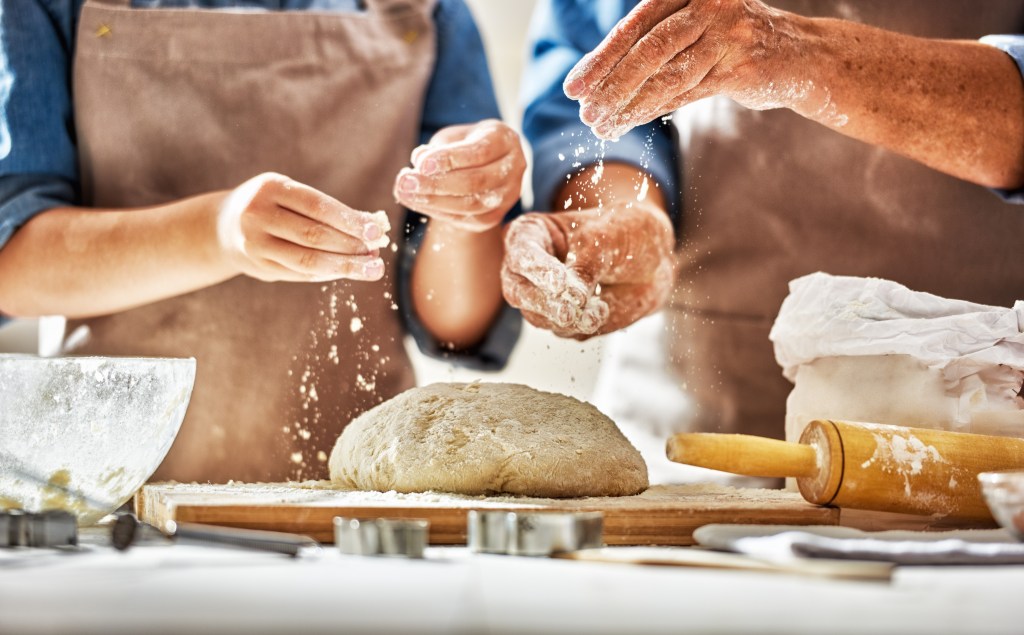
Despite the explosions, when the sourdough is feeding and growing well, I have made some delicious, crusty loaves of bread. I have also made delicious, flaky sourdough piecrust to cover individual turkey pot pies. My grandchildren have indulged in the sourdough discard crackers my daughter-in-love has baked. And, although I haven’t yet tried them, I have pinned recipes for sourdough cookies, cakes, and pancakes. This dough, when in the right jar, has endless possibilities. But that Saturday afternoon, I just saw a mess.
I see the “mess” created by the messages that young girls receive about themselves, along with the messages I have received about myself. And before I choose a different jar, I need to clean up my mess. This starts by examining how I live my life and the messages I believe about myself. What I say can and will influence those younger women in my circle, including my nieces and granddaughters. And even more importantly, I need to evaluate the messages I convey to younger girls and how those messages may reinforce the negative views they have of themselves.
Honestly, I struggle with how much or how little we should comment to a young girl on her appearance. Being the young girl who rarely received comments on how pretty she was, I felt that void in a big way. This slight becomes glaringly obvious when your peers are praised for their beauty, and you are mostly ignored except for the occasional “You have a pretty face.” Comments that would have made me feel beautiful and feminine and would have been a balm for my broken soul were withheld. It took me twenty-five years into my marriage to a committed husband to really believe he found me attractive.
On the flipside, these comments can make a young girl feel like her appearance is the only valuable thing she has to offer. It objectifies her as something to be put on display and viewed. It ignores her talents, strengths, character traits, and intelligence. And when we don’t praise those traits in young women, they will also feel the void.
And this puts us back to where we started. How can I help future generations stop trying to fit into places that don’t fit them? How can they work on changing those destructive messages in their teens and early twenties? And how can we prevent those destructive messages from even being contemplated?
Along with cleaning up my own mess, I need to understand how I define beauty and how my definition contrasts with God’s definition. Do I see beauty as being a certain size, hair style, or type of dress? Do I recognize that God made everyone in His image, and His image is not limited by height, weight, or bone structure? The closer I get to God’s definition, the more inclusive and encouraging I will become.
Next, I don’t think eliminating all affirmations about appearance is the answer. Instead, it’s making the jar large enough to encompass all the beautiful traits that make each woman valuable. This means an honest evaluation of the type of compliments I give. Besides complimenting a young girl on her appearance, am I pointing out times she is kind, courageous, and demonstrating perseverance? When she is sweaty and playing hard, am I cheering her on while she is engaging in habits that promote wellness? Most importantly, when she is modeling Jesus, am I encouraging her with praise? These simple acts of affirmation can help her see that she is beautiful both inwardly and outwardly.
The more I deal with my own mess, align my concept of beauty with God’s, and take an honest evaluation of how I am complimenting young women, the more I believe I can make a dent in this mess that we have created in our society. And I think the more women who join me, the more we can impact future generations with the idea that anything is possible.
It’s Women’s History Month. We should look back and honor the women who have made an impact on our lives historically. But it’s also a time we can pave the way for younger women to make a future impact in our society. So, let’s look at our jars!

 By Sherry Collins