
It’s Play Time
“And the streets of the city shall be of boys and girls playing in its streets.” Zechariah 8:5
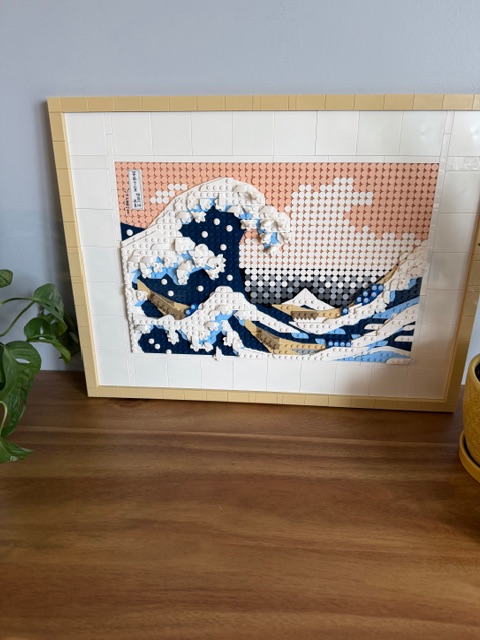
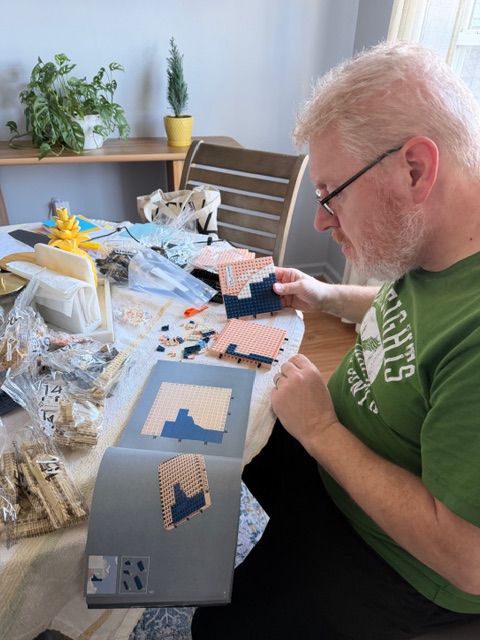
Four weekends ago, my husband played for hours. No, he was not playing the piano. No, he was not playing on his phone. And no, he was not playing with our grandchildren. All these things would have been perfectly acceptable. Instead, he was playing with Legos, a gift he had received for his birthday from our daughter and son-in-law. And for multiple hours across two days, Terry built the art piece The Great Wave by Hokusai.
Too often, as an adult, I viewed playing as strictly for children. I understood the importance of play for children, how it helps them develop their social skills, increases their creative muscles, builds strong neural connections, and helps make sense of the world. I invested in toys that fostered open-ended play and was careful not to overcommit my children to outside events. Simply, I let them play for hours uninterrupted.
As an adult, I forgot how to play, if I ever even knew how. I bought into the idea that as a Christian American, I needed to be constantly productive. I cleaned my house, prepared Sunday School lessons, read books that would help me grow as a Christian, and then started all over the next day. By the time I hit my mid-forties, I was exhausted. I had lost my joy, and I was measuring everyone else on their productivity. I did not know how to live differently.
Meanwhile, my daughter, Maggie, was in nursing school. Throughout the semester, she was extremely focused, studying and watching videos on the subjects she had covered in class. When spring break came along, Maggie decided to put the books down briefly and play. Over the course of two days, she baked and frosted a cake to look like a log with fondant mushrooms. The cake turned out amazing and I asked her why she made it. Her response was simple, “Just for fun!” It allowed her to express her creativity and provided a much-needed break from a semester of intense learning. She did not make the cake for an occasion, but simply for her own pleasure. It was a whimsical art piece in the form of a cake. It was play.
This awakened a desire in me to be more playful. I no longer saw her baking as a waste of ingredients and time. Instead, I saw how it brought joy to Maggie’s life. I started by dabbling with sketching flowers, bees, and artichokes with colored pencils. I cooked elaborate ethnic dishes with new spices, filling my home with exotic scents from around the world. I explored the idea of writing by both blogging and journaling. I was becoming more playful.
Research has indicated that playing as an adult is just as beneficial as it is for a child. Playing releases endorphins, reduces cortisol levels, and fosters relaxation. It improves cognitive flexibility and memory. Many play activities strengthen bonds between family and friends. Just like sleep and good nutrition, play is something we should prioritize in our lives.
Still, I struggled with playing, feeling like I was a bit of an outcast and still too judgmental. I was not a conventionally playful person: I don’t enjoy practical jokes, rarely get punchlines, find the Three Stooges stressful, and still thought video games were a waste of time. I did enjoy whimsy—driving an hour to explore a new indie bookstore or a pastry shop that featured canelé. I could sit for hours listening to people tell their stories. Yet I felt like I was still missing something, lacking the fundamental gene to be truly playful.
The National Institute of Play, a nonprofit organization that “recognizes, supports, and promotes the science of play” helped clarify my internal quandary. On their website, they had a link to a quiz to assess your “play personality.” This is “the style or mode we feel most comfortable being playful.” Just the concept of different play personalities freed me. It allowed me to celebrate who I was without trying to fit into the traditional modes of how others played. It was okay for me to not have a favorite Stooge. It also helped me see how my judgment of different forms of plays was just as harmful as how I viewed myself. People do find video games fun because their play personality is competitive, while others find attending car shows fun because their play personalities are wired to be collectors. Before taking the quiz, I knew instantly that I was not the joker or the kinesthetic play personality. I also knew I was not likely to be the competitor or the collector, but I was not sure if I was the director, explorer, creator/artist, or the storyteller. After answering a few questions, my play style leaned towards a storyteller. That seemed to fit since I readily indulge in books and podcasts.
The greater truth is less about my play personality, but more about the idea that play looks different for everyone. I have friends who love to go into our town’s cat café and pet cats for hours. This is their form of play. For me, cats pouncing on their cat gyms would be stressful and cause an allergic reaction. These same friends may not enjoy listening to our local bookstore owner’s pontifications about the history of our local library. Some people enjoy pranks with big stuffed dogs, others love to play board games, while still others enjoy digging in the dirt, creating flower beds that bloom all season.
I believe play is important to God. He created the world in six days and designed a day for us to rest. He designed lambs to frolic in the fields, otters to splash in rivers, and birds to have elaborate mating dances. Jesus’ first miracle was to turn water into wine, to ensure that the wedding was a success. Play is important, and I will continue to prioritize play in my life. I will no longer judge others by how I play but will celebrate their own version of play. Productivity is important, but productivity without play is living life as an automaton.
 By Sherry Collins