Chirstmas Genes: Intro

“For unto you is born this day in the city of David, a Saviour, which is Christ the Lord.” Luke 2:11

My husband loves investigating his genealogy. After subscribing to Ancestry.com, he learned that his Scottish family arrived in the US in the mid-1700s. Further back, he discovered that his ancestors lived in a castle and he is distantly related to England’s Queen Camilla. Less than two weeks later, he also found that one of his more recent ancestors was convicted of murder.

Learning about your ancestry can help people feel rooted. Reading the names of my own indigenous relatives helped me connect with my biological father’s family in unexpected ways. I even discovered some more siblings. Some people prize these roots so much that infamous people are cut out of their family trees. It is as if their entire existence is erased because their relatives don’t want the family tree marred by a rotten branch.

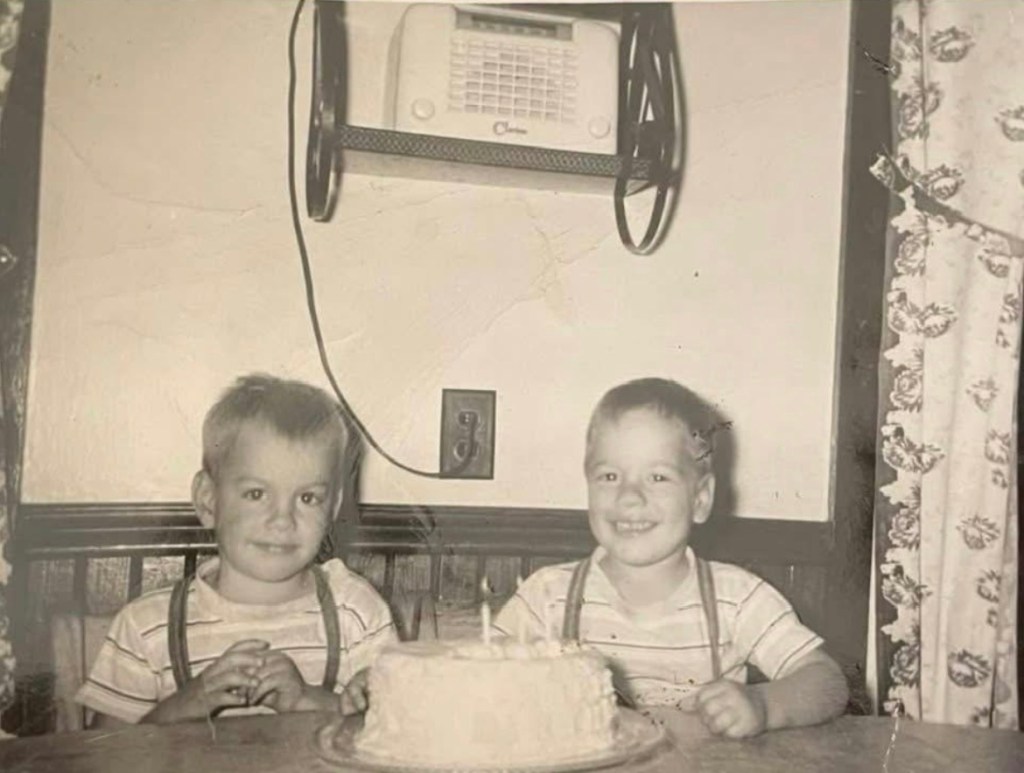
I went to the same high school that my mom and her siblings attended. Because I had my mother’s maiden name, the high school principal, Mr Havey, asked if I was related to Dennis and Dave Walter. My twin uncles were amazing men, but had a reputation for being a bit mischievous in high school. Quite often, Mr Havey would call my grandmother to report on their escapades. I replied yes to his question but quickly reminded him I was also related to Kenny and Debbie Walter, my uncle and aunt, who were much more studious. I wanted him to know who I identified with as a high school student.

For the next few weeks, I will be writing about the genealogy of Jesus. Specifically, I want to examine the four women that Matthew chose to include in his account of Jesus’ birth. First, the fact that he was willing to include women in the genealogy says something significant about Jesus. Matthew was trying to prove the “Jewishness” of Jesus by tracing his lineage back to Abraham. But, inspired by God, Matthew included women in Jesus’ genealogical record, which was controversial in those days. Furthermore, all four women had stories filled with brokenness perpetuated by the misogynistic society in which they lived. Again, inspired by God, Matthew included these women for a reason, and that reason gets at the heart of who Jesus is.

Another woman, Mary, the mother of Jesus, said it best in what is referred to as her “Magnificat.” Mary offers this praise after her cousin Elizabeth confirms that Mary is indeed carrying the Messiah. This praise came when so much was still unknown in her future. Her betrothed, Joseph, had not yet indicated how he was going to manage this scandalous pregnancy. According to Hebrew law, he had the right to publicly shame her by legally divorcing her. Despite her uncertain future, Mary was confident in God, declaring “My soul magnifies the Lord.” She goes on to say, “For he took notice of his lowly servant girl and from now on all generations will call me blessed.” Jesus was lifting women up for future generations.

On the surface, it’s obvious that women were treated unfairly in biblical times. Many Christians have perpetuated that in the modern church. They have minimized women’s roles in ministry, marriage, and life. However, reading deeper, you can see that Jesus was trying to raise up women. Peter declared that salvation was for men and women. Jesus declared he came to set the “captive free.” Women were, and continue to be, captive by limitations contrived by society. Jesus intended salvation to bring women liberty and freedom.

My husband reminded me how significant it was that Matthew added these women in the Bible. Matthew knew firsthand how the prejudices of society could impact a person. As a tax collector on behalf of the hated Roman government, Matthew was an outcast among his own people. It is likely he was called names, shunned, and spat upon. He may not have been welcomed in the temple or allowed to share Shabbat with his family. Jesus saw how loneliness and bitterness had broken Matthew’s spirit. But Jesus also saw beyond what others labeled as an outcast and called Matthew to be his disciple. Over the next few years, Matthew was an eyewitness to how Jesus treated those devalued by society, especially women, several of whom were named as followers of Jesus.

Join me and hear the stories of Tamar, Rahab, Ruth and Bethsheba. Note: I want to give credit to Raymond Woodward for inspiring this piece with his message “Broken Christmas.” You can find his message on YouTube. I disagreed with his interpretation of Bethsheba. Read my upcoming piece on her to see my interpretation

This is a picture of my uncles, Dennis and David, who have since passed away.

Formations 18: God’s Word

“Your word is a lamp to guide my feet and a light for my path.” Psalms 110:105

God’s Word

Nourishes me,

Encourages me,

Inspires me,

Reminds me, and then,

Convicts me.

God’s Word

Informs me,

Persuades me,

Awakens me,

To whom God is

And who I am not.

God’s Word

Has been misaligned,

Has been weaponized,

Has been misinterpreted,

Has been misused,

And this is so unfortunate.

God’s Word

I need to study,

I need to mediate,

I need to pray.

And when I repeat,

It will be alive in me.

Formations 16: Adulting

“O people, the Lord has told you what is good, and this is what he requires of you:to do what is right, to love mercy, and to walk humbly with your God.” Micah 6:8

I love all the seasons of adult life.

In the spring of adulthood, I embraced collegiate life like a sponge. I adopted new ideas and became more passionate about others. I saw every opportunity as something to try and find out what I liked and what I didn’t. Although I poured myself into my studies, I poured myself into my friendships even more. Life seemed full of possibilities, and I wistfully dreamed of the future. It was the season when I fell in love with the person who would become my husband, with a DQ Mr. Misty by my side. And God’s goodness was chasing after me.

In the summer of adulthood, I was more confident in who I was. I embraced motherhood, creating opportunities for them to learn, explore, and thrive. I created traditions and celebrated life in a big way. I poured myself into ministry, both as a mother and as a faithful member of the body of Christ. In this season, I made the decision to home educate. I did childcare on the side. I loved my life and strived to do everything well fueled by Diet Pepsi. And God’s goodness was chasing after me.

It is the autumn of my adulthood, and I am still loving my life. I am an empty nester enjoying the quietness of our home. We still have plenty of family moments filled with lots of hugs and kisses from grandchildren. But now, we have time to focus on each other. I have cast my net wider than the four walls of my church, as far as ministry, trying to care for those who are marginalized in my community. I published a book and hope to write another one next year. I am energized by my relationship with God and the more than occasional cup of coffee. And God’s goodness is chasing after me.

The winter of adulthood has not arrived. I hope it will be filled with family, friends, and serving my community. I pray that I grow less attached to things and more attached to God. I believe I will continue to write, learn, and explore. And some day, when I am at the end, I will drink and feast at the table of my king. Because God’s goodness chased after me.

Formations 3: My Greatest Love Story

“Oh Lord, you are so good, so ready to forgive, so full of unfailing love for all who ask for your help.” Psalms 86:5 NLT

It started almost 36 years ago, tear-stained cheeks, bowed at an altar asking a simple question: “God, are you real? If you are, please fill me with your spirit?” Seconds later, I felt this warm blanket of peace cover me and joy bubbling up from deep within my soul. At that moment, I knew there was a God who loved and cared for me. At that moment, He became my Savior. At that moment, I still had a lot to learn about this God.

I am still discovering His goodness, His love for me, the depth of His sacrifice, and His plans for my life. I love my husband, my children, and my grandchildren. I love my extended family and friends. But the greatest love story in my life is still unfolding, it is my relationship with Jesus Christ.

Like all love stories, it has its hills and valleys. Those are not based on His love for me, but rather my distorted view of Him. I sometimes wander away from Him, pridefully believing I can figure it out on my own. Time after time, His gentleness leads me back to repentance. Other times, I try to worship or connect with Him, but I allow distractions to turn my gaze to other things. Again, His Word redirects me so I can connect. He is forever faithful, knows my deepest secrets, my most unkind thoughts, and yet, still loves me.

I am forever grateful for that altar 36 years ago. It has slowly turned me from being a broken teenager scarred by sexual abuse into a woman who knows God heals and lovingly restores. And as this love story continues, I know someday I will be reunited with Him, surrounded by His glory.

Musing 3: Longwood Eulogy

“Precious in the sight of the Lord is the death of His saints” Psalm 116:15

Recently, we spent an evening at Longwood Gardens in eastern PA. We meandered through the gift store, finding treasures to share with loved ones. We took a small walk through the garden, seeing golden, purple, and burgundy flowers make their final encore before the frost curtain falls. We marveled at the Ginkgo trees, hearing squirrels scattering in the branches. We ended the evening waiting for the illuminated fountain show, which highlighted Bollywood music. Enchanted by the crisp air, I offered to get Terry a hot drink at the food stand above where we were sitting. I climbed the steps and found my way to the hut selling hot spiced apple cider. After the woman handed me my drinks, I started the descent down, but an image of hot drinks sloshing over the lids, or worse, one tumbling down the stairs, stopped me. I could not hold both drinks at the same time while going down the stone stairs. So, I called Terry, and he met me, as he always does, to help me.

I have written four eulogies for people I loved, three of which I personally gave at their funerals. Eulogy writing is hard; how do you sum up someone you loved in a few paragraphs amid your own personal grief? How do you share other people’s perspectives, trying to make the person you care about sound well-rounded? In the case of my uncle, how do you write about him as a husband, father, uncle, and mentor? And the thing I have wrestled with most is how do I stay honest in my portrayal? All too often, I have heard people eulogized, making them akin to Queen Elizabeth, Mother Theresa, or even Jesus himself. In no way do I think a funeral is the place to air your grievances, but it is important to be honest. Even the greatest humanitarian has faults. No one on this side of Heaven is perfect, except Jesus himself. So, I found myself putting fingers on the keyboard, painting with words a praiseworthy portrayal of the person, yet staying true to their humanity.

About two months ago, Dr. James Dobson died. For those of you outside the evangelical world, Dr. Dobson was a major influencer with his daily radio program and nonprofit, Focus on the Family. As a clinical psychologist, he doled out parenting and marriage advice through a Christian lens. He later became more politically active by addressing issues concerning abortion, immigration, and euthanasia. As a new mother, his voice was ever-present in my home, and his books filled my shelves, including Dare to Discipline and The Strong-Willed Child. I loved the world his nonprofit created with the children’s radio drama Adventures in Odyssey. My son’s middle name is Whitaker, and I secretly wished he was named after Whit, the wise older man who owned an ice cream shop in the imaginary town of Odyssey. I even called Focus on the Family’s hotline once to seek some parenting advice during a difficult toddler moment. I was an ardent follower.

Sometime after my children reached high school, I stopped listening to Dr. Dobson. It wasn’t for any specific reason, but likely because I had gotten bored. I had spent the last eighteen years or so listening to the same ideas from different voices through his various interviews. Dr. Dobson had also stepped down from Focus on the Family and later formed a new show under a different nonprofit, where he could make a stronger impact on politics. I only tuned in when my son became engaged and streamed a few shows on how to be a good mother-in-law. I was in a new season of my life, listening to new voices.

In 2016, when Donald Trump arrived on the scene, I was surprised to hear that Dr. Dobson endorsed him. This was the same man who stood firm during the Clinton years, speaking that morality mattered in political office. I tried to justify his endorsement because Mike Pence, his running mate, seemed to have a moral backbone. But as time went on, I heard more about Dr. Dobson’s stance, and I became a little disillusioned with one of my Christian mentors. He seemed to shift, espousing the idea that morality was less important in electing people for political office.

I also started hearing some criticism from some adults who had been raised by Dobson’s followers. They felt his stance on discipline opened the door to child abuse. I reflected on what I had heard and was shocked that some parents had drawn these conclusions based on his talk show and books. Yes, he advocated for discipline and structure, but he insisted discipline had to be shrouded with love. But, upon reflection, I also understood how some people can draw those conclusions based on Dobson’s teachings.

How do I hold the Dr. Dobson who helped shape my parenting in a healthy way, when that same Dr. Dobson’s methods were seen as creating controlling environments and potentially leading to child abuse? How do I hold the Dr. Dobson who helped me see that integrity was an important trait to develop in my life, when that same Dr. Dobson called President Trump a gentleman despite Trump’s crassness on the Hollywood Access tapes? The only way I can hold that is by realizing that, just like me, Dr. Dobson is a Christian who is not perfect. As a formerly ardent follower, I also needed to be careful not to make my mentor an icon.

About six months ago, a question was asked by my pastor: as a Christian, who do you admire or want to be like? One person admired an influential prayer warrior, another said their mom, but one precious tween said “Sherry, because she is always cheerful and encouraging.” I was humbled and surprised by her love for me, but I also felt the weight of that responsibility. I am human and far from perfect. In conversations with her since then, I constantly remind her that I have faults. I don’t want to be the disgraced hero in her eyes. But maybe I need to let her draw her own conclusions at the end of my life. I pray that she doesn’t see me as a perfect Sherry, but a Sherry who knew that Jesus loved her and let His love flow through her to others.

I found holding two hot drinks and going downstairs outside at dusk challenging. But what is even more challenging is knowing that someday my husband, friend, sibling, child or grandchild will have to write my eulogy. I know I have made mistakes in all those relationships, and I will continue to do so while still breathing. I just pray that as I get to know Jesus more, they will see a woman who owned her mistakes and kept growing closer to Jesus.

Musing: Part 1

“Sanctify them by Your truth. Your word is truth.” John 17:17 NKJV

“What if I stumble, what if I fall? What if lose my step and make fools of us all?”1 This lyric from Christian group, DC Talk, has been flashing through my mind since the Michael Tait scandal hit the news. It raises a lot of questions for me about mercy, grace, confession, and forgiveness. How do I handle moral failings of other Christians? Is there a difference between moral failings and predatory behavior? What is truth and can it still come from flawed people? And why do his lyrics keep on repeating in my brain?

To understand my obsession, I need to travel back to 1995, when Terry and I met. While dating, we shared Mr. Misty strawberry kiwi slushes at DQ and explored antiques stores. We also exposed each other to new experiences. I brought whimsy, color, and adventure. Terry brought Star Trek, Clark Gable and Jimmy Stewart, and introduced me to all different musical artists including DC Talk. This trio with a backup band, had just released their groundbreaking album, Jesus Freak, to the world. Well, maybe just the Contemporary Christian Music world. DC Talk started off as a rap group, and by adding grunge elements to their music, this album went to a new level. The album was a hit, with its self-title release and Between You and Me, debuting on Billboard at number 16. DC Talk released a follow up album afterwards and soon broke up to explore individual projects. Kevin McKeehan became TobyMac, continuing in the rap/hip-hop tradition, and Michael Tait started his own band Tait.

Tait’s second album, Lose This Life, soon became one of our all-time favorites. These lyrics became the soundtrack of our lives, repeating the CD on road trips. The lyrics were deep and thought provoking, looking at the hard realities of life while still pursuing God. Lyrics from Fallen challenged me amid feeling hopeless, to be “hopelessly drawn”2 to God.  Michael Tait went on to become the new lead singer of Newsboys, another popular group. With this new step, he became one of the most influential artists in the Christian music industry.

“So, let our faith be more than anthems, greater than the songs we sing, and in our weakness and temptations, we believe, we believe.”3 A few months ago, Michael Tait abruptly left the Newsboys after 15 years. Rumors followed and a legitimate news story in the Roys Report broke about what has been called “the worst kept Nashville secret.”  Three different men with credible stories, corroborated by others, had been sexually assaulted by Tait, some given drugs or coerced into taking drugs. A few days later, Tait came out with one of the sincerest apologies given by any disgraced Christian leader, pastor, artists, or influencer, thus far. But even his apology held some ambiguity due to legal reasons. He acknowledged his sin and recognized he needed to do some healing and work on his issues out of the spotlight and off the stage. Yet, the stories kept coming, including one of a young woman who was raped by a stagehand while Tait watched.

I have sat with this for a few weeks, reeling with disappointment and struggling with how to handle my love for Tait’s music. Do I stop listening to everything he made to support victims in their trauma and healing? If I take this step, where does it end? Do I stop watching every movie, including Lord of the Rings: Fellowship of the Ring, produced by Havery Weinstein because he was a sexual predator?  How does this carry over to books I read or songs I worship through when written by questionable characters?

I also struggle with the language some have used when describing this as a moral failure. A moral failure is struggling with addiction or having a consensual affair while married to someone else. What Michael Tait is alleged to have done and admitted to on some level, was prey upon young men in a consistent pattern of behavior with unwanted sexual advances, in essence, sexual assault! What happened to the young woman was criminal behavior, making Tait an accomplice to a crime! Also, this is an abuse of power under the guise of Christianity by someone powerful in an industry where younger people are trying to enter in and make their own mark.

This leads to more questions about the artist itself. Can art still be beautiful and good despite the artist’s lifestyle and choices?  A mantra in our home is that truth is truth regardless of the source. This means despite the moral character or criminal background of a person, if they create something that is beautiful and true, it is reflecting God’s image in them. But does that mean that I financially support someone who can still profit from their work while engaged in criminal and predatory behavior?

I want to be in the Light, as You are in the light, I wanna shine like the stars in the heavens. Oh, Lord be my light, and be my salvation, Cause all I want is to be in the Light.”4 I must believe that during the beginning of his performances, Michael Tait sincerely believed his own lyrics as he was singing. Why enter the Christian music industry with all its high expectations when entering the secular music industry might be easier with fewer moral guidelines? Maybe he was sincere 34 years ago when DC Talk was performing with soundtracks as they opened for another band in Illinois where my husband saw them. But somewhere along the line, Tait made terrible choices that traumatized the lives of those around him. Yet, he continued to get up on stage and sing the lyrics that he may still believe but was no longer living. Was it all just a performance or was there any authenticity to his art?

After wrestling with this, I still don’t have concrete answers for most of my questions. These questions are added to the other ones I have wrestled with as well in reconstructing my faith. We are messy people with messy faith worshiping a good and true God. We sometimes stand on principles and forget to demonstrate love and kindness. Then we swing to the opposite end and no longer stand on truth.

I remember making a stand almost three decades ago that I wouldn’t attend the baby shower of an unwed mother. I still intended to “bless her with things she needed for this child.” I still intended to support her by offering her help when she needed it. But, somehow, my self-righteous mind thought that celebrating her was encouraging women to be promiscuous. I felt justified in giving her a scarlet letter by my absence from her shower, thinking that principles were more important than kindness and love.

This was an easy principle to keep until I was challenged by some sweet friends of mine who made the tough choices to be single moms. They chose to face the persecution of others in our evangelical circle and raise their precious children. These children are wonderful individuals that I am privileged to know. I am so thankful that I recognized the folly in my so-called stand and chose to demonstrate love and compassion.

It is important to stand for principles, but I must remember who I am standing for and why. Tait, despite his hypocrisy, said it best in one of his last hits with the Newsboys, “I’ll stand right here at the foot of the cross, I’ll stand.”5 Tait failed miserably in his stand, but it doesn’t change the truth of these lyrics. My prayer is that I’ll stand for the one who loved me enough to die for my sins, Jesus, the only place I should stand. And while I stand with Him, I need to remain humble, just as He did, and put my trust in Him.

Citations

  1. DC Talk (1995). What If I Stumble? Jesus Freak. Forefront Records
  2. Tait (2003). Fallen. Lose This Life. Forefront Records
  3. Newsboys (2013) We Believe. Restart. Sparrow Records
  4. DC Talk (1995) In The Light. Jesus Freak. Forefront Records
  5. Newsboys (2021) Stand. Stand. Capitol Records

53 to 17

“Wisdom is with age the aged and understanding in length of days.” Job 12:12

At 53 years old, I wish I could tell my 17-year-old self the following:

  • God is a good God. You don’t have to strive to win His approval; you just need to be in relationship with Him, because He loves you.
  • Enjoy the college cafeteria, because after figuring out what to cook for more than 11,000 dinners, the decision about what you want for dinner is not so glamorous.
  • There will be good times and challenging times, but remember, each season is just a season.
  • Wear sunscreen and reapply it often.
  • Stop buying so much stuff! Eventually most of it ends up being donated, at your yard sale, or, even worse, in the landfill!
  • There is no book that tells you what to expect during menopause, but I hope that by the time your daughter reaches this stage, a book will have finally been published; written, of course, by a woman.
  • Relationships matter, so spend more time cultivating them.
  • Choose where you spend your time carefully: outdoors, being creative, and giving back to your community.
  • Remember the three R’s: read, read more, and read more often.
  • No relationship is ever meant to be your all: not your spouse, your children, and not your friends. Only God is meant to fulfill you.
  • Marriage can be hard, but it also can be a lot of fun. Make sure you laugh often, chill together, forgive continuously, and have adventures.
  • Celebrate the big moments and the small victories.
  • Life is extraordinarily ordinary and that is okay.
  • Sleep for 7 to 9 hours; the rest is good for both your mental and physical health.
  • Some of the movies, fashion choices, and music you loved at 17 didn’t stand the test of time –who cares, look at those memories as good, (Yes, I had pictures of Knight Rider David Hasselhoff on my wall along with Tom Wopat form Dukes of Hazard, and Andrew Macarthy from Pretty in Pink)
  • Fruit is nature’s candy when it is in season. Buy it then and indulge it.
  • Lots of people including yourself will have negative opinions about your body, stop listening to those voices, Express kindness to your body.
  • Kindness costs nothing, be generous with it and express it to everyone.

I’m A Bit Much!

“Give her of the fruit of her hands, and let her works praise her in the gates.” Proverbs 31:31 ESV

For our first Pennsylvania Thanksgiving, both my sisters and my in-laws made the trek from Wisconsin, Nebraska, and Illinois to celebrate with us. We had our traditional turkey feast and squeezed in an early Christmas with everyone as well. To keep the season festive, I made everyone’s favorite Christmas treats: Hershey Kiss Cookies, Peanut Butter Balls, Haystacks, Thumbprints and Carrot Cookies. My sister’s boyfriend came with her, and I assumed he would find a cookie amongst our favorites that he would like. When I noticed that Jamin was passing on the cookies, he politely shared that he didn’t like nuts, peanut butter, or carrots in cookies. I felt bad and promised the next holiday we had together, I would bake his favorite cookie or treat. I asked what he liked, half expecting him to announce sugar or gingerbread cookies. His eyes lit up and he exclaimed, “Cornflake Wreaths!” He explained that he and his mother had a tradition of making these treats, and he emphasized the importance of the red-hot candies. Terry snickered in the background, because he had been asking for years to add these same treats to the holiday baking list. I half-heartedly agreed but kept putting them at the bottom of the list.

So, next Christmas, I finally decided to make Cornflake Wreaths for Terry. I looked up the recipe and immediately presumed there was a mistake: 1 tsp. of green food coloring? Surely, that was a misprint, since food coloring is typically measured by drops. I adjusted the food coloring, added a few extra drops, then attempted to form the wreaths. When it was all said and done, my blob-shaped wreaths were the shade of a sick Grinch. I snapped a picture and sent it to Jamin asking what I did wrong. He informed me that buttered hands were necessary to shape the wreaths. He also said a lot of green food coloring was necessary to get the right shade. And when you think you have enough, add some extra.

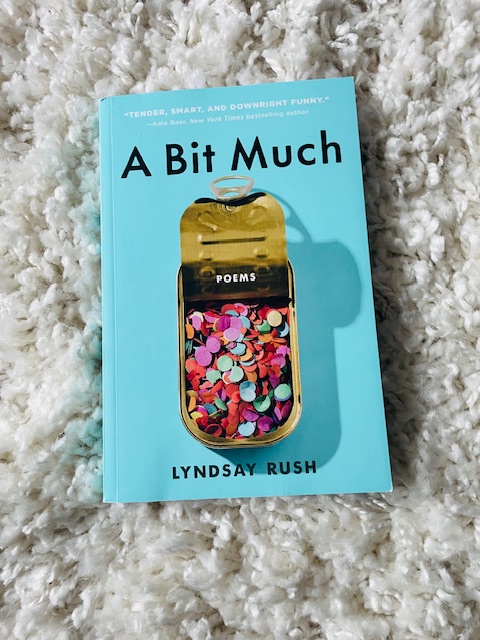
There is a new poet, Lindsay Rush, known on Instagram as Mary Oliver’s drunken cousin, who wrote a poem that went viral and has since become my poetic life mantra. It is titled “She’s A Bit Much.” She takes a common insult made about women and turns it into a compliment. She compares the insulted women to confetti, sprinkles, and the bonus French fry at the bottom of the bag, someone we are to celebrate, and she ends with the line, “Aren’t we lucky she’s here.” Her poem points to a bigger truth: insults made about women, such as she is a bit much, too bossy, manipulative, too driven, not feminine enough, etc., are more about putting women into a box that minimizes their God-given attributes when they should be celebrated.

As I child, I was labeled as bossy by some adults in my circle. I had budding leaderships skills, and needed adult guidance to help develop those skills in a healthy manner. Yes, some children with leadership skills can develop into narcissistic dictators, but most children just need adults to help them recognize that being a leader is not just giving orders but inviting others along to accomplish a goal for the greater good. It is interesting that boys are rarely described as bossy; words like charismatic or having leadership potential are used instead.

I have also been accused, in some circles, of being “too much” and have had conversations with other women who have also been unjustly accused of this as well. Introverted, mild mannered Christian women are held up as the more palatable and less offensive role models. According to the Bible, we are all expected to be humble, gracious, and gentle. Those character traits are not just limited to the female gender. But somehow, we associate those traits with quiet females. I think I can be “too much” in some people’s eyes but still exhibit the fruits of humility, graciousness, and gentleness in my life. It is just how those fruits are manifested that might be different than some of my introverted friends.

The point is, we label women with negative traits that we rarely use to describe men, and somehow, we think that it is okay. Although I don’t like being called bossy or “too much”, I find myself putting other women into a box with the label “brassy.” These so-called “brassy” women boldly state their opinions or ask for what they need from others without qualifications. We all need to learn a level of hospitality and be careful that we are asking and not demanding. Being bold and direct are not bad traits, and I must be careful that I am not labeling a bold woman as brassy when I don’t apply the same standard to men.

Like most consumers, I can be drawn in by certain labels. Terms like “sustainable,” “supports local farmers,” and “produced in small batches” are like catnip to me. I also look for labels in a bookstore and rush to the poetry, memoirs, and literary fiction sections, avoiding the fantasy and science fiction shelves. These labels help me pursue what I am looking for. But when we broadly label women negatively, we impose limits on what we think they can and should achieve, which can sometimes become self-imposed limits.

One of the most controversial women today, Meghan, the Duchess of Sussex, addressed these labels or archetypes on a podcast she did in 2022. She understands firsthand how labels can destroy when the media and trolls describe her as a “gold-digger,” “fake,” “family destroyer” and far worse. She interviewed some women, including Serena Williams, Paris Hilton, and Mariah Carey, exploring the origins and consequences of being labeled ambitious, a bimbo, or a diva. These women shared how they have let go of the negativity and, in some cases, changed the definition to a positive one. One thing from her podcast that stuck with me is when Serena Williams talked about negativity in relation to a woman being described as ambitious. Serena explained how for a long time that label hadn’t impacted her until she met her husband. But then people started describing her ambition in a negative light. “So, since I’ve felt the negativity behind it (referring to ambition), it’s really hard to un-feel it. I can’t unsee it, either, in the millions of girls and women who make themselves smaller, so much smaller—on a regular basis.”

Serena articulated something that I believe most women have felt in their lifetime, and I have no doubt that all the young women I care about have also felt it. When we are labeled as too much, bossy, brassy, and not feminine enough, we often find ourselves becoming smaller, shrinking our influence, agency, ambition, drive, and talents. This often leads us to imposter syndrome where we think we don’t measure up. We then start to second guess our instincts and minimize the character traits that reflect our creator.

Years ago, my husband had a meeting with some people and the subject of me came up. I had been feeling for a while that I was doing something wrong and felt like I was being pushed out of what I deemed the inner circle. Terry directly asked if there was an issue with me. The people in the meeting immediately said no, but one person qualified that sometimes, “Sherry can be too much.” They continued, implying that I can swoop in and get a job done, almost making the “too much” more palatable. But clearly, no one in the room but my husband believed this was a good trait.

Later, when I heard that I was “too much”, I instantly felt swallowed by shame. Hadn’t I written prayers time and time again in my journal asking God to help me be meek and mild? Hadn’t I come to this same group, bearing my soul in one of the worst moments in my life, and pursuing God with humility? Hadn’t I become smaller, hiding my natural extroverted inclinations to fit in with this group? Apparently, despite my best efforts, I was still “too much.” At that point, I was still desperately trying to fit in, so instead of affirming that my “too much” was enough for God, I did the opposite. I became smaller by being less talkative, less present, less involved, and less joyful.

There is one woman in the Bible who did not shrink in a time of need. Esther and her people were facing total annihilation. At first, when confronted by her cousin Mordecai to address the king, Esther started to shrink. Yes, she was the queen, but she still had to submit to the king. Boldly approaching his throne without being called for might lead to her own death. But Mordecai challenged her with these words found in Esther 4:14, “For if you keep silent at this time, relief and deliverance will rise for the Jews from another place, but you and your father’s house will perish. And who knows whether you have not come to the kingdom for such a time as this.”  Esther thought about what he said, and replied with a plan, ending with “and if I perish, I perish.”

Esther decided to go big and be who she was called to be, realizing that shrinking will lead to certain death, but the unknown gave her agency, allowing her to call the shots. By being who God called her to be, she was able to command the king’s attention and save her people and herself. I wonder how many of us women have shrunk in times we were needed because of what others have said about us, and how that leads to us slowly dying inside, never fully living the life we are called into.

In the circle that thought I was “too much”, I was slowly dying and becoming less of who I am. But I am no longer in that circle and have found a safe place to be all that God has called me to be. Yes, I still have character traits that must be balanced and smoothed out. But God’s guidance will help me fully be the woman He created.

I need to talk more about these issues with my friends. When I hear a woman being labeled, I should challenge the speaker with grace, trying to expose how these labels constrict, damage, and restrict women. I also need to address my own complicity in the problem, making sure I don’t fall into the trap of labeling others. I can encourage young women to be exactly who God made them, growing in true inward holiness. This will help #AccelerateAction in removing gender biases.

Sometimes, we need extra food coloring to make things right. Sometimes we need to turn insults into something positive like Lindsay Rush does in her poetry. But we always need women to operate exactly as they were designed; not labeled in a way that brings death but brings life.

Atmosphere

“So, whether you eat or drink, or whatever you do, do all to the glory of God.” 1 Corinthians 10:31

A few days ago, I woke with the sun peeking through my curtains. Clad in my pajamas, I headed downstairs to see that frost had blanketed the lawn, while the cool crisp air from outside had seeped into my home. Shivering, I adjusted the heat, covered up with one of my cozy throws, and opened my Bible. The heat kicked in, and the rising sun lit the room with a warm glow. But something didn’t quite feel right, and I knew instantly what was wrong. The icy fingers of the silence snatched away any warmth supplied by the throws, the sun, or the heat. I knew it was time to start filling the home with joyous Christmas music, and I knew just where to start. I asked Alexa to play “O Come, O Come, Emmanuel” by The Piano Guys. Instantly, the mellow notes of the cello filled the room with hope, soon followed by the tinkling notes of the piano, giving the hope wings.  The atmosphere changed as peace and joy flooded my home and my soul.

It has been two weeks since the cacophony of the election ads, accusations from both sides, and shouts of despair have quieted. The polls have closed, and with that, ended one of our nation’s most tumultuous elections. Some who read these words spent the next day rejoicing, while others were in despair. I have had a lot of thoughts about this election, and how as a Christian I personally felt called to vote. I know my views were in direct opposition to many of my friends and surprised some on the other side. I have no intention of justifying my reasons or trying to persuade others of the wisdom of my decision. I can say that I thoughtfully prayed, listened carefully to some people I respect on the issues, and cast my vote, confident of making the right choice for my faith.

The biggest takeaway from the election is not about who was right and who was wrong. No one on either side can say in truth that God favored the winner and frowned upon the loser. They only thing we can definitively say is that God is in control. It’s also not important for me to lay out my own personal interpretation of why one candidate won and the other lost. I will leave that analysis to Tim Alberta, David French, and Sarah Steward Holland and Beth Silvers from Pant Suit Politics, a new independent podcast I have discovered. The real takeaway is this: how do I, as a Christian, move forward in our nation, sharing the peace, joy, and hope that I feel in Christ? How can I create an atmosphere that others of different beliefs can feel and maybe experience?

God prioritizes creating the right atmosphere. Eden was full of different fruits, plants, and animals, creating a beautifully diverse world. Later, God set up his tabernacle appealing to all our senses. He charged designers to carefully craft intricately carved gold furnishings. He had curtains carefully woven so that visually they told a story. Candles burned eternally, creating a place of reverence and light. He used special ingredients for the incense whose scent would distinctly remind visitors that this was the place where God dwelled. The sound of prayers offered up to God were heard throughout the tabernacle. Even the sense of taste was used in the tabernacle, when the priests ate the shewbread every Sabbath, reminding us that we need to come to God regularly for our daily needs.

Beyond the tabernacle, the New Testament exemplifies Jesus using His senses to minister to other’s needs. He saw the disreputable tax collector, Zacchaeus, hiding in a tree, and invited Himself over to Zacchaeus’ home. Virtue flowed out of Jesus when the hemorrhaging woman grasped His robe. His hands molded dirt with spit and placed this poultice on the eyes of a blind person to bring sight. He heard His disciples’ cries during an epic storm, responding to their fears by defying all scientific principles, calming the storm with His command. He ignored the scent of Lazarus’s decaying body, bringing life back to His friend.

As a Christian, I am called to be a witness for Christ by being a peacemaker, speaking truth with love, and glorifying God in everything I do. I can model myself after Jesus by engaging my senses to minister to those around me. Like Jesus, I can keep my eyes open for those who are marginalized and invite them over dinner. Showing hospitality opens doors for conversations with others who may not think or believe the way I do. I can pay attention to those who are in desperate situations and reaching out for help by acknowledging their identity in Christ. Jesus called the hemorrhaging woman His daughter, inviting her into relationship with Him. When I recognize everyone as being created in the image of God, respect should flow from me to them with my conversation and social medial posts. I can use my hands to minister to those who are in need by making meals, writing cards, or cleaning someone’s home when needed. When people feel stressed by what’s going on in the world, I can offer peace by remaining calm and listening to their concerns. Finally, when the stench of controversy and divisiveness floods social media and dinner tables, I can quietly turn the conversations back toward life by addressing the hard issues, and by acknowledging what Jesus cared about most: making broken people whole.

This doesn’t mitigate my concerns for the next four years. I have concerns that some potential cabinet candidates with checkered pasts relating to sexual misconduct and assault will silence victims and empower perpetrators by giving them legitimacy. I believe in strong borders but am concerned about the consequences mass deportation would have on those who are desperately trying to have a better life. Labeling immigrants, legal or not, as “not humans” or “Hannibal Lectors” denies the fact that all people are created in the image of God. I believe in the sanctity of life, but it goes far beyond a baby in the womb. I do not believe the incoming administration will offer support to single mothers by extending childcare credits or offering decent health insurance. And my list continues. But staying in a constant state of worry doesn’t move the dial forward toward solutions on any of the issues. Instead, I need to do my part whenever and wherever I can. I also can work toward being a peacemaker in my own circles.

Thanksgiving is right around the corner. Menus have been planned; turkeys will soon start their journey toward juicy, brown goodness; and pumpkin pie dreams fill my grandchildren’s heads. Often, our tables are full of people we love, but who think or believe differently than we do. I will sit at many tables during this holiday season where people think differently than I do. I am sure some of the conversations around the table will cross political lines. For me, I am going to try to create an atmosphere around these tables that represents Jesus, sharing the hope, peace, and joy I feel. These will always remain no matter who is president.

Moldy Divisions

“Let your steadfast love, O Lord, be upon us, even as we hope in you.” Psalm 33:22 ESV

Black mold leached across the inside of the wooden lid of my floral painted glass tumbler. I scrubbed and scrubbed but was unable even with brushes to eradicate the mold underneath the rubber seal. There was nothing to do but throw the lid away. I was devastated; my thoughtful daughter, Maggie, had purchased this tumbler for my birthday. One of the best gift givers I know, she picked out something that was both cheerful and sustainable with a glass straw. For a solid month, I used the glass regularly. But one night, after an exciting book club meeting on Zoom, I left the glass, with water in it, on my desk, and forgot about it for about a week. And over the course of that week, mold developed and ruined the lid.

For the past few years, I have struggled with finding where my faith intersects with my political views. For years, I believed that my party held high moral ground when it came to supporting candidates. We took a strong stance when one president had an inappropriate relationship with an intern, and even moved to impeach him (I struggle with using the words “inappropriate relationship” when power dynamics are involved). But then came 2016 and the Hollywood Access tapes, and all the same issues that plagued former President Bill Clinton seemed to be ignored when dealing with Donald Trump. I heard again and again, vote for the one who supports causes Christians believe in, it doesn’t matter what his character has been. I watched while fellow Christians who voted for Donald Trump, and as he gained office and passed legislation, they seemed to put him on the same pedestal as Jesus.

Four years later, when protestors stormed the Capitol, these same Christians justified his actions. As more allegations have come against him, including credible sexual assault, Christians have chosen to align themselves even closer to former President Trump. They ignore all the hate speech, white supremacy connections, and belittling comments he makes. Instead, they focus on his candidates for the Supreme Court, some of his policies, and create memes where angels and Jesus are watching over his candidacy.

I have found some Christian community that doesn’t support Trump. Russell Moore, David and Nancy French, Tim Alberta and others take a strong and EDUCATED stance against Trump because of their faith. They articulate their views on various podcasts, op-eds in different newspapers, and have even written some books that explain how we as Evangelicals have gotten to the Trump era. They don’t profess that as Christians we have to be perfect. But they do believe that as Christians, we need to be ethical in who we support in politics.

By now, we have all heard of the assassination attempt on former President Donald Trump. As much as I oppose Donald Trump and have major concerns if he is elected, I am thankful that the assassination was not a success. Russell Moore stated on the social medial platform X that “Political violence is evil to the core and is an attack on everything this nation represents. Attempted murder is an attack on the image of God.” David French commented on Threads, “In moments like this, it’s imperative to condemn political violence, full stop. Don’t what-about. Don’t measure which side is worse. Just say it’s wrong, loudly and clearly.” They are the middle of the road voices that believe in God, rule of law, and decency.

Unfortunately, on both sides of the political spectrum, there are extremely loud voices that don’t hold themselves to these same standards. Instead, conspiracy theories are running amok in social media, wild assumptions about the hand of God and where the bullet should have gone are also being articulated, and more memes are shared about the wings of angels guarding certain individuals.

The mold on my lid spread because it had the perfect environment. Our air conditioning was on the fritz for the past few weeks. Therefore, the hotter temperatures in that room were causing the water to condense on the inside of the lid. It probably only took a few days before the mold developed, and within that few days my lid was ruined.

A week after the assassination attempt, President Biden has chosen not to seek reelection. With this new election drama, just like the mold, hyperbole is spreading from extremists on both sides. They each claim that democracy is at stake and accuse the other side of being fascist or socialist.

A few Sundays ago, my husband spoke boldly when leading prayer in our church. He asked the church at large to truly follow Jesus, instead of making certain hot button issues our religion or a certain politician our messiah. When I reflect on Terry’s focused prayer, I pause to consider what my personal rhetoric endorses.

As a Christian, I have asked myself some hard questions in the last few years. I continue to wrestle with these questions amid a divided nation, assassination attempts, and suspended campaigns. Do I follow Jesus, or do I follow a political party? Do I recognize the Bible as truth, including its consistent advocacy for the marginalized groups, or do I continue to vote in a way that further marginalize these groups? Finally, do I educate myself on these issues, instead of just accepting the views from certain perspectives, whether right or left?

This has been a journey for me, and in my community, I often feel alone with some of my views. I struggle with the urge to persuade others to take this journey with me. I try to hide my expressions as I cringe when Christians share a belief that I find contrary to my faith. I know my reactions, both verbal and nonverbal, should reflect Christ.

Where does this leave me in this upcoming election? First, local elections are far more important than I have ever believed. I am going to take the time to educate myself on who is running for school boards, council positions, and state offices. I think these positions can have a more direct impact than I initially believed on some of the causes I support. I also recently heard on a few podcasts a theme of hope, no matter who wins this election. This hope is not in a particular party, platform, or agenda. My hope needs to rest in Christ. Therefore, the outcome of the November election is not going to determine my joy or my peace. I am going to place my hope in the only place that sustains—in the arms of a just and gracious God, the only place I can find peace.

Terry was right to challenge me to follow Jesus; only He can save and lead!!