Christmas Genes 1: Tamar

“She is more righteous than I am,” Genesis 38:26

I remember the first time I felt “othered”. I knew from little on I was not the same as my siblings; we didn’t have the same father, and my bone structure and the tone of my skin were disparaged by him. But this feeling of being “othered” was different than my daily experience. It was the last day of second grade, I loved school, and I was excited to read fluently. I don’t remember stealing the candy bar; I just remember the teacher asking me if I had taken an extra birthday treat. I remember denying it and feeling a wave of guilt, but the chocolate smear on my face gave me away. Lifting my desk, she saw the evidence, a crumpled wrapper. She gave me a note to take home. Handing it to my father, he sneered with disgust immediately. Despite normally being an obedient child, he instantly found a way to publicly humiliate me. He told my siblings I was a thief, and for the next two weeks, made me stay inside while the rest played outside. That summer, I wore my first scarlet letter.

Feeling “othered” is a universal feeling among women. Whether or not we are athletic enough, fit societal standards of beauty, or are talented enough in certain areas, at some point in our lives, we don’t feel like we measure up or fit in. Misty Copeland, principal ballerina for the NYC Ballet Company, despite her raw talent, faced scrutiny by critics that she didn’t have the “right look” for a ballerina. Oprah Winfrey was told she needed to lose weight by Joan Rivers. Jamie Lee Curtis was typecast as a horror actress and worked hard to find different roles for herself in Hollywood. The list goes on and on.

There are several Tamars in the Bible. The account of this Tamar takes place in Genesis 38. Judah’s mother, Leah, could never win her husband’s favor, even after the birth of three sons. Finally, after her fourth son was born, she decided to focus on the favor of God, naming her son Judah, which meant “I will praise the Lord.” Judah married a Canaanite woman and gave birth to a son, Er. She also gave birth to two other sons. Later, Judah arranged for Er to marry Tamar. Immediately, the Bible records that “Er was wicked” and the Lord took his life. Some commentaries point out how close this followed his marriage, believing that it might have something to do with how he treated Tamar.

In most of the world at that time, widows were left to fend for themselves. They often had to return to their father’s home and remain single for the rest of their lives. Hebrew law made provisions for the widows and for the lineage of the deceased husband. It involved the widow marrying her deceased husband’s brother. Judah arranged for Tamar to marry his second son, Onan. Displeased with this arrangement, Onan treated Tamar like a prostitute, ensuring she wouldn’t get pregnant. God was disappointed with Onan’s treatment of Tamar and took his life as well.

Judah secretly blamed Tamar for the death of his two sons. He never sought God, who may have led him to the truth about his sons’ wickedness. Instead, he led Tamar to believe that once his third son, Shelah, grew up, he would give Tamar to him in marriage.

So, Tamar, twice widowed, was sent back to her father’s house. I can’t imagine how othered she must have felt. Women her age were married and giving birth to children. Instead, she probably went to the market, with people whispering about how she was either unlucky or evil, causing the death of two husbands. Years went by, and Tamar got to see everyone else’s life flourish, while she sat on the sidelines, watching life pass her by.

Names were important in the Bible, and “Tamar” meant date palm. Date palms symbolize righteousness and vitality. Dates have a lot of nutritional value, including lowering bad cholesterol, being packed with Vitamin B, and helping balance the digestive tract. Because of their high sugar content, they require a lot of energy to grow the 200-300 dates in a season. Thus, they need to grow together and get a lot of water to flourish.

After a while, Tamar realized that Judah had no intention of honoring his word. By this time, she was probably aware of the promises given to Judah’s great-grandfather, that the one true God called this group of people into a covenantal relationship with him. She was tired of being othered and she was desperate to be a part of this Godly heritage. Deciding to take matters into her own hands, Tamar disguised herself as a prostitute, the very thing that Onan had treated her like. She seduced her father-in-law and held his seal as a promise of payment.

Judah later heard that his daughter-in-law was pregnant. In his mind, this confirmed his preconceived notion of Tamar. His immediate response was to have her burned. As they were taking her out to be killed, Tamar let them know that the father of her unborn child was the person who owned the seal she held. Judah recognized it as his own immediately and declared, “that she was more righteous than I.”

The story goes on to say that Tamar gave birth to twins. The midwife saw one of the babies’ hands reach out, and she quickly tied a scarlet thread onto the wrist, declaring this was the firstborn. This was important because he would inherit all the rights of the firstborn. But Perez pushed back his brother and came out first, with his name meaning “breaking out.” Perez’s name was more significant than breaking out first from his mother’s womb. Biblically, he was given the honor of the covenantal lineage, over his older brother Shelah. The Bible doesn’t say why, but Judah hinted at this when he declared Tamar’s righteousness over his own.

Today, women respond in one of two ways when feeling othered. Like Tamar, some women take matters into their own hands to get the outcome they desire or deserve. But it is interesting that Matthew doesn’t tell just Tamar’s story in the lineage. He includes three other women as well. This could point to the other way women can handle feeling othered. Women can collaborate with other women, bind together with supportive men, and change the false narratives of society. I have seen women athletes champion all women across different sports. I see it when writers encourage other women to write and mentor them along the way. I see it in the church when older women mentor younger women to grow in godliness and character.

I want to reiterate that date palms only flourish when well-watered and in community with other date palms. Jesus wants women to flourish well in healthy spiritual communities that support all women: single, married, widowed, or divorced. He created women to have all different personalities: some are bold, while others are quiet. He created women of all different shapes and sizes. He created women to express their creativity in different talents. And all these women should be celebrated and treated like valuable members of the community, not only by other women, but by men as well, especially those who are spiritual leaders.

How does one gauge the healthiness of their community? A good place to start is to ask the women in your circle if they feel “othered.” Only ask this question if you are willing to suspend judgment and exercise curiosity. The answers may surprise you, and you may find yourself challenged to be more supportive of women. Judah quickly saw the folly of his own judgment and declared Tamar’s righteousness without blame-shifting. Next, ask God to help you see women the way Jesus sees women. Finally, start implementing changes in how you speak to and about women in general and work towards creating a more inclusive environment.

In the Christmas story, Matthew ensured for eternity that Tamar would no longer be “othered.” I am forever grateful for that!

Chirstmas Genes: Intro

“For unto you is born this day in the city of David, a Saviour, which is Christ the Lord.” Luke 2:11

My husband loves investigating his genealogy. After subscribing to Ancestry.com, he learned that his Scottish family arrived in the US in the mid-1700s. Further back, he discovered that his ancestors lived in a castle and he is distantly related to England’s Queen Camilla. Less than two weeks later, he also found that one of his more recent ancestors was convicted of murder.

Learning about your ancestry can help people feel rooted. Reading the names of my own indigenous relatives helped me connect with my biological father’s family in unexpected ways. I even discovered some more siblings. Some people prize these roots so much that infamous people are cut out of their family trees. It is as if their entire existence is erased because their relatives don’t want the family tree marred by a rotten branch.

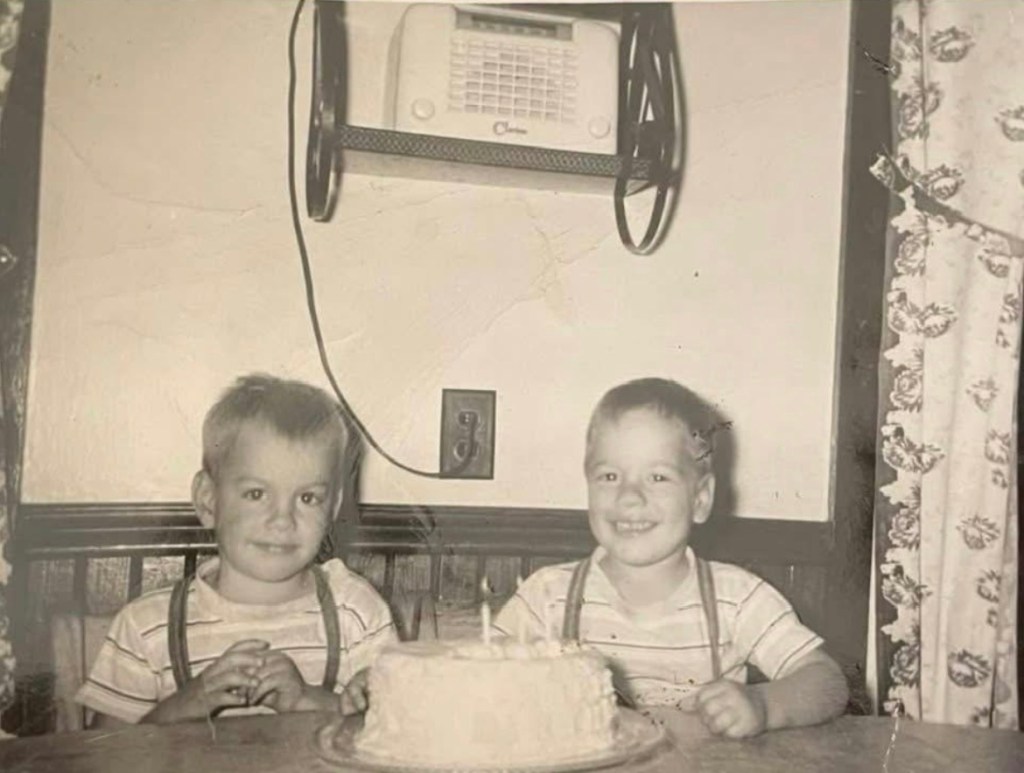
I went to the same high school that my mom and her siblings attended. Because I had my mother’s maiden name, the high school principal, Mr Havey, asked if I was related to Dennis and Dave Walter. My twin uncles were amazing men, but had a reputation for being a bit mischievous in high school. Quite often, Mr Havey would call my grandmother to report on their escapades. I replied yes to his question but quickly reminded him I was also related to Kenny and Debbie Walter, my uncle and aunt, who were much more studious. I wanted him to know who I identified with as a high school student.

For the next few weeks, I will be writing about the genealogy of Jesus. Specifically, I want to examine the four women that Matthew chose to include in his account of Jesus’ birth. First, the fact that he was willing to include women in the genealogy says something significant about Jesus. Matthew was trying to prove the “Jewishness” of Jesus by tracing his lineage back to Abraham. But, inspired by God, Matthew included women in Jesus’ genealogical record, which was controversial in those days. Furthermore, all four women had stories filled with brokenness perpetuated by the misogynistic society in which they lived. Again, inspired by God, Matthew included these women for a reason, and that reason gets at the heart of who Jesus is.

Another woman, Mary, the mother of Jesus, said it best in what is referred to as her “Magnificat.” Mary offers this praise after her cousin Elizabeth confirms that Mary is indeed carrying the Messiah. This praise came when so much was still unknown in her future. Her betrothed, Joseph, had not yet indicated how he was going to manage this scandalous pregnancy. According to Hebrew law, he had the right to publicly shame her by legally divorcing her. Despite her uncertain future, Mary was confident in God, declaring “My soul magnifies the Lord.” She goes on to say, “For he took notice of his lowly servant girl and from now on all generations will call me blessed.” Jesus was lifting women up for future generations.

On the surface, it’s obvious that women were treated unfairly in biblical times. Many Christians have perpetuated that in the modern church. They have minimized women’s roles in ministry, marriage, and life. However, reading deeper, you can see that Jesus was trying to raise up women. Peter declared that salvation was for men and women. Jesus declared he came to set the “captive free.” Women were, and continue to be, captive by limitations contrived by society. Jesus intended salvation to bring women liberty and freedom.

My husband reminded me how significant it was that Matthew added these women in the Bible. Matthew knew firsthand how the prejudices of society could impact a person. As a tax collector on behalf of the hated Roman government, Matthew was an outcast among his own people. It is likely he was called names, shunned, and spat upon. He may not have been welcomed in the temple or allowed to share Shabbat with his family. Jesus saw how loneliness and bitterness had broken Matthew’s spirit. But Jesus also saw beyond what others labeled as an outcast and called Matthew to be his disciple. Over the next few years, Matthew was an eyewitness to how Jesus treated those devalued by society, especially women, several of whom were named as followers of Jesus.

Join me and hear the stories of Tamar, Rahab, Ruth and Bethsheba. Note: I want to give credit to Raymond Woodward for inspiring this piece with his message “Broken Christmas.” You can find his message on YouTube. I disagreed with his interpretation of Bethsheba. Read my upcoming piece on her to see my interpretation

This is a picture of my uncles, Dennis and David, who have since passed away.

Formations 18: God’s Word

“Your word is a lamp to guide my feet and a light for my path.” Psalms 110:105

God’s Word

Nourishes me,

Encourages me,

Inspires me,

Reminds me, and then,

Convicts me.

God’s Word

Informs me,

Persuades me,

Awakens me,

To whom God is

And who I am not.

God’s Word

Has been misaligned,

Has been weaponized,

Has been misinterpreted,

Has been misused,

And this is so unfortunate.

God’s Word

I need to study,

I need to mediate,

I need to pray.

And when I repeat,

It will be alive in me.

Formations 16: Adulting

“O people, the Lord has told you what is good, and this is what he requires of you:to do what is right, to love mercy, and to walk humbly with your God.” Micah 6:8

I love all the seasons of adult life.

In the spring of adulthood, I embraced collegiate life like a sponge. I adopted new ideas and became more passionate about others. I saw every opportunity as something to try and find out what I liked and what I didn’t. Although I poured myself into my studies, I poured myself into my friendships even more. Life seemed full of possibilities, and I wistfully dreamed of the future. It was the season when I fell in love with the person who would become my husband, with a DQ Mr. Misty by my side. And God’s goodness was chasing after me.

In the summer of adulthood, I was more confident in who I was. I embraced motherhood, creating opportunities for them to learn, explore, and thrive. I created traditions and celebrated life in a big way. I poured myself into ministry, both as a mother and as a faithful member of the body of Christ. In this season, I made the decision to home educate. I did childcare on the side. I loved my life and strived to do everything well fueled by Diet Pepsi. And God’s goodness was chasing after me.

It is the autumn of my adulthood, and I am still loving my life. I am an empty nester enjoying the quietness of our home. We still have plenty of family moments filled with lots of hugs and kisses from grandchildren. But now, we have time to focus on each other. I have cast my net wider than the four walls of my church, as far as ministry, trying to care for those who are marginalized in my community. I published a book and hope to write another one next year. I am energized by my relationship with God and the more than occasional cup of coffee. And God’s goodness is chasing after me.

The winter of adulthood has not arrived. I hope it will be filled with family, friends, and serving my community. I pray that I grow less attached to things and more attached to God. I believe I will continue to write, learn, and explore. And some day, when I am at the end, I will drink and feast at the table of my king. Because God’s goodness chased after me.

Formations 13: Four Seasons

“For everything there is a season, a time for every activity under heaven.” Ecclesiastes 3:1

I am thankful for all four seasons!

In spring, bunnies frolic in the grass, nibbling on the clover. Lilacs bloom, wafting their sweet, heady perfume across the yard. Trees bud and unfurl their chartreuse leaves. Cheeful daffodils wave hello across the city, and everyone’s steps seem lighter. It is a season of anticipation, where anything can happen, and we can all start over. It is the season when we indulge in strawberries, green peas, and asparagus, embracing the season’s freshness. And God made it so good.

In summer, groundhogs waddle through the fields, feasting on the greens before they wilt in the sun. Birds sing at dawn and in the evening, hiding in their nests during the heat of the day. Flowers are blooming everywhere, filling pots and boxes with explosions of color. People meander around the city, as if time has stopped, and having a good time is the priority. Laughter fills the air, while peaches, nectarines, and corn fill the stands at Farmers’ Markets. Gatherings during the days and late nights keep the city buzzing like bees looking for the sweet nectar of the good life. It is the season of enjoyment. And God made it so good.

In autumn, squirrels skitter across the streets, gathering nuts and acorns for the winter. Mornings start with a chilly nip, while golden light frames the afternoon. Flowers may fade, but the trees express artistry with deep red, yellow, and orange leaves. Pumpkins, butternut squash, and apples are seasonal flavors in both food and drinks. People still gather, but the atmosphere has changed. It is a season of thankfulness, expressed with open hearts and warm smiles around tables and bonfires. And God made it so good.

In winter, the blanket of snow tells the tales of deer, raccoons, and foxes by their tracks. The snow sparkles like glitter in the sunlight, and the air feels icy. Wrapped up in coats, scarves, gloves, and knitted hats with pompoms, people walk quickly and determinedly. Yet, children still find joy in the season, squealing as they sled down a hill or make a snowman. Once inside, they warm up with steamy mugs of tea, coffee, or hot chocolate and fill their stomachs with stews of turnips, parsnips, and potatoes. Despite the landscape being a bit monochromatic, citrus fills the grocers, adding a bit of brightness to the season. It is the season for quiet contemplation, reading books, or playing games as a family. And God made it so good.

I love the God who made the four seasons so good.

Formations 3: My Greatest Love Story

“Oh Lord, you are so good, so ready to forgive, so full of unfailing love for all who ask for your help.” Psalms 86:5 NLT

It started almost 36 years ago, tear-stained cheeks, bowed at an altar asking a simple question: “God, are you real? If you are, please fill me with your spirit?” Seconds later, I felt this warm blanket of peace cover me and joy bubbling up from deep within my soul. At that moment, I knew there was a God who loved and cared for me. At that moment, He became my Savior. At that moment, I still had a lot to learn about this God.

I am still discovering His goodness, His love for me, the depth of His sacrifice, and His plans for my life. I love my husband, my children, and my grandchildren. I love my extended family and friends. But the greatest love story in my life is still unfolding, it is my relationship with Jesus Christ.

Like all love stories, it has its hills and valleys. Those are not based on His love for me, but rather my distorted view of Him. I sometimes wander away from Him, pridefully believing I can figure it out on my own. Time after time, His gentleness leads me back to repentance. Other times, I try to worship or connect with Him, but I allow distractions to turn my gaze to other things. Again, His Word redirects me so I can connect. He is forever faithful, knows my deepest secrets, my most unkind thoughts, and yet, still loves me.

I am forever grateful for that altar 36 years ago. It has slowly turned me from being a broken teenager scarred by sexual abuse into a woman who knows God heals and lovingly restores. And as this love story continues, I know someday I will be reunited with Him, surrounded by His glory.

Formations: Introduction

“In everything give thanks; for this is the will of God in Christ Jesus for you.” 1 Thessalonians 5:18

I am insatiably curious about everything, well almost everything. From snails, horse racing, and architecture to travel, history, and biology, I read, research, and run down rabbit holes on a diverse number of subjects. In looking back, childhood trauma stifled my curiosity, but it was reawakened when I home educated my children. The fires were fanned while watching their deep brown and shimmering blue eyes sparkle when learning how pitcher plants could trap small mammals, and the frigate bird stole food from the blue-footed booby. I readily engage in conversations with strangers, listen to a wide array of podcasts, and have a never-ending stack of books on my nightstand to satisfy my curiosity. As I grow older, I hope to keep these fires burning, forever positioning myself to be a life-long learner.

One of my favorite areas of study is learning how the brain’s wiring changes with new interactions. For many years, we thought that brain development became static as we age. But we are learning that even people 50 and older can change due to neuroplasticity. They are not trapped by their childhood and early adult patterns of viewing the world. Instead, they can move towards being more healthy, whole, and wise as they age.

One of the simplest ways to change is to express gratitude. Various studies have demonstrated that practicing gratitude daily can reduce cortisol, which lowers stress. It also provides more structure for the prefrontal cortex, the part of the brain that deals with difficult emotions. Building neuron connections through gratitude helps us feel good both in the short term and in the long term, by strengthening our emotional resilience.

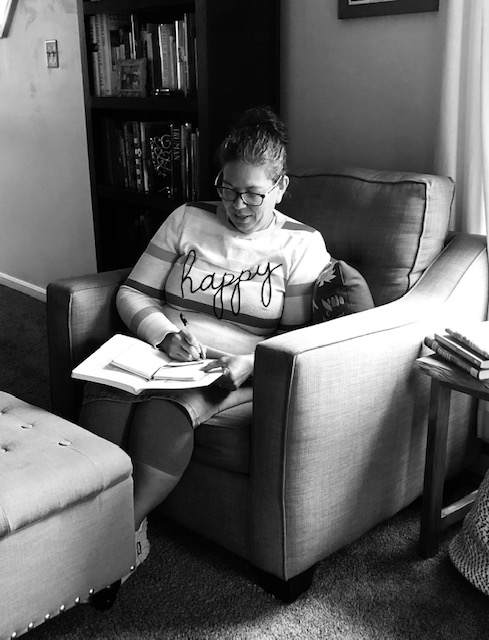
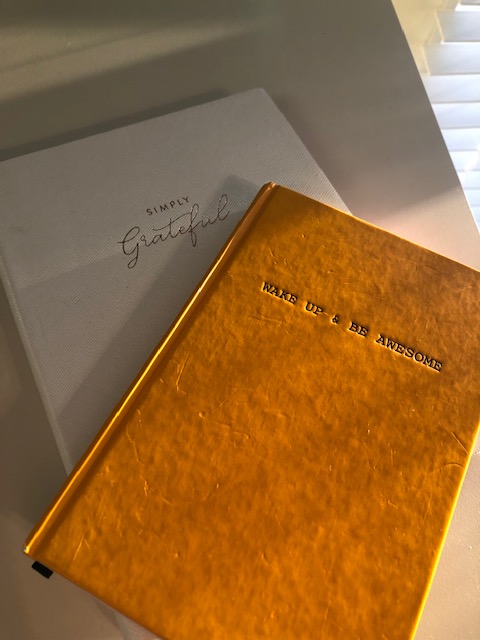
I could go on about the benefits of gratitude, but I know firsthand how it has improved my life. For about 10 years, my daily gratitude journal has been an important rhythm in my life. Expressing gratitude daily has helped me pursue peace during adversity, demonstrate kindness to others, and remain hopeful in hard circumstances. It confirms Paul’s words in Philippians 4:6, “Don’t worry about anything; instead, pray about everything. Tell God what you need and thank him for all he has done.”

For the next 30 days, I am going to share with you a glimpse of what this daily practice has looked like in my life. I am doing this for several reasons. I need to reincorporate this practice with more consistency. I also need to make writing a priority in my life as well. Writing helps me process and is an important creative outlet for my life. It may be just a few sentences or a few paragraphs, but each day, I invite you to see a window into my soul.

I am going to title this series Formation. Formation means an act of giving form or shape to something. I hope this practice of writing gratitude helps shape my brain to focus on the goodness of God and gives form to my writing habit. So come along with me for the month of November, and practice daily gratitude with me. Feel free to share in the comments about your own gratitude.

Musing 3: Longwood Eulogy

“Precious in the sight of the Lord is the death of His saints” Psalm 116:15

Recently, we spent an evening at Longwood Gardens in eastern PA. We meandered through the gift store, finding treasures to share with loved ones. We took a small walk through the garden, seeing golden, purple, and burgundy flowers make their final encore before the frost curtain falls. We marveled at the Ginkgo trees, hearing squirrels scattering in the branches. We ended the evening waiting for the illuminated fountain show, which highlighted Bollywood music. Enchanted by the crisp air, I offered to get Terry a hot drink at the food stand above where we were sitting. I climbed the steps and found my way to the hut selling hot spiced apple cider. After the woman handed me my drinks, I started the descent down, but an image of hot drinks sloshing over the lids, or worse, one tumbling down the stairs, stopped me. I could not hold both drinks at the same time while going down the stone stairs. So, I called Terry, and he met me, as he always does, to help me.

I have written four eulogies for people I loved, three of which I personally gave at their funerals. Eulogy writing is hard; how do you sum up someone you loved in a few paragraphs amid your own personal grief? How do you share other people’s perspectives, trying to make the person you care about sound well-rounded? In the case of my uncle, how do you write about him as a husband, father, uncle, and mentor? And the thing I have wrestled with most is how do I stay honest in my portrayal? All too often, I have heard people eulogized, making them akin to Queen Elizabeth, Mother Theresa, or even Jesus himself. In no way do I think a funeral is the place to air your grievances, but it is important to be honest. Even the greatest humanitarian has faults. No one on this side of Heaven is perfect, except Jesus himself. So, I found myself putting fingers on the keyboard, painting with words a praiseworthy portrayal of the person, yet staying true to their humanity.

About two months ago, Dr. James Dobson died. For those of you outside the evangelical world, Dr. Dobson was a major influencer with his daily radio program and nonprofit, Focus on the Family. As a clinical psychologist, he doled out parenting and marriage advice through a Christian lens. He later became more politically active by addressing issues concerning abortion, immigration, and euthanasia. As a new mother, his voice was ever-present in my home, and his books filled my shelves, including Dare to Discipline and The Strong-Willed Child. I loved the world his nonprofit created with the children’s radio drama Adventures in Odyssey. My son’s middle name is Whitaker, and I secretly wished he was named after Whit, the wise older man who owned an ice cream shop in the imaginary town of Odyssey. I even called Focus on the Family’s hotline once to seek some parenting advice during a difficult toddler moment. I was an ardent follower.

Sometime after my children reached high school, I stopped listening to Dr. Dobson. It wasn’t for any specific reason, but likely because I had gotten bored. I had spent the last eighteen years or so listening to the same ideas from different voices through his various interviews. Dr. Dobson had also stepped down from Focus on the Family and later formed a new show under a different nonprofit, where he could make a stronger impact on politics. I only tuned in when my son became engaged and streamed a few shows on how to be a good mother-in-law. I was in a new season of my life, listening to new voices.

In 2016, when Donald Trump arrived on the scene, I was surprised to hear that Dr. Dobson endorsed him. This was the same man who stood firm during the Clinton years, speaking that morality mattered in political office. I tried to justify his endorsement because Mike Pence, his running mate, seemed to have a moral backbone. But as time went on, I heard more about Dr. Dobson’s stance, and I became a little disillusioned with one of my Christian mentors. He seemed to shift, espousing the idea that morality was less important in electing people for political office.

I also started hearing some criticism from some adults who had been raised by Dobson’s followers. They felt his stance on discipline opened the door to child abuse. I reflected on what I had heard and was shocked that some parents had drawn these conclusions based on his talk show and books. Yes, he advocated for discipline and structure, but he insisted discipline had to be shrouded with love. But, upon reflection, I also understood how some people can draw those conclusions based on Dobson’s teachings.

How do I hold the Dr. Dobson who helped shape my parenting in a healthy way, when that same Dr. Dobson’s methods were seen as creating controlling environments and potentially leading to child abuse? How do I hold the Dr. Dobson who helped me see that integrity was an important trait to develop in my life, when that same Dr. Dobson called President Trump a gentleman despite Trump’s crassness on the Hollywood Access tapes? The only way I can hold that is by realizing that, just like me, Dr. Dobson is a Christian who is not perfect. As a formerly ardent follower, I also needed to be careful not to make my mentor an icon.

About six months ago, a question was asked by my pastor: as a Christian, who do you admire or want to be like? One person admired an influential prayer warrior, another said their mom, but one precious tween said “Sherry, because she is always cheerful and encouraging.” I was humbled and surprised by her love for me, but I also felt the weight of that responsibility. I am human and far from perfect. In conversations with her since then, I constantly remind her that I have faults. I don’t want to be the disgraced hero in her eyes. But maybe I need to let her draw her own conclusions at the end of my life. I pray that she doesn’t see me as a perfect Sherry, but a Sherry who knew that Jesus loved her and let His love flow through her to others.

I found holding two hot drinks and going downstairs outside at dusk challenging. But what is even more challenging is knowing that someday my husband, friend, sibling, child or grandchild will have to write my eulogy. I know I have made mistakes in all those relationships, and I will continue to do so while still breathing. I just pray that as I get to know Jesus more, they will see a woman who owned her mistakes and kept growing closer to Jesus.

Musings 2.5: Autumn Vibes

“The way of a fool is a right in his own eyes, but a wise man listens to advice.” Proverbs 12:15

It is finally cooling down, and you can see the leaves getting tired and worn out, ready to shed their verdant color and expose the red, yellow, and brown of Autumn. Squirrels scurry on the streets, desperately trying to grab every nut and seed they can find before winter. Pumpkin décor scatters my bookcases, the spicy apple butter scent has already permeated my home, and I just made my first pot of chili. And, yes, I have had more than my share of hot and cold pumpkin spice drinks. This has been and continues to be my favorite time of the year.

Fall always feels like a time of transition—a time to get cozy and embrace hygge living. You can learn more about my love for hygge in an earlier post. This fall, more than ever, I look forward to lighting candles, cozying up under a throw, and listening to my cousin Johanna’s classical spooky playlist. It is a welcome change after a summer filled with swirling noise, making everything feel murky and confusing.

But practicing hygge this season would not be enough. I had known for a while; it might do me some good to start counseling—to follow the advice I had given to so many recently. But sometimes it is easier to give advice than to follow it. Almost two months ago, I took the plunge and went back into therapy. I needed some help processing the aftermath of publishing my book. I also needed some help reconciling the things I had been taught about faith with what Jesus taught, as some of it felt incongruent. So, I found a licensed counselor who could help me reorient myself and clear up the murkiness I was feeling.

I am too early in the process to fully disclose what I am learning about myself and about God. I can say that I still believe God is good. I can also say that thirty-six years ago I had a life-changing experience that filled me with peace and joy when I asked God to fill the empty space in my life. But beyond that, I am still figuring out how to hold Jesus in one hand and the obstacles of life in another.

Transitions are hard, whether you ask for them or they come unexpectedly. This whole blog experience was because I was facing transitions. I had no idea that in this process, I would be expanding my views on God and finding a fuller message of the gospel. But in that process, I have learned some unpleasant things about myself, things I need to work on. One of those things is that I can be extremely passionate when I make a change or discovery, and that enthusiasm or passion can make others feel judged. I am also learning to give myself more grace, articulate to others where I am at, and fill my life with gratifying things.

It’s Autumn, and I don’t have a bucket list of things I want to accomplish. I just want to keep my heart open to whatever God has planned for me. I want to work on the things that I can control and leave the rest in His hands. I also want more pumpkin spice!

Musings 2: Mushrooms and Monsters

“A fool gives full vent to his spirit, but a wise man quietly holds back.” Proverbs 29:11

I have always wanted to time-travel to the 1960s and be a flower child. I imagined listening to the Beatles and Jimmy Hendrix on 45s. My closet would be radiating hippy vibes with peasant blouses and platform shoes. As a college student, I would participate in civil rights protests, while remaining drug free. I know that is a bit unrealistic given that most college students during that time experimented with LSD and mushrooms, but I would still be me, a bit of a rule follower. I wanted to live in a time when it felt like important things were happening and I was making a difference.

In romanticizing that era, I forget that in a space of 5 years, 4 major political figures were assassinated: President John F. Kennedy, Malcom X, Robert Kennedy, and Martin Luther King, Jr.  Despite the peace signs and mellow commune living, I am sure that all people, mushrooms or not, experienced anxiety, grief and turmoil over these deaths. They didn’t have up to date information on the manhunt for the shooters. Images of the actual assassinations were grainy, taken with cameras far less superior than most iPhones. Often, they had to wait until their “regularly scheduled program” was interrupted to get the latest updates.

In the last 5 years, we have also faced political violence resulting in 3 political assassinations. These acts of violence include the plot to kidnap Michigan Governor Gretchen Witmer, the January 6 violence at the US Capitol, Nancy Pelosi’s husband attacked in her home, 2 assassination attempts on President Donald Trump, a firebomb thrown at PA Governor Josh Shapiro’s residence, 4 shootings of Minnesota lawmakers and their spouses in their homes, resulting in 2 deaths, and the assassination of Charlie Kirk. Add the attempt on Justice Brett Kavanaugh and the shooting at the CDC, and these acts of violence feel unprecedented in my lifetime.

Some things have changed since the 60s: Swifties replaced Beatlemania, neutrals replaced the bright patterns (except in my wardrobe), and retro sneakers replaced platform shoes. While fashion and music have changed, how we respond to political violence has not changed. We still turn some victims into martyrs while villainizing others. Conspiracy theories float around and become the leading narratives. People call for protests, speech to be censored, and more stringent laws to protect those they believe are innocent.

I could fulfill my past flower child dreams by making signs and marching in my city square or state capital, protesting on behalf of those I feel are being oppressed. I have been given the opportunity to join some protests in recent months by some of my friends. I could also write a click bait comment online, waiting for likes and dislikes to hit, based on my algorithms. But protesting and tweets don’t feel like the best approach for me at this moment. Instead, I am learning to pause, think, and reflect before I speak and act. My family and friends could attest that this approach doesn’t come naturally to me. I am far more comfortable speaking than being silent. I readily look for solutions and ways to apply them. This rhythm of pause, think, and reflect is a learning process that I continue to develop in my life.

In my time of reflection, I am trying to balance my news intake by hearing both sides. It helps me to see all victims of political violence as real individuals with families who love them, pets they cared for, and people who believed in them. Erika Kirk’s answer to her 3-year old’s questions as to where her daddy, “He’s on a work trip with Jesus so he can afford your blueberry budget,” was absolutely heart wrenching. Equally as devastating was the statement made by Sophie and Colin Hortman, children of Minnesota Rep. Melissa Hortman and her husband Mark, who were shot in their home. They encouraged others to honor their parents’ memory by doing “something, whether big or small, to make our community a little better for someone else.” I also had the unique perspective of viewing an alleged criminal’s family differently. When images of the alleged Minnesota shooter flashed on my screen, I recognized this person as someone I had been briefly acquainted with while in a homeschool group with his wife and family in the mid 2000’s. This sweet woman loved God, invested herself in her children, and gave to her community. I can’t imagine her grief, and I pray daily for this family.

This balance of news also helps me see there is political violence on both sides. David French wrote an op-ed piece for the New York Times titled “There Are Monsters in Your Midst, Too” that articulates how I have been feeling. He shared a conversation he had with National Review colleague, Michael Brenden Dougherty about political blindness. Dougherty said when we see a problem on our opponent’s side, we believe that is emblematic, but when our allies do something, that is exceptional. This resonated with me; how often do I label those I struggle with and say that their mistake is indicative of their personality, and that this shortcoming makes them a flawed human being? But when someone I love does the same thing, overall, I emphasize that they are good people who made a small mistake. I even let this confirmation bias inform how I view myself. It is so much easier to see a flaw in another person, judging their motives and actions. But when this same flaw shows up in me, I protest when my motives and actions are judged.

I found out that a young man who was formerly in my circle of influence recently did something violent that ended with multiple deaths. I didn’t know him well and hadn’t seen him in the last year or so. What I did know was that this young man seemed lonely. As much as many of us tried to include him in our circle, it wasn’t enough to make any lasting change. Soon, he left our circle and moved on. I can also say that what I knew of this young man was that he was not evil; but at the same time, I can hold the acts he committed as evil and destructive.

I am asking myself some hard questions based on what I know of him and what I suspect of most people who commit these acts of violence. Do I enable political extremism by engagement online and in person, labeling people and putting them into groups? Do I engage in conversations with curiosity or try to prove my point? Do I call out political violence no matter what the source? Do I amplify political extremism when political violence occurs, or do I move towards unity and reconciliation? Do I treat all people as if they are created in the image of God? Finally, do I open my home with hospitality, inviting those who feel alienated or lost to enter, creating a space of refuge?

In the case of the young man I knew, it was not an act of political violence. But it was still violence that may have been prevented. I grieve for the young man I knew and his family, along with the victims and their families. I can no longer sit on the sidelines and say that violence “affects them.” It affects all of us, no matter what side of the fence we are on.  And if we continue in “us vs them” conversations, if we only lower flags half-mast to honor people we support, if we move to limit the free speech of those we disagree with, if we label the other side as extreme, then violence will continue. But if we pause and reflect, maybe we can work to create a community where we can invite those who feel alienated to be in a place where they feel welcomed and loved. Just maybe, we can stop some from becoming potential monsters.

The way I do mushrooms!!