Page 2 of 3

Musings 1.5: Tension

“For God has not given us a spirit of fear, but of power, love, and a sound mind.” 2 Timothy 1:7

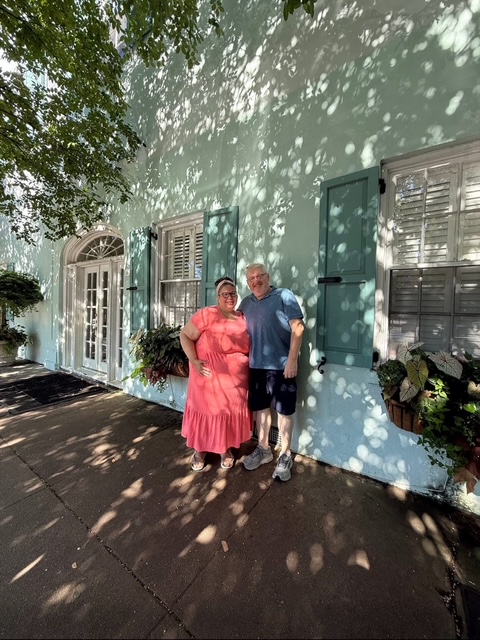
Seven weeks ago, we spent a beautiful time in picturesque Charleston, South Carolina. Rainbow Row and its cobblestone alleys felt like I was entering a new world where elves and pixies danced among the ivy- and moss-covered stones. The southern live oaks dripping with Spanish moss helped my tense shoulders relax and my whole body lean into the low country vibe. The Pineapple Fountain reminded me to remain open and hospitable despite some of the anxiety I had felt in the past few months. And the sunset cruise on the harbor reminded me of the goodness and faithfulness of God.

My lack of writing was an indicator that my life had reached a point where I had lost perspective. My inability to open my gratitude journal demonstrated that I was feeling hopeless. The utter exhaustion I felt from the time I rose till the time I lay my head on my pillow reminded me that something was not right. And when words failed to be released from my lips to God in prayer, sitting in silence, just feeling His presence was a sign that things needed to change.

One of the changes I made was starting a new Substack account last week, a place for me to share my thoughts. It was also a new place for me to be inspired, to create, to receive beauty and truth, and to re-focus. I still have no expectations about my writing. I just know that when I stop, I lean too much into the busyness of life and forget to reflect on the goodness of God. Writing helps me turn the chaos and despair I may be feeling into peace and hope.

Last week, I posted the first of a series of writings I am calling Musings. Musing is defined as a period of reflection and thought. Although some of the pieces I am writing are related to current events, these musings that have been marinating in my brain for the past few years. They reflect the tension I feel between who I was and who I am becoming. I am still a Christian, I still find my identity in Christ, but I am trying to navigate the chaos around me while staying centered on Jesus. This finds me in a different place than I was 10 years ago, 5 years ago, or even a year ago.

I would love to hear feedback about these pieces. I am in no way trying to tell anyone what to believe or think. Instead, I hope you feel I am taking you on a journey where I explore that tension I feel. Tension is not bad; it is at the heart of every good story, spurs new inventions, challenges us to research, creates music, and defines art. Tension is only bad when we stay focused on what should be and what is not. I hope my exploration helps you see how I am breathing during this tension, becoming the woman God has called me to be.

Musing: Part 1

“Sanctify them by Your truth. Your word is truth.” John 17:17 NKJV

“What if I stumble, what if I fall? What if lose my step and make fools of us all?”1 This lyric from Christian group, DC Talk, has been flashing through my mind since the Michael Tait scandal hit the news. It raises a lot of questions for me about mercy, grace, confession, and forgiveness. How do I handle moral failings of other Christians? Is there a difference between moral failings and predatory behavior? What is truth and can it still come from flawed people? And why do his lyrics keep on repeating in my brain?

To understand my obsession, I need to travel back to 1995, when Terry and I met. While dating, we shared Mr. Misty strawberry kiwi slushes at DQ and explored antiques stores. We also exposed each other to new experiences. I brought whimsy, color, and adventure. Terry brought Star Trek, Clark Gable and Jimmy Stewart, and introduced me to all different musical artists including DC Talk. This trio with a backup band, had just released their groundbreaking album, Jesus Freak, to the world. Well, maybe just the Contemporary Christian Music world. DC Talk started off as a rap group, and by adding grunge elements to their music, this album went to a new level. The album was a hit, with its self-title release and Between You and Me, debuting on Billboard at number 16. DC Talk released a follow up album afterwards and soon broke up to explore individual projects. Kevin McKeehan became TobyMac, continuing in the rap/hip-hop tradition, and Michael Tait started his own band Tait.

Tait’s second album, Lose This Life, soon became one of our all-time favorites. These lyrics became the soundtrack of our lives, repeating the CD on road trips. The lyrics were deep and thought provoking, looking at the hard realities of life while still pursuing God. Lyrics from Fallen challenged me amid feeling hopeless, to be “hopelessly drawn”2 to God.  Michael Tait went on to become the new lead singer of Newsboys, another popular group. With this new step, he became one of the most influential artists in the Christian music industry.

“So, let our faith be more than anthems, greater than the songs we sing, and in our weakness and temptations, we believe, we believe.”3 A few months ago, Michael Tait abruptly left the Newsboys after 15 years. Rumors followed and a legitimate news story in the Roys Report broke about what has been called “the worst kept Nashville secret.”  Three different men with credible stories, corroborated by others, had been sexually assaulted by Tait, some given drugs or coerced into taking drugs. A few days later, Tait came out with one of the sincerest apologies given by any disgraced Christian leader, pastor, artists, or influencer, thus far. But even his apology held some ambiguity due to legal reasons. He acknowledged his sin and recognized he needed to do some healing and work on his issues out of the spotlight and off the stage. Yet, the stories kept coming, including one of a young woman who was raped by a stagehand while Tait watched.

I have sat with this for a few weeks, reeling with disappointment and struggling with how to handle my love for Tait’s music. Do I stop listening to everything he made to support victims in their trauma and healing? If I take this step, where does it end? Do I stop watching every movie, including Lord of the Rings: Fellowship of the Ring, produced by Havery Weinstein because he was a sexual predator?  How does this carry over to books I read or songs I worship through when written by questionable characters?

I also struggle with the language some have used when describing this as a moral failure. A moral failure is struggling with addiction or having a consensual affair while married to someone else. What Michael Tait is alleged to have done and admitted to on some level, was prey upon young men in a consistent pattern of behavior with unwanted sexual advances, in essence, sexual assault! What happened to the young woman was criminal behavior, making Tait an accomplice to a crime! Also, this is an abuse of power under the guise of Christianity by someone powerful in an industry where younger people are trying to enter in and make their own mark.

This leads to more questions about the artist itself. Can art still be beautiful and good despite the artist’s lifestyle and choices?  A mantra in our home is that truth is truth regardless of the source. This means despite the moral character or criminal background of a person, if they create something that is beautiful and true, it is reflecting God’s image in them. But does that mean that I financially support someone who can still profit from their work while engaged in criminal and predatory behavior?

I want to be in the Light, as You are in the light, I wanna shine like the stars in the heavens. Oh, Lord be my light, and be my salvation, Cause all I want is to be in the Light.”4 I must believe that during the beginning of his performances, Michael Tait sincerely believed his own lyrics as he was singing. Why enter the Christian music industry with all its high expectations when entering the secular music industry might be easier with fewer moral guidelines? Maybe he was sincere 34 years ago when DC Talk was performing with soundtracks as they opened for another band in Illinois where my husband saw them. But somewhere along the line, Tait made terrible choices that traumatized the lives of those around him. Yet, he continued to get up on stage and sing the lyrics that he may still believe but was no longer living. Was it all just a performance or was there any authenticity to his art?

After wrestling with this, I still don’t have concrete answers for most of my questions. These questions are added to the other ones I have wrestled with as well in reconstructing my faith. We are messy people with messy faith worshiping a good and true God. We sometimes stand on principles and forget to demonstrate love and kindness. Then we swing to the opposite end and no longer stand on truth.

I remember making a stand almost three decades ago that I wouldn’t attend the baby shower of an unwed mother. I still intended to “bless her with things she needed for this child.” I still intended to support her by offering her help when she needed it. But, somehow, my self-righteous mind thought that celebrating her was encouraging women to be promiscuous. I felt justified in giving her a scarlet letter by my absence from her shower, thinking that principles were more important than kindness and love.

This was an easy principle to keep until I was challenged by some sweet friends of mine who made the tough choices to be single moms. They chose to face the persecution of others in our evangelical circle and raise their precious children. These children are wonderful individuals that I am privileged to know. I am so thankful that I recognized the folly in my so-called stand and chose to demonstrate love and compassion.

It is important to stand for principles, but I must remember who I am standing for and why. Tait, despite his hypocrisy, said it best in one of his last hits with the Newsboys, “I’ll stand right here at the foot of the cross, I’ll stand.”5 Tait failed miserably in his stand, but it doesn’t change the truth of these lyrics. My prayer is that I’ll stand for the one who loved me enough to die for my sins, Jesus, the only place I should stand. And while I stand with Him, I need to remain humble, just as He did, and put my trust in Him.

Citations

  1. DC Talk (1995). What If I Stumble? Jesus Freak. Forefront Records
  2. Tait (2003). Fallen. Lose This Life. Forefront Records
  3. Newsboys (2013) We Believe. Restart. Sparrow Records
  4. DC Talk (1995) In The Light. Jesus Freak. Forefront Records
  5. Newsboys (2021) Stand. Stand. Capitol Records

53 to 17

“Wisdom is with age the aged and understanding in length of days.” Job 12:12

At 53 years old, I wish I could tell my 17-year-old self the following:

  • God is a good God. You don’t have to strive to win His approval; you just need to be in relationship with Him, because He loves you.
  • Enjoy the college cafeteria, because after figuring out what to cook for more than 11,000 dinners, the decision about what you want for dinner is not so glamorous.
  • There will be good times and challenging times, but remember, each season is just a season.
  • Wear sunscreen and reapply it often.
  • Stop buying so much stuff! Eventually most of it ends up being donated, at your yard sale, or, even worse, in the landfill!
  • There is no book that tells you what to expect during menopause, but I hope that by the time your daughter reaches this stage, a book will have finally been published; written, of course, by a woman.
  • Relationships matter, so spend more time cultivating them.
  • Choose where you spend your time carefully: outdoors, being creative, and giving back to your community.
  • Remember the three R’s: read, read more, and read more often.
  • No relationship is ever meant to be your all: not your spouse, your children, and not your friends. Only God is meant to fulfill you.
  • Marriage can be hard, but it also can be a lot of fun. Make sure you laugh often, chill together, forgive continuously, and have adventures.
  • Celebrate the big moments and the small victories.
  • Life is extraordinarily ordinary and that is okay.
  • Sleep for 7 to 9 hours; the rest is good for both your mental and physical health.
  • Some of the movies, fashion choices, and music you loved at 17 didn’t stand the test of time –who cares, look at those memories as good, (Yes, I had pictures of Knight Rider David Hasselhoff on my wall along with Tom Wopat form Dukes of Hazard, and Andrew Macarthy from Pretty in Pink)
  • Fruit is nature’s candy when it is in season. Buy it then and indulge it.
  • Lots of people including yourself will have negative opinions about your body, stop listening to those voices, Express kindness to your body.
  • Kindness costs nothing, be generous with it and express it to everyone.

One Car

“Do nothing from selfish ambition or conceit, but in humility count others more significant than yourselves.” Philippians 2:3

Recently, an acquaintance asked a question in a judgmental tone that upset me, “Now that you are working, are you finally going to get a second car?” I instantly felt like I had to explain my choices and justify the decisions my husband and I have made. Instead, I remembered some of the work I have done, and that not everyone deserves an explanation, especially when they have already formed their own opinion. I replied “no” and moved the conversation in a different direction.

For many, our almost 29 years of marriage may seem like we are in the dark ages, with our choice to have only one vehicle. For most of the time, Terry has worked within 5 to 10 minutes from our home. This made it convenient when I had appointments or home school activities. I would just take him to work in the morning and continue my day. I also lived close to parks and the library, putting a lot of miles on my stroller odometer. Money was tight, and keeping up a second car was not something that fit into our budget.

For the past 10 years, other than during the pandemic interruption, my husband has commuted 45-60 minutes to work. This made appointments a little bit challenging, but again we found ways to work around those obstacles. I was providing childcare for a family, who had an extra vehicle which I used for taking their kids to appointments and school. They generously allowed me to use it for my own appointments as well. I lived close to my family doctor and chose to walk to her office on a few occasions. Also, my children were driving and had purchased their own cars, so occasionally they helped with a few errands.

The one-car family idea became a little more challenging when I took a part-time job, and for 9 months, I drove more than I had driven in the past 5 years. We knew all the miles we were putting on our car were not sustainable, so we moved closer to my work. Two months later, Terry accepted a new position making both of our commutes 5-6 minutes in the same direction from our home. We have decided that the cost of a second car is not important to our lives, using the extra money for travel and day excursions.

I know that Women’s History month is over, but I want to end this series on how we can support all women in their choices concerning their marital status, if or when they are going to have children, whether they choose to stay home or work while raising children, and how they decide to educate their children. All of these have elicited some strong opinions in the church and have caused women to go both on the offense and on the defense. Within all these areas, we even micro-judge whether they breastfeed, what they feed their family, and what they let their children watch.

Years ago, while in college, I made some arrogant statements over time to a dear friend about the importance of higher education and being career oriented. With her usual grace, she wrote a letter to me, sharing with me how my opinions had demeaned her choice to be a stay-at-home mom, and that there was room for both of us to have our goals without tearing each other down. I instantly felt bad and apologized. Ironically, I didn’t learn my lesson when I made the decision to stay home with my kids and home-educate. I soon found myself on the other side of the table, judging working moms. This view was reinforced by my insulated circle of friends and acquaintances, all of us reading books by home education leaders and listening to Christian talk-radio shows (this was before podcasts were a thing).

Recently, I had a few people hang up on me as I was making phone calls for donations to a local nonprofit. The first time, I was offended but quickly remembered I have done the same to various other organizations trying to raise funds. I cushioned the hang up by saying I was not interested and ended the call before the person had a chance to respond. Now, being on the other side of the call, I realized even a cushioned hang-up felt rude.

Author Tyler Merrit says in his book I Take My Coffee Black, “proximity breeds empathy. And with empathy, humanity has a fighting chance.” My sister, Cheryl, entered college slightly later than her peers. She finished her bachelor’s degree and went on to complete her master’s degree. She later found a great job at a major university. She then decided to pursue her law degree, while getting married, followed by having two children. After having her children, she continued working full-time while finishing her law degree. I saw how hard she worked towards achieving her goals. I also knew how much she loved her children and wanted what was best for them. She wanted them to have healthy, whole lives supported by a loving mother. Her goals in parenting were not different from mine. What was different was the application, and that didn’t make either of our approaches better than the other.

Just like me, she sacrificed her finances and personal time to meet the needs of her growing family. I chose to have one car; she chose to spend money on an excellent daycare for her children. I made some sacrifices with my professional goals, while she limited her opportunities so she could be fully present in the evening with her kids. We both stayed home with our sick kids, giving them the extra cuddles they needed. We both took our children to the library, created family traditions, and researched the best ways to raise our children.

I saw how hard my sister worked, and continues to work, as a mom while still excelling in her chosen career. Being close to her gave me insight into working moms. Just like stay-at-home moms, they love their children passionately. Their reasons for working are to help provide for their family, achieve some professional goals, and some may have no other option as single parents. No matter what their reason is, this doesn’t make them less of a mother. It just means they work differently than stay-at-home moms.

I remember going to camp where competition between cabins was fierce. We created chants about our cabin name, often belittling the different cabins, hoping to win the coveted Best Cabin award at the end of the week. This was fine for a one-week experience as a middle-schooler. The stakes are higher when we continue as adults to put ourselves into camps of our different choices in marriage, children, work, and education. We automatically create an “us vs. them” culture which leads to belittling attitudes and judgements. But Paul reminds us there is a different way to operate. He states in Galatians 3:28, “There is neither Jew nor Greek, there is neither slave no free, there is no male and female, for you are all one in Christ Jesus.” Paul was teaching a principle that our differences don’t separate us from Christ, and in turn, shouldn’t separate us from each other.

Sienna Miller, who welcomed a new baby at age 41, addressed the ageism question in Hollywood. She pointed out that she gets a lot of negative feedback on how “old” she was to be having a baby. She also pointed out that stars like Robert De Niro and Al Pacino, who welcomed children at 79 at 83 respectively, were celebrated instead of questioned on their geriatric age. Though these arguments plague Hollywood, can’t we of the Christian faith do better? Let’s cheer on mothers who embrace motherhood at older ages. Let’s support those who choose to remain single by embracing them into the greater family of God. Let’s champion those mothers who choose to use formula. Let’s recognize that all parents want the best education for their children, and that they have a right to delegate that to private or public schools.

Again, like all the other topics I have discussed in the last three blogs, this can only happen when I personally identify the ways I have judged other women in the past and choose to be supportive in the future. I have some amazing friends who parent passionately and have made different choices than I did. I have some amazing friends that are single, who support the kingdom in so many tangible ways and their choices should be validated. It’s time to embrace the differences so we can chant the hashtag of International Women’s Day, let’s #AccelerateAction, by recognizing that these differences make us a more effective body of Christ. This proximity to differences will increase our empathy, and in turn, our witness.

We have one car, and we are content with our choice. I chose to raise my family the way God called us to as a family unit, which resulted in me staying home, home educating, and a limited income. Our way was right for our family, but not for everyone. In the future, I want to champion my friends and families who make different choices than me.

I’m A Bit Much!

“Give her of the fruit of her hands, and let her works praise her in the gates.” Proverbs 31:31 ESV

For our first Pennsylvania Thanksgiving, both my sisters and my in-laws made the trek from Wisconsin, Nebraska, and Illinois to celebrate with us. We had our traditional turkey feast and squeezed in an early Christmas with everyone as well. To keep the season festive, I made everyone’s favorite Christmas treats: Hershey Kiss Cookies, Peanut Butter Balls, Haystacks, Thumbprints and Carrot Cookies. My sister’s boyfriend came with her, and I assumed he would find a cookie amongst our favorites that he would like. When I noticed that Jamin was passing on the cookies, he politely shared that he didn’t like nuts, peanut butter, or carrots in cookies. I felt bad and promised the next holiday we had together, I would bake his favorite cookie or treat. I asked what he liked, half expecting him to announce sugar or gingerbread cookies. His eyes lit up and he exclaimed, “Cornflake Wreaths!” He explained that he and his mother had a tradition of making these treats, and he emphasized the importance of the red-hot candies. Terry snickered in the background, because he had been asking for years to add these same treats to the holiday baking list. I half-heartedly agreed but kept putting them at the bottom of the list.

So, next Christmas, I finally decided to make Cornflake Wreaths for Terry. I looked up the recipe and immediately presumed there was a mistake: 1 tsp. of green food coloring? Surely, that was a misprint, since food coloring is typically measured by drops. I adjusted the food coloring, added a few extra drops, then attempted to form the wreaths. When it was all said and done, my blob-shaped wreaths were the shade of a sick Grinch. I snapped a picture and sent it to Jamin asking what I did wrong. He informed me that buttered hands were necessary to shape the wreaths. He also said a lot of green food coloring was necessary to get the right shade. And when you think you have enough, add some extra.

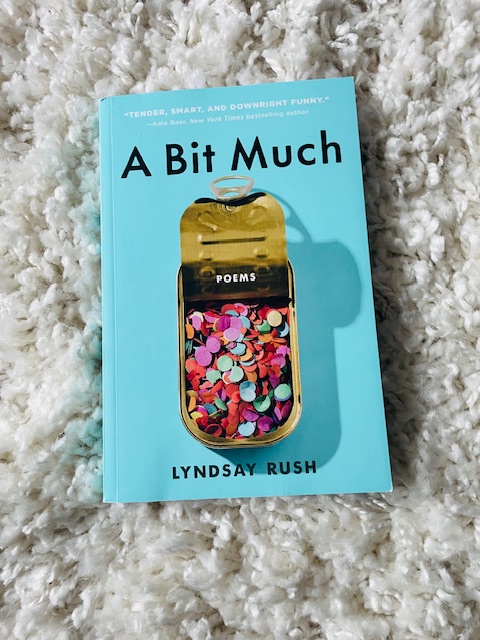
There is a new poet, Lindsay Rush, known on Instagram as Mary Oliver’s drunken cousin, who wrote a poem that went viral and has since become my poetic life mantra. It is titled “She’s A Bit Much.” She takes a common insult made about women and turns it into a compliment. She compares the insulted women to confetti, sprinkles, and the bonus French fry at the bottom of the bag, someone we are to celebrate, and she ends with the line, “Aren’t we lucky she’s here.” Her poem points to a bigger truth: insults made about women, such as she is a bit much, too bossy, manipulative, too driven, not feminine enough, etc., are more about putting women into a box that minimizes their God-given attributes when they should be celebrated.

As I child, I was labeled as bossy by some adults in my circle. I had budding leaderships skills, and needed adult guidance to help develop those skills in a healthy manner. Yes, some children with leadership skills can develop into narcissistic dictators, but most children just need adults to help them recognize that being a leader is not just giving orders but inviting others along to accomplish a goal for the greater good. It is interesting that boys are rarely described as bossy; words like charismatic or having leadership potential are used instead.

I have also been accused, in some circles, of being “too much” and have had conversations with other women who have also been unjustly accused of this as well. Introverted, mild mannered Christian women are held up as the more palatable and less offensive role models. According to the Bible, we are all expected to be humble, gracious, and gentle. Those character traits are not just limited to the female gender. But somehow, we associate those traits with quiet females. I think I can be “too much” in some people’s eyes but still exhibit the fruits of humility, graciousness, and gentleness in my life. It is just how those fruits are manifested that might be different than some of my introverted friends.

The point is, we label women with negative traits that we rarely use to describe men, and somehow, we think that it is okay. Although I don’t like being called bossy or “too much”, I find myself putting other women into a box with the label “brassy.” These so-called “brassy” women boldly state their opinions or ask for what they need from others without qualifications. We all need to learn a level of hospitality and be careful that we are asking and not demanding. Being bold and direct are not bad traits, and I must be careful that I am not labeling a bold woman as brassy when I don’t apply the same standard to men.

Like most consumers, I can be drawn in by certain labels. Terms like “sustainable,” “supports local farmers,” and “produced in small batches” are like catnip to me. I also look for labels in a bookstore and rush to the poetry, memoirs, and literary fiction sections, avoiding the fantasy and science fiction shelves. These labels help me pursue what I am looking for. But when we broadly label women negatively, we impose limits on what we think they can and should achieve, which can sometimes become self-imposed limits.

One of the most controversial women today, Meghan, the Duchess of Sussex, addressed these labels or archetypes on a podcast she did in 2022. She understands firsthand how labels can destroy when the media and trolls describe her as a “gold-digger,” “fake,” “family destroyer” and far worse. She interviewed some women, including Serena Williams, Paris Hilton, and Mariah Carey, exploring the origins and consequences of being labeled ambitious, a bimbo, or a diva. These women shared how they have let go of the negativity and, in some cases, changed the definition to a positive one. One thing from her podcast that stuck with me is when Serena Williams talked about negativity in relation to a woman being described as ambitious. Serena explained how for a long time that label hadn’t impacted her until she met her husband. But then people started describing her ambition in a negative light. “So, since I’ve felt the negativity behind it (referring to ambition), it’s really hard to un-feel it. I can’t unsee it, either, in the millions of girls and women who make themselves smaller, so much smaller—on a regular basis.”

Serena articulated something that I believe most women have felt in their lifetime, and I have no doubt that all the young women I care about have also felt it. When we are labeled as too much, bossy, brassy, and not feminine enough, we often find ourselves becoming smaller, shrinking our influence, agency, ambition, drive, and talents. This often leads us to imposter syndrome where we think we don’t measure up. We then start to second guess our instincts and minimize the character traits that reflect our creator.

Years ago, my husband had a meeting with some people and the subject of me came up. I had been feeling for a while that I was doing something wrong and felt like I was being pushed out of what I deemed the inner circle. Terry directly asked if there was an issue with me. The people in the meeting immediately said no, but one person qualified that sometimes, “Sherry can be too much.” They continued, implying that I can swoop in and get a job done, almost making the “too much” more palatable. But clearly, no one in the room but my husband believed this was a good trait.

Later, when I heard that I was “too much”, I instantly felt swallowed by shame. Hadn’t I written prayers time and time again in my journal asking God to help me be meek and mild? Hadn’t I come to this same group, bearing my soul in one of the worst moments in my life, and pursuing God with humility? Hadn’t I become smaller, hiding my natural extroverted inclinations to fit in with this group? Apparently, despite my best efforts, I was still “too much.” At that point, I was still desperately trying to fit in, so instead of affirming that my “too much” was enough for God, I did the opposite. I became smaller by being less talkative, less present, less involved, and less joyful.

There is one woman in the Bible who did not shrink in a time of need. Esther and her people were facing total annihilation. At first, when confronted by her cousin Mordecai to address the king, Esther started to shrink. Yes, she was the queen, but she still had to submit to the king. Boldly approaching his throne without being called for might lead to her own death. But Mordecai challenged her with these words found in Esther 4:14, “For if you keep silent at this time, relief and deliverance will rise for the Jews from another place, but you and your father’s house will perish. And who knows whether you have not come to the kingdom for such a time as this.”  Esther thought about what he said, and replied with a plan, ending with “and if I perish, I perish.”

Esther decided to go big and be who she was called to be, realizing that shrinking will lead to certain death, but the unknown gave her agency, allowing her to call the shots. By being who God called her to be, she was able to command the king’s attention and save her people and herself. I wonder how many of us women have shrunk in times we were needed because of what others have said about us, and how that leads to us slowly dying inside, never fully living the life we are called into.

In the circle that thought I was “too much”, I was slowly dying and becoming less of who I am. But I am no longer in that circle and have found a safe place to be all that God has called me to be. Yes, I still have character traits that must be balanced and smoothed out. But God’s guidance will help me fully be the woman He created.

I need to talk more about these issues with my friends. When I hear a woman being labeled, I should challenge the speaker with grace, trying to expose how these labels constrict, damage, and restrict women. I also need to address my own complicity in the problem, making sure I don’t fall into the trap of labeling others. I can encourage young women to be exactly who God made them, growing in true inward holiness. This will help #AccelerateAction in removing gender biases.

Sometimes, we need extra food coloring to make things right. Sometimes we need to turn insults into something positive like Lindsay Rush does in her poetry. But we always need women to operate exactly as they were designed; not labeled in a way that brings death but brings life.

Atmosphere

“So, whether you eat or drink, or whatever you do, do all to the glory of God.” 1 Corinthians 10:31

A few days ago, I woke with the sun peeking through my curtains. Clad in my pajamas, I headed downstairs to see that frost had blanketed the lawn, while the cool crisp air from outside had seeped into my home. Shivering, I adjusted the heat, covered up with one of my cozy throws, and opened my Bible. The heat kicked in, and the rising sun lit the room with a warm glow. But something didn’t quite feel right, and I knew instantly what was wrong. The icy fingers of the silence snatched away any warmth supplied by the throws, the sun, or the heat. I knew it was time to start filling the home with joyous Christmas music, and I knew just where to start. I asked Alexa to play “O Come, O Come, Emmanuel” by The Piano Guys. Instantly, the mellow notes of the cello filled the room with hope, soon followed by the tinkling notes of the piano, giving the hope wings.  The atmosphere changed as peace and joy flooded my home and my soul.

It has been two weeks since the cacophony of the election ads, accusations from both sides, and shouts of despair have quieted. The polls have closed, and with that, ended one of our nation’s most tumultuous elections. Some who read these words spent the next day rejoicing, while others were in despair. I have had a lot of thoughts about this election, and how as a Christian I personally felt called to vote. I know my views were in direct opposition to many of my friends and surprised some on the other side. I have no intention of justifying my reasons or trying to persuade others of the wisdom of my decision. I can say that I thoughtfully prayed, listened carefully to some people I respect on the issues, and cast my vote, confident of making the right choice for my faith.

The biggest takeaway from the election is not about who was right and who was wrong. No one on either side can say in truth that God favored the winner and frowned upon the loser. They only thing we can definitively say is that God is in control. It’s also not important for me to lay out my own personal interpretation of why one candidate won and the other lost. I will leave that analysis to Tim Alberta, David French, and Sarah Steward Holland and Beth Silvers from Pant Suit Politics, a new independent podcast I have discovered. The real takeaway is this: how do I, as a Christian, move forward in our nation, sharing the peace, joy, and hope that I feel in Christ? How can I create an atmosphere that others of different beliefs can feel and maybe experience?

God prioritizes creating the right atmosphere. Eden was full of different fruits, plants, and animals, creating a beautifully diverse world. Later, God set up his tabernacle appealing to all our senses. He charged designers to carefully craft intricately carved gold furnishings. He had curtains carefully woven so that visually they told a story. Candles burned eternally, creating a place of reverence and light. He used special ingredients for the incense whose scent would distinctly remind visitors that this was the place where God dwelled. The sound of prayers offered up to God were heard throughout the tabernacle. Even the sense of taste was used in the tabernacle, when the priests ate the shewbread every Sabbath, reminding us that we need to come to God regularly for our daily needs.

Beyond the tabernacle, the New Testament exemplifies Jesus using His senses to minister to other’s needs. He saw the disreputable tax collector, Zacchaeus, hiding in a tree, and invited Himself over to Zacchaeus’ home. Virtue flowed out of Jesus when the hemorrhaging woman grasped His robe. His hands molded dirt with spit and placed this poultice on the eyes of a blind person to bring sight. He heard His disciples’ cries during an epic storm, responding to their fears by defying all scientific principles, calming the storm with His command. He ignored the scent of Lazarus’s decaying body, bringing life back to His friend.

As a Christian, I am called to be a witness for Christ by being a peacemaker, speaking truth with love, and glorifying God in everything I do. I can model myself after Jesus by engaging my senses to minister to those around me. Like Jesus, I can keep my eyes open for those who are marginalized and invite them over dinner. Showing hospitality opens doors for conversations with others who may not think or believe the way I do. I can pay attention to those who are in desperate situations and reaching out for help by acknowledging their identity in Christ. Jesus called the hemorrhaging woman His daughter, inviting her into relationship with Him. When I recognize everyone as being created in the image of God, respect should flow from me to them with my conversation and social medial posts. I can use my hands to minister to those who are in need by making meals, writing cards, or cleaning someone’s home when needed. When people feel stressed by what’s going on in the world, I can offer peace by remaining calm and listening to their concerns. Finally, when the stench of controversy and divisiveness floods social media and dinner tables, I can quietly turn the conversations back toward life by addressing the hard issues, and by acknowledging what Jesus cared about most: making broken people whole.

This doesn’t mitigate my concerns for the next four years. I have concerns that some potential cabinet candidates with checkered pasts relating to sexual misconduct and assault will silence victims and empower perpetrators by giving them legitimacy. I believe in strong borders but am concerned about the consequences mass deportation would have on those who are desperately trying to have a better life. Labeling immigrants, legal or not, as “not humans” or “Hannibal Lectors” denies the fact that all people are created in the image of God. I believe in the sanctity of life, but it goes far beyond a baby in the womb. I do not believe the incoming administration will offer support to single mothers by extending childcare credits or offering decent health insurance. And my list continues. But staying in a constant state of worry doesn’t move the dial forward toward solutions on any of the issues. Instead, I need to do my part whenever and wherever I can. I also can work toward being a peacemaker in my own circles.

Thanksgiving is right around the corner. Menus have been planned; turkeys will soon start their journey toward juicy, brown goodness; and pumpkin pie dreams fill my grandchildren’s heads. Often, our tables are full of people we love, but who think or believe differently than we do. I will sit at many tables during this holiday season where people think differently than I do. I am sure some of the conversations around the table will cross political lines. For me, I am going to try to create an atmosphere around these tables that represents Jesus, sharing the hope, peace, and joy I feel. These will always remain no matter who is president.

Dear Little Sherry

“Behold, children are a heritage from the Lord,” Psalm 127:3

Dear Little Sherry,

            I want to start off by saying I love you and I am so thankful that you were brave and survived, but I so wish things had been different for you.

            I wish you had had pretty dresses that you could twirl in. I wish you could have felt like a princess and beamed with delight that you were enough. I am sorry that you wore leggings and jeans that were ripped in between your legs because of your thighs rubbing together. I am sorry that you had to wear the army green jacket that made you feel ugly. I would give you more pink and yellow, colors that made you feel beautiful and cheerful, the child you were meant to be.

            I wish someone had taken the time to make breakfast for you. I wish they had poured your cold grape juice in a glass like you preferred and made you soft scrambled eggs or oatmeal. You deserved someone to make your favorite meal special.

            I wish you had laughed more and not been laughed at. I would sit with you and watch the funny cartoons like Bugs Bunny and listen to your giggle. I am sure your laughter would have filled the room with sunshine.

            I wish you had played more. I don’t remember when you stopped playing, but I know you have no memories of toys or using your imagination except to escape your abuse. I can imagine you playing for hours with things like Barbies or baby dolls. Maybe you would have built things with blocks or designed pictures with art supplies.

            I wish someone had written notes to you on your first day of school, letting you know they believed in you and that you would make friends. I wish someone had told you that you were a good big sister, and not held you accountable for all the things that went wrong.

            I wish you had been tucked in at night, with a special blanket and stuffed animal, and had a story read to you that made you dream. I wish someone would have asked you what your favorite thing was for the day, and you would tell them about a fun activity at school. I wish you had a safe place to go when you had nightmares, instead of trembling in your bed from the fear of something that no child should ever dream of, let alone experience.

            I wish someone had encouraged you to take more walks in nature and look for the beauty God had created. As an adult, you get excited when you see vibrant verdant moss covering a path or wild purple mushrooms growing next to a tree. I can only imagine the squeals of delight you would have made as a child seeing the explosive beauty of nature. I wish someone had taken you to the library after these walks so your insatiable curiosity could be satisfied instead of spending hours in front of the television.

            I wish you had someone safe to share your common childhood disappointments with, instead of stuffing them with food. When you were bullied on the bus, I wish you had been able to come home and tell someone, instead of coming home to endure more bullying. I wish when you realized you couldn’t sing on key or dance with rhythm, that someone had told you to sing and dance anyway. I wish they had played your favorite music and had a dance party with you at home.

            I wish someone had encouraged you to write, even if you struggled with your penmanship. I wish they would have realized how much you identified with Jo in Little Women and bought you a desk so you could create stories and newspapers. I wish they had bought you special journals so you could write down what you observed.

            I wish someone had shown you how to file your nails, fix your hair with a curling iron, and walk in high heels. I wish you had always had clean towels, top sheets, and fruity smelling lotion. I wish you hadn’t felt the responsibility of keeping the house clean by doing hours of laundry and dishes, only to find your attempts futile.

            I wish so much for you little Sherry, and I hope, as an adult, you find restoration for all the things that were taken from you.

                                                                                                Love, Sherry

Prologue: Sunshine

“See what kind of love the Father has given to us, that we should be called children of God; and so we are.” 1 John 3:1

It was a Saturday morning when God ushered a healing moment into my life. It didn’t happen with me crying at the altar, pouring my heart out to the Lord, although moments have happened there. It didn’t happen with me coming to a revelation while engaged in professional counseling, although at times it has happened there. It didn’t happen with me finding a scripture and dissecting it till it imprinted meaning on my life, although it has happened there, too. Instead, it happened on an ordinary morning where I was unexpectedly graced with the Lord’s gift of restoration.

My husband, Terry, had had a busy week at work and at church. I can’t recall the exact details of what was going on. It could have been late nights due to overtime, or maybe he was working on putting some music together for choir, but whatever the reasons, my 4-year-old blond-haired, blue-eyed daughter, Maggie, had felt slightly neglected by her father. She had been playing quietly on the floor when her dad stepped into the room. She pleaded with her soft, sweet voice saying, “Daddy, can you please sit down by me?” He quickly plopped on the floor next to this child that we called our sunshine. She sat across from him and said, “Daddy, I’ve missed you. Can you please just hold my hands?” Terry gently took his large man hands and held the dainty hands of our daughter for a few moments, just gazing with love and wonderment in his eyes. He then quietly whispered the words “I love you,” and she beamed with joy, her mouth smiling widely, causing her eyes to crinkle.

Maggie and Terry on her wedding day!

At that exact moment, I felt God’s peace flood my soul. In Philippians 4:7 (ESV), scripture describes this as “the peace of God, which surpasses all understanding.” I felt God whispering to me that this is an example of the beautiful relationship He intended all daughters to have with their fathers. It is the relationship He, as my Heavenly Father, intended for me, His daughter, to have with Him. He continued to whisper that He was going to use my daughter’s relationship with her father to demonstrate to me what He intended. My daughter’s healthy relationship with her father would provide restoration for my troubled and ugly childhood. No, it would not erase my memories of what had happened. No, it would not make everything better. No, it would not answer all the why’s in my life. But He would take the brokenness in my life and continue the work of restoring me. He would show me how much He had loved me even when I was being abused and neglected by the man I called my father. He would show me the beauty of restoration.

Restoration: The Post That Led to My Book

“And I am sure of this, that he who began a good work in you will bring it to completion at the day of Jesus Christ.” Philippians 1:6 ESV

Note to Reader: This blog was previously posted in June 2020 as a test to see if I could put my story out to the world. You will learn in my upcoming memoir, how I reacted to my first post.

Last Sunday marked another year; another year I did not buy a Father’s Day card for my father. In fact, I don’t recall ever buying a card for either my biological father, or my stepfather. It is possible that in grade school I may have made a card, but I have no clear memory of doing so. I have purchased cards for my husband, celebrating the wonderful, nurturing father he has been to our children. I have also bought cards for my grandfather, my father-in-law and my uncle, who acted as positive male role models in my life. Yet, I will never make a warm sappy post highlighting that I am still a “Daddy’s girl” on Instagram. I will never share a picture of my father walking me down the aisle on my wedding day, instead it was my uncle who fulfilled that role. The harsh reality is that I don’t have a father to celebrate or honor!

For you to understand my situation, I will share a brief history of my family. My biological father signed away his parental rights when I was a baby. I did meet him once and subsequently decided the relationship was not worth an investment. I was raised by my stepfather, an alcoholic who sexually abused me. He was later arrested and convicted of sexual assault. It’s easy to understand why I don’t buy a Father’s Day card for either of them.

I could close my blog right now, and I am sure comments of sympathy and empathy would ensue. I might even get questions about the details, or about the importance of expressing forgiveness. But not spending $5.99 for a Hallmark sentiment on Father’s Day is just a prologue to the main story. It doesn’t tell the story of a woman in her late forties who cherished and treasured every picture her friends shared on Father’s Day with their own amazing dads. It doesn’t tell about the woman who loves to plan a full day celebrating her husband on Father’s Day. It doesn’t show the restoration that has taken place.

Restoration is defined as the action of returning something to a former condition. I love old furniture, but unlike antique purists such as my father-in-law, I don’t love to restore furniture. Instead, I love to paint pieces a fun, new color and replace the old hardware. It fits my décor style and takes less time. And a good coat of paint can cover up a lot of damage. But true restoration takes time and effort. Often, you have strip away the old finish, sand the piece down, and carefully stain it to its former glory. My husband and I toured The Breakers, the old Vanderbilt mansion in Newport, Rhode Island. The curators of this mansion did an amazing job trying to find as many original period pieces as possible to furnish the house. The restoration of these pieces was carefully done and is priceless, demonstrating the amazing craftsmanship of the designer!

Picture Credit to Margaret Diller

Imagine with me that when I was born, I was a beautiful table, designed and carefully carved by God himself. My wood grain was stained carefully to let the beauty of the piece shine through. Yet, within a few short years of my life, this table was damaged beyond recognition by misuse and abuse. In some areas, the beautiful wood grain was marred with scratches that cut deeply into its surface. It no longer functioned as a table and most people would not have even bothered trying to sell it at their yard sale. Its battered surface and legs looked worthless and unsalvageable.

Thirty-one years ago, this table, my life, was on its way to the dump, all but crushed by the weight of worries and burdens I was never meant to carry. I had just shared with the police and social workers the details of my years of sexual abuse. My stepfather was immediately arrested, and I was experiencing post-traumatic shock. Yet, within a few months, I experienced the love of Jesus, an unconditional love that forever changed my life. Being filled with His spirit, I felt peace amidst the chaos, pain and brokenness.

This infilling of God’s spirit was the beginning of the restoration process. This involved therapy with counselors, but a lot of the process involved God using His word, His spirit, and His body of believers to restore me. Some of the process involved stripping me of the wounds of abuse, carefully sanding my distorted thoughts and views to bring out the beautiful grain. It included refinishing me with a new stain, restoring in me the trust and beauty found in a marriage, family and friends. It entailed ripping out damaged places such as coping mechanisms that led to food addiction and replacing them with new, sturdier hardware, including the satisfaction and fulfillment found only in God. This restoration didn’t happen overnight, and I can’t say that it is complete, yet. I can’t say that there aren’t some scars underneath the table that still need to be uncovered and healed. However, I can say that God has done an incredible work in my life, restoring me to what He had intended from the beginning. I am not the same table that I was when I was born. God, through his restoration process, has created a new masterpiece that reflects His amazing craftsmanship!

This is just a glimpse into a major project I am working on: writing a book about the restoration of a life. In this blog I have used the metaphor of restoring a piece of furniture for simplicity’s sake. In my book, I am relating my life to the restoration of a home, a deeper and more involved project than a simple table. My goal in the book is to walk you through my restoration process, unfolding how God has ministered to me in different areas of my life. This journey of restoration is my story, but I believe, whether it is childhood trauma, as in my case, or a failed marriage, an unexpected death, or any situation that causes us to be broken, we all have areas where we need God’s intervention to help bring us back to a place of restoration. In Jeremiah 30:17, the Lord prophesies, “For I will restore health unto thee, and I will heal thee of thy wounds.” According to the Matthew Henry commentary, most of Jeremiah’s prophecies fall in the area of reproof and threats. Yet, this chapter is one of two chapters that stand out as a source of comfort and hope. Despite the effects of sin, whether self-induced, or inflicted by others, God had a plan to restore His people to health and heal their wounds. This promise was not only for Israel, but for us, today, as well!

Father’s Day will arrive every year for the rest of my life, and there will always remain some “nevers” in my life, including never buying my father a Father’s Day card. But this is not a source of pain or contention for me, but rather a reminder of God’s grace and love. Like the Apostle Paul says in Philippians 1:6, “Being confident of this very thing, that he which hath begun a good work in “Sherry” will perform it until the day of Jesus Christ.” God has begun a good work in me, and I can’t wait to finish my book so that you can read about it!

Stewarding the Earth: Echo Chambers and Climate Change

“but in your hearts honor Christ the Lord as holy, always prepared to make a defense to anyone who asks you for the reason for the hope that is in you; yet do it in gentleness and respect.” 1 Peter 3:15 ESV

Four and half years ago, I titled my blog Graceful Transitions and started writing about my midlife journey. I wanted it to be a space where I could share things I was wrestling with, such as creating more intimacy in my marriage, being transparent about my journey to better health, and moving from parenting to blessing my adult children. Just as I agonized over the names of my children, I picked the name for my blog carefully. I wanted this to be a place that exuded gracefulness. In years past, I had been bold and harsh with my opinions, often alienating those around me. But life has a way of humbling you, and I wanted to operate in that space. My writings could still be bold and confident, but I didn’t want to come off as an expert. Instead, I wanted to share my thoughts in a gentle manner that dignified both God and the reader. The word “transitions” was also carefully thought out. I didn’t want to portray myself as someone who has arrived. Instead, I wanted to be curious, eager to learn and grow in my relationship with Christ. These traits would move me from one place to another with fluidity.

We often walk in a local park that has a tunnel underneath a busy road. Anytime we have children with us, we stop in the tunnel for a few minutes. They sometimes yell each other’s names or just make a loud noise and listen to it reverberate. There is something about hearing an echo that is delightful. Your voice becomes an instrument that can drown out any other sound. And it’s contagious. Once one child makes a sound, other children quickly start doing the same. And soon, the tunnel becomes a cacophony of noise.

Initially, I had no intentions of pontificating on any hot button issues in my blog. Current event noise fills our screens with rants and raves, polarizing our society. But as I continued to write, I found God gracefully transitioning me out of the self-imposed echo chamber I had been in for the last thirty years. This echo chamber informed my political views, how I looked at the world, and what causes I believed in. Like the tunnel, the echo chamber noise of the 2020 election became deafening. And as the world dealt with the pandemic, racism, and immigration issues, I found myself looking for other perspectives.

This led to a spiritual crisis. For so many years, I espoused the idea that you could only vote one way to be a good Christian. I even challenged others on this principle, boldly declaring that God only accepted the votes of one political party. But again and again, I kept reading in scripture how God cared for the poor, the widow, the fatherless, and the sojourner (another word for immigrant). Did my votes support what God truly cares about? Can Christians think differently about issues?

God always has a way of helping you wrestle well these concepts. As I read scripture, God directed me to other Christians who had a different perspective from those on talk radio and certain news outlets. These thinkers researched carefully, believed all people were created in the image of God, and still held fast to scripture. They didn’t water down the gospel, but instead looked at scripture wholly and completely.

All this reading, listening, and thinking led me to this series on Stewarding the Earth. For years, the far right has labeled environmental supporters “wackos and pagan worshippers”. As a follower of Christ, I am troubled by the name calling I used to support. Is name calling helpful in moving the conversation forward and declaring the gospel to those who care about the earth? I now believe you can be a Christian environmentalist. John Muir, one of the biggest environmental supporters had Christian roots. Founder of the Sierra Club and considered the father of the National Parks, Muir believed in God. He was known to share his faith with others on the University of Wisconsin campus. Some scholars acknowledge that Muir struggled with orthodox Christianity later in life, but he did recognize God’s hand in creation throughout his book My First Summer in the Sierra. Today, one of the leading climate change scientists, Katherine Hayhoe, is a Christian. She has been awarded Champion of the Earth, the United Nation’s highest environmental honor. In her bio on her website, she says, “I don’t accept global warming on faith; I crunch the data, I analyze the models. I help engineers and city managers and ecologists quantify the impacts.” There are also some faith based environmental advocacy groups, like A Rocha International and the Evangelical Environmental Network.

I have heard two consistent arguments from fellow Christians against environmental policies. First, they believe that environmentalists worship creation more than the creator. There may be some truth to this in some cases. But scripture supports the fact that when people express awe in creation, it points them to the creator. David says in Psalms 8:3, “When I look at your heavens, the work of your finger, the moon and the stars, which you have set in place.” This sense of awe was reaffirmed by Paul in Romans 1:20, where he says, “For the invisible attributes, namely his eternal power and divine nature, have been clearly perceived, ever since the creation of the world, in the things that have been made.” Psychologist Dacher Keltner, who has studied awe, finds that experiencing awe makes people more curious and less judgmental. It also makes people more humble, generous, and altruistic. If we Christians keep the earth as awe inspiring as we can by reducing our impact on the climate, can we point others to Christ? If we value the created earth, because it points to an awesome creator, can we have conversations with non-believers when they are curious and open to ideas about how God frames our world? These conversations can only happen if we, too, are inspired by awe. This will help us to express curiosity and be less judgmental.

The next argument I hear often is that we were given dominion over the earth from the beginning of time. Again, there is truth in that. Genesis 1:28 says, “Be fruitful and multiply and fill the earth and subdue it and have dominion over the fish of the sea and over the birds of the heavens and over every living thing that moves on the earth.” But the Bible goes on to say in Genesis 2:15, “The Lord God took the man and put him in the garden of Eden to work it and keep it.” The Hebrew word for work is “abad” which also means to serve, and the Hebrew word for keep is “samar” which means to guard and keep watch, protect, and save. When you put the two verses together, it changes our view on the word dominion. We are to operate on God’s behalf, and we are called to rule over the earth by protecting and serving it. By doing this well, we are ensuring that the earth will provide us with the means to survive: a healthy climate where animals and vegetation are thriving, and clean water flows freely. God didn’t give us the authority to destroy and plunder the earth!

There are some great theologians and philosophers who advocate for a more theologically sound view of the environment. C. S. Lewis, great Christian apologist, warned in The Abolition of Man that “Man’s conquest of Nature turns out, in the moment of its consummation, to be Nature’s conquest of man.” Francis Schafer, a leading Christian philosopher, challenged believers in Pollution and the Death of Man, “Christians, of all people, should not be the destroyers. We should treat nature with an overwhelming respect.” Wendell Berry, poet and naturalist, writes in The Art of the Commonplace: The Agrarian Essays, “…the care of the earth is our most ancient and most worthy and, after all, our most pleasing responsibility. To cherish what remains of it, and to foster its renewal, is our only legitimate hope.” These Christians contemplate the word of God and carefully choose words to respond to concerns they have about the environment. I wonder how often the voices that oppose environmental policies contemplate scripture and man’s responsibility towards the earth.

As a follower of Christ, I am expected to shine His light in a dark world. This is more than just sharing my testimony; it should be embodied in how I act and treat others and the earth around me. How I live my life impacts the climate. My carbon footprint increases drought and flood conditions and changes water supplies. It also makes winters warmer, allowing bugs and pests to increase. Their increase can lead to the destruction of forests and other vegetation. Food supply chains are being affected and the sea level is also changing. All this change directly impacts my neighbor, from the person next door to those in Mozambique who contribute little to the carbon footprint. Katherine Hayhoe’s website is full of information about how climate change is affecting our world. She uses scientific research to support her arguments and to counter the opposition.

I have written about noise pollution, our obsessive use of plastics, and how to Leave No Trace. Some of these ideas will help reduce our carbon footprint. Although I don’t personally own a hybrid or electric vehicle, I can argue the benefits of encouraging research and development in making these vehicles more viable. I can also talk about how shopping locally, both for produce and meat, is another way you can reduce your carbon footprint. But the biggest way for me to make an impact is to acknowledge climate change is real and to be educated before I enter the voting booth, both on a national and a local level. Supporting policies that reduce climate change can be one of the most important ways I steward the earth well as a follower of Christ.

This is the end of my series on Stewarding the Earth. Readers, I hope you enjoyed it. Feel free to comment on any of the posts I have made. I will continue the conversation in the future with some interviews with fellow Christians who model these principles well. Additionally, I will likely write about other issues where God has been opening my eyes to a wider and fuller view of scripture. These still fit into the ethos of Graceful Transitions, because I want my words to dignify God and you, my readers. Thank you for all your support.