“In everything give thanks; for this is the will of God in Christ Jesus for you.” 1 Thessalonians 5:18
I am insatiably curious about everything, well almost everything. From snails, horse racing, and architecture to travel, history, and biology, I read, research, and run down rabbit holes on a diverse number of subjects. In looking back, childhood trauma stifled my curiosity, but it was reawakened when I home educated my children. The fires were fanned while watching their deep brown and shimmering blue eyes sparkle when learning how pitcher plants could trap small mammals, and the frigate bird stole food from the blue-footed booby. I readily engage in conversations with strangers, listen to a wide array of podcasts, and have a never-ending stack of books on my nightstand to satisfy my curiosity. As I grow older, I hope to keep these fires burning, forever positioning myself to be a life-long learner.
One of my favorite areas of study is learning how the brain’s wiring changes with new interactions. For many years, we thought that brain development became static as we age. But we are learning that even people 50 and older can change due to neuroplasticity. They are not trapped by their childhood and early adult patterns of viewing the world. Instead, they can move towards being more healthy, whole, and wise as they age.
One of the simplest ways to change is to express gratitude. Various studies have demonstrated that practicing gratitude daily can reduce cortisol, which lowers stress. It also provides more structure for the prefrontal cortex, the part of the brain that deals with difficult emotions. Building neuron connections through gratitude helps us feel good both in the short term and in the long term, by strengthening our emotional resilience.
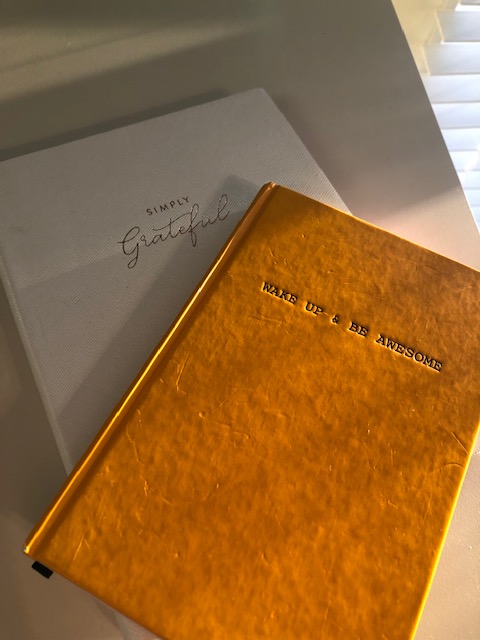
I could go on about the benefits of gratitude, but I know firsthand how it has improved my life. For about 10 years, my daily gratitude journal has been an important rhythm in my life. Expressing gratitude daily has helped me pursue peace during adversity, demonstrate kindness to others, and remain hopeful in hard circumstances. It confirms Paul’s words in Philippians 4:6, “Don’t worry about anything; instead, pray about everything. Tell God what you need and thank him for all he has done.”
For the next 30 days, I am going to share with you a glimpse of what this daily practice has looked like in my life. I am doing this for several reasons. I need to reincorporate this practice with more consistency. I also need to make writing a priority in my life as well. Writing helps me process and is an important creative outlet for my life. It may be just a few sentences or a few paragraphs, but each day, I invite you to see a window into my soul.
I am going to title this series Formation. Formation means an act of giving form or shape to something. I hope this practice of writing gratitude helps shape my brain to focus on the goodness of God and gives form to my writing habit. So come along with me for the month of November, and practice daily gratitude with me. Feel free to share in the comments about your own gratitude.
“The way of a fool is a right in his own eyes, but a wise man listens to advice.” Proverbs 12:15
It is finally cooling down, and you can see the leaves getting tired and worn out, ready to shed their verdant color and expose the red, yellow, and brown of Autumn. Squirrels scurry on the streets, desperately trying to grab every nut and seed they can find before winter. Pumpkin décor scatters my bookcases, the spicy apple butter scent has already permeated my home, and I just made my first pot of chili. And, yes, I have had more than my share of hot and cold pumpkin spice drinks. This has been and continues to be my favorite time of the year.
Fall always feels like a time of transition—a time to get cozy and embrace hygge living. You can learn more about my love for hygge in an earlierpost. This fall, more than ever, I look forward to lighting candles, cozying up under a throw, and listening to my cousin Johanna’s classical spooky playlist. It is a welcome change after a summer filled with swirling noise, making everything feel murky and confusing.
But practicing hygge this season would not be enough. I had known for a while; it might do me some good to start counseling—to follow the advice I had given to so many recently. But sometimes it is easier to give advice than to follow it. Almost two months ago, I took the plunge and went back into therapy. I needed some help processing the aftermath of publishing my book. I also needed some help reconciling the things I had been taught about faith with what Jesus taught, as some of it felt incongruent. So, I found a licensed counselor who could help me reorient myself and clear up the murkiness I was feeling.
I am too early in the process to fully disclose what I am learning about myself and about God. I can say that I still believe God is good. I can also say that thirty-six years ago I had a life-changing experience that filled me with peace and joy when I asked God to fill the empty space in my life. But beyond that, I am still figuring out how to hold Jesus in one hand and the obstacles of life in another.
Transitions are hard, whether you ask for them or they come unexpectedly. This whole blog experience was because I was facing transitions. I had no idea that in this process, I would be expanding my views on God and finding a fuller message of the gospel. But in that process, I have learned some unpleasant things about myself, things I need to work on. One of those things is that I can be extremely passionate when I make a change or discovery, and that enthusiasm or passion can make others feel judged. I am also learning to give myself more grace, articulate to others where I am at, and fill my life with gratifying things.
It’s Autumn, and I don’t have a bucket list of things I want to accomplish. I just want to keep my heart open to whatever God has planned for me. I want to work on the things that I can control and leave the rest in His hands. I also want more pumpkin spice!
“Learn to do good; seek justice, correct oppression; bring justice to the fatherless, plead the widow’s cause.” Isaiah 1:17
As I write the epilogue, we are deep into the editing process. Thoughts race through my mind. Did I miss something? Should I have written certain chapters with more vulnerability? Did I address all the areas I hoped to cover? And the list continues. But my husband keeps reminding me that I need to close the book. And he’s right. This book was never meant to be an exhaustive window into my healing process, because it is fluid, and I continue to grow. Nor was this book meant to be a comprehensive overview of all the therapeutic models that have helped me and could help other victims. Just as the home remodeling shows edit hours and hours of footage down to a 44-minute show, I also must edit all the heart, soul, and mind material that I have dealt with in my healing process. I can’t cover everything, and some things are still so raw and vulnerable that I am not ready to share them with the world.
I therefore close with a thought that Rachael Denhollander, a victim of sexual assault, shared in her victim impact statement at the sentencing hearing of Olympic Gymnastics doctor, Larry Nassar. She asked the judge, “So what is a little girl worth?”1 This later became the title of her own memoir about sexual assault. It is a simple question but one with many layers to it. And it’s a question I ask you, my readers: What is a little girl worth?
I know the answer is not found in the voices of perpetrators who crush victims. It is not found in people who lack insight and knowledge of how to handle trauma. It is only found in the gospel. As Christians, we can and should be a support system that has confronted and dealt with our own misconceptions about sexual assault and has created a safe place for victims to heal.
I ask you, again: What is a little girl, a little boy, a woman, or a man worth? Are you willing to arm yourself with knowledge and material that will help educate and inform you on the effects of trauma? Are you willing to let experts like Rachael Denhollander, Dan Allender, and Chanel Miller educate you on the harm this kind of trauma did in their lives and the lives of others? Only one of these is a licensed therapist. Their expertise is not based on the letters after their names, it’s based on their own experiences with sexual assault. All too often, victims are further dismissed for being a sexual assault advocate. Rachael Denhollander said in her impact statement, “Once it became known that I too had experienced sexual assault, people close to me used it as an excuse to brush off my concerns when I advocated for others who had been abused, saying I was just obsessed because of what I had gone through.”2 I also have experienced this dismissal. But who better to understand and advocate for a victim’s rights than a person who has experienced it herself?
So once again, I ask you: What is the person sitting next to you in church worth? What is the person in your small group worth? What is your sister worth? What is your neighbor worth? If they are valuable and made in the image of God, will you invest some time to unpack sexual assault in more depth? I have included in this epilogue a list of books and podcasts that have helped shape me and correct my own misconceptions about sexual assault, rape, and harassment. Not all these are written by Christians, but truth is truth, no matter the source. Take some time to read a few of these books, or, if you prefer, download them as audiobooks. Listen to a few of the podcasts. It will help inform your compassion and empathy.
List of Resources
Books:The Wounded Heart: Hope For Adult Victims of Childhood Sexual Abuse: Dr. Dan B. Allender; What is a Girl Worth?: My Story of Breaking the Silence and Exposing the Truth about Larry Nassar and USA Gymnastics: Rachael Denhollander; What My Bones Know: A Memoir of Healing from Complex Trauma: Stephanie Foo; Rid of My Disgrace: Hope and Healing for Victims of Sexual Assault: Justin S. Holcomb and Lindsey A. Holcomb; She Said: Breaking the Sexual Harassment Story that Helped Ignite a Movement: Jodi Kantor and Megan Twohey; The Body Keeps the Score: Brain, Mind, and Body in the Healing of Trauma: Dr. Bessel van der Kolk; Know My Name: Chanel Miller; All My Knotted-Up life: A Memoir: Beth Moore
Podcasts:The Healing Trauma Podcast: Monique Koven; Java with Juli: Dr. Juli Slattery; The Place We Find Ourselves: Adam Young; The Allender Center Podcast: Dan Allender and Rachael Clinton Chen
“I praise you, for I am fearfully and wonderfully. Wonderful are your works; my soul knows it very well. My frame was not hidden from you, when I was being made in secret, intricately woven in the depths of the earth.” Psalm 139:14-15
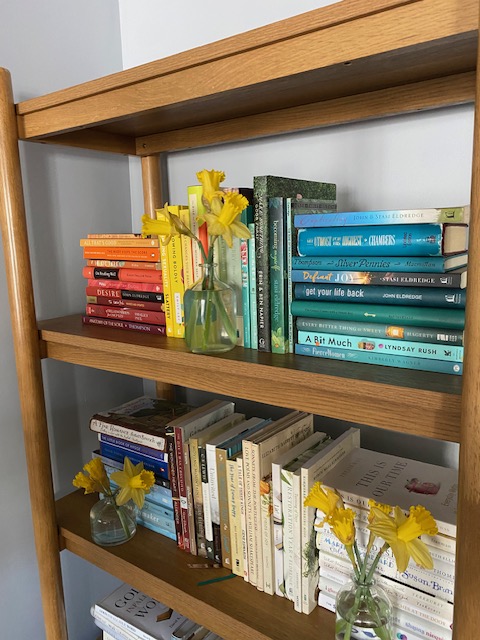
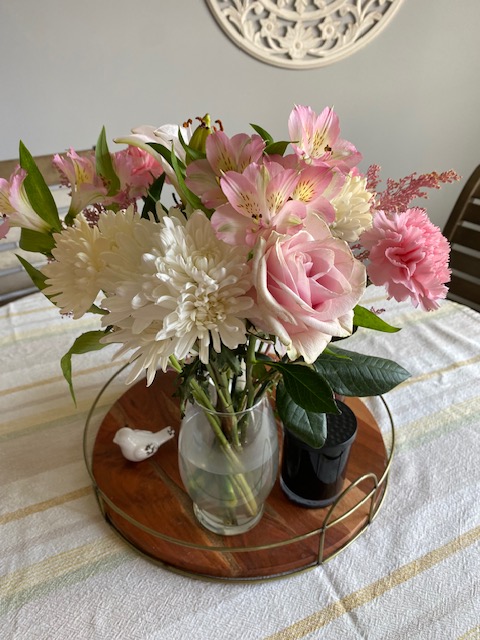
I can smell spring in the air, the faintest scent of dirt exhaling after its long winter slumber, while birds sing their morning songs. The air is still cool, but the sun and the wind whisper warm breezes, hugging my body. Even my music playlists are changing, from the mellow rhythms of yacht music to the upbeat melodies of Cole Poter and Frank Sinatra. To commemorate spring and offset my curmudgeon attitude due to daylight savings time, I bought myself some grocery store flowers. It started when a small bundle of daffodils smiled at me from their bucket. Then I saw another bouquet, full of light pink and white flowers that physically embodied the sounds of robins chirping. Initially, I was going to bundle both bouquets together. I later decided to spread the joy in four separate vases, creating expectant hopes of spring around my home.
The kinds of flowers a person is drawn to are a unique fingerprint of their personality. My mother-in-law loved impatiens, geraniums, and pansies, flowers that grew abundantly, giving her a lot of blooms for her budget. My mother loves ordinary carnations because they last a long time, allowing her to savor the blooms. My daughter’s love for ranunculus helped determine that she would have a spring wedding, so that her bouquet would drip with the delicate pink and yellow blooms. I love daisies because, as Meg Ryan’s character asked in You Got Mail,“Don’t you think daisies are the friendliest flower?”
It is interesting that God designed flowers to be unique. Some have massive heads with lots of tiny individual flowers like hydrangeas, some have intricate patterns like dahlias, and some are just little cups of joy like buttercups. There are even different varieties amongst the same species. Soon, pockets of daffodils will fill fields with sunshine, but if you look closely, you will see some with bright yellow heads, while others are the color of butter. Some will have curvy petals, while others will be fringed with lace. I am delighted our God, in His master artistry, took the time to create flowers unique and individualistic.
In the past few years, I have been on a journey to better health. I have had some setbacks in the last two years, gaining back a lot of the weight I had lost. But I am choosing not to focus just on numbers but on being more active, gaining strength, and becoming more flexible. I am also choosing not to be ashamed of the body I am living in and have bought clothes that fit me well and make me feel comfortable. But as much as I am working towards not being ashamed, I have still let other people around me make comments that demeaned me and others about the size of our bodies. I let the comments slip by, wishing now I had been courageous enough to address how these comments harm women.
One of the comments had to do with a local theater production an acquaintance saw. He noted that the production was good but commented that the female lead seemed too “big for the role.” He felt her size made her less believable as a love interest, although she could sing and dance “well enough.” I listened in disbelief. I am sure that, even in local productions, there were several women trying out for this role. I am also sure that some of the women would have fit his idea of what the lead should look like. But this woman was chosen above every other option because she was the most talented for this role. Additionally, I am curious how “big” this woman really was? Were his perceptions of “big” defined by his narrow view of how a woman should look?
The second comment was made directly to me about me. A different acquaintance of mine looked at the back cover of my book and asked if I dug out my “yearbook photo” for my picture. He didn’t comment on the fact that publishing a book is a major accomplishment. He didn’t remark on how brave I was for addressing a difficult subject or how well my daughter had designed the cover. His only response was pointing out rather unsubtly that I had gained weight. Again, I was stunned by his remarks and started to justify my choice of picture and even casually remarked that I recognized I had gained weight. Meanwhile, he quickly put the book down and started rambling about his upcoming adventure. I left that conversation demeaned.
It is stunning to me that in 2025, despite all the work that has been done in this area, women are still being judged by our size, appearance, and age. We celebrate women such as Andie McDowell who decided to go grey naturally, and Pamela Anderson who decide to walk the red-carpet sans makeup. Yet, Millie Bobbie Brown, a 21-year-old actress, was trolled by critics as “aging badly.” Keely Shaye Bronsan, the wife of actor Pierce Bronsan, is often pictured with before and after pictures, pointing out her weight gain. And if a celebrity has recently lost weight, the assumption is made that she used Ozempic.
I remember writing the author’s biography for my book. As Terry was helping me with the correct wording about where I lived, he added the words “Sherry currently lives in south-central Pennsylvania.” I reacted viscerally to that statement and stated rather emphatically, “I don’t want to take up that much space in my author’s biography. Where I live is not the most interesting thing about me!” I feel the same about my appearance and weight loss/gain; that is not the most interesting thing about me. How I love and care for my family, what I write about, my job as a volunteer coordinator, my passions, and, most importantly, my faith are far more interesting than whether I choose to dye my graying hair, or whether the numbers on the scale have increased or decreased. I do enjoy wearing a nice outfit and taking the time to care for my skin and hair, so I feel confident in accomplishing the things I want to in my world. I do want to move towards a healthier lifestyle so I can live a long and active life. But I don’t want to be defined by my age or my size anymore. And I will no longer tolerate comments made by others that demean me or the women around me.
Ilona Maher is one of the most body-positive role models for women. Maher won a bronze with her American Rugby team at the Paris Olympics this past summer. One of the comments on her social media speculated that she had a BMI of 30. Maher pushed back in a viral TikTok video, confirming she had a BMI of 29.3. She went on to say that the BMI was designed to represent males and was not an accurate representation of what a healthy female athlete’s body looks like. She also stated her weight boldly, remarking that she was not meant to live in a small body. Finally, she stated to the naysayer, “I am going to the Olympics, and you are not!”
If God designed flowers so uniquely, why can’t we accept that women live in different sized bodies, have different facial features, and have different shapes? Why are little girls in middle school still struggling with eating disorders and cutting due to bullying about how they look? Why is “You look fat!” the worst thing you can say to a woman or a girl? And why do we still think appearance, no matter the age, is the most interesting thing about a woman? I am sick of hearing people’s first remarks about a girl or a woman being “She is so pretty,” and then extolling her character, talents, and skills only as secondary considerations. When people remark about a young man, they lead with his character, skills and talents, and rarely address his looks. Will this ever change?
It can only change if I admit how I contribute to the problem. I can work on changing my own language and make sure my comments about women and girls address the character, skills, and talents they offer our world. When I am faced with demeaning comments about women related to their appearances, I can challenge the offender with kindness and curiosity, hoping to make them aware of how their comments demean women. Finally, I can keep addressing the subject with women in my community, hoping that little by little, we can move the conversation forward and #Accelerateaction in conversations about gender bias.
One thing I know for certain is that God made hydrangeas, tulips, and bluebells to be different. And if He was so careful to design flowers differently, I have no doubt that He designed humans to look differently as well, and I believe He looks at His creation and declares it good. It is my responsibility to live well in the body I have been given!
“Give justice to the weak and the fatherless, maintain the right of the afflicted and the destitute.” Psalm 82:3
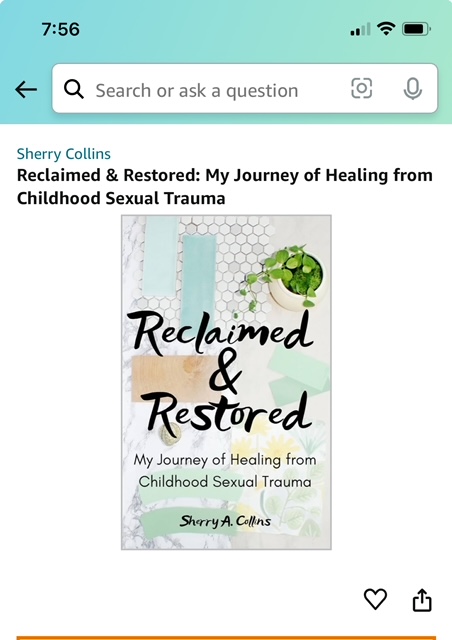
I am less than a week away from the release of Reclaimed & Restored. It will be available on October 25th through Amazon. I will also be selling copies at my book launches on Oct. 26th and Nov 2nd. I am excited and a bit nervous. I have heard other authors compare launching a book to having a baby. It is a lot of work and once it’s out in the universe, this book baby is precious to you. You can’t wait for people to read it. After a baby is born, everyone wants to know details: how much does the baby weigh, does the baby have hair, what is the baby’s name, and who does the baby look like? I have had similar questions from both friends and acquaintances about my book. I am going to take the time to answer a few of those questions here.
Who is the intended audience for this book?In the beginning, I struggled with this question, but as I continued to write, it became clearer. This book is for any survivor or anyone who loves and supports survivors of sexual assault, regardless of whether it happened as a child or an adult. It is also for the Christian church at large because I hope that they care about this issue as much as Jesus does. It is not a self-help book but a memoir of my journey through healing. I hope that readers can see a path forward to healing, either for themselves or for their loved ones.
You write from a Christian world point of view; can it resonate with those who don’t practice your faith? Also, will it resonate with those who have experienced sexual trauma within their Christian faith? As a reader, I don’t limit myself to books that are written only by Christians. Truth is truth, no matter the source. Some of the most important books I have read on this subject came from those who did not articulate a faith system. I will not presume anyone’s interaction with the book, but I hope that I wrote it in a way that was true to my experience. And if I was effective, I think anyone, whether they have a Christian faith or not, or if they have been harmed within a Christian community, can see how one woman found healing in her own faith. Hopefully, my words will help them find hope for their own lives.
The church has not always been supportive of sexual assault victims (victim blaming, covering up sexual assault), do you address this in your book?Yes, I do address these issues. I think the Christian community needs to address the harm they have caused to survivors by perpetuating rape culture in their community with misinformed ideas about sexual assault. This is emphasized in my epilogue entitled Worth. My sexual trauma happened before I became a Christian. Although I personally did not experience victim blaming, I have heard other Christians perpetuate victim blaming when speaking about other situations. I did experience harm from adults who pressured me to express forgiveness to my perpetrator without him acknowledging the harm he inflicted on me. Although this is not the main theme of my book, the topic is important to address.
You mention that you include some graphic details about your sexual assault, why?I spent a lot of time praying and thinking about this part of the book. Too many Christian books on sexual assault gloss over the hard, ugly details. I think trauma is only healed when it comes out of the shadows and into the light. For me, I shared these details in therapy over thirty years ago. That was a positive experience for me, but when I shared my story again with other victims and heard their stories, only then did I feel validated and supported in my experience. Additionally, I had a young woman who is a sexual assault survivor read that portion of the book. She said after reading that portion, it helped validate her own experience. On the flip side, I hope the graphic details help those who love survivors by giving them a glimpse of the brutal, soul-crushing violence that survivors experience. I do not sugarcoat it. But it is a short portion of the whole book, and it comes in early. But if you read on, you will find more beauty and healing. This was affirmed time and time again by those who helped edit the book, and it was said best by Denise Thompson: “It is horrifyingly beautiful!”
Did writing help bring more healing to you? The book took almost five years to write, because I needed to do more work on my healing. I had to think, process, and figure out how to convey in words the work I was doing as I was writing. When I initially outlined the book, I had not included the chapter on “Little Sherry” or the chapter that dealt with my biological father and my Indigenous roots. I also wasn’t going to include the chapter on my other sexual assault by a neighbor. But as I wrote, I knew my story had some holes, and those chapters helped fill those holes. Also, as I did research, I discovered more ways my trauma has impacted me. And with that, more work had to be done. Healing is work. It is acknowledging the ways trauma has harmed you and impacted your relationships with yourself, your family, and your friends. Healing is also not letting your trauma define you but informing you of why you respond the way you do. Healing is working towards changing those unhealthy responses into a more healthy and whole way of living.
What is your hope for Reclaimed & Restored as it is being launched?Since I am self-publishing, I have no illusions that this will make the New York Times Bestseller list. That was never my goal. I do hope that readers share this book with friends and families. I hope when readers finish the book, they take a minute to post reviews on Amazon and Goodreads. This will help the algorithms and expose other readers to the book. I pray that the book finds its way into the hands of those who need it the most. I hope, as other books have done for me, it helps victims identify the ways trauma has impacted them but gives them hope that healing is possible.
How did your family feel about you writing this book? I did ask for permission from everyone whose story I included. I did try to keep it to my story, and not include their feelings or experiences. Everyone in my family has been supportive, including my mother and my siblings. But I am not going to deny or minimize the fact that some or all of us will have some difficult feelings to process once the book is released. But I do know that all of us have lived better lives after that experience was over than we lived during it, and I am grateful for that.
After you get your copy and have time to read Reclaimed & Restored, I would love to answer any more questions you might have. I want to hear your feedback. My only caveat: if you find a typo, give me a moment to bask in the newborn stage of my book. Editing is hard work, and I just want to savor the success of the book launch before hearing about a comma mistake.
Six days till Reclaimed & Restored is launched!!!!
“But you, take courage! Do not let your hands be weak, for your work shall be rewarded.” 2 Chronicles 15:7 ESV
It’s done! My memoir, Reclaimed & Restored, is uploaded, and my proof copy has arrived. For almost five years, I have labored over this book and covered it with prayer. The font has been chosen, the cover designed by my amazing daughter and hours and hours of edits have been made by my husband. Five weeks from today, it will be available through Amazon in both paperback and E-book formats. Then I will take the next two weekends to celebrate with book launches in both Pennsylvania and Wisconsin.
For the last month, my blog has been quiet because I have been consumed with getting my book ready for publication. Terry has spent most of his Saturdays staring at his computer from sunup to sundown, helping me make the needed changes and fixing the multitude of punctuation and grammatical errors. At the end of those long days, we would both fall into bed, bleary-eyed and exhausted.
I have learned a lot through this writing process. Spending all that time looking up the nitty gritty details of comma usage will hopefully result in making fewer errors in the future. Reading your manuscript aloud with someone else present gives you an idea of how your words are being heard and reduces the amount of repetitive language. I have learned when it’s important to be decisive and when it’s important to use caution when drawing conclusions. I am reminded of the value of citing as you go; it will make the final manuscript so much easier to note.
I have also learned the importance of feedback and how to receive it. I recognized early on that this project was going to be vulnerable and challenging to write. All too often, when telling others about my abuse, I would intellectualize it by just stating the facts, leaving my heart and hurt behind. I felt strongly to be more vulnerable this time around and help reduce the shame that victims feel by being graphic with details. My purpose was to help victims feel validated, that they were not alone with the hardest, ugliest, most brutal trauma that they have experienced in their life. Along with that, I wanted to educate others on how brutal sexual trauma is for victims.
But along with the ugliest parts of my life, I wanted the book to bring hope to survivors. The only way to combine the ugly truth with pictures of hope was to interweave my story of abuse with lighter anecdotal and theological truths. Yet, I was concerned this back and forth might result in weak transitions and be difficult for readers to follow. So, I sent the book out to ten people for feedback on structure, grammar, punctuation, and general thoughts.
I remember sitting in my living room in April and clicking send, moving this work of heart out to other people’s devices to read and critique. Doubts raced through my head. Will everyone see me as an imposter of a writer? What if people hate it? What if it doesn’t resonate with people? And the biggest question of all: Was my trauma too much for people to read?
Feedback came in slowly, especially for those who were closest to me. Some of my closest friends didn’t know the extent of my abuse and had to put it down for a bit to process their feelings of anger towards my perpetrator. Some feedback pointed out my misplaced modifiers and comma errors, while some suggested rewording a sentence here and there to make it more readable. Others suggested more clarification in some areas and to be careful about making declarations concerning correlations between health issues and trauma. This feedback was valuable, and it made the book stronger.
The feedback also answered the biggest question that plagued my mind: my trauma was not too much for people to read. The feedback was consistent and supportive. Yes, it was hard and brutal in the beginning of the book. But as they read on, readers started to see the picture of hope that I was hoping would shine through. Denise Thompson, one of my final editors, called the book “Horrifyingly beautiful.” These two words were one of the best compliments I could ever receive.
It is surreal to have my own ISBN number attached to a book and to see my name on a book spine. I can’t imagine how it is going to feel when my book title becomes available on Amazon on Friday, October 25. I am excited that both my children and their spouses, along with my three favorite little ones, are going to celebrate with me in Pennsylvania. I am also looking forward to reconnecting with friends and family while I am in Wisconsin.
After the excitement of the book launch ends, I am most excited to hear about the impact the book makes on others. I pray that this little book of mine gets into the hands of people who need hope that the most terrible moments of their lives do not have to define them. What defines a person is the life you allow God to restore within you and how you use that life to make something beautiful.
Next week, I am going to reshare the post that started it all, a vulnerable post about why I don’t celebrate my father on Father’s Day. The following two weeks, I will share excerpts from the book. Then the week before the book launches, I will close with some final thoughts and feelings I have about my life. I hope that you find these next few posts encouraging and inspiring. More importantly, I hope that my small community starts sharing this book with others who may benefit from the subject matter.
Let the countdown begin: 35 days till Reclaimed & Restored is released!!!



 By Sherry Collins