
It’s Play Time

“And the streets of the city shall be of boys and girls playing in its streets.” Zechariah 8:5

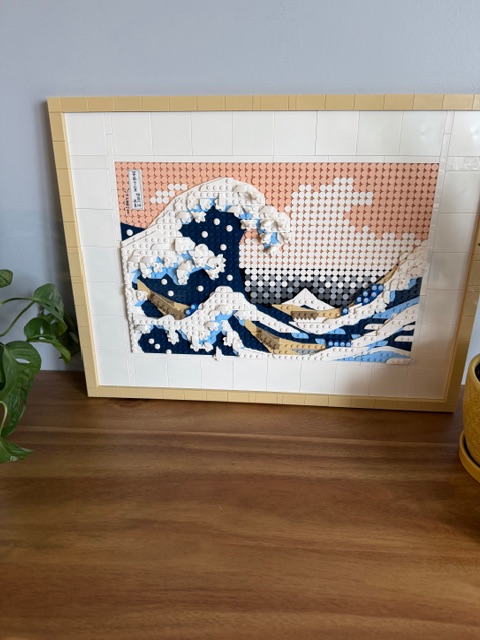
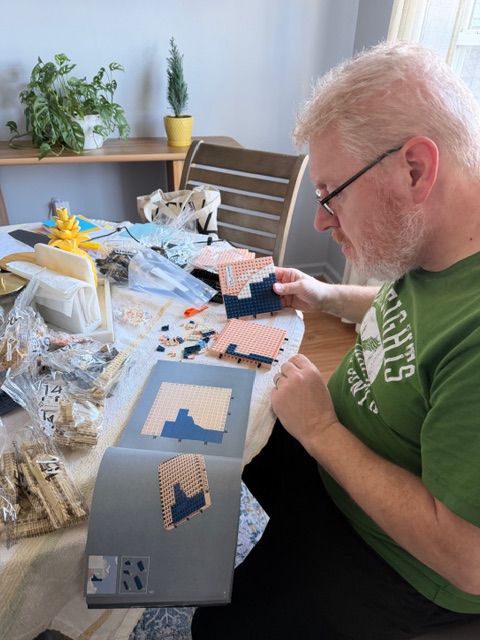
Four weekends ago, my husband played for hours. No, he was not playing the piano. No, he was not playing on his phone. And no, he was not playing with our grandchildren. All these things would have been perfectly acceptable. Instead, he was playing with Legos, a gift he had received for his birthday from our daughter and son-in-law. And for multiple hours across two days, Terry built the art piece The Great Wave by Hokusai.

Too often, as an adult, I viewed playing as strictly for children. I understood the importance of play for children, how it helps them develop their social skills, increases their creative muscles, builds strong neural connections, and helps make sense of the world. I invested in toys that fostered open-ended play and was careful not to overcommit my children to outside events. Simply, I let them play for hours uninterrupted.

As an adult, I forgot how to play, if I ever even knew how. I bought into the idea that as a Christian American, I needed to be constantly productive. I cleaned my house, prepared Sunday School lessons, read books that would help me grow as a Christian, and then started all over the next day. By the time I hit my mid-forties, I was exhausted. I had lost my joy, and I was measuring everyone else on their productivity. I did not know how to live differently.
Meanwhile, my daughter, Maggie, was in nursing school. Throughout the semester, she was extremely focused, studying and watching videos on the subjects she had covered in class. When spring break came along, Maggie decided to put the books down briefly and play. Over the course of two days, she baked and frosted a cake to look like a log with fondant mushrooms. The cake turned out amazing and I asked her why she made it. Her response was simple, “Just for fun!” It allowed her to express her creativity and provided a much-needed break from a semester of intense learning. She did not make the cake for an occasion, but simply for her own pleasure. It was a whimsical art piece in the form of a cake. It was play.

This awakened a desire in me to be more playful. I no longer saw her baking as a waste of ingredients and time. Instead, I saw how it brought joy to Maggie’s life. I started by dabbling with sketching flowers, bees, and artichokes with colored pencils. I cooked elaborate ethnic dishes with new spices, filling my home with exotic scents from around the world. I explored the idea of writing by both blogging and journaling. I was becoming more playful.

Research has indicated that playing as an adult is just as beneficial as it is for a child. Playing releases endorphins, reduces cortisol levels, and fosters relaxation. It improves cognitive flexibility and memory. Many play activities strengthen bonds between family and friends. Just like sleep and good nutrition, play is something we should prioritize in our lives.
Still, I struggled with playing, feeling like I was a bit of an outcast and still too judgmental. I was not a conventionally playful person: I don’t enjoy practical jokes, rarely get punchlines, find the Three Stooges stressful, and still thought video games were a waste of time. I did enjoy whimsy—driving an hour to explore a new indie bookstore or a pastry shop that featured canelé. I could sit for hours listening to people tell their stories. Yet I felt like I was still missing something, lacking the fundamental gene to be truly playful.

The National Institute of Play, a nonprofit organization that “recognizes, supports, and promotes the science of play” helped clarify my internal quandary. On their website, they had a link to a quiz to assess your “play personality.” This is “the style or mode we feel most comfortable being playful.” Just the concept of different play personalities freed me. It allowed me to celebrate who I was without trying to fit into the traditional modes of how others played. It was okay for me to not have a favorite Stooge. It also helped me see how my judgment of different forms of plays was just as harmful as how I viewed myself. People do find video games fun because their play personality is competitive, while others find attending car shows fun because their play personalities are wired to be collectors. Before taking the quiz, I knew instantly that I was not the joker or the kinesthetic play personality. I also knew I was not likely to be the competitor or the collector, but I was not sure if I was the director, explorer, creator/artist, or the storyteller. After answering a few questions, my play style leaned towards a storyteller. That seemed to fit since I readily indulge in books and podcasts.

The greater truth is less about my play personality, but more about the idea that play looks different for everyone. I have friends who love to go into our town’s cat café and pet cats for hours. This is their form of play. For me, cats pouncing on their cat gyms would be stressful and cause an allergic reaction. These same friends may not enjoy listening to our local bookstore owner’s pontifications about the history of our local library. Some people enjoy pranks with big stuffed dogs, others love to play board games, while still others enjoy digging in the dirt, creating flower beds that bloom all season.

I believe play is important to God. He created the world in six days and designed a day for us to rest. He designed lambs to frolic in the fields, otters to splash in rivers, and birds to have elaborate mating dances. Jesus’ first miracle was to turn water into wine, to ensure that the wedding was a success. Play is important, and I will continue to prioritize play in my life. I will no longer judge others by how I play but will celebrate their own version of play. Productivity is important, but productivity without play is living life as an automaton.

Dogs and Dippy Eggs

“There is no fear in love; but perfect love casts out fear, because fear involves torment. But he who fears has not been made perfect in love.” 1 John 4:18

It is a sultry summer day, and I am playing in my yard, my thick, dark hair messy and loose. Everything is filtered through that 1970s yellow haze, and I am barefoot, wearing a striped terrycloth shirt and shorts. Out of the corner of my eye, I see a coyote-sized dog growling from the edge of yard. I smell fear, like sulfuric rotten eggs, smothering me. I vacillate between two different choices: stay still and hope that the dog thinks I am a tree or run to the trailer for safety. My choice is made when the dog crouches low, ready to run and pounce on me. I ran faster than I ever thought possible and banged on the metal framed screen door for my father to let me in. I hear the clinking of beer bottles, see the wafts of cigarette smoke, and even see my parents and grandparents talking. My cries are ignored, and soon the dog is at my ankles growling and snarling. I turn around see his mouth open with his sharp canine teeth ready to tear my flesh and…I wake up. Panting with fear, breathing heavily, I realize this is just a dream. I try to slow down my breathing and begin to drift off to sleep again.

For about forty years, I had this recurring nightmare. It wasn’t based on the memory of a real event. I recently had a conversation with my mom about it. According to her, the setting of the nightmare took place in a mobile home where we actually lived after she married my stepfather, putting me at two years old. We didn’t have a dog at that time, and she doesn’t remember any dog trying to maul me. But this vivid nightmare has impacted my relationships with animals, especially dogs, for my entire life.

We grew up with dogs, and I say that with a plural for a reason. It wasn’t that we had a lot of dogs at once, we just seemed to have a different dog on a semi-regular basis. Our first dog, Willy, a curly, gray peakapoo, arrived in our home when I was in second grade. Like most little dogs, he scurried around our house, was a bit nippy, and jumped endlessly. I have no idea how long we had him, I just know that one day he ran across our road and was hit by a car. We then had a German Shepherd that my father thought would be a good guard dog. My mom recognized his viciousness and, for our safety, kept him chained up in an outside kennel. She used a rake to push his food bowl to him and insisted that the dog had to go, fearful that he would get loose and maul us. We then had Tippy, possibly a dog named Tuffy, and Budweiser (yes, we had a dog named after a beer). I believe most of the dogs met their demise in the same way that Willy did. We lived in the country, didn’t leash our dogs, and had no underground electrical fencing. With all the chaos going on in our home, we probably should not have added any animals into the mix.

For all the times we had a dog, I don’t remember actively interacting with any of them. I avoided them, rarely petted them, and kept my door closed at night afraid they would crawl into my bed. This may sound heartless, but I don’t even remember shedding tears when any of them died. The only dog I remember being sad over was a tiny cocker-spaniel puppy I named Rose, that was accidentally run over by my stepfather the day after we got her. Even with Rose, I didn’t bond with her enough to shed actual tears, I just felt a little disappointed.

This fear of dogs carried over to cats, goats, rabbits, basically anything that crawls, runs, jumps, or pounces. I have never held a kitten, don’t know how to carry a puppy, and the idea of goat yoga is far from relaxing. Even for the short time we had cats when my children were younger, I would allow Zoe, the timid one, to sit next to me, but I never picked her up.

An amateur Freudian analysis of my dream has led me to two possible conclusions: either my father silenced me with the threat of a dog attack, or I transferred my fear of my father to animals. I’ll likely never know for sure, but for about fifty years, my fear has controlled me, hindered me, and caused me shame. The shame developed from well-meaning people who are shocked by my fear of animals. They don’t intend to make me feel bad, but comments like “it’s just a little puppy” or “how could you not love this face” always made me feel there was something wrong with me. Additionally, many of my friends post the memes “I don’t trust the human who doesn’t like dogs or cats”, solidifying the fear that I am somehow abnormal.

I have worked hard to overcome the fears, triggers, and dislikes caused by my childhood experiences. Some were as simple as using pepper on my food, associating that with my father. I can now hear someone walking in cowboy boots without feeling my skin crawl. And I even have a recliner in my home, now, which I also associated with my father. But there are a few things that have stuck with me since childhood: dogs and dippy eggs.

I do find puppies adorable. And I have seriously thought about getting a dog to help me overcome my fear, plus it will give me more excuses for walking. However, Terry and I have concluded we are too busy and like our freedom to do long day trips or weekends away without having a pet to consider. And there is still my fear.

A few years ago, we changed the place where we worship. Along with the change came new friends with dogs, lots of them. My one friend had a small pack of six dogs, who barked loudly to welcome me when I arrived. Other friends have one or two dogs. But it didn’t matter whose house I went to, a four-footed, furry friend was there.

This exposure to dogs has slowly eroded my fear. I can walk confidently into my friend’s house with the pack of dogs, with no racing heart. Our friends the Kempers, had a dog named Kona, who I not only played catch with but took him on a walk. My other friends, the Hornes, have a mini Bernedoodle, Barkley, who is still a wild puppy, but I have managed to get his leash on him to let him outside. My other friends, the Eplers, have Tucker who I haven’t interacted with much, but I follow his antics on Instagram.

And then there is Winston, a Bernedoodle and part of the McCory family, who has captured both my heart and Terry’s. This sweet fluffy dog looks like a giant bear. He is calm and has the sweetest disposition. He probably sensed my fear, but was determined to win me over, by sitting next to me on the couch and putting his head in my lap. His dark eyes looked so forlorn as if to say, “Please, just pet me, I want to be your friend.” I couldn’t resist him, and soon he and I became pals.

Fears and dislikes rooted in trauma are hard to overcome. They don’t always make sense and can seem unreasonable. I can’t say that I am at the place where I could become a pet owner as our busy lifestyle would make it challenging. I still think if I would pick up a pet, it would appear as awkward as it would feel. And I have no desire to try goat yoga. But I think this fear is slowly diminishing, and I thank all my furry friends and their owners for helping me.

And now, dippy eggs…I can’t even deal with this one, right now!