“Give her of the fruit of her hands, and let her works praise her in the gates.” Proverbs 31:31
I have a magazine subscription that is a splurge in my life. The path that led to this magazine started with stumbling upon a podcast. I am not sure how I found Radio Cherry Bombe. It could have been an Instagram post, another podcast, or a chef I was curious about. But somehow, in 2021, I started to listen to host Kerry Diamond interview women in the food industry. These interviews exposed me to the ingenuity of women despite barriers and how camaraderie and collaboration helped women become more successful. It was more than the delightful aprons created by Ellen Bennet for Hedley & Bennet, or the celebrations that Elisa Sunga hosted with her Cake Picnic. It was coming together as women, recognizing the obstacles that have held us back, and moving towards the future where women can be creative, lead, and live fully.
Last Sunday, I prayed with three young women. Our pastor instructed us to pray over one another a blessing of some sort for their future lives. I had been sitting behind the three young women in church, watching them interact with one another. Laughing, worshipping, and praying, I saw them connected in a way only tween/teen girls can be. They giggle at the same things, pretend disdain at adults’ attempts at humor, share heartbreaks and challenges with one another, and love each other fiercely. They are on the brink of womanhood, with so many dreams, goals, and ideas. When I came up to them, I didn’t have anything profound to say that spoke to their future. Instead, I felt led to bless their friendship and ask God to help them be hospitable whenever new tweens/teens entered the group. I prayed that God would help them enlarge their circles despite their strong connections. After a group hug, I felt as blessed as I hoped my prayer would be for them.
When I became a Christian, I was one of the outsiders coming into a group of friends that shared a history. They all attended a small Christian school while I attended public school. They could all sing beautifully and even had matching outfits for a vocal ensemble they were competing in. When I sang, it was less than harmonious. Yet, despite their connections, they were able to invite me to be a part of their group. I never felt like an outsider. They celebrated my wins and helped shape the woman I am today. Today, I am still in a relationship with two of these women, our friendship spanning almost 40 years.
This past Sunday was International Women’s Day. It was affirming to see women across different industries celebrating other women in their industry. Reese Witherspoon paid tribute to other actresses, Ina Garten honored Julia Child and Martha Stewart, along with other women who “were fabulous chefs and food writers.” Other women praised their moms, aunts, and teachers who made an impact on their lives.
In this post, I wish I could list all the women who inspire me. From my aunts to my sisters, to my oldest friends, to my daughter and daughter-in-law, to my newest friends, to my co-workers, to my volunteers, to all the young women in my life—you are all amazing! I hope to always be your biggest cheerleader, to sit by your side when life is hard, and to advocate for you when life seems unfair. Thank you for being amazing women, and let’s continue to make this world a better place for all women!
“For everything there is a season, a time for every activity under heaven.” Ecclesiastes 3:1
A few months ago, I made Erin French’s Butter Cake. Erin, a self-taught chef, has created a culinary experience in the sleepy town of Freedom, Maine. Late spring, she opens her restaurant on the weekend to lucky individuals who travel from around the world to her tables. She serves different courses highlighting local produce in an artful way that leaves the diners feeling connected, loved, and cared for. One of her favorite desserts is a simple butter cake, which she slices and adds fresh fruit and whipped cream. Despite butter being the main ingredient, and soaked with a butter glaze, the cake is surprisingly light and ethereal. It left you satisfied with a hint of wanting just one more bite.
It’s been an eventful year; I entered the workforce after being a home educator and childcare provider at home for 26 years. This resulted in a long commute for work for both Terry and me. This prompted a move to Carlisle, and in the process, Terry found out his company was closing. He took a new position which now makes our commute less than 7 minutes. Besides all the driving we did for work, we made 6 trips to Rhode Island, and 3 trips to Wisconsin. We both had some pressing health issues that resulted in new medication for me and a biopsy for Terry. Amid this chaos, I finished writing, editing (with Terry’s help), and published my memoir, Reclaimed & Restored. The biggest highlight of the year was welcoming our newest granddaughter.
The word weight is a loaded term. It conjures up images of heaviness, judgment, and burdens for me. As a woman, I have been judged by the flashing numbers on my scale, how I prioritize my responsibilities, and whether I am making meaningful contributions to my family, church, and world. This results in a weight that is unseen, but that yokes me together with feelings of failure, a constant need to be productive, and never being enough. And the weight of this pressure extinguishes my creativity and crushes my dreams.
We both recognized as soon as I took this position, that life would need to change. For most of our marriage, I took responsibility for meal planning and preparation, cleaned and maintained our home, organized our schedule, and managed our finances. But even working only three days a week (which often ended up being 4-5 days a week), I could no longer manage the load I carried before. Even more importantly, I didn’t want to. I was tired of being solely responsible for cleaning the house, knowing when certain projects like de-scaling the coffee pot needed to be done. I was done with making dinner every evening. I was tired of being defined solely by what I did at home.
To be fair, Terry has always been a great partner in our marriage. He always helped with chores on weekends and cleaned up after dinner. He picks up after himself, and to his credit, I have only had to pick up his dirty socks once in our almost 29 years of marriage (we won’t discuss the amount of bobby pins or hair ties that he picks up). We both had idealized traditional roles and didn’t recognize how the weight of these roles hindered both of us. By taking this new position, I turned our worlds upside down. Even though we both needed to change we didn’t know how to communicate with one another about what changes needed to happen which led to resentment in me and Terry feeling inadequate.
I quickly learned that me responding to his inquiries about what needs to be done with “You’re an adult, figure it out” wasn’t helpful or kind. But I also didn’t like treating him like a child with a honey-do list. We both needed to get past the resentment and feelings of inadequacy. After a few heated discussions, we sat down and talked reasonably about how our idealized traditional roles left little time for me to explore creative endeavors or pursue other interests. I was not only maintaining the house, but also home educating our children and doing full-time childcare as well. This seemed reasonable when he was going to school part time and working full-time. But when that changed for him, my load didn’t lessen. I want to reiterate, Terry was not lazy, he helped any time I asked or when he saw me doing something. My resentment came with the weight of the responsibility and the lack of initiative.
This is common in a lot of marriages, regardless of the women’s working status. My generation entered the workforce and struggled with the mental weight of managing the home as well. Often, women were expected to do most of the meal planning, clean the house and adjust their work schedules when their kids were sick. Sitcoms picked up on this discrepancy, often making men look like buffoons or idiots. Many in the evangelical Christian circles pushed against these stereotypes. They felt like it made men seem insignificant and worthless. Yet, if you go back a few generations, TV shows like Leave it to Beaver,I Love Lucy and the Geroge Burns and Gracie Allen Show made their leading ladies look unintelligent, silly, or ditzy. Yet, I have yet to see these same Evangelical Christians address how these stereotypes denigrate women. We are all created in God’s image and although humor is an important outlet, it should never be sanctioned when it supports stereotypes in way that is destructive.
After long conversations, Terry and I are working at creating a new normal. We both have some clear responsibilities in the house. I no longer cook every meal completely on my own. We share responsibilities depending on each other’s schedules. We are flexible to pick up the slack when the other person has some extra responsibilities at work. It feels like a true partnership, where I no longer carry the mental load of running the household.
I heard recently something that has challenged my beliefs about marriage. On the Bare Marriage podcast, author Sheila Wray Gregorie and her husband discussed that when the premise that marriage is hard is accepted, people tend to accept the disappointments and struggles as normal and their burden to bear. Instead, they suggest if we view marriage as a good thing and beneficial for both parties, we are more willing to address the hard things and work together to find a solution. We don’t carry resentment because we address things that seem unfair. I thought about this in my own situation. For years, I accepted the mental load as my burden to carry. I never addressed how it made me feel. I know if I had addressed this earlier, Terry would have been responsive and willing to adjust. Instead, I accepted the status quo and chose to endure the burden.
We think of butter as being a heavy ingredient, like it is in French food, where the rich sauces are tasty but leave you feeling a bit sluggish. Erin French took this same ingredient and created a cake, brushed with butter, and made it light. Maybe I need to look at all things in my life and learn to make things lighter, including the weights that burden me.
“Give her of the fruit of her hands, and let her works praise her in the gates.” Proverbs 31:31 ESV
For our first Pennsylvania Thanksgiving, both my sisters and my in-laws made the trek from Wisconsin, Nebraska, and Illinois to celebrate with us. We had our traditional turkey feast and squeezed in an early Christmas with everyone as well. To keep the season festive, I made everyone’s favorite Christmas treats: Hershey Kiss Cookies, Peanut Butter Balls, Haystacks, Thumbprints and Carrot Cookies. My sister’s boyfriend came with her, and I assumed he would find a cookie amongst our favorites that he would like. When I noticed that Jamin was passing on the cookies, he politely shared that he didn’t like nuts, peanut butter, or carrots in cookies. I felt bad and promised the next holiday we had together, I would bake his favorite cookie or treat. I asked what he liked, half expecting him to announce sugar or gingerbread cookies. His eyes lit up and he exclaimed, “Cornflake Wreaths!” He explained that he and his mother had a tradition of making these treats, and he emphasized the importance of the red-hot candies. Terry snickered in the background, because he had been asking for years to add these same treats to the holiday baking list. I half-heartedly agreed but kept putting them at the bottom of the list.
So, next Christmas, I finally decided to make Cornflake Wreaths for Terry. I looked up the recipe and immediately presumed there was a mistake: 1 tsp. of green food coloring? Surely, that was a misprint, since food coloring is typically measured by drops. I adjusted the food coloring, added a few extra drops, then attempted to form the wreaths. When it was all said and done, my blob-shaped wreaths were the shade of a sick Grinch. I snapped a picture and sent it to Jamin asking what I did wrong. He informed me that buttered hands were necessary to shape the wreaths. He also said a lot of green food coloring was necessary to get the right shade. And when you think you have enough, add some extra.
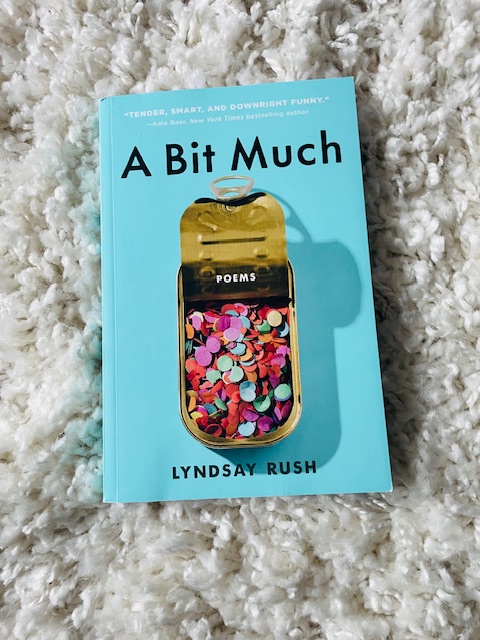
There is a new poet, Lindsay Rush, known on Instagram as Mary Oliver’s drunken cousin, who wrote a poem that went viral and has since become my poetic life mantra. It is titled “She’s A Bit Much.” She takes a common insult made about women and turns it into a compliment. She compares the insulted women to confetti, sprinkles, and the bonus French fry at the bottom of the bag, someone we are to celebrate, and she ends with the line, “Aren’t we lucky she’s here.” Her poem points to a bigger truth: insults made about women, such as she is a bit much, too bossy, manipulative, too driven, not feminine enough, etc., are more about putting women into a box that minimizes their God-given attributes when they should be celebrated.
As I child, I was labeled as bossy by some adults in my circle. I had budding leaderships skills, and needed adult guidance to help develop those skills in a healthy manner. Yes, some children with leadership skills can develop into narcissistic dictators, but most children just need adults to help them recognize that being a leader is not just giving orders but inviting others along to accomplish a goal for the greater good. It is interesting that boys are rarely described as bossy; words like charismatic or having leadership potential are used instead.
I have also been accused, in some circles, of being “too much” and have had conversations with other women who have also been unjustly accused of this as well. Introverted, mild mannered Christian women are held up as the more palatable and less offensive role models. According to the Bible, we are all expected to be humble, gracious, and gentle. Those character traits are not just limited to the female gender. But somehow, we associate those traits with quiet females. I think I can be “too much” in some people’s eyes but still exhibit the fruits of humility, graciousness, and gentleness in my life. It is just how those fruits are manifested that might be different than some of my introverted friends.
The point is, we label women with negative traits that we rarely use to describe men, and somehow, we think that it is okay. Although I don’t like being called bossy or “too much”, I find myself putting other women into a box with the label “brassy.” These so-called “brassy” women boldly state their opinions or ask for what they need from others without qualifications. We all need to learn a level of hospitality and be careful that we are asking and not demanding. Being bold and direct are not bad traits, and I must be careful that I am not labeling a bold woman as brassy when I don’t apply the same standard to men.
Like most consumers, I can be drawn in by certain labels. Terms like “sustainable,” “supports local farmers,” and “produced in small batches” are like catnip to me. I also look for labels in a bookstore and rush to the poetry, memoirs, and literary fiction sections, avoiding the fantasy and science fiction shelves. These labels help me pursue what I am looking for. But when we broadly label women negatively, we impose limits on what we think they can and should achieve, which can sometimes become self-imposed limits.
One of the most controversial women today, Meghan, the Duchess of Sussex, addressed these labels or archetypes on a podcast she did in 2022. She understands firsthand how labels can destroy when the media and trolls describe her as a “gold-digger,” “fake,” “family destroyer” and far worse. She interviewed some women, including Serena Williams, Paris Hilton, and Mariah Carey, exploring the origins and consequences of being labeled ambitious, a bimbo, or a diva. These women shared how they have let go of the negativity and, in some cases, changed the definition to a positive one. One thing from her podcast that stuck with me is when Serena Williams talked about negativity in relation to a woman being described as ambitious. Serena explained how for a long time that label hadn’t impacted her until she met her husband. But then people started describing her ambition in a negative light. “So, since I’ve felt the negativity behind it (referring to ambition), it’s really hard to un-feel it. I can’t unsee it, either, in the millions of girls and women who make themselves smaller, so much smaller—on a regular basis.”
Serena articulated something that I believe most women have felt in their lifetime, and I have no doubt that all the young women I care about have also felt it. When we are labeled as too much, bossy, brassy, and not feminine enough, we often find ourselves becoming smaller, shrinking our influence, agency, ambition, drive, and talents. This often leads us to imposter syndrome where we think we don’t measure up. We then start to second guess our instincts and minimize the character traits that reflect our creator.
Years ago, my husband had a meeting with some people and the subject of me came up. I had been feeling for a while that I was doing something wrong and felt like I was being pushed out of what I deemed the inner circle. Terry directly asked if there was an issue with me. The people in the meeting immediately said no, but one person qualified that sometimes, “Sherry can be too much.” They continued, implying that I can swoop in and get a job done, almost making the “too much” more palatable. But clearly, no one in the room but my husband believed this was a good trait.
Later, when I heard that I was “too much”, I instantly felt swallowed by shame. Hadn’t I written prayers time and time again in my journal asking God to help me be meek and mild? Hadn’t I come to this same group, bearing my soul in one of the worst moments in my life, and pursuing God with humility? Hadn’t I become smaller, hiding my natural extroverted inclinations to fit in with this group? Apparently, despite my best efforts, I was still “too much.” At that point, I was still desperately trying to fit in, so instead of affirming that my “too much” was enough for God, I did the opposite. I became smaller by being less talkative, less present, less involved, and less joyful.
There is one woman in the Bible who did not shrink in a time of need. Esther and her people were facing total annihilation. At first, when confronted by her cousin Mordecai to address the king, Esther started to shrink. Yes, she was the queen, but she still had to submit to the king. Boldly approaching his throne without being called for might lead to her own death. But Mordecai challenged her with these words found in Esther 4:14, “For if you keep silent at this time, relief and deliverance will rise for the Jews from another place, but you and your father’s house will perish. And who knows whether you have not come to the kingdom for such a time as this.” Esther thought about what he said, and replied with a plan, ending with “and if I perish, I perish.”
Esther decided to go big and be who she was called to be, realizing that shrinking will lead to certain death, but the unknown gave her agency, allowing her to call the shots. By being who God called her to be, she was able to command the king’s attention and save her people and herself. I wonder how many of us women have shrunk in times we were needed because of what others have said about us, and how that leads to us slowly dying inside, never fully living the life we are called into.
In the circle that thought I was “too much”, I was slowly dying and becoming less of who I am. But I am no longer in that circle and have found a safe place to be all that God has called me to be. Yes, I still have character traits that must be balanced and smoothed out. But God’s guidance will help me fully be the woman He created.
I need to talk more about these issues with my friends. When I hear a woman being labeled, I should challenge the speaker with grace, trying to expose how these labels constrict, damage, and restrict women. I also need to address my own complicity in the problem, making sure I don’t fall into the trap of labeling others. I can encourage young women to be exactly who God made them, growing in true inward holiness. This will help #AccelerateAction in removing gender biases.
Sometimes, we need extra food coloring to make things right. Sometimes we need to turn insults into something positive like Lindsay Rush does in her poetry. But we always need women to operate exactly as they were designed; not labeled in a way that brings death but brings life.
“Judge not, that you be not judged.” Matthew 7:1 ESV
During my junior year of college, I had a full schedule. Along with being promoted to a new role as a Program Assistant and other extracurricular activities, I had the toughest class of my psychology major: a research and methods course. Often when I moved around my small campus, my head was down, thinking about the list of things I still needed to accomplish before the day ended. At the end of the school year, I met a freshman with whom I would be working in a summer program for underprivileged high school students. We quickly became friends, and she introduced me to a new, up-and-coming store: Bath & Body Works. Later that summer, she shared how she had tried to make my acquaintance before and, after being ignored a few times, she thought I was pretentious. I was taken aback by this assessment, and it was the first time I realized that I didn’t always appear warm and friendly. I quickly apologized, remembering how often my head was down and my list was long. Unfortunately, at the time, I was not mature enough to recognize that I needed to find healthier ways to deal with my stress and to avoid alienating people.
Since then, I have learned that when I am busy, I tend to have a Jekyll and Hyde transformation, shifting from the warm, friendly Sherry to busy, task-oriented Sherry. Even how I move about my world is different. I go from engaging in conversation with total strangers and inviting people into my home for peanut butter and jelly sandwiches (this was when my children were little) to being laser focused on what needs to be done and barking orders at others. This Mr. Hyde conversion is not my best side, and the various members of my immediate family have often been the ones who faced the brunt of this ugliness. And if you meet me at this time, you might not be enticed enough by the peanut butter jelly sandwiches to come over and visit with me.
Despite being busy with a newborn, I remember the1998 Bill Clinton and Monica Lewinsky scandal blowing up across the different broadcast and cable news networks. Before social media platforms existed, we still managed to be inundated with images of the infamous blue dress and clips of her phone conversations with a so-called friend. Next, we watched as President Clinton denied any sexual relationship, later apologized, and then faced impeachment. For years afterwards, every comedian and talk show host had a joke about Monica Lewinsky, criticizing her body, intelligence, and character. I laughed at some of the jokes and formed my own opinions of her.
But in 1998, we had no common language for the concepts of power differential, body shaming, or trauma. We didn’t understand that critical thinking is not yet fully developed in young adults, resulting in one intern’s naïve idea of love turning into the biggest mistake of her life. Today, I listened to Lewinsky tell her own story on her new podcast, Reclaiming by Monica Lewinsky. My views of Monica Lewinsky had been shifting for the last few years, and I knew I had misjudged her. But it was devastating hearing how hard it has been for her to move forward in her life, find a career, or even be in a healthy relationship because of a mistake she made when her impulse control was not yet fully developed. What was even harder to face was my culpability in her demise. I, along with the rest of the public, had misjudged and mischaracterized her.
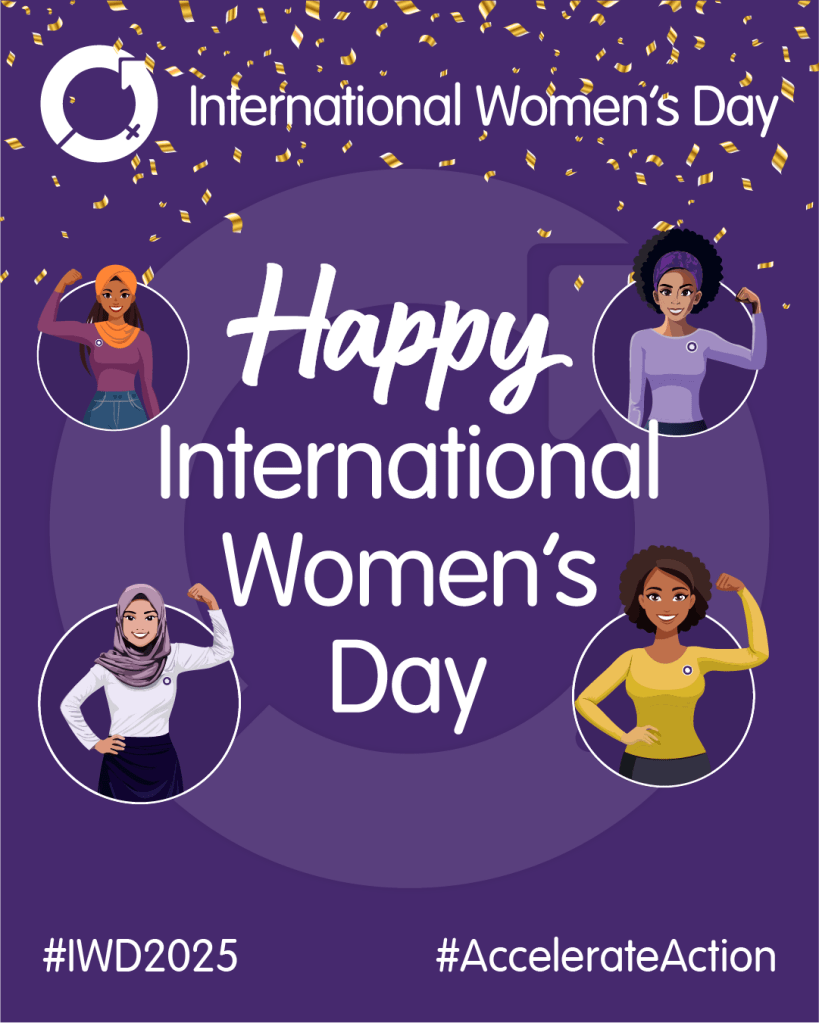
This Saturday is International Women’s Day, a day with its roots in women protesting to receive better pay and improved working conditions. It started in the United States and moved across Europe as more women protested poor working conditions, wage gaps, and the inability to vote. In 1975, it was recognized by the United Nations as a day to support gender equality. The theme this year is #AccelerateAction, engaging in concrete ways to improve gender equality. There are still nations like Iran and Afghanistan where girls can’t receive education beyond elementary school, women are not allowed to own businesses, and women can’t leave their homes to have lunch with a friend. I can’t do much about those problems, except bring awareness of those human rights violations, support organizations that are trying to make a change, and vote in ways that address these issues. But I can do one thing that is noted on the International Women’s Day website: I can “call out stereotypes, challenge discrimination, question bias, celebrate women’s success…and share our knowledge and encouragement with others.” But to do this well, I need to recognize my own biases and the ways I need to change to address these issues.
Over the next three weeks, in honor of International Women’s Day, I am going to address issues of body image/body shaming, labeling, and judging women’s paths in life. I have touched on these areas in the past, but I am hoping to examine them from a fresh perspective with some personal anecdotes, pop cultural references, and Biblical principles. I also want to highlight why I, as a Christian, should and can do better about these issues. I hope you will join me in this series and hear how I am evolving.
I am so glad my friend in college laid aside her preconceived notions about me to become my friend. Her friendship, as brief as it was, enriched my life beyond fruity smelling lotions. I know how it feels to be misjudged, and I need to remind myself not to make judgments of others based on my own limited information about that person. My participation in shaming Monica Lewinsky certainly didn’t embody Christian principles and exacerbated her future struggles. But I know better now, and I want to continue to accelerate action to help move the dial forward in treating all women with equality.
“Let us consider how to stir up one another to love and good works, not neglecting to meet together, as is the habit of some, but encouraging one another, and all the more as you see the day drawing near.” Hebrews 10:24-25 ESV
The Super Bowl, Fasnacht Day, and Valentine’s Day have hit the calendar this week with a bang. Wings, donuts, and flowers packed shelves in the grocery stores. Travis Kelce and Taylor Swift, Madri Gras, and restaurant menus fill my social media feed. It’s a week of feasting, partying, and celebrating. Although all three events are supported by food, these three days are distinct with very different vibes. But if you set aside the commercials, beads, and flowers, they all point to the importance of connection. And with our polarized nation, we all need more opportunities to connect.
Because of my Wisconsin roots, I call myself a Packers fan, but I am not a football aficionado. I may have watched two Super Bowls in my entire life. And this year, even though we didn’t watch the game, we still made mini appetizers to enjoy while spending the evening together. I fully recognize that we are in the minority here. This year, the Super Bowl had the largest viewership ever at 123.4 million. If I am doing my math right, this means one out of every three Americans watched the big game. And I am sure that those who were not watching were like me, still checking their phones for updates and to hear the buzz about the commercials.
Now some may argue that it’s just a game unworthy of all the hype. Others may say viewership was up due to the “Swifties” showing interest. But whatever the case, this is one of the only major events that Americans seems to come together and share collectively. And I think it’s important we have these types of events, whether it’s football, the Olympics, or the Barbie movie. It forces us to put aside our differences and have fun. And this “fun” or play is valuable because it helps to create camaraderie. It reminds us that we are not so different, and as a Christian, it reminds me that everyone is created in His image.
Whether you call it Fat Tuesday, or Fasnacht Day, Tuesday, February 13, 2024, is another day that most people recognize on the calendar. Historically, this was the last day before the start of Lent. People would empty out their pantries of sugar, butter, and lard to prevent spoilage over the next forty days of fasting. An easy way to do this was to make donuts, named Fasnacht by the Pennsylvania Dutch. Even if you were not a liturgical Christian, you would still benefit by indulging in donuts due to your neighbor’s excess. The point of this indulgence was not to eat as many calories as you can, but to mark the upcoming season of remembrance of the death, burial, and resurrection of Jesus.
Since moving to Pennsylvania, the Collins family has celebrated Fasnacht Day by sharing donuts with our family and friends. I discovered this day thirteen years ago, a lonely month and half after leaving Wisconsin. The idea of a day set aside for donuts made the hard move seem more palatable. It’s hard to eat a donut and not be joyful. And a donut shared in the company of others makes the donut even sweeter. Additionally, my first Fasnacht day gave me hope that my move to Pennsylvania could be sweet. I could make new friends and new traditions.
Traditionally, Valentine’s Day has been set aside for couples to celebrate romantic love. But like all holidays, the love has spread with Valentine gift exchanges in schools and Galentine Day celebrations. Today, we don’t celebrate with just a card and an appropriate sentiment. Instead, the National Retail Federation estimates that Americans will spend an average of $185.81 per person letting their loved ones, including pets, know that they are special with cards, flowers, candy, and gifts. And if money is an indicator of importance, it seems many Americans believe this day is as valuable as our relationships!
At different points in our marriage, we have prioritized this day to a greater or lesser extent. How we celebrated was often an indicator of the healthiness of our marriage. This year, we are not spending the average amount, but we are still taking time to be together as a couple and celebrate our love of 28 years. In no way do I think flowers or chocolate will heal a broken marriage, but I do think setting aside days to celebrate love is important. It signals to those you love that they are valuable and cherished.
All polls, whether related to politics, economic satisfaction, or mental health indicate that there is a prevailing sense of apathy, anxiety and loneliness across all ages, genders, and backgrounds. The average American feels a general sense of hopelessness for the future. And with that lack of hope comes a higher rate of suicide, depression, and substance addiction. Additionally, our avid use of devices, whether for social media or news headlines, increases our anxiety and sense of being alone. How does one look to the future with an impending election that guarantees more divisiveness? How does one look past the genocides and wars happening across the world? How does one find support if they are struggling or support others who are struggling with mental health issues?
I don’t have all the answers, but I think a little football, donuts, and flowers are good ways to start. I need to find ways to connect with others in larger gatherings centered on fun. This may involve a game night at my home or watching a movie with friends. This checking in with people can help others feel less isolated or alone. It also reminds us not to take everything so seriously, but to spend time just enjoying each other’s company. Plus, whenever you have a group together, laughter is both likely and contagious!
On a smaller note, connecting with small groups is another way to combat hopelessness. Joy is not found just in a bundle of fried sweet dough; it’s found in meaningful conversation that glorifies God. Although my extroverted nature thrives in large gatherings, my most meaningful connections are with a small group of friends. These connections not only contain laughter, but also moments of truth and beauty found in deep abiding relationships. This is where I refuel and glean from others. It’s a place of safety, where I am known and loved. And if I feel this from my friends, I am confident that others feel this as well in small groups. And just like buying a box of donuts gave me a glimpse of hope, I can cultivate small groups in my life as well to bring hope.
Finally, the health of my most treasured relationships should reflect where I spend my time, money, and energy. If I value my husband, my adult children and in-loves, and my grandchildren, they should receive the best of what I have to offer. This doesn’t require extravagant gifts, but it does require me to be intentional in my relationships. It is all too easy to take for granted those you love the most. And the gift of Valentine’s Day is that it is a reminder to put those you love front and center.
Like most people, it is easy for me to fall into despair over the upcoming election, the state of our world, and the myriad crises we face. But this week is a gentle reminder to me that there is a lot to celebrate and, more importantly, lots of ways I can personally build connections. And if football, donuts, and flowers can’t get you out of the doldrums, watch the Dunkin’ Super Bowl commercial. I promise the Dunkin’ tracksuits alone will make you laugh!



 By Sherry Collins