Page 19 of 28

The Simple Art of Breaking Bread

“Show hospitality to one another without grumbling.” ! Peter 4:9

I am a decent cook with a few meals that I make well and other dishes that I could improve on.  I watch cooking shows, read cookbooks, and have more recipes saved on Pinterest then I will ever make.  I use a wide variety of spices and herbs from bright basil to fruity sumac to spicy fennel seeds.  My main problem in cooking is that I don’t trust my instincts.  I tend to follow a recipe to the letter and have a hard time adding my own personal twist.  Honestly, I am ok with that because, although I love to cook, cooking is often a means to end for me.  What I really enjoy about the cooking process is putting food on the table and creating a comfortable place for people to connect.

Hospitality is a buzz word today.  If you shop at Target, Hobby Lobby or TJ Maxx, you can find all sorts of merchandise to help you with your entertaining needs including charcuterie boards, olive wood salad bowls, ceramic serving platters and glass lemonade pitchers.  Pinterest has all kinds of ideas for having your friends over, from a nacho bar to a burger buffet to a brunch.  Although I have tried some of these ideas, these social media constructs can put a lot of pressure on a person to perform beyond their level of comfort level. I’ve been pondering the concept of hospitality, both how to cultivate it in our lives and some of the pitfalls that keep us from inviting someone over for a simple meal.  I hope these thoughts help take the pressure off of entertaining guests.

 First, hospitality is a Biblical concept that Jesus himself practiced.  He could have easily sent the crowd away after performing countless miracles.  Instead, he miraculously provided a simple meal for the crowd consisting of fish and bread.  We don’t know what transpired during that meal, but I can imagine Jesus walking around the crowd, connecting with individuals, making sure they were satisfied and trying to get to know them better.  In addition, Paul admonishes both widows and deacons to practice hospitality.  Peter gives a general instruction to Christians in 1 Peter 4:9 saying, “Show hospitality to one another without grumbling.”  The Greek word translated here as hospitality is philoxenos, defined as being generous to guests.
Second, we need to find a way to be hospitable that aligns with our personality and gifting.  As an extrovert, having a large group of people over and making individuals feel connected comes easy for me.  You might prefer small groups, so then just invite one family over.  I am also a casual person, who always googles how to set a table properly when holidays come around.  On the flip-side, I do love putting my food in beautiful serving dishes.  Whether you prefer formal China or paper plates, do what is comfortable for you.  If you are uncomfortable with what you are doing your guests will know it and, in turn, they will feel uncomfortable.  We once attended an open house with a scheduled time slot, and the hostess ushered us through the house at a break-neck pace because she had a schedule of guests to adhere to.  Both my husband and I appreciated the invite, but we left feeling as frantic as the hostess.

 Third, the menu can be as simple or elaborate as your season of life and skill set can handle.  When my children were young, beef roast was often the meal I made when serving friends.  It sat in the crockpot all day getting tender while I attended to toddlers.  Now that my children are adults, I can prepare more elaborate meals, but, sometimes, I still keep it simple, like burgers.  I also have one go-to meal that is often a crowd pleaser, my chicken fajitas.  I have a good handle on how much to make no matter what the size of the crowd.  If cooking is not your thing, feel free to order take out.  Pizza is always a winner.  If you have a limited budget, soups are also good.

                Finally, it’s okay to be a “Martha” when prepping for the meal, but once your guests arrive, be a “Mary”.  We all know the story in the Bible when Martha pleads with Jesus to chastise her sister, Mary, for not helping in serving their guests.  To Martha’s surprise, Jesus admonishes her instead and says that Mary “has chosen the good portion.”  Although Jesus is referring to the fact that Mary was prioritizing spiritual matters over housekeeping, I think it can also apply to being a hostess.  Sharing a meal with other people requires us to be present.  Yes, put your leftovers away in a timely manner so no one gets food poisoning the next day.  Yes, you might want to quickly clear the table so conversation can continue without dirty plates in front of you.  But leave the dishes in the sink and use the time you have to visit with your guests.

I just finished Shauna Niequest’s book “Bread & Wine: A Love Letter to Life Around the Table”.  It’s a delightful book with essays on hospitality and includes some amazing recipes to try.  In a world where we have felt disconnected in the past year due to the pandemic, racial tensions, and political upheaval, I think its time to invite others back into our homes.  Shauna says it best: “This is how the world changes-little by little, table by table, meal by meal, hour by hour.  This is how we chip away at isolation, loneliness, fear.  This is how we connect, in big and small ways, -we do it around the table.”
No More Checking Boxes

“Seek the Lord and his strength; seek his presence continually!” 1 Chronicles 16:11

I love my patio in spring and summer.  It is the perfect place for my morning coffee, surrounded by all my potted flowers and herbs.  I often spend early mornings there reading scripture, studying God’s Word, and writing down my thoughts in my gratitude journal.  It is one of my happy places, enjoying the serenity of God’s creation.

The past few weeks have been a little crazy in the Collins’ household.  My husband fell down our stairs, three weeks ago, landing on his wrist.  He heard his bones crack, and X-rays revealed both his radius and ulna had been broken in several places, along with an acute case of carpal tunnel syndrome that had been previously undiagnosed.  The severity of the break resulted in emergency surgery.  His wrist is now full of hardware, one plate and seven pins, to assist in his piano playing and accounting profession.  However, these functions will only resume after weeks of healing coupled with occupational therapy appointments.

For the first time in three weeks, as I sat on my patio this morning, I stopped and took a deep breath.  I closed my eyes and listened to the sounds of the different birds singing, the buzzing of a bee pollinating my flowers, and the breeze rustling the leaves in my trees.  As the sun was rising, I lifted my face and let its light flood me with warmth and a sense of coziness.  I realized that, in the last few weeks, I have been just checking my boxes: devotions – check, prayer – check, meal planning – check, caring for Terry – check.  I was going through the motions, getting everything done, but, honestly, I was emotionally checked out.  I was in survivor mode, trying to anticipate my husband’s needs and still manage the household responsibilities.  The only thing saving my soul was the time I have spent taking solitary walks or hiking with a new friend.

Yet, this Is not the place where I should live.  I do not want to be just in survival mode.  I want to lean into God in the nitty gritty moments of difficulty instead of just going through the motions.  I do not want to be just checking my boxes, I want to be fully engaged and fully present, even in moments of stress.  I want to be in relationship with Jesus daily, true authentic relationship full of honesty, and admitting my need for Him.

This can only come through true worship.  I am not talking about the worship that we offer up Sunday mornings as we sing the words projected on the wall of our churches.  I am not talking about knowing just when to raise our hands and when to clap.  Yes, those can be moments of true worship, but all too often, we are just checking boxes even then.  All too often, we are just going through the motions, exchanging honest worship for shallow emotions.

 I do not want a religion based on emotional highs and feel-good moments.  I want a relationship with Jesus, discovering His true character and exchanging my faulty thinking and agreements for the truth of His word; my doubts and cares for His truth.  I want to be honest with Him when I am feeling discouraged, lonely, or stressed.  I do not want to just be a “good Christian”, instead I want to be a follower of Christ who acknowledges her desperate need for God!

This true worship is choosing to adore God in the places where I doubt His goodness, and even when I do not understand.  It is being vulnerable during crisis and choosing to find real living in God.  Sara Hagerty says, in her book Adore, “Adoration invites me into His presence.  His Word, spoken from my mouth, and a reaching for Him (however weak) within my heart, open me up to receive His presence.”

Yes, the last few weeks have been stressful.  And even though Terry is improving, there is still a lot of uncertainty.  When will he go back to work?  How will the numbers add up in our limited budget?  What are we supposed to be learning during this time?  I do not have all the answers, and I may never have all the answers.  But if I truly allow myself to adore God during this time of uncertainty, spending time with Him instead of just checking boxes, I know that His grace is sufficient to carry me through this uncertain time.

Updates, Book Club and Gratitude

“He brought me out into a broad place; he rescued me, because he delighted in me.” Psalm 18:19

About a year and half ago, I made the decision to start writing my blog.  I wanted to write about my stage of life, share how I was handling my transitions and reveal some of the insights I was gaining from the Lord.  I had no idea if anyone would read it, whether my writing was good enough, or even how long I would write.  I just felt God prompting me to be vulnerable, to share in real time some things I was going through and maybe be a voice of encouragement to others.

Vulnerability is hard.  It is easier to come from a place of expertise or to draw conclusions when you are on the other side of situations.  It is harder to be in the middle of messiness and share in real time some of the transitions you are going through.  I can speak from experience how to raise toddlers, looking back on things I did well and the things I wish I could do over.  It is harder to share some mistakes I made raising my teenagers and helping them to transition into adulthood because those mistakes are fresh.  It is easy to talk to young married couples and share with them how you adapted to married life.  It is harder to share that in the middle of your marriage you hit some rough patches and what you are learning.  It is easy to share pictures of the end of the journey of the weight loss, but harder to share that you are still struggling with losing the last 15-20 pounds.

Brene’ Brown, one of the leading researchers on vulnerability, says, “Vulnerability is the birthplace of innovation, creativity and change.”  This perspective on vulnerability is life giving.  It gives you the freedom to make changes, to attempt new things and to possibly fail.  In the spirit of vulnerability, I am sharing a few updates in my life and for Graceful Transitions.

For starters, I really had hoped to have my book, God’s restoration of my life from childhood abuse, completed this fall.  A few weeks ago, I felt the pressure of this self-imposed deadline looming over my shoulder.  Writing about my childhood trauma has made me aware of some unresolved issues that I still need to process.  That does not mean that I cannot sill write a book, because I believe restoration has happened on a large scale.  But to write the book well, honoring God and my story, I am going to give myself more time.

Next, I want to acknowledge that May was Mental Health Awareness month by being transparent about my life.  Currently, I am looking to do some more therapy to help me process some of these unresolved issues.  Solid Christian therapy should not be stigmatized within the church community.  Instead, it is an acknowledgement that sometimes you need an outside source to help you navigate difficult situations.  I pray that my honesty helps others to be reach out for help, whether it’s within your church community, or outside through formal therapy.

The next issue I want to be transparent about is that with some recent stresses in my life, I found myself going to back to some old habits related to food.  I seem to be looking for comfort in food again, occasionally overindulging.  Although I’ve gotten back on track, I need to examine this in my life and reaffirm that my satisfaction needs to be found in God.  To help resolve this, I am going to reread Full: Food, Jesus and the Battle for Satisfaction by Asheritah Cuicui.  I had thought about doing an online book club this summer through my blog and this book seems to be the perfect place to start.

Friends, this leads to a few opportunities for you.  First, for the next two weeks, if you subscribe to my blog through the link below, one lucky subscriber is going to win a free copy of Asheritah CuiCui’s book mailed directly to your home.  That’s right, you will win a free book!  I promise not to use your email address for anything else but to send my blog post directly to your email and occasionally some updates.  I encourage you to stop reading right now and click on this link.

Ok, if you are done subscribing, read on!  Summer seems to be one of the most natural times to start new healthy habits, so, on June 28, I am going to share with you real time some of my insights as I reread Full: Food, Jesus and the Battle for Satisfaction.  I will be creating a Facebook group in which readers can discuss passages, ask questions, and share some insights on what they have learned.  This Is not a diet plan, but instead it is on opportunity to understand your relationship with food.  There will be no shame or condemnation, just a safe place to share, encourage, and process the book.  Look for more information in the next few days on my Facebook page and Instagram.  I cannot wait for you to join me!

 I want to thank you all for reading and sharing my blog.  I have had a lot of you reach out to me and share how this blog has impacted you.  I am truly humbled that my words have made an impact and consider my writing a ministry that God is using to bring Him glory.  Thank you so much!!!

Beauty in the Ordinary

“But we urge you, brothers, to do this more and more, and to aspire to live quietly, and to mind your own affairs, and to work with your hands, as we instructed you.” 1 Thessalonians 4:10b-11

I will be turning forty-nine next week.  At this age, birthdays often induce some refection, especially since I am so close to the big 5-0.  Some women view turning fifty as the beginning of the end when wrinkles, cellulite and grey hair take over.  Other women see it as a pivotal turning point where they make a bucket list and prioritize accomplishments to achieve before the end of their life.  I have one more year to think about what I want fifty to look like.  But this year, at almost forty-nine, I feel contemplative.  If I look back on my life, it is nothing like I imagined it would be, but everything I hoped it would be.  And if I had to describe my life in a few words, I would say “beautifully ordinary”.  This may seem like a contradictory statement, and maybe a little bit of a letdown, but take a little journey with me through an ordinary life lived out beautifully by the grace of God.

This is one of the best organization tools I use. It makes menu planning fun. Picture credit Margaret Collins

As a child, I thought I was headed toward a career making a big impact on the world.  At one point, I wanted to be an investigative reporter exploring the streets of Calcutta.  I also thought about being a lobbyist climbing Capitol Hill, trying to influence Congress for social justice causes.  Later, I hoped I would be a therapist helping other people overcome childhood trauma.  Regardless, all my dreams involved travel, adventure, and influence!

My reality, however, has looked quite different.  Instead of a career, I chose to stay home with my children and home-educate them.  Yes, we did travel, but never anywhere requiring a passport.  Any international travel was done from our living room through the pages of books, or in my kitchen where I tried to introduce my children to international cuisine.  Adventure was not found in a war-torn village, instead it was found camping in a tent, banging logs together to scare away the raccoons, or exploring nature in our backyard.  And, although I never became a licensed therapist, the people I influenced the greatest were those who lived in the four walls of my home.  This did not happen by me extolling the virtues of a Christian world point of view, although both my children would say I did my share of that.  I impacted lives around me by doing the ordinary things in my life through the inspiration of God and to the best of my ability!

My friend, Lynette, an incredible micro blogger with “Joy Intended”, wrote, this week, about “the momma of that little boy with three loaves and two small fishes.  Yes, the unnamed lady.  She was somebody great.  Because she was back home, in the kitchen, way behind the scenes.  Doing the mundane thing of baking bread for the 192,384 time.”  Little did this mother know that her very bread would be used in a miracle to feed thousands.  It is in the mundane, ordinary tasks we do every day that impact others.  It is finding the one gift or talent God has given us and developing that talent to bless the kingdom of God.  It is choosing to reflect God’s beauty in your corner of the world, no matter how big or small the impact may be.

I have spent a lot of time writing out menu plans and grocery lists, not only to feed my family, but also to make sure our pantry is always company ready.  I have learned to preserve several different flavors of jam, some of which delight a certain eight-year-old on her toast, every morning.  I try to keep my home sunny and comfortable, so that both my family and friends can be in a place that is inviting and conducive to good conversation.  I keep a stack of cards on hand to jot short notes of encouragement to others.

Susan Branch, in her book, “A Fine Romance: Falling in Love with the English Countryside”, reflects on her travels.  She says, “What we do matters.  It’s the everyday little things that mean the most & make all the difference.”  She later goes on to say, “Perhaps just going about our business, thinking small, thinking Home, thinking, “What do I have to give?” is the true secret for a happy life.”

As I turn forty-nine, I am not looking to start a non-profit that will have a global impact, although I might.  I am not looking to travel to Africa to help children in an orphanage, although I am open to that.  I am not looking to be a licensed therapist, although if God lays it on my heart, I will go back to school.  Today, I am writing this post and praying that it speaks to at least one person.  Today, I am going to write a few cards out to some important people in my life to let them know I care.  Today, I am going to finish my load of laundry and put it away, so that we have fresh linens to use.  Today, is just an ordinary day in a beautiful life!

Will Migory Sow Ever Twirl?

“Those who look to him are radiant; their faces are never covered with shame.” Psalms 34:5

Many years ago, my then eight-year-old daughter and I went shopping for her traditional Easter dress.  She combed through the racks, selecting a white dress trimmed in a wide spring-green ribbon with a matching green shrug.  She rushed to the dressing room, came out a few minutes later, and proceeded to twirl jubilantly!  She exclaimed, “I knew this was the dress, because it would twirl the best!”  I smiled at my daughter’s whimsy and bought her the dress.

This past Easter, a group of young girls were standing in the foyer of our church, giggling and chatting.  Dressed in their finest Easter dresses with lots of tulle and ruffles complementing the shades of blue, pink, and cream, I smiled.  Reminded of my daughter’s standard of the perfect Easter dress, I asked them if their dresses twirled.  Taking turns, each girl spun in her dress, finishing with a curtsy at the end.  The sea of glitter and twirling tulle, along with the smiles on their faces, radiated pure joy, pleasure in beauty, and complete confidence in their princess-like status!  Then they asked me to twirl.  For the first time ever in my life, I twirled around in my Easter dress.  Although I smiled as I spun, I felt a moment of deep sadness come over me.  I shrugged the feeling off and went on my way.

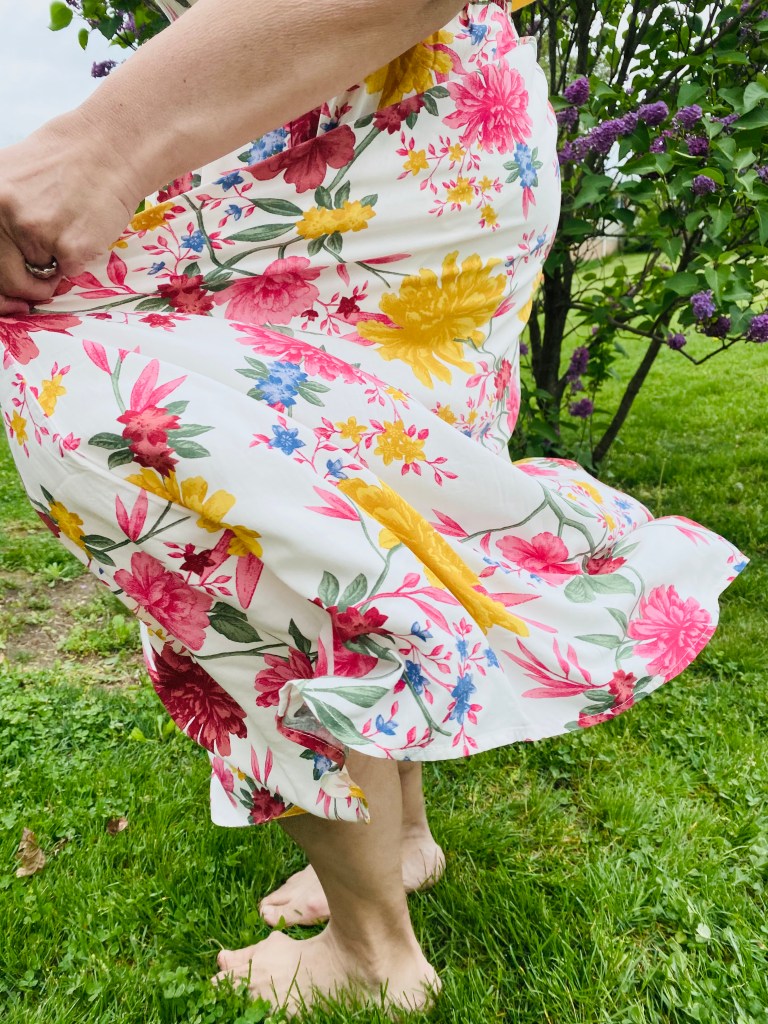
My attempts at twirling. Photo credit to Margaret Collins

It has been a few weeks since Easter, and I have thought about that moment often.  What was the root of that sadness I felt as I twirled in my Easter dress?  I spent some time praying about it, and, through a series of conversations with different people, I have finally been able to put words to the feeling that came over me.  I have never twirled because I have never felt like a princess!

I am aware that I am being vulnerable, and I am still trying to process this in real time, but I never intended this blog to be a place where I come off completely polished and put together.  It’s about transitions, and, sometimes, transitions can be messy.  I believe my feelings will resonate with other women.  And for my male readers, unfortunately, I am sure that you have women in your life who have probably felt the same way.

Looking back on my life, I have always had a slight aversion to princesses.  This has manifested itself in various ways, including purposely steering my daughter away from the whole Disney princess culture.  Even in the Bible, I was drawn more to the Ruth and Rahab characters than to Esther.  This aversion has a lot to do with my wounding as a child.  My sexual abuse at the hands of my father made me feel dirty and ashamed.  In addition to not feeling like a princess, my obesity did not fit the traditional appearance of a princess.  I struggled to find clothing that made me feel feminine.  I wouldn’t even have considered layers of tulle because that would have added volume in places that I didn’t want to emphasize.  I was also unable to tame my wavy hair, which further added to my feelings of awkwardness.

I remember reading aloud “The Tale of Despereaux” to my children and identifying with Migory Sow, a character in the book whose name matched her unfortunate appearance and her even more unfortunate life.  Her ears were disfigured to the point of resembling cauliflower because of the beatings she had endured.  She escaped by being a servant in the castle, but even there she is described as “rounder and rounder, and bigger and bigger.  Only her head stayed small.”  One time, when she expressed her desire to be a princess, her abusive “uncle”, who had bought her from her father, responded, “Har.  An ugly, dumb thing like you.”

I covered up my Migory-like feelings by being outgoing and the life of the party.  I worked hard at being a good and supportive friend.  Even though I could not wear the princess dresses I desired, I helped my friends by becoming their personal shopping assistant.  I suppressed all my desires for physical beauty and, instead, focused on developing my character and my talents.  I admit that I lived a little vicariously through my daughter, encouraging her to play dress up and buying her dresses that twirled.  But, deep inside, there was a desire to twirl, to have a moment where I was blissfully joyful!

As I have lost weight, I have begun to wear dresses with more feminine patterns and shirts with flowing sleeves.  I even have a few dresses that meet Maggie’s twirling standard.  However, despite the lower numbers on the scale and the more feminine clothing, I still felt like Migory Sow inside with the princess crown on her head.  My own voice echoed the rat, Roscuro’s, response, “Ridiculous. Laughable. I mean you will never look like a princess no matter how big a crown you put on your tiny head!”  All my efforts to eat right, wear more feminine clothes, and even attempt to twirl, could not erase the hopeless feeling I have had engrained in me since childhood.  Even other people’s compliments, including my husband’s, did not make me feel like twirling.

At the end of “The Tale of Despereaux”, although Migory Sow never becomes a princess in the literal sense, her real father atones for his mistreatment of his daughter and “treats her like one for the rest of his days.”  I cannot look to my stepfather for healing, but I can look to my heavenly Father.  His unconditional love written on the pages of the Bible helps me to see who He truly is and how He really sees me.  Through His reflection, the negative messages from my childhood begin to diminish and I hear His voice more clearly.  David declares in Psalm 34:5, “Those who look to him are radiant with joy; their faces will never be ashamed.”

One summer, I kept wiping out on my bike in our gravel driveway.  Just as my knee would start to heal and a scab would begin to form, I found myself falling off my bike again, repeatedly picking stones out of the same wound.  Eventually, it did heal, but the resulting scar is a reminder of that summer of scraped knees. I am still unpacking this as I write, as I haven’t erased all the “Migory Sow” messages in my mind.  Right now, it is an open wound.  But as I learn to rewrite those messages with the voice of Jesus speaking into my life, eventually a scab will form, moving me closer to complete healing.  I might be left with a scar, but it will be a reminder to me of the goodness and love of Jesus.  Until then, I will keep twirling!

Worms: The Sequel

“But emptied himself, by taking the form of a servant, being born in the likeness of men. And being found in human form, he humbled himself by becoming obedient to the point of death, even death on a cross.” Philippians 2:7-8

With no inherent sense of direction, I am terrible at reading maps.  I still struggle with the basic kindergarten skill of knowing my left from my right.  Often, you’ll see my hands by my side making an “L” to verify the direction I should be going.  Last summer, after hiking in a nature preserve, my GPS was not picking up any signal, so I turned right (or was it left?).  By the time I picked up a satellite signal, I was going in the completely wrong direction, driving about 45 minutes of out my way.  Although I was lost, I genuinely enjoyed the drive, looking at old farmhouses, seeing a new apple orchard, and driving through a new town.

When writing for my blog, I often get lost in my research, running down rabbit trails to places I never expected.  My husband often helps me focus my thoughts, both verbally and through editing, just like he does when relying on my navigational skills (GPS technology has tremendously blessed our marriage).  In my last post, I started researching the lifecycle of worms.  I admit part of my fascination with worms stems from finishing the book The Sound of a Wild Snail Eating.  The book is the memoir of a woman who was incapacitated by a neurological disorder and spent hours watching a snail in a terrarium by her bedside.  Her observations inspired me to be more attentive to nature and the creatures around me.  Snails are cuter than worms, but God did not inspire me with a shriveled snail, so I researched worms instead.

A picture of the scarlet grub found in Israel.

My research led me to a fascinating scripture in Psalms 22.  This psalm, written by David, is considered a prophetic psalm since Jesus spoke the exact words found in verse 1 while hanging on the cross: “My God, my God, why have you forsaken me?”  David later makes a strong statement in verse 6, “But I am a worm, and no man; a reproach of men, and despised by people.”  It is natural to conclude that both David and Jesus are metaphorically referring to themselves as worms, conveying the importance of humility.  Most people, except for fishermen and gardeners, pay little attention to the simple worm.  These invertebrates get little news in the press for being an essential worker.  But after studying the verse more deeply, I discovered some amazing information that has led to this blog, “Worms: The Sequel”.

The Hebrew word “towla”, translated as “worm” in Psalm 22:6, is specifically referring to the coccus ilicis worm, sometimes known as the scarlet worm, found in the Middle East.  This is not the ordinary humble earthworm.  Instead, David purposely referred to this specific worm, or grub, which has some interesting characteristics.  To start with, the red dye excreted from this grub was used for the outer tents of the wilderness tabernacle.  It is also likely the same dye used for the scarlet thread stitching in the veil separating the Holy of Holies.  The symbolic implications seem obvious thus far, but we have only scratched the surface!

When the female worm is ready to lay her eggs, she climbs up a tree or fence and attaches herself to the wood by forming a hard crimson shell.  The shellac she uses to attach herself is so strong one would have to actively scrape her off the wood, killing her in the process.  She then lays her eggs underneath the protective shell of her body.  After the eggs hatch, the larvae feed on the living body of the mother for three days until she dies.  In her death, she secretes a crimson dye that permanently stains her offspring.  Her final act is to pull up her tail onto her head, forming a heart-shaped body that is no longer crimson, but has turned into a snow-white waxy shell attached to the wood.  It flakes off, dropping to the ground like snow, while her offspring leave their place of birth to start their new life.

The implications of “I am a worm” are so profound, even a great writer could not have so thoroughly connected the details of Jesus’ life to the life of this worm.  Jesus, like the mother worm, willingly attached Himself to the cross.  Throughout the whole ordeal, Jesus did not struggle against the beatings or the act of the crucifixion.  Instead, He knew that the cross was they only way to redeem a lost world.  Like the mother worm, Jesus sacrificed his life, including every drop of blood, for our sins.  The internal crushing of the mother’s body causes her crimson dye to be secreted on to her offspring just as Jesus “was bruised for our iniquities”, leaving a mark on our lives.  Even as the white flakes of the dead worm fall to the ground, scripture declares in Isaiah 1:18, “Come now, let us reason together, saith the Lord: though your sins be as scarlet, they shall be as white as snow, though they be red like crimson, they shall be white as wool.”  Our sins are made clean!  As the death of the worm signifies new life for her offspring, Jesus’ death and resurrection signifies new life for us and hope for eternity!

Today, scientists have discovered some new purposes for this insignificant worm that parallel the life of Jesus.  For example, the crushed worm has been used in medicines that help regulate the heart.  We often come to Jesus with brokenness and use phrases like “broken-hearted” to describe our pain.  Scripture declares in Psalm 34:18, “The Lord is near to the brokenhearted and saves the crushed in Spirit.”  Jesus’ death was not just for our redemption from sin, but also to heal those who were broken.  Also, the white wax shell has been used in making shellac to preserve wood.  Through the infilling of His spirit, we have a natural protection from anything that would harm us!  This does not mean we will not experience pain, hurt, betrayal or sin.  It just means, our hope Is not of this world!

Sometimes, we follow rabbit trails that lead to nothing, but my “worm” trail has reinvigorated my love for scripture.  I find myself opening my Bible and anticipating new discoveries that verify the authenticity of the inspired word of God!  I would love to hear about some “worm” trails you have found in scripture.  Please feel free to share in the comments below!  Also, don’t forget to subscribe to my blog.

Daffodils and Worms

“For behold, the winter is past; the rain is over and gone. The flowers appear on the earth, the time of singing has come, and the voice of the turtledove is heard in our land.” Song of Songs 2:11-12 ESV

This past week, I have been thoroughly enjoying spring in Pennsylvania.  Flanked by flowering dogwoods and daffodils waving hello, the warm sun puts a bounce in my step while walking in the neighborhood.  The birds chirp happy songs making me want to click my heels in the air like Dick Van Dyke.  Our little Jane Magnolia tree is blooming its blush velvet blossoms while the trees are budding out providing me with all kinds of creative inspiration.  It is the season of new beginnings and fresh starts!  But the circle of life dictates that for new life to continue, something must also die.

I suppose I should give myself photo credit for this less than stellar picture.

Just a few months ago, on a warmer-than-average February day, I was walking in one of my favorite parks praying about some situations weighing heavily on my mind.  As I passed a wet spot on the pavement, I glanced down to see a dead earthworm.  Barely registering the worm, I continued my walk when I felt God prompt me to go back and take a picture.  I knew this had to be a heaven-sent thought for two reason.  First, I am a terrible photographer, always ending up with blurry images.  Second, if I am going to attempt to take a photo of something, it would be something a little more interesting, like a groundhog or a squirrel.  As I was taking the picture, I heard a still small voice speak to me, “This worm is a reminder that winter is still here, but spring is coming.  For spring to arrive, some things have to die for new life to be birthed and new ideas to bloom.”

For the past few days, I have been pondering about this dead earthworm, investigating its life cycle and attributes.  This slimy invertebrate is a gardener’s favorite pet.  Active in warm weather, an earthworm recycles organic material in the soil into nutrients.  Her tunnel-making skills improve the soil structure, creating room for air, water, and plant roots.  As temperatures cool, she will burrow beneath the frost line for the winter.  Curling up into ball, she secretes a mucus to protect herself, before entering a hibernation state.  Scientists have discovered that the protective mucus is full of nitrogen, making the soil around it fertile for plants.  Likely, the warm temperatures in February awakened an instinct in this worm, causing her to peep above surface to begin her summer duties.  Unfortunately, she probably got caught moving across the pavement during the night when the temperatures dropped again, dying a quick death.  Despite her death, somewhere beneath the surface of the soil, she left behind eggs that will hatch in spring, carrying on her life-giving duties through future generations.  In addition, as her body decomposes, it provides nutrients to the soil, where future plants can grow and thrive.

I have been transparent in previous posts that these past few years of my life have been tough.  At times, I felt like I was being buried by various situations all stemming from areas of brokenness within me and those around me.  I, like the earthworm, crawled beneath the surface of life to hibernate from the harshness of the bitter winter surrounding me.  This hibernation led to isolation and depression.  Fortunately, God is good, prompting me to spend time memorizing scripture in the heat of the trials.  One year, during the toughest moments, I purposed in my heart to memorize 420 scriptures filled with truth.  I would spend about an hour a day writing scripture on note cards, quoting the words, and studying the meanings.  These anointed words of God created a protection around me, insulating me from the darts of the enemy manifested by shame, loneliness, and despair.

My spiritual winter has ended, just as it has on my calendar.  But like the dead February earthworm, some things in my life need to die, including pride, bitterness, need for resolutions and control, and constant replaying of some trauma-inducing situations.  Just like the living earthworm recycles in life, God used these tough situations to bring to surface areas in my life where I was relying on my own ability and strength.  As the earthworm makes tunnels, my submission to the work God is doing in my life has created room for his Word and spirit to do a transformation in me.  This, along with being a part of a life-affirming community rich in authenticity and truth, is allowing me to give birth to humility, wholeness, healing, empathy, and restoration!

In the Bible, Jonah left the city of Nineveh angry with God.  Yet, God still had compassion on Jonah, providing him with a plant to shade him from the hot desert sun.  The story gets interesting when the next morning, the Bible states In Jonah 4, “God prepared a worm that damaged the plant that it withered.”  God did not stop there, but also created a strong wind “and the sun beat on Jonah’s head so that he grew faint.”  Jonah responded by exclaiming, “It is better for me to die than to live.”  God then stepped in to address some areas in Jonah’s life, including his self-righteous attitude.

 God allows the worm-like situations in our lives, not to destroy us, but to draw us closer to Him.  What Jonah had determined to be a terrible situation, preaching to Nineveh, was salvation for over 120,000 people!  Although my situations were tough, I believe that, in time, the testimonies of God’s mercy can provide hope for other people around me.

Today, in full-blown spring weather, I took a walk again in my favorite park.  It had stormed the night before leaving the pavement wet, again.  This time, I noticed fat, long earthworms everywhere, slipping and sliding across the sidewalk.  The presence of the earthworms is an indication that the ground is ready to produce.  Although I didn’t take any pictures, I did thank God for what He continues to do in my life, and the new life He is producing!

Happy 100th Birthday!

“A good name is to be chosen rather than great riches.” Proverbs 22:1a NKJV

My children fondly remember the never-ending ice cream bowl at my grandfather’s.  After sharing a meal together, my grandfather, with a glint in his eyes, would say, “How about some ice cream?”  Ethan and Maggie would nod their heads with huge smiles as he scooped Schwan’s Chocolate Marshmallow Ripple into tiny pastel-colored melamine bowls.  Just as the kids were about to scrape the bottom of their bowl, he would offer them another scoop, filling it again to the brim.  This continued a few more times, until both were completely full.  I debated internally whether I should put a stop to this, but my grandfather and my children seemed to be enjoying blissful moments in an ice cream haze.  Besides, how does one say “no” to an octogenarian?

This month, my grandfather would have celebrated his 100th birthday.  He died six years ago in March, just before his 94th birthday.  I could discuss all the life events he has missed, including his youngest grandchildren’s’ graduations, marriages, and the births of his first great grandsons to carry on the Walter family name.  I am sure he would have had an opinion about the Trump presidency, although, with his libertarian views, I have no idea in what camp he would have landed.  He also would have experienced the pandemic and, sadly, the untimely death of his youngest son.  Although I am sad about the things he missed, he lived a long life, and he lived it well.  However, upon reflection, I am choosing to share a few lessons I have gleaned from his life.

First, you can lead a simple life and still have a big impact on others.  My grandfather lived in only two houses his whole life, the farmhouse he was born in, and the house in town he died in.  As far as I know, He held only two jobs: a farmer and a factory worker.  He did not dress in high end clothing, buy expensive cars, or hold any political office.  Instead, he lived within his means, dressed for the occasion, maintained his vehicles, and voted regularly.  He impacted his family by making them important in his life.  Whenever a child or a grandchild stopped by, he insisted on making a meal, usually grilled steak.  He never hesitated to attend his grandchildren’s events, including baseball and football games, drama performances and birthday parties.  He played Monopoly, scooped ice cream, and wrote out Christmas cards.  He took some of his grandchildren hunting.  I think all my cousins would affirm that they felt loved and cherished by their grandfather.  Despite his stature, being 5’6” at his tallest, my grandfather was definitely the patriarch of the family!

My grandpa at his old barn. Photo credit by Deardre Walter.

Secondly, he set an example of how to love well, without reservation.  My grandfather met my grandmother at a dance and was instantly smitten.  He expressed his desire to marry her rather quickly, but my grandmother thought she was too young.  He patiently waited for her to walk down the aisle a few years later.  Despite the wait, he was able to celebrate sixty-one years of marriage to her.  The last few years of my grandmother’s life, she developed some debilitating health problems.  My grandfather took over all the household responsibilities, including learning how to make Rice Krispies treats for company.  He took her to every appointment without fail.  We have no idea how much he was doing for her towards the end of her life, because he did whatever it took without comment or complaint.  He even passed up a dream trip to Alaska because he did not want to leave his beloved wife home alone.  During her last days, he spent most of his waking hours with her at the hospital, holding her hand as she took her last breath.

Thirdly, traveling helps you appreciate the beauty that God created.  My grandparents made it to all forty-eight contiguous states, starting off with their honeymoon in Niagara Falls.  Although my grandmother loved to tour the mansions in Newport, Rhode Island and Wall Drug Store in South Dakota, my grandfather particularly loved National Parks.  They traveled to the Grand Canyon, the Rocky Mountains and the Redwood Forest.  His eyes lit up when he would talk about seeing Old Faithful and the Grand Tetons.  I once asked him why he never traveled to Europe.  His reply was that the United States was rich in beauty and his goal in life was to capture the beauty in his own backyard!

This is an original postcard from my grandparent’s honeymoon, along with a photograph they took. Photo credit by Margaret Collins. .

Next, real whole foods add to the longevity of your life.  My grandfather never liked fast food, frozen meals, or prepared box dinners.  If you woke up early, most mornings, you could find him at the kitchen counter with a paring knife peeling whatever seasonable fruit was available.  He also enjoyed the occasional bowl of Grape Nuts cereal with whole milk and sweetened with honey.  His meals consisted of lean meats, vegetables, and potatoes.  He snacked on hickory nuts and fruit.  His one splurge in life was ice cream, yet he would even balance out that indulgence with handpicked, crushed strawberries as a topping.

Finally, my grandfather loved to learn.  His formal education was cut short by his father’s poor health, forcing him to take over the responsibilities of the family farm.  Yet, he continued learning throughout his life, whether it was about hunting, new farming techniques, automobiles, or world politics.  He demonstrated to me that learning is a lifelong journey, not just a destination with letters behind your name.

All too often, we memorialize a person after they die, putting them on a pedestal that maybe was not deserved.  By no means am I saying my grandfather was a perfect man.  He had his faults and idiosyncrasies like all of us.  Yet, if you weighed his life on a balance, you would find the positive he contributed to his family and community outweighed any of his flawed humanity.  In Proverbs 22:1, Solomon emphasizes the importance of having a good name by saying, “it is to be chosen rather than great riches.”  I am proud of my Walter heritage because Jerome Sylvester Walter made it a good name by living an honorable life!

Coffee and Chocolate Snobbery

“All things are lawful for me, but not all things are helpful. All things are lawful for me, but I will not be enslaved by anything.” I Corinthians 6:12 ESV

Last fall, Terry and I visited Asheville, North Carolina for a long weekend.  Although the rain hindered any opportunity to hike, we spent some time touring French Broad Chocolate, a local bean-to-bar chocolatier.  The tour guide explained how chocolate takes on the flavor profile of the region where it grows and explained how the beans are harvested, roasted, and made into a delicious treat.  Learning more about the chocolate-making process made the bars, cake and liquid truffles even more exquisite.  I remarked to my husband, “I’ll never be satisfied with Dove Promises again!”

Recently, I had a similar experience with coffee.  I discovered that fair trade brands roasted in small batches have better flavor profiles.  I love when the coffee bag notes the secondary flavors such as citrus and dark chocolate.  In addition, I tend to prefer local coffee shops over chains.  In the last year, I found myself buying more specialty brands of coffee.  As I grew more accustomed to the better coffee, I started to disdain a basic cup of Joe!

This became a slight issue in our home.  Terry can appreciate fine chocolate and great coffee but honestly, he enjoys a simple cup of coffee that tastes like coffee.  He is not always looking for secondary notes and still enjoys ordinary chocolate like Hershey miniatures.  I decided to break out the second coffee pot and we began to brew two pots to satisfy our different tastes.

This continued until I heard something interesting on the podcast A Drink with a Friend.  The weekly podcasters, Seth Haines and Tsh Oxenreider, discuss living sacramentally while sharing what they are drinking.  Seth lives near Onyx Coffee Lab, a popular coffee roaster in Bentonville, Arkansas which has the motto “Never Settle for Good Enough” and often shares his favorite blend of coffee on the show.  In one episode, he was drinking a blend of coffee from Aldi.  He did not really love this cup of coffee, but the ordinariness of it made him appreciate the good coffee.  It led to a discussion between Seth and Tsh wondering that if you always have the best, can you lose your appreciation for the best?

I have been contemplating this question.  I have relished the fact that I have cultivated a taste for good coffee and good chocolate.  But if I juxtapose that constant diet of great stuff with the possibility of losing the wow factor, it causes me to pause.  In addition, should I really spend my resources on the best all the time?  Most importantly, what does God have to say about this?

In examining the principles of God, we know that He has created in us a desire for good things.  He set his creation in the perfect garden with every available fruit and vegetable.  He created the beans of both the coffee plant and the cacao tree, and man has discovered how to use them to make an incredible drink and a delicious food.  He also instructed the Israelites to observe certain holidays and to celebrate them with food.  In addition, the early church modeled hospitality by sharing meals together while growing in their faith.

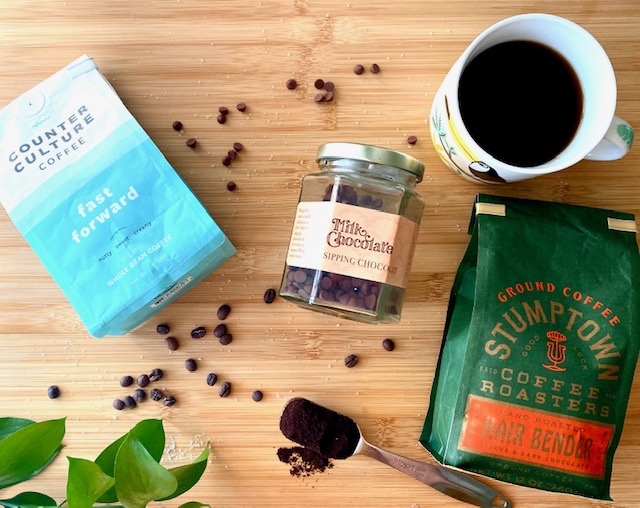
Photo credit Margaret Collins

The problem comes when we fixate on coffee and chocolate more than we fixate on God!  In several places, the Bible clearly states that we need to be careful not to be overly concerned with what we are eating and drinking.  Jesus also warns us in Matthew 24:38 that we will know His return is imminent when people are “eating and drinking” as in the days of Noah.  This “eating and drinking’ is not our need for caloric intake to survive.  Instead, it is referring to the pleasure-seeking mentality of the people in Noah’s day.  Matthew Henry proclaims in his commentary, “they were unreasonable in it, inordinate and entire in the pursuit of the delights of their senses.”  They spent a lot of time fixating on their food and drink, paying close attention to how it affected their senses to the point that they were ignoring the destruction of the world around them!

Jesus would be interested in the amount of money I could spend to maintain my high-end coffee and chocolate habits.  He illustrated truths to his disciples using parables, often related to finances.  He emphasized the importance of being a good steward and making good use of our resources for the kingdom of God.  I need to be responsible with my financial resources, and carefully use them to bless my church, the mission field, and my community.  I do not think the occasional French Broad Chocolate treat is wrong, but it needs to be an occasional budget expense rather than a constant indulgence!

Finally, the scriptures admonish us as to be moderate in how we live our lives.  In 1 Corinthians 6:12, Paul says, “All things are lawful for me but not all things are helpful.  All things are lawful for me, but I will not be enslaved by anything.”  I can enjoy the secondary notes of a good cup of coffee, but if I get to a point where I cannot enjoy an ordinary cup of coffee at a friend’s house, I have become enslaved by my coffee habit.  I need to fight against my propensity to be pretentious, and instead, remain humble in all areas of my life.

I decided to put my second coffee pot away.  (Why I have a second coffee pot is another story!)  Some days we indulge in great coffee, but most days, I have an ordinary cup of coffee.  I still eat Dove Promises, but occasionally splurge on a good truffle.  I am choosing to live by the words of Epicurus, a Greek philosopher, who said, “Be moderate in order to taste the joys of life in abundance.”

Kitchen Corners and Unlabeled Spices

“Be anxious for nothing, but in everything by prayer and supplication, with thanksgiving, let your requests be made known to God.” Philippians 4:6

I have a secret that I am going to share.  Until my kitchen flooring was recently replaced, once a week, I would get down on my hands and knees with a bucket of hot, soapy water and scrub my dingy, twenty-year-old linoleum.  Three buckets later, my floor would be clean, except one corner.  Out of steam, I would grab my mop and quickly finish that corner, recognizing the job was not perfect.  The following week, I would start cleaning my floor in that corner, alternating the unfinished corner on a regular basis.  Some would say this was lazy, while others might just laugh at my honesty.  I share this story to make a point: my corner is a reminder that it’s okay to be imperfect!

To be fair, I am not a perfectionist by nature.  It doesn’t bother me if my lines are crooked, my stamp is off center, or my pillows are not fluffed.  Still, I have struggled with wanting to have a spotless house, a comprehensive home education schedule, and well-balanced meal plans!  In essence, I have struggled with trying to be super at everything I do.  This need to feel accomplished has put undue pressure on me, my family, and those I lead!

I understand we should always do our best.  I am not advocating letting your house go completely to the dark side, or to eat Chick-Fil-A at every meal!  I think we can find a balance between being a super woman and just letting it all go.  I have found balance in my life by three simple principles: recognize your season of life, prioritize what is important, and let go of unrealistic expectations.  Kendra Adachi, author of The Lazy Genius Way, says it best, “Be a genius about the things that matter, and lazy about the things that don’t.”

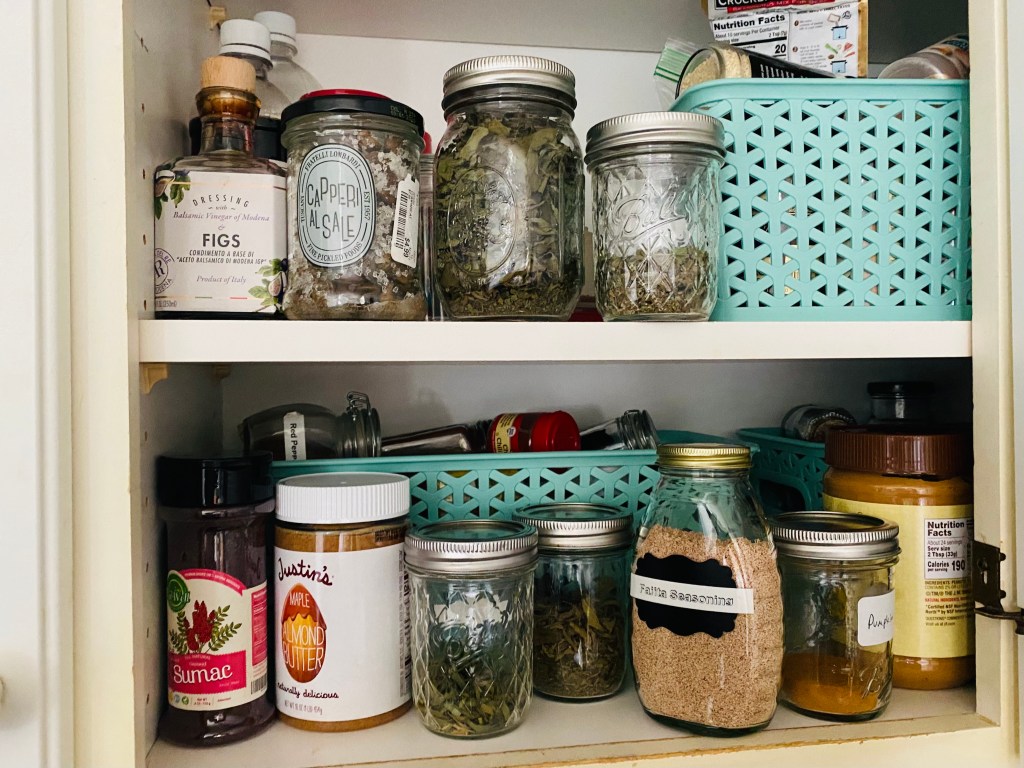
Yes, this is a real picture of my spice cabinet.

God gave us the seasons to help illustrate some principles in our lives.  Birds don’t build nests at the end of fall, and squirrels don’t gather nuts in the middle of summer.  In the natural world, each season has its blessings and disappointments.  I love summer, but with warm evening walks also come the not-so-occasional mosquito.  We need to apply these seasonal principles to our lives as well.  When I was in the season of raising toddlers, I cooked simple dishes with ample leftovers.  This way, during their nap time, I was not spending all my “free” time prepping for dinner.  Instead, I used that time to read an occasional book or close my eyes for a much-needed nap.

In some seasons, you need to show yourself grace.  I loved planning theme-based birthday parties for my children from “Knights of the Round Table” to “Candy Land”.  One year, I was struggling with a major RA flare with no energy to put together my son’s 8th birthday party.  This was a season where grace was needed to accept that it was necessary to simplify his birthday plans.  We opted for a roller-skating rink party with a store brought cake.  My son had a great time celebrating with his friends, not missing the elaborate themed party.

Even within seasons, you need to learn to prioritize what is important.  Right now, God is leading me to finish my book.  Therefore, my husband has taken over some of the household responsibilities, including making some meals.  I have also decided that having elaborate meals on a regular basis is not going to happen.  Instead, I plan easier menus because I care more about finishing my book than about making Harissa Chicken!

I think it is important to regularly examine my priorities because they can change, over time.  Last summer, we knew that we wanted to do more hiking and traveling.  As much as we loved the fresh tomatoes from our small garden, it was no longer a priority in our life.  Instead, we purchased our tomatoes from local farmers, giving us the freedom to hike more often while still being able to enjoy farm-gown tomatoes!

Finally, I have learned to let go of unrealistic expectations, instead choosing to invest in what is important to me.  Both my daughter and daughter-in-law love organizing and finding clever storage solutions.  They even have their own label makers!  On the other hand, I love the “illusion” of organization, but find myself always skipping those aisles at TJ MAXX.  I put things in particular spots but making everything look like Martha Stewart’s pantry is not important to me.  Instead, my spice baskets have different size bottles spilling out the top, sometimes labeled and sometimes not.  If my Pinterest boards are an indication of what I care about, it has never occurred to me to create a board on home organization!  What follows next is that I should not spend lots of time and energy trying to create systems of organization for me.  It is just not that important, so I will continue to play the game of guessing my herbs by their smell, unless I can induce my family to make labels for me!

I know I am not alone in the pressure of being a super-accomplished woman.  In the past few weeks, I have had three different conversations with women expressing angst by saying, “I should be doing ______” but finding it difficult to fit that desire into their already busy lives.  Instead of trying to squeeze more into our lives, we would be better served by asking ourselves, what season am I in, what are my priorities right now, and what do I really need to let go?  Answering these questions will give us more clarity in what we should be doing, and what we should not be doing!  Maybe that means tonight is Chick-Fil-A night, or maybe it means you perfect your lasagna-making skills.  And maybe you just get off your hands and knees and simply mop your kitchen floor!